Photography of the First World War – Part II: Finding First World War Photos

Following on the first part of this series: The Canadian War Records Office, here are some strategies for locating photographs of the First World War produced by the Canadian War Records Office.

Browsing

You can browse the lower-level records by selecting the ‟sub-series” or ‟sub-sub-series consists of” hyperlinked entries. For example, trying this within the “O” prefix record yields “4134 lower level description(s)” (Note: records are being continually added so this number may change).

Browsing the “O” prefix Sub-sub-series.

Browsing the “O” prefix Sub-sub-series.

Choosing this strategy makes it possible to view the pictures by browsing through them sequentially. This works well if you’re not quite sure what you are searching for but want to have an idea of the way the pictures are described and the type of photographs that can be found in the collection.

Searching

A more robust strategy to locate specific photographs within each series is to use the advanced Archives Search function. You can search using the “O-?” (with the quotes) or the original accession number “1964-114,” and a name or keyword. Using quotes limits the search words to a specific order. Using the question mark (?) allows for an open-ended search. A similar use of the asterisk (*) allows a search that looks for the variants of a word, for example: nurs*: nursing, nurse, nurses.

Searching for nursing-related photographs in the “O” prefix series in Advanced Archives Search.

Searching for nursing-related photographs in the “O” prefix series in Advanced Archives Search.

If you are unsure which series will contain photographs that are of interest to you, try entering the accession number “1964-114” and a specific term, such as “Vimy” (349 results) or “bishop” (21 results).

The following image shows items for nurs*, resulting in nurse and nursing sisters.

Search results for the nurs* search.

Search results for the nurs* search.

Some of the search results may yield records that appear to be duplicates. This is because archivists often create bilingual records to make it easier for all Canadians to find items in the language of their choice. In the case of panoramas, duplication may come from multiple negatives for one finished photographic print, with each part of the negative having its own record.

Explore the Canadian War Records Office images, and discover the “official” photographic record of Canada’s involvement in the First World War.

Other related materials:

Photography of the First World War – Part I: The Canadian War Records Office

The year 2014 marks the centenary of the First World War. In preparation for this date, archivists at Library and Archives Canada (LAC) have been cleaning up the Official Canadian War Photographs Records. They have been made more accessible to Canadians by enhancing their descriptions through thematic organization in the online database. This has been part of a much larger project to organize and describe the entire Department of National Defence’s photograph collection at LAC to ensure that the records are accurate, complete and accessible to the public. When the war began in 1914, most photographers and journalists were ordered away from the front. The First Canadian Division entered the European war theatre the following year. Finally, in 1916, millionaire press baron Max Aitken was granted permission to start the Canadian War Records Office (CWRO) and it became Canada’s “eyewitness to war” sending reports home from the front. Soon, these reports were also accompanied by photographs and paintings.

In addition to acquiring photographs from various sources, over the course of the war the CWRO hired three photographers—Captain Henry Edward Knobel, William Ivor Castle and William Rider-Rider—to travel to France and photograph battles, life at the front, and other activities. These photographs can be accessed under the Canadian War Records Office and were organized and given prefixes by the CWRO such as:

The largest of these CWRO-created prefixes is the “O” prefix. It includes about 4705 images, which were taken between May 1916 and May 1919. We find some of the most famous Canadian images of the war in this series. It includes William Ivor Castle’s shots of “Going over the Top” and the “29th Battalion advancing over No Man’s Land during the Battle of Vimy Ridge.”

Black and white photograph showing soldiers climbing over a ridge.

Canadian troops ‟going over the top” during training course at a trench-mortar school. (MIKAN 3206096)

Both of these photographs were later found to be manipulations: the first being a photograph of a drill, and the latter being a composite of two images to add dead bodies and puffs of smoke.

Black and white composite photograph of soldiers advancing through a field of mud. There's puffs of smoke in the air and bodies in the foreground.

The 29th Infantry Battalion advancing over “No Man’s Land” through the German barbed wire and heavy fire during the Battle of Vimy Ridge (MIKAN 3192389)

The next part of this series will explain how to search for First World War photographs in the Canadian War Records Office collection.

Other related materials:

Find colour photos of Canadian Second World War soldiers

Did you know that Library and Archives Canada (LAC) has rare colour photographs from the Second World War? During that time period, colour film was a new and untested medium for most professional photographers. These images were captured on Kodak Kodachrome film by members of the Canadian Film and Photo Unit (CFPU) in the days and weeks following D-Day, on June 6, 1944.

The CFPU, formed in 1941, was under the command of Captain William Abell of Winnipeg and was staffed by enlisted Canadian men and women. Their goal was to capture images of Canadian military personnel in action, which would then be released by the Department of National Defence to various media outlets. Today these images provide an invaluable record, in living colour, of Canadian servicemen and servicewomen, as well as changing photographic technologies and techniques.

The images are part of a larger set of 1,200 digitized Second World War colour photographs that can be viewed through LAC’s online database. Included are photos of various subject matter, such as Canadian troops in England, France, Holland, Germany, Italy, and on bases and in training in Canada; portraits of notable military figures; the Canadian Women’s Army Corps; troop entertainment; hospital transport ships; and the Canadian role in liberation/occupation duties as photographed by CFPU member Ken Bell.

Search the collection

LAC’s complete digitized collection of colour images from the CFPU includes over 2,000 additional digitized colour images dating to 1961. To view them, consult the ZK prefix. To search within this collection, go to Advanced Archives Search and search using “ZK prefix” and the search term of your choice. An electronic finding aid for the ZK prefix sub-series is also attached to this record and can aid in locating specific images. To learn more about using finding aids in your research, read Discover Finding Aids – Part Two.

See also:

Insight into Library and Archives Canada’s collection: interview with photographer Martin Weinhold

Recently, the Library and Archives Canada Discover Blog had a chance to interview documentary photographer Martin Weinhold about some of his photographs of Canadians at work, held in Library and Archives Canada’s collection.

Kenwyn Bertrand, I, worker.

Kenwyn Bertrand, I, worker. MIKAN 3842771, e010934568

  1. These photographs are part of a larger series. In just a few words, please tell us what series this is and what inspired it?
  2. The photographs are part of the “WorkSpace Canada” collection, a long-term project that still is a work in progress. The project’s goal is a general description of the world of work in Canada in the early 21st century; a kind of visual inventory centred around the human aspect of labour, work and action. The idea for this photographic documentary was triggered in 2005 when I read Hannah Arendt’s book “The Human Condition.”

    Kenwyn Bertrand, II, worker.

    Kenwyn Bertrand, II, worker. MIKAN 3842782, e010934567

  3. Please tell us why you chose to take three different photographs of the same subject?
  4. I wanted to introduce Kenwyn Bertrand, a worker at a car shredder yard in Hamilton, Ontario, with a threefold approach: giving the viewer a notion of the work environment and the activity happening there, as well as showing a facet of his individual personality. This pattern is the general approach for the “WorkSpace Canada” series.

    When I came to the car shredder yard I had a kind of production schedule already in mind. From previous visits and observations I knew the so-called picking shacks were one part of the operation, and I knew they were a must in the overall description of the place. I wanted to visually translate what it was like being on shift there. Kenwyn and I discussed what would be important for me to photograph and what wouldn’t. For Kenwyn, being at his workplace meant this repeated waiting for the copper parts among the rubbish on the conveyor belt—the whole reason his job existed. Then there was the locker room, the place where every shift began and ended. And the only possible place for a portrait. Although for privacy we had to wait until every worker from Kenwyn’s shift had left.

    Kenwyn Bertrand, III, worker.

    Kenwyn Bertrand, III, worker. MIKAN 3842786, e010934566

  5. How can we tell that these are Martin Weinhold photographs?
  6. I think—I hope—the intensity of my dealing with the subject can be seen. I try to establish an intense relationship with every person I photograph. Time is the crucial precondition for that. Time is the luxury I insist on having with my documentary work. If the viewer can read the intensity in my photographs and see it as typical for a Martin Weinhold photograph—that would make me very happy.

Where art and history meet: exhibitions of historical photographs at the National Gallery of Canada

What happens when the practical also has a poetic side?

In recent months, visitors to the National Gallery of Canada have had a chance to explore the answer to this question. A series of small exhibitions of historical photographs, drawn from Library and Archives Canada’s collection, considers the aesthetic, as well as the documentary properties of images created “on-the-job” by 19th-century surveyors, public servants and engineers.

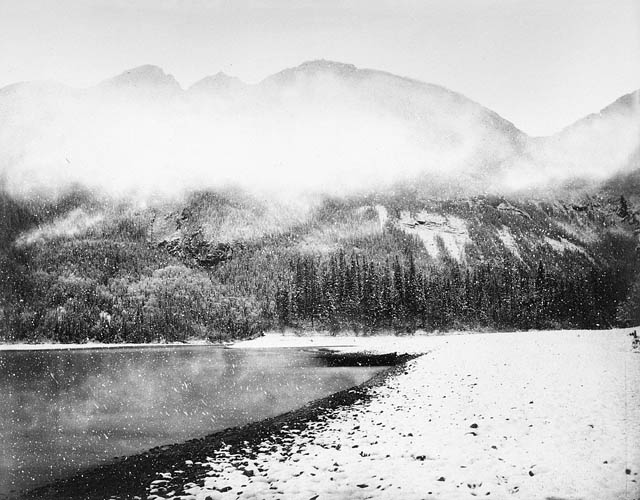
In the heart of the Rocky Mountains: A snowstorm, by Charles Horetzky

In the heart of the Rocky Mountains: A snowstorm, by Charles Horetzky (Source: MIKAN 3264251, e011067226)

At first glance, this beautiful photograph, which was part of the past exhibition Early Exploration Photographs in Canada, seem to be exactly as labelled — a view of the Peace River in British Columbia, as it appeared during a snowstorm in October 1872. It turns out, however, that Charles Horetzky, official photographer with Sir Sandford Fleming’s Canadian Pacific Railway survey team, deliberately enhanced its dramatic effect: paint splatters were added to the image in order to create the effect of non-existent snow.

The current exhibition, Paul-Émile Miot: Early Photographs of Newfoundland, on view until February 2, 2014, includes this portrait from the 1800s, by French naval officer Paul-Émile Miot.

Mi’kmaq man, by Paul-Émile Miot

Mi’kmaq man, by Paul-Émile Miot (Source: MIKAN: 3535989, e011076347)

It was taken while surveying and mapping the coastal areas of Newfoundland — at the time, France maintained a commercial fishing interest in these waters. Though Miot was capturing the earliest known photographs of members of the Mi’kmaq Nation, the extravagant pose of his subject suggests 19th-century European romanticism.

So-called inaccuracies or created effects in 19th-century documentary photographs do not negate the worth of these images as records of past events. If anything, they add fascinating nuances of meaning to these items, as artifacts.

We invite you to stay tuned for the next exhibition, on Arctic exploration photography, opening on February 7, 2014.

How anonymous or little-known portrait sitters tell the Canadian story

No names are recorded on this 1913 photograph of an Ontario boys’ band.

Boy’s Brass Band Community Movement Pembroke, circa 1913.

Boy’s Brass Band Community Movement Pembroke, circa 1913. Source

Although the leader, “Bandmaster Wheeler,” is identified in a second photograph of this same group, we have found little information about him or the group of boys that he taught.

Bandmaster Wheeler and Boy’s Brass Band Community Movement Pembroke, circa 1913

Bandmaster Wheeler and Boy’s Brass Band Community Movement Pembroke, circa 1913 Source

A surprising number of portraits in Library and Archives Canada’s (LAC) collection are anonymous or little–known men, women and children. We may never know the identity of these people or discover more about their lives, yet these portraits are as important to LAC’s collection as portraits of well-known people.

These boys’ band photographs document an interesting social movement at the beginning of the 20th century. Community organizations concerned about the morals and manners of their children sponsored bands for young boys. Participation in these bands was seen as a way of learning community service and developing local and national pride.

Viewed together, these photographs illustrate this idea. We know that the first photograph was taken slightly earlier because the boys wear suits rather than band uniforms. Local records of the time show that they were still raising money through performances to earn their uniforms. The second photograph shows the group in uniform — the reward for learning this lesson in personal responsibility and hard work.

These group photographs probably helped to cement the band’s unity and team spirit. Membership in this band looks as though it might have been a lot of fun too, judging by Bandmaster Wheeler’s slightly loosened tie in one photograph, and the jaunty angle of his hat in the other. Wheeler is an interesting figure, being an early Black bandmaster in small-town Ontario. LAC holds few portraits of Black Canadians from this period. Wheeler’s presence in these photographs provides us with an important record.

We continue to research the identity of unknown portrait sitters. If you can help, please contact us.

To view other examples of anonymous or little-known sitters in LAC’s portrait collection, visit our Flickr Album.

Margie Gillis Dance Foundation Archival Holding at Library and Archives Canada

Did you know that, since 2010, Library and Archives Canada (LAC) has held the Margie Gillis Dance Foundation’s audiovisual, administrative and promotional materials?

Dance performance advertisement featuring Margie Gillis.

Dance performance advertisement featuring Margie Gillis.
© Margie Gillis Dance Foundation. Credit: Michael Slobodian

The Foundation itself chose LAC to preserve its documentary heritage as a result of a 2008 analysis report that strongly urged the Foundation to ensure the long-term preservation of its documentary heritage in a Canadian archive.

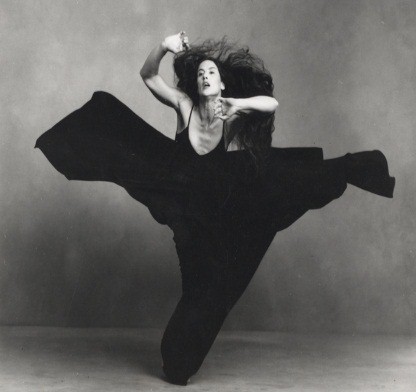
LAC has more than 1,100 photographs illustrating the career of this internationally acclaimed Canadian contemporary dancer and choreographer. The collection features photographs by nationally and internationally renowned photographers and artists, including Annie Leibovitz, Lois Greenfield, Cylla Von Tiedemann, Michael Slobodian and Jack Udashkin.

Black and white artistic dance photo of Margie Gillis

Black and white artistic dance photo of Margie Gillis.
© Margie Gillis Dance Foundation. Credit: Annie Leibovitz

The archival holding also includes about 750 hours of audiovisual materials. This unique collection of recordings shows Margie Gillis’s choreographic and artistic work from the beginning of her career to today. Her dance performances in Canada, the United States and around the world are thus preserved for posterity, along with her choreography labs and rehearsal sessions, and a large number of media interviews and reports.

In addition, the textual records, brochures and multiple posters in a variety of formats provide an overview of the activities carried out by the Foundation, which was created in 1981. The Foundation’s primary mission is to support, protect and promote the artistic vision of Margie Gillis, a pioneer and an innovator in contemporary dance.

All the materials in the holding are accessible. However, they may not be reproduced or used without the Foundation’s consent.

The fonds can be consulted online.

For more information about Margie Gillis and her dance foundation, please consult the Foundation’s website.

The Mountain Legacy Project: An Archive-Based Scientific Project

Beginning in 1871, the Dominion Lands Branch had been surveying and mapping Canada from East to West. By 1886, the Dominion Lands Survey had extended to the Rocky Mountains, but the rugged terrain made traditional survey methods impractical. Édouard-Gaston Deville, Surveyor General of Canada, devised a new methodology called “phototopography,” (also known as photogrammetry) based on the use of survey photography from hot-air balloons in France and Italy. A special camera was constructed for surveyors, who ascended thousands of peaks in Alberta, British Columbia and the Yukon. They rotated and levelled their cameras on tripods to create 360-degree views of the surrounding terrain. Between 1887 and 1958, more than 100,000 glass plate negatives were used to create the first topographic maps of the Canadian Rockies, of which 60,000 are now part of the Library and Archives Canada (LAC) collection.

Since 2002, LAC has been a major participant in the Mountain Legacy Project, an ongoing partnership led by the University of Victoria, which includes stakeholders in universities, archives, government, and non-governmental organizations.

LAC identifies, describes and digitizes the original negatives. These photographic records are the foundation of this multidisciplinary project, which uses “repeat” photography. It consists of re-photographing the landscape from the precise original locations to provide information about environmental changes that have occurred over the last 120 years.

To search LAC holdings of original photographs, follow these easy steps:

  1. Go to the Basic Archives Search.
  2. Enter the archival reference number R214-350-0-E in the search box.
  3. From the Type of material drop-down menu, select Photographic material and then click on Submit. Your search will generate a list of results.
  4. Select an underlined title to access the full description of a photograph. The descriptive records display images of photographs that have been digitized.

For more information about how to search for photographs at LAC, consult our articles “How to Find Photographs Online” and “How to Search for Images Online.”

If you wish to narrow your search:

  1. Go to the Archives Advanced Search.
  2. Select Photographic material from the drop-down menu labelled Type of material
  3. Use one or a combination of the following options as keywords in the Any Keyword search box:
    1. Name of the surveyor (e.g., Bridgland, McArthur or Wheeler).
    2. Year of the survey (must be used along with another keyword to limit search).
    3. Name of a survey (e.g., Crowsnest Forest Reserve, or Interprovincial Boundary Survey, although these may have taken place over several years, by various surveyors).
    4. Name of a particular landscape feature, such as mountain peak, river, creek, or valley (often the views are identified by the station/peak they were taken from, rather than by the peak or landscape featured in the photograph).
    5. Name of the park (Note: The LAC collection does not contain reproductions of the images from Jasper and Banff National Parks).
  4. Limit your search results by selecting a decade under the label “Date” on the right side of the screen.

For more information about the Project, and to compare the archival images with the repeat photography, visit the Mountain Legacy Project website. To view a sampling of paired photographs, visit our Flickr Set. To view some images of the surveyors, visit our Facebook Album.

Questions or comments? We would love to hear from you!