“A Very Desolate Place”: The Lord Dufferin Letters

By Kelly Ferguson 

“I have always wanted to breathe the atmosphere of the New World,” writes Lord Dufferin, the third Governor General of Canada, to his close friends Mr. and Mrs. Sturgis. It was 1872 and Dufferin was preparing for his move to Canada, where he would spend the majority of the next six years.

When most of us think of the early governors general we may imagine stuffy noblemen coming to Canada as part of their duty to the monarchy. Sometimes it is hard to think of them as real people at all. These twelve letters, purchased by LAC at an auction in the summer of 2016, offer Canadians a glimpse into the motives and experiences of one of these aristocrats.

Yellow and brown composite photograph. Five people—Lord and Lady Dufferin and three of their children—are shown, each in their own individual shot. They are either sitting or standing for the portraits, dressed in costumes from the era of King James V of Scotland.

Lord and Lady Dufferin, and their children, dressed as the Court of King James V of Scotland in Ottawa, 1876 (MIKAN 3819711)

Lord Dufferin, although initially excited about the adventure of the “New World”, soon had to face the reality of what it meant to live in Canada in the 1870s. He was rather unimpressed with the living situation in Ottawa, complaining that the Governor General’s residence did not have enough space to entertain, that the roads were “strips of mud” and that the city was unfinished. He complained of the cold and the lack of things to do and soon realized that his time here would not be the exciting adventure for which he had hoped.

A yellow and brown image on albumen photographic paper of a winter scene in Ottawa, including several buildings, a road, and trees.

View from top of Dufferin’s tobogganing slide at Rideau Hall. Ottawa, 1878. (MIKAN 3819407)

While the living situation was not always up to his standards, Lord Dufferin took his position seriously. His letters discuss his efforts to bring “prestige” back to the job of Governor General. He also wrote about his opinions and actions as a neutral observer of one of the biggest political scandals of the time. The Pacific scandal saw the resignation of John A. Macdonald and the rise to power of Alexander Mackenzie and the Liberal party. Lord Dufferin’s letters discuss the scandal, expressing both sympathy for Macdonald and hope that the Opposition’s rise to power would be of benefit to Canada. From his letters, it is clear that he liked and respected both leaders.

A black and white photograph of a middle-aged man wearing a suit and standing for a portrait, with his right hand on a table and a chair next to him on the other side.

A portrait of Lord Dufferin, 1878. (MIKAN 3215134)

The Lord Dufferin letters lift the curtain a bit, offering us a more personal look at one of our early governors general. Lord Dufferin came to Canada to escape his boredom with the London scene and in search of something new. Although he was not always completely happy here, he worked hard to uphold the importance of the position. He was also diplomatic, having his own opinions on the Pacific scandal, but maintaining good working relationships with both leaders. Dufferin was Governor General at a crucial time. Canada had just become a country, the expansion west was just beginning, and Ottawa was a city “in progress”. The Dufferin letters not only humanize the man, they also ground the world in which he lived, breathing life into it and making it tangible for Canadians today.

A yellow and brown image on albumen photographic paper. A large wide frame shot of the crowd. Lord and Lady Dufferin sitting to the left at the head of the room.

A Fancy ball given by Lord Dufferin at Rideau Hall, 1876. (MIKAN 3260601)


Kelly Ferguson is a Master’s student from Carleton University working in the Governance and Political Archives Section at Library and Archives Canada.
Newly digitized images of the construction of 395 Wellington

By Andrew Elliott

Located on a site overlooking the Ottawa River, the Library and Archives Canada (LAC) building (known more fondly as 395 Wellington or, even more archaically, as PANL—Public Archives National Library) is an iconic structure that is highly visible from many vantage points on both sides of the Ottawa River. The building embodies the preservation of the national collective documentary memory, which Library and Archives Canada gathers and disseminates.

The history of the design and construction of this Classified Federal Heritage Building is an interesting one. While the original proposal targeted a site near the intersection of Bank and Wellington streets, in November 1952, the National Planning Committee of the Federal District Commission (now the National Capital Commission) approved the 395 Wellington Street address as the most appropriate location for the new National Library and Archives building. At the suggestion of Prime Minister Louis St. Laurent, Cabinet agreed to retain the services of the prestigious firm Mathers & Haldenby to design the new building.

The firm of Mathers and Haldenby (1921–1991) was established by Alvan Sherlock Mathers ([1895–1965] born in Aberfoyle, Ontario) and Eric Wilson Haldenby ([1893–1971] born in Toronto).

Construction, however, was delayed for almost a decade. The primary reason: No. 1 Temporary Building, which sat on the site, had not yet been demolished. In 1958 the project was further delayed following a major gas explosion on Slater Street, which destroyed a government building and saw the relocation of hundreds of civil servants to the remaining offices at No. 1 Temporary Building.

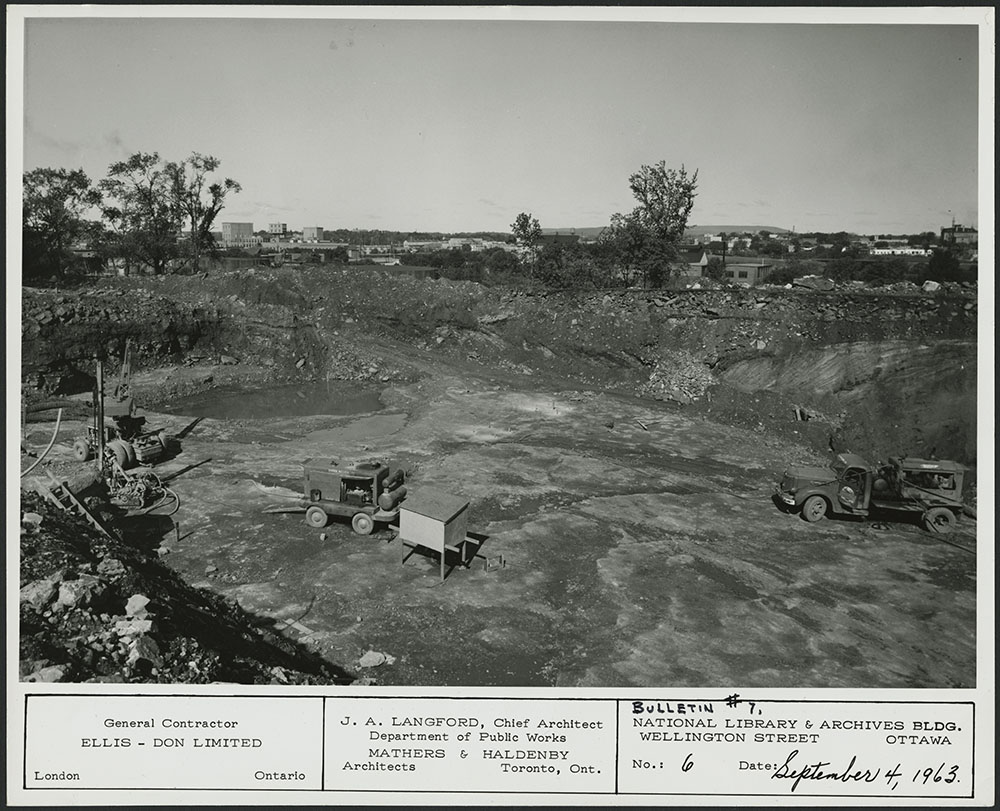
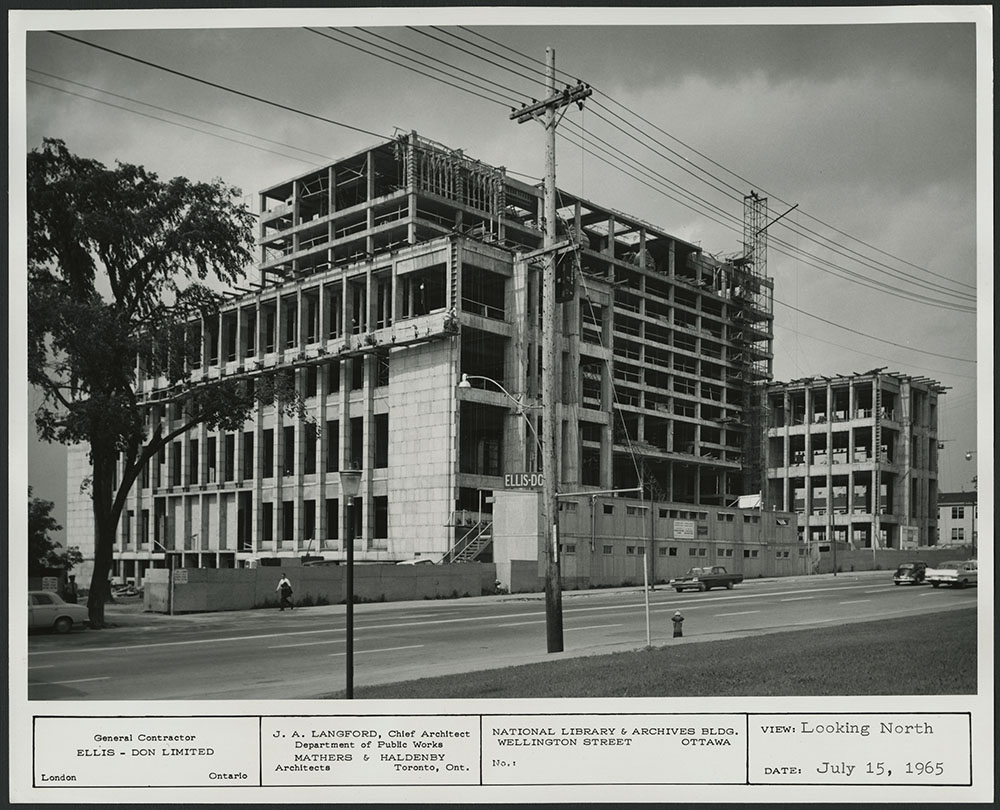
In 1960 Ellis-Don was awarded the contract to construct the building and in the fall of 1963 construction finally began in earnest. The entire construction project, which lasted until 1967, was recorded by Ottawa’s Van Photography Studio.

Recently, a remarkable series of photos showing the progress of the building was digitized by LAC. These images can be found in the Department of Public Works Accession. Included are the following photos:

A black–and-white photograph showing a large construction site with various types of construction equipment, and trees and other buildings in the distance

Excavation of the building site, September 4, 1963 (MIKAN 3600820)

A black-and-white photograph showing the unfinished facade of a 10-storey building. There is construction board on the ground floor. There are cars (including a VW bug!) and pedestrians going about their business.

A view of the partially constructed building looking north, July 15, 1965 (MIKAN 3600860)

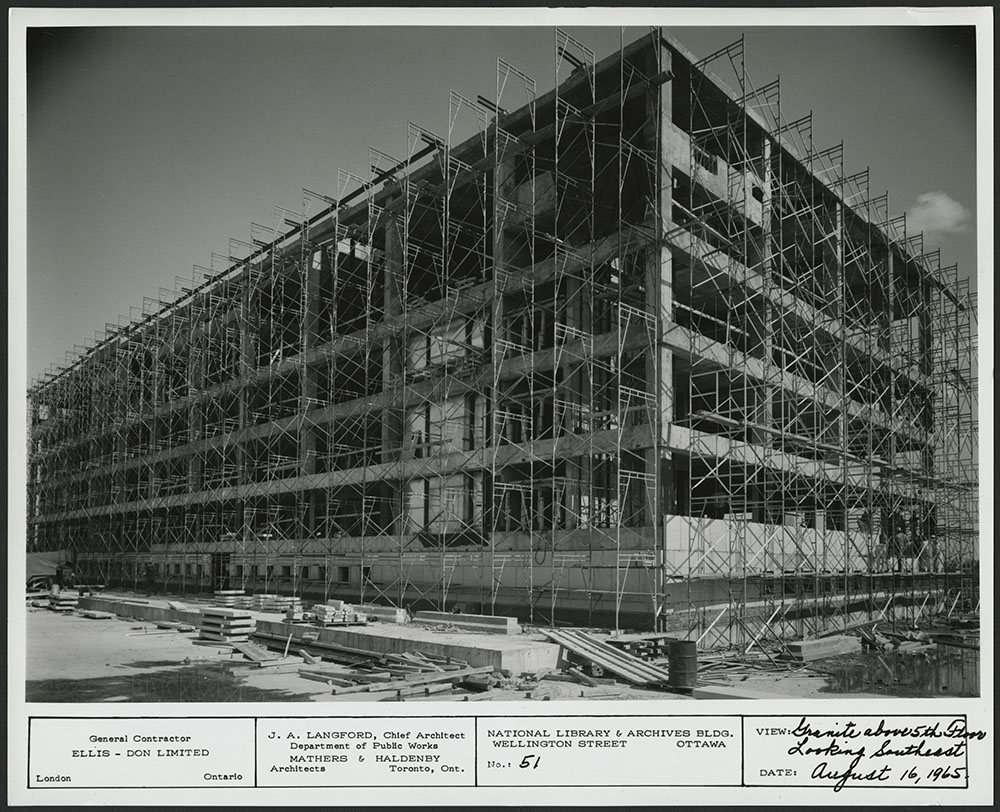
A black-and-white photograph showing a building completely surrounded by scaffolding.

View of the building looking southeast, August 16, 1965 (MIKAN 3600863)

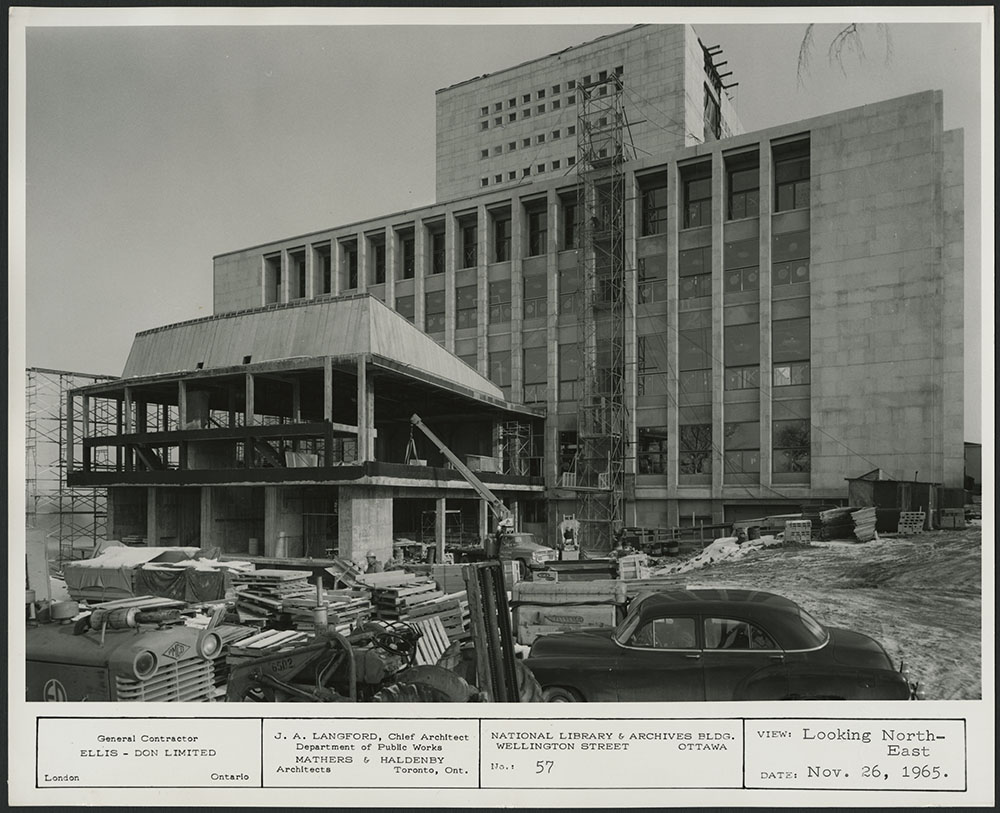
A black-and-white photograph showing a construction site with a partially finished building.

A view looking northeast taken on November 26, 1965 (MIKAN 3600869)

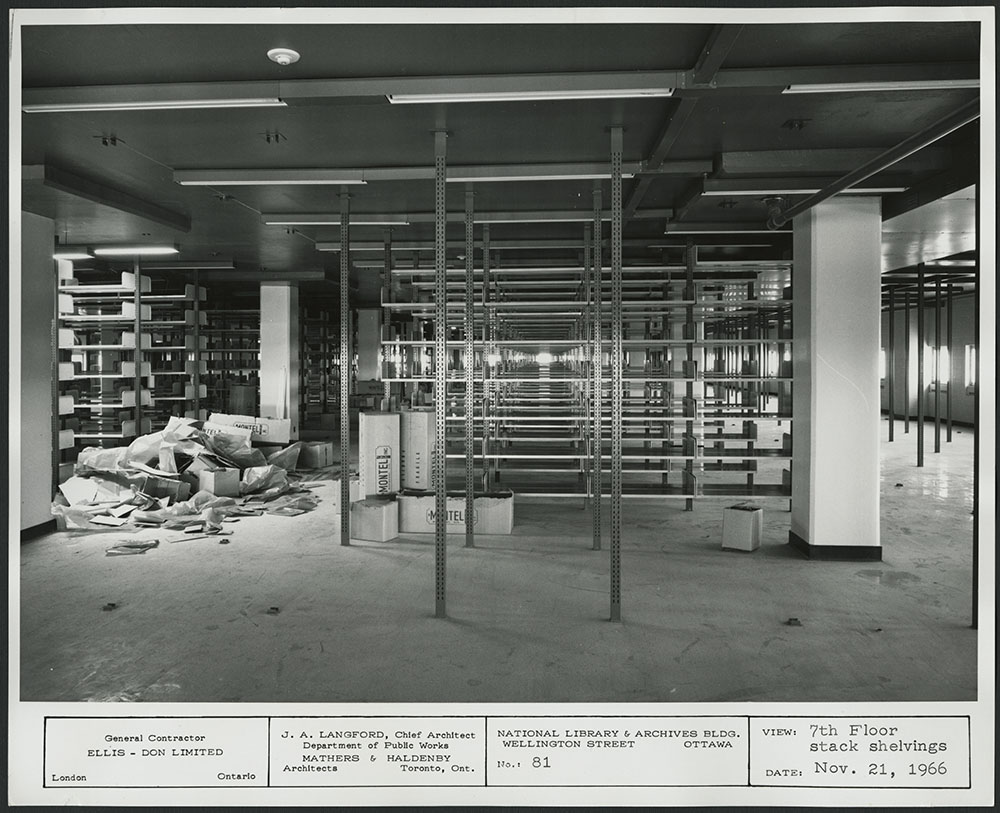
A black-and-white photograph a low-ceilinged room with rows upon rows of shelving in various states of completion.

An interior view of partially finished stack shelving, November 21, 1966 (MIKAN 3600895)

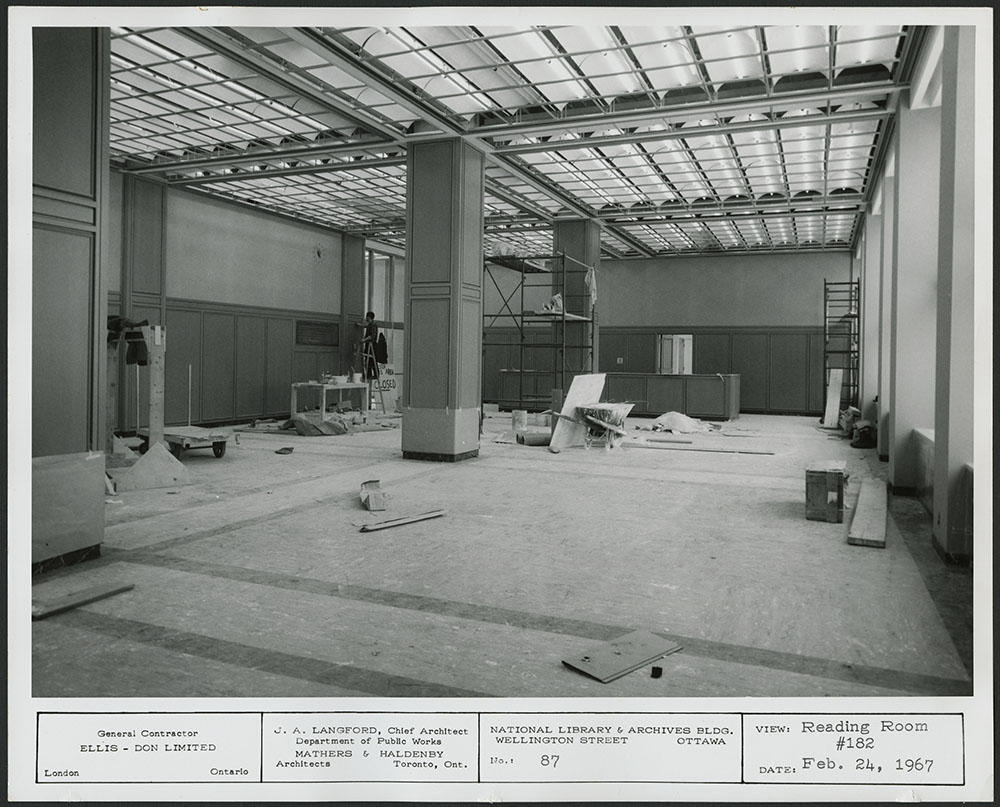
A black-and-white photograph of a large room with scaffolding and construction materials scattered about.

Partially finished Reading Room showing the coffered-light ceilings, February 24, 1967 (MIKAN 3600901)

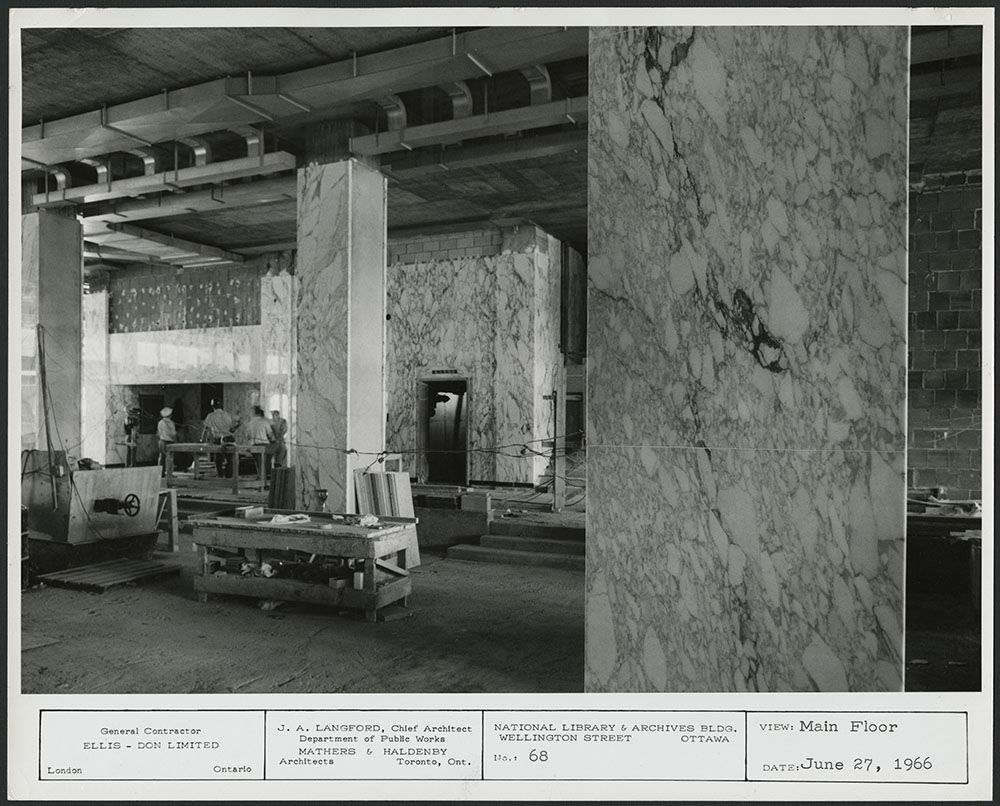
A black-and-white photograph showing a partially completed interior covered in deeply-veined, white Carrera marble.

Main floor showing the beautiful marbles in the entrance of the building, June 27, 1966 (MIKAN 3600882)

On May 10, 1965, Governor General Georges Vanier laid the official cornerstone. Inside the cornerstone he placed an elaborate copper casket containing pictures and descriptions of the building as well as copies of the latest publications of both the National Library and the National Archives. On June 20, 1967, in time for the celebration of Canada’s centennial, Canada’s new, purpose-built National Library and Archives building was officially opened. You can listen to the opening ceremonies here:

395 Wellington is an interesting combination of functional and aesthetic design. As the Federal Heritage Building Review Office Report 04-027 (FHBRO) states, “[it] is a high quality achievement . . . . Aesthetically, it is a hybrid of two tendencies, balancing remnants of federal classical modernism with Modernism’s new trends, both of which it handles with sophistication and refinement, resulting in a modern, functionalist, rational appearance . . . . Functionally, the complex range of the building’s uses is well served and the arrangement of public areas and that of services and stacks is reflected in the composition of the building.” (For further reading see: http://historicplaces.ca/media/18730/2004-027(e)publicarchivesandnationallibrarybuilding.pdf)

As one can see, neither time nor expense was spared with regard to the building’s design. Today, the building continues to have an iconic presence near the heart of downtown Ottawa.


Andrew Elliott is an archivist with the Science, Governance and Political Division of Library and Archives Canada.


Stelco archives now acquired

By Lucie Paquet

Library and Archives Canada is proud to announce that it has acquired the archives of The Steel Company of Canada, more commonly known as Stelco. These archives are now part of our national heritage. They include more than 100 metres of textual records, thousands of photographs, technical and architectural drawings, and over 200 film and sound recordings. The Steel Company of Canada (Stelco) fonds, currently in archival processing, documents all aspects of the evolution of the steel industry from the beginning of its mechanization in the 1880s through to the 1980s.

Black and white photograph showing an industrial complex for steel production and processing.

Aerial view of The Steel Company of Canada Limited (Stelco) mills in Hamilton, circa 1952. (MIKAN 4915715)

The Steel Company of Canada Limited was formed in 1910 as a merger of five companies that had previously taken over some 40 smaller ones, operating in various areas of Quebec and Ontario: Hamilton Steel and Iron Company Ltd., Montreal Rolling Mills Company, Canada Screw Company, Dominion Wire Manufacturing Company, and Canada Bolt and Nut Company. Each one had its own speciality, from the primary production of steel for the rail, agricultural and marine sectors to consumer products. This new, large company enabled the Canadian steel industry to keep pace with strong American and European competition.

The account ledgers, correspondence, management minutes, patents and photographs provide a detailed account of the beginnings of this industry, its development and its challenges.

Black and white photograph showing a mill beside a canal. Other factories and railway tracks for transporting steel materials can be seen in the background.

Saint-Henri steel mill, one of Stelco’s departments in Montreal, May 17, 1946. (MIKAN 4915716)

The archives not only document the company’s expansion, but also the development of several entire cities, towns and neighbourhoods.

Black and white photograph showing a close-up of blast furnaces on an industrial site.

Blast furnaces of The Steel Company of Canada Limited (Stelco) in Hamilton, circa 1948. (MIKAN 4915717)

Cities like Hamilton quickly became major industrial centres referred to as “steel towns.”

Black and white photograph showing men in a plant. A large number of workers manually operating the first mechanical machines can be seen in the background.

Interior view of workers at one of the steel processing plants in Hamilton, circa 1920. (MIKAN 4915719)

In the mid-twentieth century, the plants attracted many immigrants and the population in urban centres doubled in just a few short decades.

Black and white photograph showing employees packing products inside a plant.

Interior view of workers in the finishing and packing department in Hamilton, circa 1920. (MIKAN 4915720)

The Stelco archives bear witness to the working conditions of men and women who spent their whole lives in the plants.

Black and white photograph showing a group of people holding a flag with a V for victory.

Parade of Stelco managers and employees not long after the end of the Second World War, in 1945. In the foreground can be seen Stelco directors H.G. Hilton and H.H. Champ, and a military officer, among others. (MIKAN 4915722)

Stelco and its workers had important responsibilities during the First and Second World Wars, responding to the demand for military materiel from the Canadian and British governments and contributing to the Allied victory.

But success did not stop there. The phenomenal growth of urban centres during the 1950s, real estate, energy resources, means of transportation and various consumer products created strong demand for steel.

Black and white photograph showing workers operating a machine used to roll the steel and make it into panels.

Interior view of a more modern plant from the 1960s for producing steel in rolls and panels. (MIKAN 4915723)

There followed the creation of large industrial complexes and the introduction of a high-tech research centre, which enabled Stelco to develop new steel products and increase operations and production in all areas, both residential and commercial.

Black and white photograph of a man in a white lab coat taking a photomicrograph.

Engineer from the metallurgical laboratory testing the quality of the steel structure by means of “photomicrography,” circa 1960. (MIKAN 4915724)

A collage of coloured advertisements. The first image shows different residential products, including a wood fireplace for the living room, the second shows the manufacturing of steel panels, and the third shows several architectural drawings for building construction.

Collage of three advertisements from Steel in Homes (1967), Stelco Plate Products (November 1969) and Expanding the Markets for Stelco Steel, circa 1970. (MIKAN 4915725)

The Steel Company of Canada Limited (Stelco) exported its products worldwide, becoming one of the largest steel companies in North America. As an example, it was actively involved in the design and construction of the Expo 67 Steel Pavilion.

Black and white photograph showing several modern architectural structures.

In the background, the Canadian Steel Pavilion at the Montreal World Fair in 1967. This pavilion was built by the four largest Canadian steel companies: Algoma, Stelco, Dofasco and Dosco. They reproduced in miniature all the components associated with steel manufacturing. In the centre of the image, the Canadian Pulp and Paper Industry Pavilion can be seen. (MIKAN 4915727)

Over the coming months, we will introduce you to the world of Stelco—its plants, directors, employees, operations, innovations, products and challenges, as well as its social, sports and cultural activities.


Lucie Paquet is an archivist with the Science, Governance and Political Division of Library and Archives Canada.

Opening the vaults: 20 million pages and counting!

In 2013, Library and Archives Canada (LAC) announced the opening of 10 million pages under its Block Review Project. LAC is happy to announce that the count is now up to 20 million pages open as a result of this initiative.

This project is allowing greater access to many LAC archival government records covering a myriad of federal departments and documenting all operations and functions of the Canadian federal government.

Of particular interest is the opening of approximately two million pages documenting the federal government’s centennial celebrations in 1967. The records, held by the Expo 67 fonds and the Exhibitions Branch of the former Department of Trade and Commerce, cover all aspects of the preparations and operations of Expo 67. They complement previously opened material in the records of the Centennial Commission. Together, they constitute a body of archival records ready for research, as Canadians prepare to celebrate our sesquicentennial in 2017.

Also opened are over four million pages from the former Canadian Department of Trade and Commerce, documenting Canada’s international trade functions from the 1880s to the 1980s. Canada’s international trade relations with the Commonwealth and other countries have been an important government function from the time of Confederation to the present. The records provide evidence of this long and illustrious history, documenting our trade relations with specific countries and all international trade functions.

The Expo 67 and international trade records are just two of a number of federal government collections to which the block review is now allowing greater access.

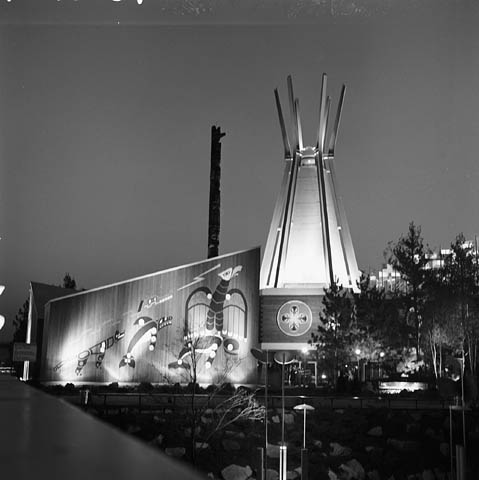
A black and white photograph of a building with native art on the front wall and a tipi-like structure adjacent to it. The top of a totem pole can be seen behind the building.

Native People of Canada Pavilion – Expo 67 (MIKAN 3192403)

Ghost towns, roads less travelled, and even lesser known places—how to find them, how to research them

By Marthe Séguin-Muntz

With the summer season here, many of us anticipate road trips, family reunions or exploring areas of interest—some destinations may be quite secluded while others are better known.

Are you wondering about that old mill, church or schoolhouse on the recreational trail that you recently discovered? Perhaps your daily commute takes you by a vacant old house, or maybe a small hamlet on your way to the cottage piques your curiosity. Or are you trying to locate the residence where your ancestor lived in 1905, but have been unable to find it?

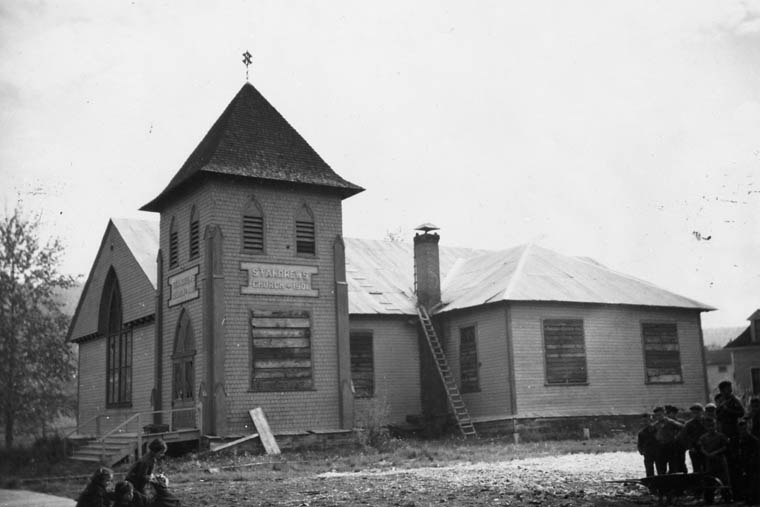
A black-and-white photograph showing a boarded-up church with construction material scattered around it

A boarded and abandoned St. Andrew’s Church, 1901, Dawson City, Yukon Territory—a reminder of the Klondike Gold Rush (MIKAN 3407583)

Ghost towns are villages, towns or cities that experience a considerable population decrease and show signs of abandonment and decay. One might think of ghost towns as “geographical ancestors”—predecessors that no longer exist.

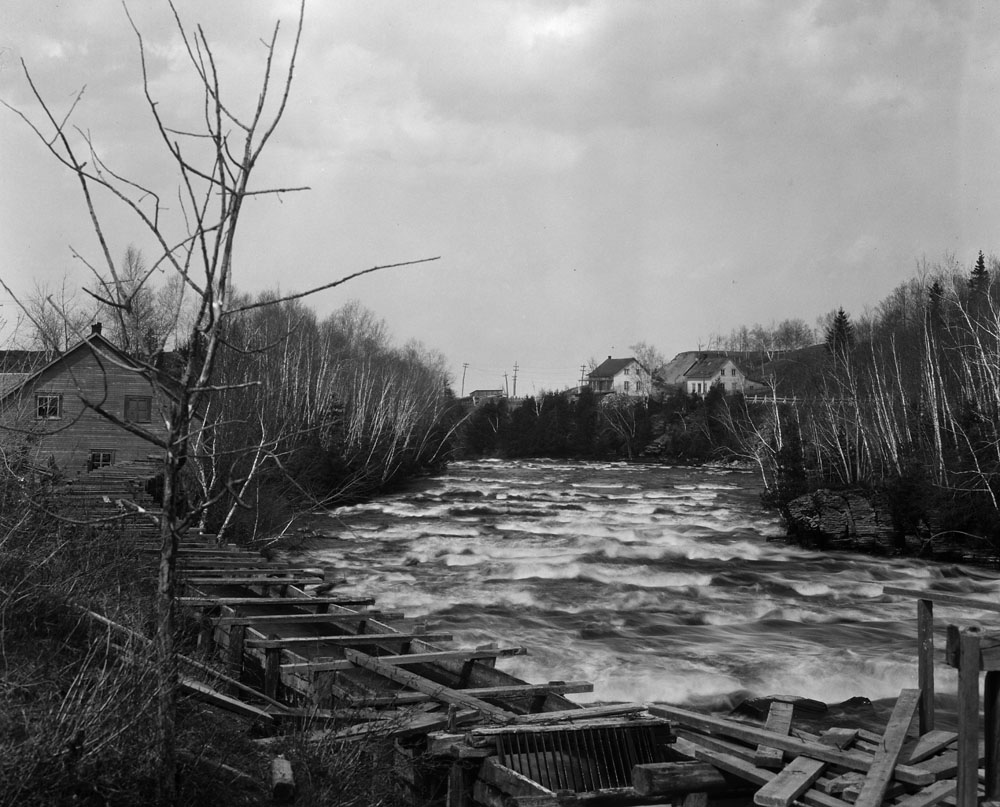
A black-and-white photograph showing a river with a heavy current, trees on both sides, and an old mill to the left in the background

Habitant series: the old mill at Val-Jalbert (MIKAN 3349504)

Where to begin?

Library and Archives Canada holds many archival resources and publications to help you find out more about that lesser-known place.

Census records list the residents of a location and in many cases provide details such as the year of birth, occupation and religious denomination of the residents. You can find more information about Canadian provinces and territories on our Places page. The Post Offices and Postmasters database documents the establishment and closing of post offices and gives helpful timeline information. The Search Help pages accompanying each database will help you understand the records and how to search them.

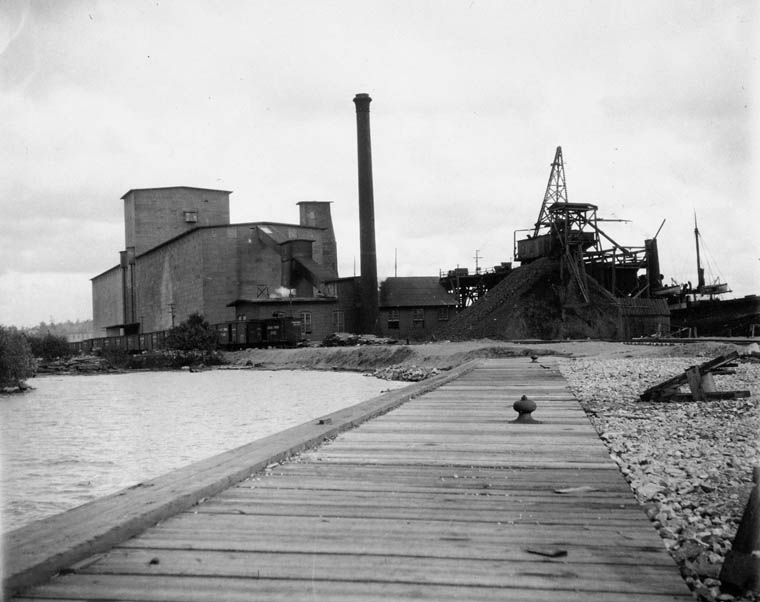
A black-and-white photograph showing a long wooden dock by the shore and grain elevators in the background

Depot Harbour, Ontario (MIKAN 3309998)

Discover what has been written about ghost towns (such as Val-Jalbert or Depot Harbour) and abandoned places using the Library Search function in our AMICUS library catalogue to research a specific area using the location’s name, or subject keywords such as “ghost town” or “abandoned.”

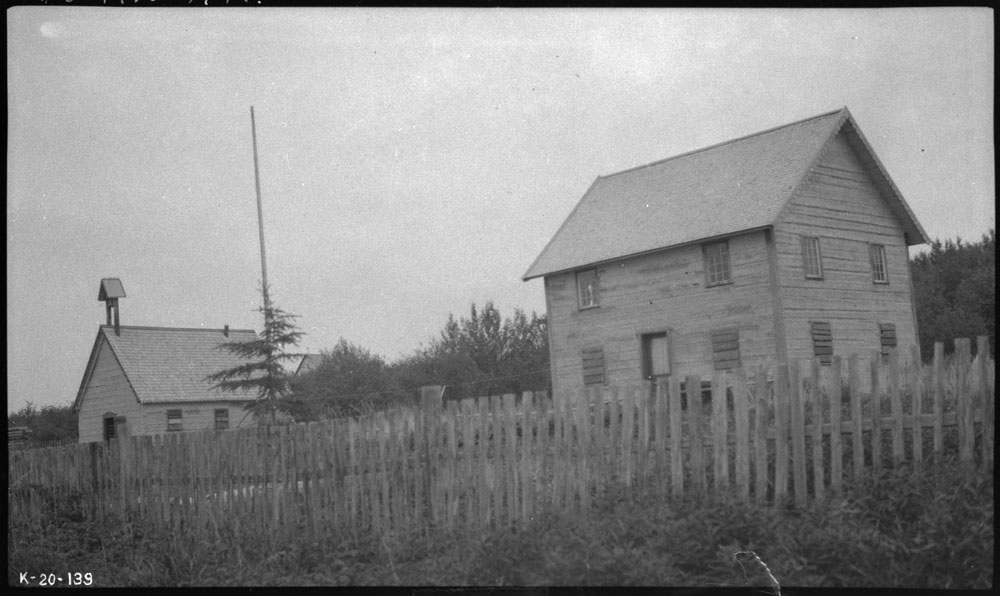
A black-and-white photograph showing two small abandoned buildings, one possibly a school, behind a white picket fence

Abandoned mission at [Fort] Norman, N.W.T. (MIKAN 3327910)

Photographs, illustrations and information in archival fonds

Our archival collections may contain some photos or illustrations of former communities. Consult our blog articles on how to find photographs online and how to find photographs that are not yet available online.

Safe travels and happy discoveries on your road trip!

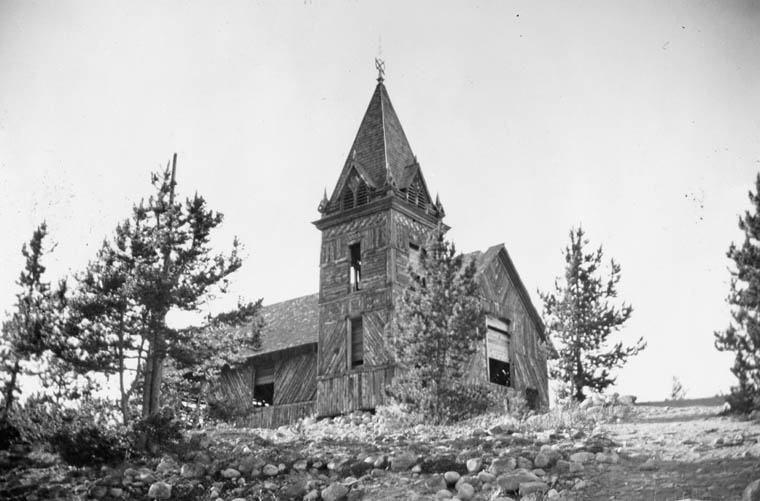
A black-and-white photograph of an abandoned wooden church

The Presbyterian Church on the shores of Lake Bennett, B.C. (MIKAN 3383929)


Marthe Séguin-Muntz is a Project Officer in the Private Archives Branch of Library and Archives Canada.

The XXI Summer Olympic Games opened July 17, 1976 in Montréal

By Dalton Campbell

A colour photograph depicts two young people standing on a raised platform in a crowded stadium. They each have a hand on a torch which they are holding aloft. Beside them is a large ceremonial cauldron that is lit with a flame.

The Olympic cauldron is lit during the opening ceremonies of the XXI Summer Olympic Games, Montréal, July 17, 1976. ©Canadian Olympic Committee

Montréal, Quebec was awarded the games in the second round of voting by Olympic delegates in 1970. After the first ballot, Moscow was leading Montréal 28 votes to 25, resulting in third-place Los Angeles being automatically eliminated. The Montréal bid received most of the Los Angeles support and was selected as host city.

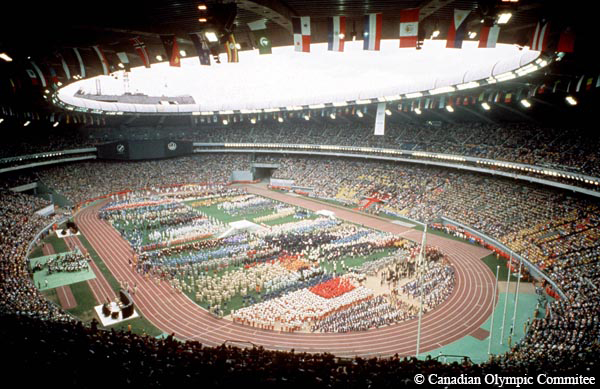
A colour photograph depicts the inside of Olympic Stadium, Montréal. The athletes of the competing nations assemble on the infield of the stadium. The flags of the competing nations hang from the rafters.

The delegations of participating countries gather during the opening ceremonies for the XXI Summer Olympic Games, Montréal, July 17, 1976. ©Canadian Olympic Committee

Construction of the Olympic facilities was slow due to complicated architectural designs, the rapid inflation rate and governments reluctant to commit to funding. Exceptionally cold weather halted construction in January 1976. When the games started, 19 of the 21 facilities were finished; however the Olympic Stadium, the centrepiece, was not completed when the games began.

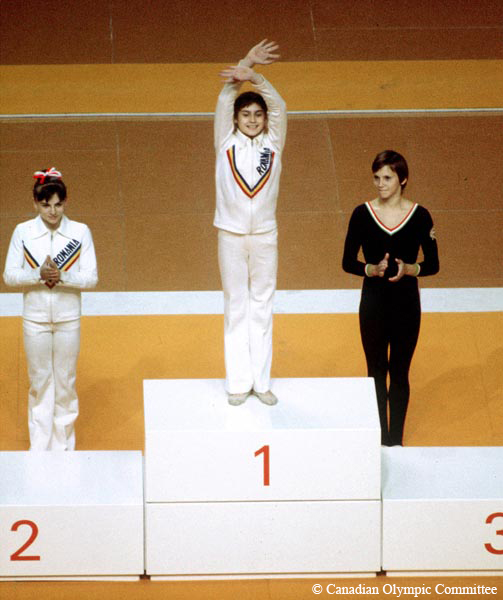
Nadia Comaneci, a 14-year-old gymnast from Romania, was perhaps the biggest star of the Montréal games. In the opening days of the Olympics, she earned an unprecedented perfect 10.00 for her routine on the uneven bars. However, as the score board was equipped with only three digits, the judges—in uncharted territory—displayed scores of “1.00.”

A colour photograph depicts a young woman standing on the podium waving to the crowd. She is wearing a white track suit with “Romania” written on it. Behind her on the floor are two other young women.

Romania’s Nadia Comaneci (centre) waves to the crowd after her gold medal win in the uneven bars during the gymnastics competition at the XXI Summer Olympic Games. She went on to earn five medals, including three gold. The silver medal is awarded to Teodora Ungureanu of Romania (left) and the bronze to Márta Egervári of Hungary (right). Montréal, July 1976. ©Canadian Olympic Committee

Apparently at a meeting before the 1976 Olympics, there had been a discussion to use score clocks with four digits. The decision was to use three-digit clocks because a perfect ten was impossible.

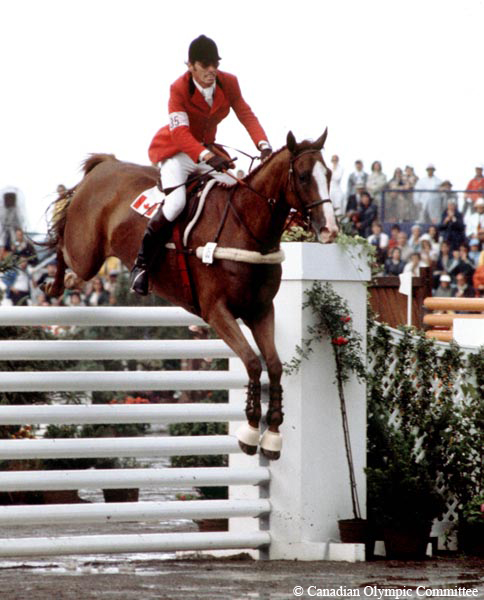
Michel Vaillancourt, riding his horse Branch County, was the first Canadian to earn an individual equestrian medal at the Olympics. Born northeast of Montréal, he was performing in front of his hometown crowd when he won a silver medal in individual show jumping.

Colour photograph of a man riding a horse as they complete a jump over a fence in the equestrian competition. The audience is seated in the background.

Canada’s Michel Vaillancourt rides Branch County in an equestrian event at the XXI Summer Olympic Games, Montréal, July 1976. ©Canadian Olympic Committee

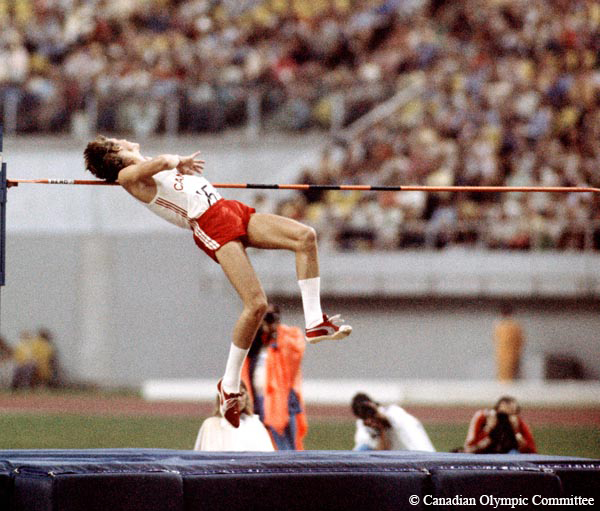
On the last day of the games, the high jump competition was held in the rain. The world record holder, Dwight Stones of the United States, had been favoured to win. After an interview in which he appeared to criticize the facilities and the hosts, he was booed by the crowd. Stones, who disliked jumping in wet conditions, struck the bar and was eliminated. The next athlete, Canada’s Greg Joy, cleared the bar, bringing the crowd of almost 70,000 to their feet in a standing ovation. Joy would finish with the silver medal, ceding the gold to Jacek Wszola of Poland.

Colour photograph of a man competing in the high jump event. The photo depicts him in the air approaching the bar. Behind the mat are photographers. The crowd is seated in the background.

Canada’s Greg Joy competes in the high jump event at the XXI Summer Olympic Games, Montréal, July 1976. ©Canadian Olympic Committee

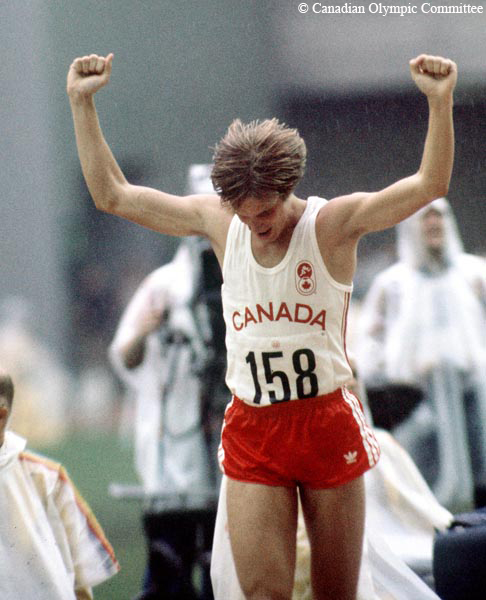
Although no Canadian earned a gold medal at the 1976 games, Greg Joy was cheered and honoured as if he had. He was named flag bearer for the closing ceremonies. Later that year he received the Lionel Conacher Award as Canada’s male athlete of the year, beating out jockey Sandy Hawley and hockey superstar Guy Lafleur. For many years afterwards, his jump and celebration were replayed nightly across the county; it was the second-last clip in the O Canada video shown on CBC television immediately before the network signed off for the night.

Colour photograph of a man, dressed in shorts and sleeveless t-shirt, standing with his arms raised in the air. In the background are people dressed in rain gear.

Greg Joy after winning the high jump event at the XXI Summer Olympic Games, Montréal, July 1976. ©Canadian Olympic Committee

The closing ceremonies were held on August 1, 1976. Canada finished the games with five silver and six bronze medals—more than double the number of medals won by Canada in 1968 or 1972.

Additional Resources


Dalton Campbell is an archivist in the Science, Environment and Economy Section of the Private Archives Division.


Anne of Green Gables podcast images now on Flickr

Few Canadian authors have achieved the universal appeal of Lucy Maud Montgomery, whose iconic series “Anne of Green Gables” continues to resonate with book lovers of all ages.

Empire Marketing Board

By Judith Enright

More than 800 posters and poster designs were produced by the Empire Marketing Board (EMB) in the early part of the 20th century. Library and Archives Canada is custodian to 379 of these posters which represent a unique sampling from this bold and beautiful British marketing campaign.

Started in 1926 by Secretary of State for the Colonies Leopold Amery, the Board’s mandate was straightforward—to encourage and promote trade without tariffs between Great Britain and her colonies, and to lead the British population away from the purchase of foreign goods and support buying and consuming all things British.

A colour print showing two men sawing a tree trunk on the left and three men planting trees on the right, with the caption, “Timber in Canada.”

Timber in Canada (e007913043_a1-v6)

Colour print of a metal crane and two men loading a trailer, with the caption “Our Steel for Australia”

Our Steel for Australia (e010759060-v8)

Through newspaper advertising campaigns, pamphlets, hand bills, films, radio programs, and poster displays, the EMB set out to achieve its goal of “Bringing the Empire Alive” to Britain and its colonies. For its poster displays, the EMB commissioned some of the most reputable and notable artists and designers of the time, including Manitoba-born poster artist Austin Cooper.

A black-and-white photo of a man in an evening suit standing beside a poster on the wall.

Photo of Austin Cooper by Sydney Carter (a112227)

Using bold lettering and vibrant colours, the EMB posters were meant to be dynamic and eye-catching. Some of the posters were also gender-specific, depicting men as “Empire builders” and women as consumers. In Britain, the posters were placed on specially designed billboards and in shop windows in over 450 towns and cities. In the colonies, where the advertising campaign was less aggressive, posters could be found on the walls of many high-traffic areas such as stores and factories. Although some posters were meant to be seen as a single image, other posters were designed to tell their story through a sequence of three to five images, an approach often compared to reading a comic strip.

A colour print of a grocery store with signs advertising that many of the products are Canadian. In the front of the store, a woman is having a discussion with the grocer. The poster has the caption, “The Wise Shopkeeper and the Good Housewife.”

The Wise Shopkeeper and the Good Housewife (MIKAN 2844979)

A colour print of a woman wearing a long dress and holding a cup of tea, standing beside a side table with a tea tray, with the caption, “Drinking Empire-Grown Tea.”

Drinking Empire-Grown Tea (MIKAN 2844932)

The posters held by Library and Archives Canada were received between 1926 and 1933 and form a sub-series of the Canadian Department of Industry, Trade and Commerce fonds. The majority of these posters are dedicated to Canadian themes and goods, however products from other colonies are represented as well.

A colour print of a man walking in front of a well-lit grocery store with advertisements for Empire products. Men and women are going in and out the shop.

Far-left panel of the advertisement, “John Bull, Sons and Daughters” (MIKAN 2845188)

A colour print of men loading wooden barrels on a boat, with the caption, “Canadian Apples for the United Kingdom.”

Canadian Apples for the United Kingdom (MIKAN 2844965)

In 1932, Ottawa hosted the British Empire Economic Conference held to discuss the economic repercussions of the Great Depression. It was here that the practice of “Imperial Preference” was inaugurated, resulting in restricted tariffs within the British Empire and raised tariffs for countries outside the Empire. As a consequence, the Board was no longer necessary and was dissolved in 1933.

A colour print of a tiger and underneath is the caption, “Buy Singapore Pineapples in Tins.”

Buy Singapore Pineapples in Tins (MIKAN 2845035)

A colour print showing the crests of India, South Africa and Canada, with the caption, “Smoke Empire Tobacco.”

Smoke Empire Tobacco (MIKAN 2844917)

To view these posters, visit the Flickr set or explore the Empire Marketing Board by looking through the lower-level descriptions.


Judith Enright is an archival assistant in the Aboriginal and Social Affairs Section of the Private Archives Branch of Library and Archives Canada.

From Bolsheviks to birds: the fascinating life of Louise de Kiriline Lawrence

By Judith Enright

The Louise de Kiriline Lawrence fonds housed at Library and Archives Canada (LAC), is rich in content and diverse in media. It was donated to LAC in the 1980s by Mrs. Louise de Kiriline Lawrence and details a life that any researcher would be hard-pressed to categorize.

Louise de Kiriline Lawrence (neé Flach) was born in Sweden in 1894 into a wealthy and well connected family. She was extremely well educated and fluent in five languages. She chose nursing as a profession and joined the Red Cross to work in Denmark at a prisoner-of-war exchange camp. It was here that she nursed back to health then married Gleb de Kiriline, a wounded Russian officer. The two then moved to live and work in northern Russia. Gleb de Kiriline went missing after the Bolshevik revolution and Louise spent four years in a futile search to find him.

A black-and-white photograph showing a couple standing in front of a wooden building. She may be in a nurse’s uniform and he is wearing a Russian military uniform.

Louise and Gleb de Kiriline (MIKAN 3722648)

In 1927, Louise immigrated to Canada where she worked as a Red Cross nurse in Northern Ontario. She became the head nurse to the Dionne quintuplets and played a crucial role in their survival during the first year of their lives. Due to the notoriety of the Quints, Louise wrote a series of articles for Chatelaine magazine chronicling her experiences with the children and their family. She retired from nursing in 1935.

Louise married Leonard Lawrence in 1939. While her new husband was overseas during World War II, Louise devoted herself exclusively to nature studies and nature writing, particularly ornithology.

De Kiriline Lawrence conducted the majority of her nature studies and nature writing from her property on Pimisi Bay, in Northern Ontario. It was here, while living in a log cabin, that she began banding birds, keeping diaries, creating sketchbooks and writing hundreds of articles for various nature publications along with several books including her autobiography entitled Another Winter, Another Spring: A Love Remembered.

A black-and-white photograph showing three women outdoors under a tree. The woman on the right is seated and smiling at the photographer, the one in the middle is also seated but engrossed in her book, and the one on the left is lying down and looking at the photographer.

Louise (in the middle) with friends (MIKAN 3951807)

LAC is now the guardian of the Louise de Kiriline Lawrence fonds. It includes material pertaining to wildlife studies, bird data and illustrations along with ornithological reports, correspondence both personal and professional, book and periodical notes and manuscripts along with family papers. Also included are over one hundred drawings, over 700 photographs, audio material, award medals, wood blocks and a few lithographs as well as material regarding her life in Sweden and Russia.

Louise de Kiriline Lawrence died in 1992.


Judith Enright is an archival assistant in the Aboriginal and Social Affairs Section of the Private Archives Branch of Library and Archives Canada.

Who will make good? The Land Development Records of the Canadian National Railway and its corporate predecessors

Railways have long played a prominent role in the stories we tell about Canada’s development as a nation. Promising to facilitate travel and trade across the vast expanse of Canada’s geography, the construction of transcontinental railway lines was once seen as pivotal to the formation of a coherent national identity.

But railway companies also participated in the settlement of Western Canada by serving as the developers and property agents for land granted to them by the federal government. Following the transfer of Rupert’s Land to Canada in 1870, railway land grants were a key component of the government’s plan to increase the population of western regions already occupied by indigenous communities, Métis settlements, and Hudson’s Bay Company outposts. Even in the early twentieth century, land grants were used to encourage the railway companies to extend their tracks across the whole of the continent, and railway construction was partly financed through the lease and sale of this land.

The Winnipeg Regional Services office holds a rich aggregation of records documenting the sale and lease of Western Canadian farm and townsite land by the Canadian National Railway and its corporate predecessors. Originating from the various subsidiary property companies linked to the Canadian National Railway, the Canadian Northern Railway, and the Grand Trunk Pacific Railway, these records sketch vivid portraits of Western Canadian settlers and some of the many challenges they faced in the early and mid-twentieth century. Continue reading