Letters of a passionate politician: Library and Archives Canada’s collection of Wilfrid Laurier’s correspondence

By Théo Martin

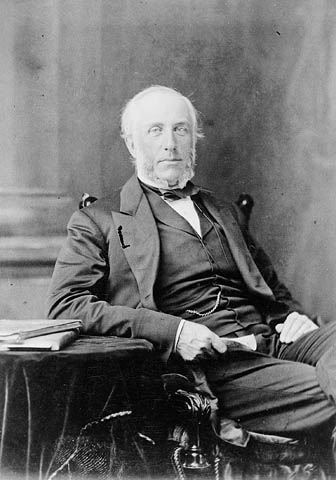
Library and Archives Canada (LAC) is home to the fascinating correspondence of Wilfrid Laurier, Canada’s seventh prime minister and the first French-Canadian to hold that office. Wilfrid Laurier (1841–1919) was born in Saint-Lin, Quebec, and would go on to enjoy an outstanding career as a journalist, a lawyer, a politician and, of course, a prime minister.

c008103

Sir Wilfrid Laurier, ca. 1906, unknown photographer (MIKAN 3623433)

Continue reading

Standing Committees: finding their printed information, pre-1995, or print-based access (Part 2)

Now that we’ve explored finding Standing Committee information on the Web, how do we access the paper versions? We will be examining the following documents:

  • Minutes of Proceedings: the official record of the committee
  • Evidence: verbatim transcripts of the meetings
  • Reports: the final results of business or study completed by the Standing Committee, presented to the House of Commons

As in Part 1, we will use the Standing Committee dealing with the Environment as our example. AMICUS, the Library and Archives Canada catalogue, is our access point and we will use the Advanced Search so that all searching options are available.

Continuing with the environmental theme for documents published in 1986, search using the following:

  1. In the Name Keyword field, type standing committee inside quotation marks.
  2. In a second Name Keyword field, type environment.
  3. Type 1986 in the Any Keyword field,* then press Enter.

*Note: Start with the date in the Any Keyword field, as the session may span several years and you’ll have a better chance of retrieving relevant records. Or, you can omit the date completely and sort your results by date.

The results list shows:

  • the report produced that year, Forest Resources and Industries in Eastern Canada
  • two microform versions of the Minutes of Proceedings and Evidence
  • the paper version of the Minutes of Proceedings and Evidence for the session

Most importantly, we discover that the name of the committee in 1986 was the Standing Committee on Environment and Forestry.

The catalogue record for the report follows. Key information for retrieval has been highlighted.

AMICUS No. 6662440 Monograph
NLC COPIES: C.O.P. – COP.C.XC50 – Add specific Parliament, session and issue no. / Ajouter la législature, la session et la livraison désirée
NAME(S): *Canada. Parliament. House of Commons. Standing Committee on Environment and Forestry
TITLE(S): Forest resources and industries in Eastern Canada : first report / Standing Committee on Environment and Forestry
PUBLISHER: [Ottawa] : The Committee, 1986.
DESCRIPTION: ii, 95, [17, 18], 107, ii p.; 27 cm.
SERIES: Canada. Parliament. House of Commons. Standing Committee on Environment and Forestry. Minutes of proceedings and evidence of the Standing Committee on Environment and Forestry = Procès-verbaux et témoignages du Comité permanent de l’environnement et des forêts. 1984-85-86, issue no. 7
NOTES: Text in English and French with French text on inverted pages.
June 1986”.
Includes bibliographical references.
RELATIONSHIPS: Canada. Parlement. Chambre des communes. Comité permanent de l’environnement et des forêts Ressources et industries forestières de l’est du Canada :. [Ottawa] : Le Comité, 1986.

You’ll notice that the record specifies that you should “Add specific Parliament, session and issue no.” This is required for the physical retrieval of these publications at Library and Archives Canada.

Where do we find this information?

Specific Parliaments are listed on PARLINFO. In this case, 1986 spans both the 1st and 2nd sessions of the 33rd Parliament. If we were to order the report released in June 1986 (see highlighted Note in record above), we would request the 33rd Parliament, 1st Session (1984.11.05-1986.08.28), Issue no. 7 (see highlighted Series note in record above).

And so ends our brief introduction to searching the Standing Committees!

Standing Committees: finding their electronic information, post-1995, or Web-based access (Part 1)

Parliamentary Standing Committee information can be tricky to find, if you don’t know how the process works. In this two-part series, we’ll link the methods of finding the current, Web-based information to locating earlier hardcopy materials (as far back as the mid-1800s) held at Library and Archives Canada.

A good deal of parliamentary work is done in committee, where members study and amend bills, or examine current issues or departmental spending plans referred to them by the House of Commons.

After every meeting, two official documents are published:

  • Minutes of Proceedings: the official record of each committee meeting contained in a numbered issue. Each issue includes that meeting’s date, content, subjects discussed, list of witnesses, and references to any reports to the House.
  • Evidence: the verbatim transcripts of the meeting

A third official document, the committee report, is the document that most researchers are interested in. These reports are produced irregularly, upon the committee’s completion of specific business or study, and are subsequently presented to the House. There may be responses by the government and/or the parties.

As an example, we will use a study on urban conservation, produced by the Environment committee. Information about standing committees from 1995 to present day, is located on the Parliament of Canada website. The printing of paper versions of committee materials ceased in 1998.

From the front page of the website, follow the links for Parliamentary Business [tab at top of page] → Committees → House of Commons Committees → List of Committees → ENVI Environment and Sustainable Development.

How to find a report

The quickest way to find reports is to use the Search box at the top right of the page. Type “urban conservation” report (keep the words together inside quotation marks); the first item on the list is the report we’re looking for – Urban Conservation Practices in Canada.

Note: Print format [upper right] gives you the searchable .pdf version.

Upon opening the document, we discover the parliament and session in which the report was released (important for further research), i.e., 41st Parliament, 1st Session, June 2, 2011-September 13, 2013.

To search by session, go to the Committee home page, click “Select a different session” and choose the one in which our report was tabled, i.e., 41-1. This opens up a page showing the Summary of Work of the committee during that session. Click on All Reports. Here we find more information about our document—the report number, the dates it was presented to the House, and the government’s response. By clicking on Study Details for Report 7, you’re brought to the page with a list of Witnesses (Evidence) as well as the transcripts of the related Meetings (Minutes of Proceedings).

This brings us to the end of Part 1 on the Standing Committees. There’s more to come in Part 2, where we deal with the task of finding the paper formats!

“Great Fun…”—A Letter from the Honourable George Brown

The slow process of Canadian Confederation largely progressed by way of debates and conferences— a series of delicate negotiations, deliberations and compromises. The hard work of the politicians paid off after the Charlottetown Conference of 1864, which resulted in a general agreement and a commitment to hammer out more details at a further conference a month later in Quebec City.

But it wasn’t all long hours of serious toil.

The Honourable George Brown, journalist and former member of the Legislative Assembly of the Province of Canada, was one of the most famous delegates to the Charlottetown Conference. Ever since he himself had been converted to the idea of Canadian Confederation, Brown had been deeply involved in the negotiating process. He detailed his engagement with the councils, debates and conferences of Confederation in his correspondence with his wife, Anne. Sometimes, as in the case of the Charlottetown Conference, Brown’s letters are the only record we have of the proceedings, since no official minutes were taken at Charlottetown.

A black-and-white photograph of a man sitting at a desk, holding a letter.

George Brown, ca. 1880 (MIKAN 3213216)

Continue reading

Martha Louise Black: First Lady of the Yukon

By Katie Cholette

A signed and matted black-and-white photograph of a woman smiling, dated 1932.

Martha Louise Black, 1932. Photographer: Pierre Brunet (e011154526)

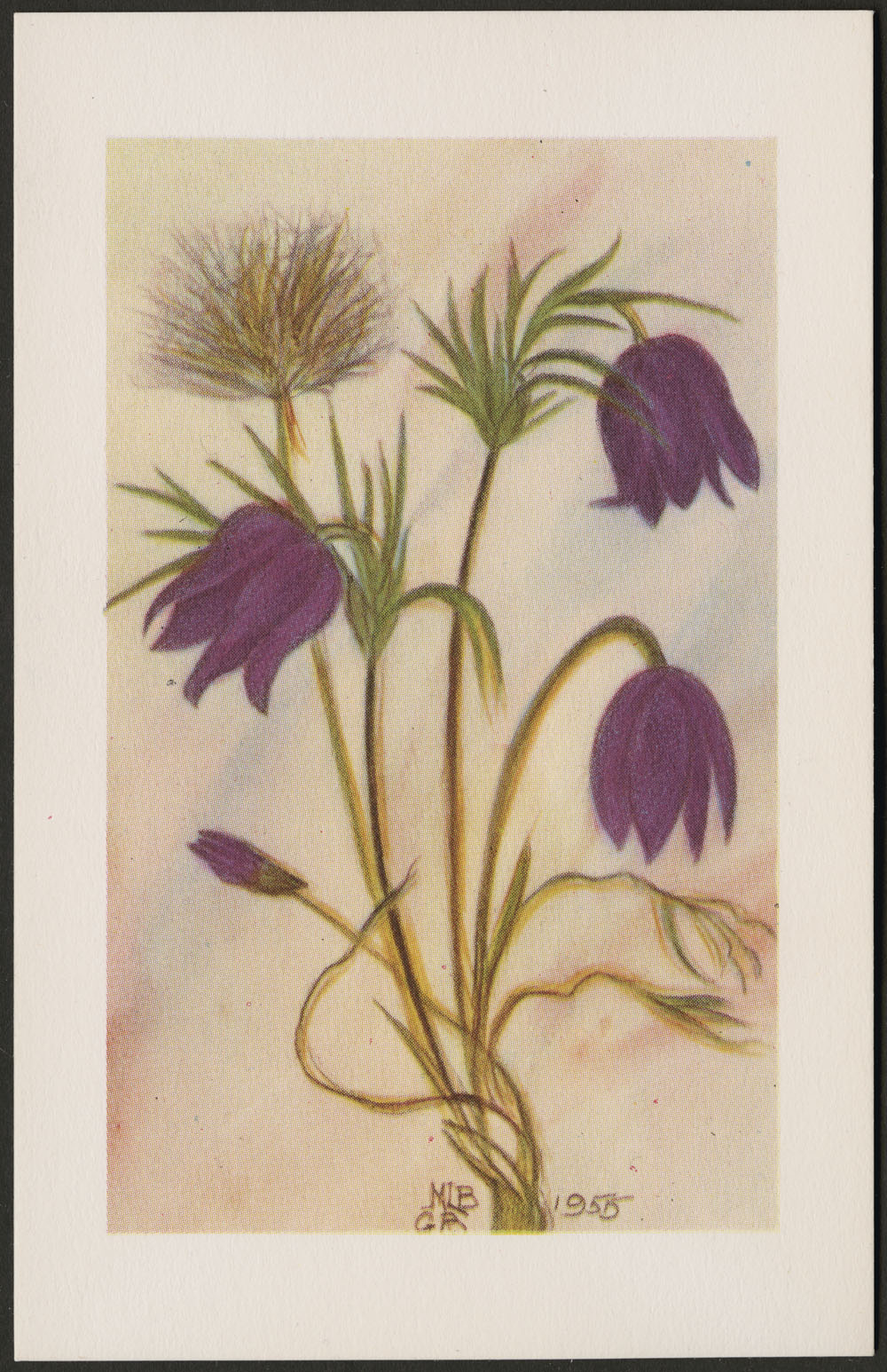
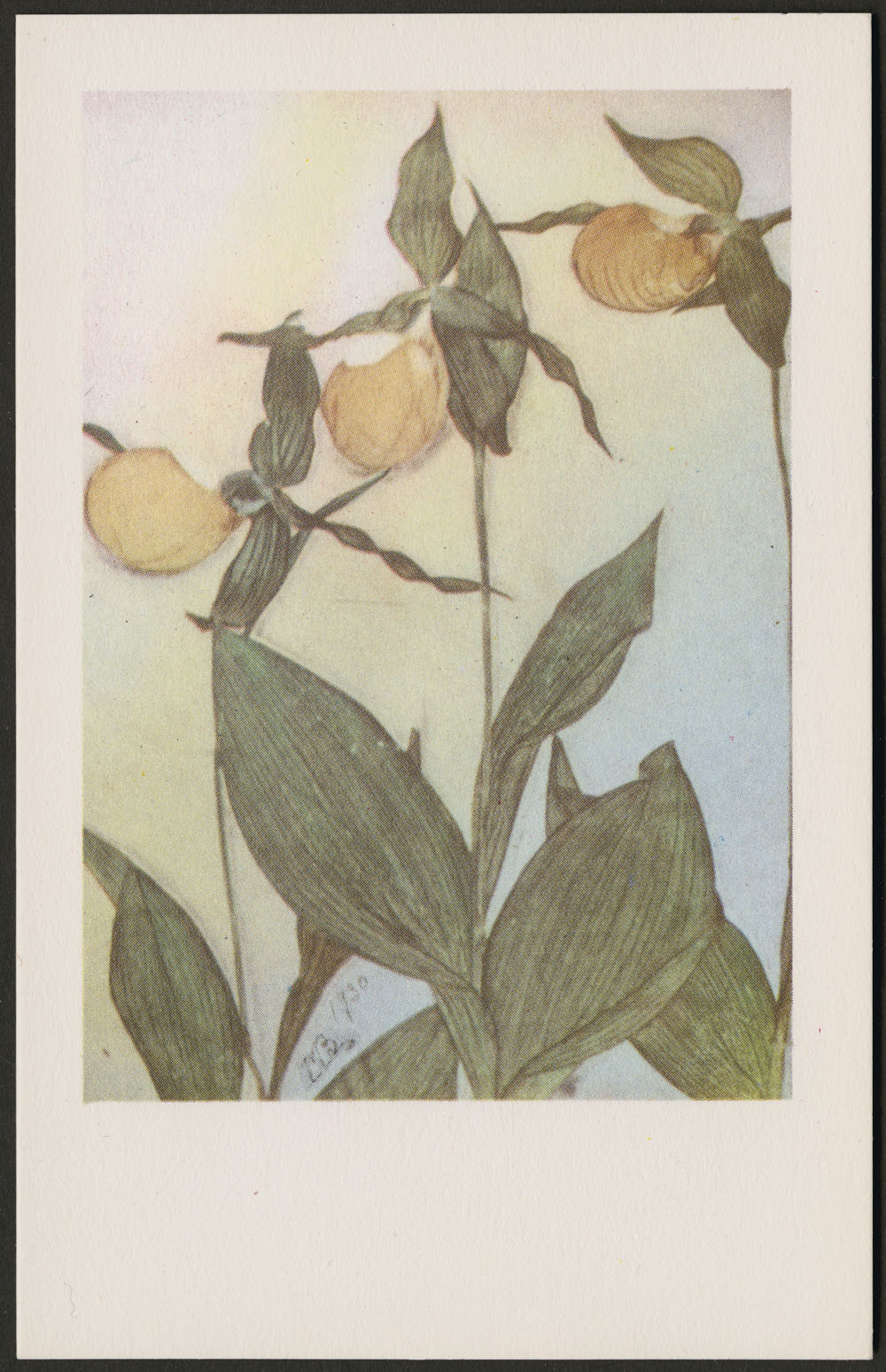
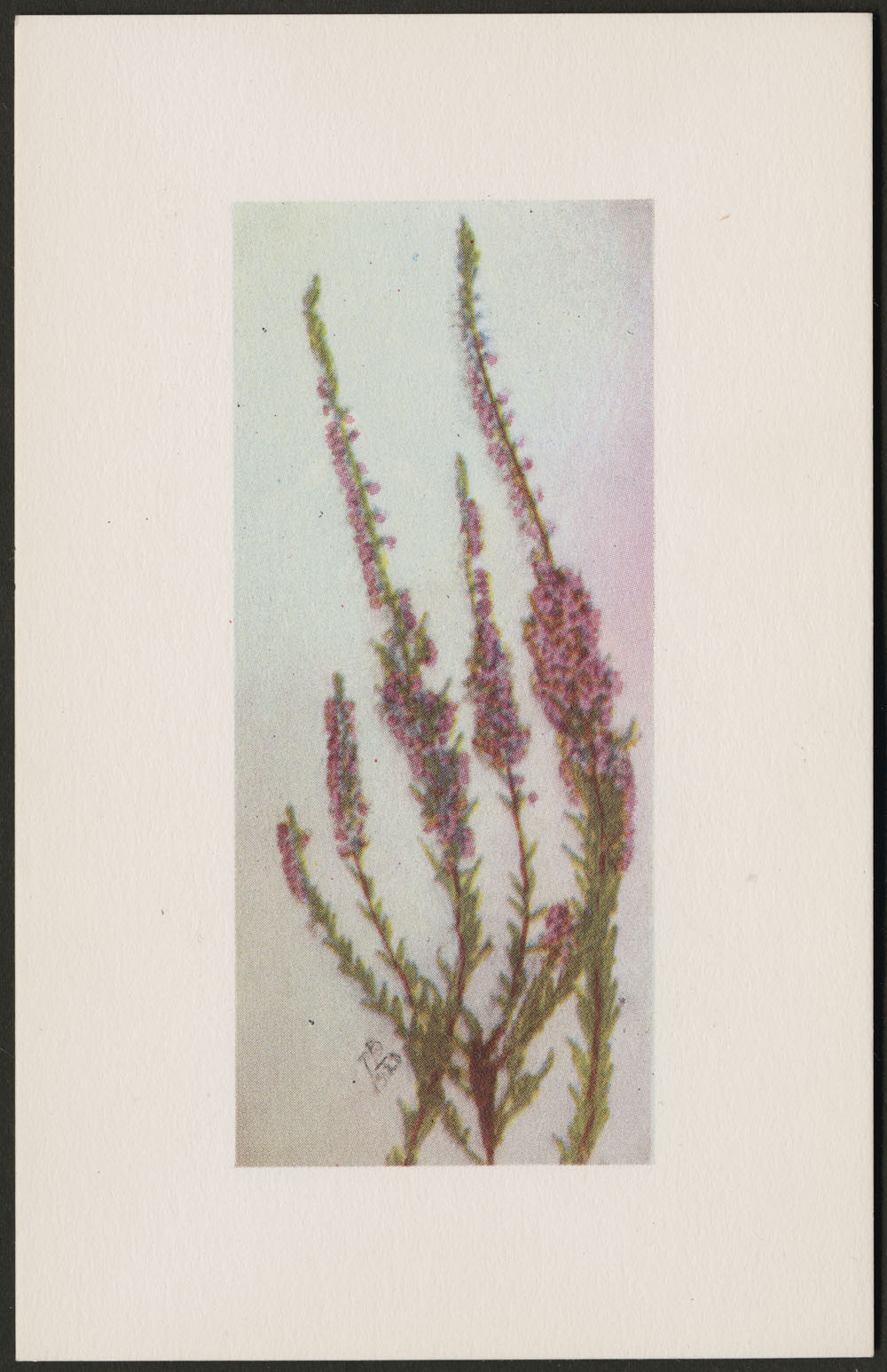
Hidden among the millions of items in the collection of Library and Archives Canada are a set of 10 floral postcards. Unassuming in size, and modest in subject matter, they were produced by an exceptional and adventurous woman named Martha Louise Black. Dubbed “First Lady of the Yukon,” and the second woman elected to Canada’s House of Commons, Martha Black was an astute businesswoman, an expert on the wildflowers of the Yukon and British Columbia, an author and lecturer, and the recipient of several honours. February 24, 2016 marks the 150th anniversary of her birth.

A colour reproduction of a plant with four purple flowers and one that has turned to seed. Centred at the bottom are the initials MLB and GB, and it is dated 1955.

“Pasque Flower” by Martha Louise Black. Photomechanical print, 1955. (e011154530)

When Martha was born in Chicago, Illinois, no one could have predicted what an exciting life she would lead. In 1898, at the age of 23, she left behind the comforts of her home in Chicago (and her first husband) to follow the Gold Rush to the Yukon. Financed by family money, Martha and her brother George crossed the Chilkoot Pass to the Yukon River. They continued to the Klondike where she staked gold mining claims. Her first stay in the Yukon lasted just over a year, but Martha had been bitten by the bug of the North. When she returned in 1901 she staked more claims, opened a successful sawmill and married her second husband, George Black. She would spend a large portion of the rest of her life living in the Yukon.

A colour reproduction of a plant with three yellow flowers with wide leafy bases. It is initialed MB and dated 1930.

“Cyprepedium, Large Yellow Lady Slipper” by Martha Louise Black. Photomechanical reproduction, 1955 (e011154531)

Martha and George built a life for themselves in the Yukon, where she raised three sons from her first marriage. George, a lawyer by profession, became the 7th Commissioner of the Yukon in 1912. Together, the Blacks played a central role in Dawson and later Whitehorse.

A colour reproduction showing a plant with small purple flowers and wide, deeply lobed leaves. It is initialed MB and dated 1930.

“Crane’s Bill – Wild Geranium” by Martha Louise Black. Photomechanical reproduction (e011154532)

Martha’s lifelong interest in botany flourished in the north. In 1909 she began collecting and pressing wildflowers, filling in the backgrounds with watercolour—a practice she called ‘artistic botany.’ Her works garnered praise, and over the next two summers she was commissioned to collect and mount wildflowers from the Rocky Mountains for exhibition at Canadian Pacific Railway stations and hotels. A series of her works were subsequently published as postcards, and she was made a fellow of the Royal
Geographical Society.

A colour reproduction showing a plant with long woody stems, closely clustered tiny pink flowers and small leaves. The print is initialed MB and dated 1920.

“Heather” by Martha Louise Black. Photomechanical reproduction (e011154538)

In 1935, at the age of 69, Martha was elected to the House of Commons. She served as Member of Parliament for the Yukon until 1940. In 1948 she was awarded the Order of the British Empire for her contributions to Yukon servicemen. Martha died in Whitehorse on October 31, 1957 at the age of 91.

Learn more about her life and work:

Written by Katie Cholette

Prime Ministers’ Speeches

Are you interested in speeches made by Canadian prime ministers? Library and Archives Canada (LAC) has a unique collection of resources to help you find speeches given by past prime ministers from the very beginning of our nationhood. LAC’s historical resources complement the Government of Canada resources which include more recent speeches.

The archived website, First Among Equals, contains a section devoted to select speeches made by past prime ministers. From the introduction page of this virtual exhibit, click the “Speeches” link from the left menu, which will take you to a page of speeches organized by topic. To view speeches given by a particular PM, click on “Profiles” in the left menu. Please note that this website is archived and will no longer be updated.

Among the sources originally used for putting together the First Among Equals website was LAC’s collection of speeches on microfiche, a reproduction of a collection of speeches held at the Library of Parliament. This collection is located in the 2nd floor reading room of LAC’s main building at 395 Wellington Street in Ottawa. In addition to speeches given by PMs, this resource includes speeches delivered by other Ministers and Leaders of the Opposition from 1914 to 1993. Continue reading

Prison Portraits by Jean-Joseph Girouard

Version française

Jean-Joseph Girouard (1794–1855) was a notary, an amateur artist, and a member of the Parti Patriote in Lower Canada during the first part of the 19th century. The Parti Patriote was a political party that sought political reform and rallied for French Canadian cultural heritage, rights and interests. The 1837–1838 Rebellion led by the Parti Patriote was a pivotal moment along the road to nationhood for pre-Confederation Canada.

Girouard was incarcerated twice for his role in the Rebellion. He maintained a notarial office and, unexpectedly, an artist’s studio while imprisoned in Montreal. Girouard created portraits of many of his fellow Patriote prisoners using drawing paper and pencils supplied to him by a supporter. The majority of these unique and rare drawings are now part of the holdings at Library and Archives Canada (LAC).

A pencil sketch of Jean-Joseph Girouard in profile, sitting in a chair and drawing on paper with a pencil.

Jean-Joseph Girouard, self-portrait in prison, Montreal, ca. 1837–1838. (c133430)

Continue reading

Open government 101

The first time many of us heard of Open Government may have been in 1980, in the pilot episode of the BBC series “Yes Minister.” The first policy idea of newly-appointed minister Jim Hacker was being “open”; giving citizens the chance to connect with the people they had just elected.

Long-serving civil servant Sir Humphrey Appleby was dismayed at this idea, explaining that open government was an absurd concept—one must choose between being open or governing.

Today, citizens and governments across the globe disagree with Sir Humphrey’s outdated ideas. Indeed more than 68 countries have joined the Open Government Partnership (OGP), a multilateral initiative that advocates openness within government to promote transparency and empower citizens.

Canada joined the OGP in 2011 and the Treasury Board of Canada Secretariat released our first Action Plan in 2012. This plan was founded on three pillars: Open Information; Open Data, and Open Dialogue. Our second Action Plan, which builds on the original commitments and adds new commitments in areas such as government spending and contracting data, will be completed this summer.

At Library and Archives Canada (LAC), our main commitment to Open Government centres on open information. We are committed to increasing access to archived federal documents among LAC’s holdings by removing restrictions on this information wherever possible. In February of 2015, we wrote a blog post about Block Review. We’re happy to report that this work continues and that we have now opened almost 18 million pages of records in our holdings! We’re also working to ensure that, wherever possible, government records will be open when transferred to us in the future.

This past summer, we told you about the work we’ve been doing with historical datasets—migrating datasets from our holdings to Canada’s Open Data Portal. To date, we have migrated over 40 datasets. Keep checking our blog to keep up to date with our new additions to the Portal.

Enough about us! How can you get involved? Open Government is about facilitating a two-way conversation. Add your voice to the conversation—the best place to start is the Open Government portal. It’s a one-stop shop for everything the federal government is doing in the Open Government arena (including current consultation opportunities).

Keep checking back for more Open Government updates!

Unraveling a life: the power of private records

The area of private records is a fascinating field of study: what do individuals choose to keep, what do they discard as their lives unfold, and what is left behind for posterity? Library and Archives Canada (LAC) holds a vast number of materials and mere fragments too; a photo here, a letter there. The Oscar Douglas Skelton fonds offers a glimpse into the private world of a significant public servant. The bulk of this collection was donated to LAC by Skelton’s daughter in 1992 and 1993. Since then, the papers have been described, processed, and the finding aid digitized for easier access.

A black-and-white photograph of three people sitting on the front steps of a cottage looking towards the photographer.

Right Honourable William Lyon Mackenzie King with his sister Jennie (Mrs. H.M. Lay) and Dr. O.D. Skelton, July 29, 1923 in Kingsmere, Québec (MIKAN 3217554)

Continue reading

Propaganda: Second World War Approach

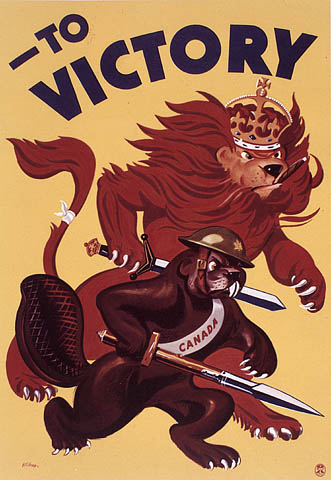
Wartime propaganda was not a 20th century invention. It has been around for many centuries in different formats. It was the advent of cheaper and quicker printing methods that made it possible to mass produce posters at the time of the Second World War. From recruitment, security and secrecy to patriotism, frugality and investments, there were posters created for every subject.

Recruitment posters, which until this point had been aimed solely at men, started to show signs of change as the war progressed. Although still often portrayed as fragile, women were becoming more and more important to the war effort. The pressure was on to enlist more men and women and the posters made it clear there was no excuse not to join.

A colour poster showing a lion and beaver wielding swords and advancing menacingly.

War propaganda campaign: the beaver and the lion united against the enemy (MIKAN 2834354)

Another new element to propaganda during the Second World War was the concern about security and secrecy. There were growing fears that spies were always listening to conversations and that a small detail could lead to a big disaster for the troops. The posters started off fairly simple but as time progressed, they became more dramatic, often portraying a sinister-looking man in the background with large ears and a group of civilians or army men in the forefront having what seems like an innocuous conversation. The colours and graphics for these particular posters were often quite bold.

A colour poster showing two photographs overlaid with text. The top photo shows a café with people talking and a bystander listening to their conversation. The photo below shows a boat sinking.

“She Sails at Midnight…” Careless talk costs lives: propaganda for the security of Canada’s army (MIKAN 2834362)

The next phase was to target the men and women who were not able to enlist, to have them play a part in the war in a different way. They were called upon to work harder and produce more for the war effort. And when that was no longer enough, they were strongly encouraged to buy Victory Bonds to help fund the war. The tone of these posters evolved from the earlier tone of fear to something more hopeful—that by purchasing Victory Bonds, Canadians were ensuring a safe and happy future for their country.

A colour poster with a black-and-white photograph of a woman holding a bomb in her hands with the caption: “I’m making bombs and buying bonds!” Underneath the photograph in white letters on a red banner: “Buy Victory Bonds.”

Victory loan drive: “I’m Making Bombs and Buying Bonds!” (MIKAN 2846935)

Although there is no sure way of gauging the effectiveness of any of these campaigns, they remain an important piece of our history and a socio-economic, political look into the past.

Related links: