Why would a team refuse the Stanley Cup?

By J. Andrew Ross

Last year, the National Hockey League (NHL) celebrated the 125th anniversary of the Stanley Cup. The celebration year was no doubt chosen because 2017 was also the NHL’s centennial year. However, even though 125 years earlier, on March 18, 1892, it had been announced that Governor General Frederick Arthur Stanley, 1st Baron Stanley, wished to donate a challenge cup for the hockey championship of the Dominion of Canada, that cup only arrived in Canada the following year. Further complicating matters, the team that was to receive the Stanley Cup actually refused it, and was only persuaded to take possession of the trophy in 1894.

Anniversaries aside, the story of how the Stanley Cup eventually became Canada’s holiest sports icon can be told through the collection of Library and Archives Canada.

By the time his cup arrived in Canada, Stanley had returned to England before the end of his term as governor general, having become the 16th Earl of Derby upon his brother’s death. Stanley appointed Ottawa Evening Journal publisher Philip Dansken (“P.D.”) Ross as one of two trustees of the trophy, and left it to him to fashion the rules of competition.

The entry in Ross’s diary for Sunday, April 23, 1893, notes that he sat down that day to draft the new rules, which were printed in his newspaper on May 1, 1893.

A grainy newspaper clipping of an article with the headline “‘The Stanley Cup.’ His Excellency’s gift to the hockey associations.”

Excerpt from “The Stanley Cup,Evening Journal (Ottawa), May 1, 1893, page 5 (AMICUS 7655475)

While the bowl had already been engraved as the “Dominion Hockey Challenge Cup,” Ross immediately asserted that it should be known as the Stanley Cup in honour of its donor. He confirmed that it would be presented in the first instance to the reigning champions of the elite hockey league of the era, the Amateur Hockey Association of Canada (AHAC), with the idea that they would then defend it against the champions of the Ontario Hockey Association. Ross arranged for the Stanley Cup to be presented to the Montreal Amateur Athletic Association (MAAA) team as the reigning champions of the AHAC, “until the championship of the [AHAC] … be decided next year [i.e., 1894], when the Cup shall go to the winning team.”

On May 15, 1893, Sheriff John Sweetland of Ottawa, the other Stanley Cup trustee, travelled to Montreal to present the trophy at the MAAA’s annual meeting. When he arrived with the Stanley Cup—at that time just a simple bowl on a wooden base—he learned that the executive officers of the hockey team had declined to attend the ceremony. The minutes of the meeting, which are in the MAAA fonds (and available online), note: “Sheriff Sweetland then made the presentation, which was accepted by Mr. Taylor [the MAAA president] owing to the unavoidable absence of Mr Stewart the President of the Mtl Hockey Club on behalf of the Assn and the abovenamed club.”
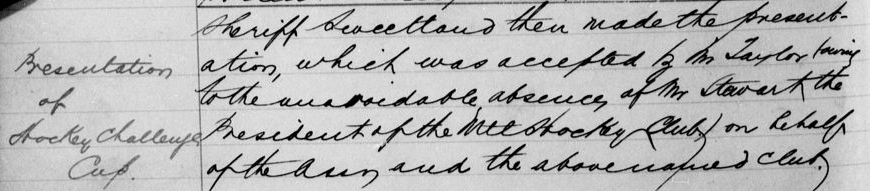
A handwritten note explaining who presented the Hockey Challenge Cup, and who accepted it and why.

Extract from the May 15, 1893, annual meeting, page 315, MAAA Minute-book, MG28 I 351, Library and Archives Canada.

It is not clear whether Sweetland realized that he and the Cup had been snubbed, but the hockey club’s absence had not been “unavoidable.” They had deliberately boycotted the event upon learning that the Cup was to be presented to the MAAA executive and not the team—and that the Cup had been engraved with “Montreal AAA/1893” on a ring around the wooden base of the bowl. The conflict was apparently rooted in the resentment of the hockey club members about being known by the name “MAAA,” rather than the Montreal Hockey Club (Montreal HC). It was a petty point of honour since the hockey club wore the MAAA emblem of the winged wheel on their uniforms, but one that clearly mattered to the proud hockey players.

A black-and-white photograph of a group of men standing, sitting on chairs or reclining. Most are wearing the team uniform and hockey skates.

MAAA 1890 (Montreal Hockey Club) (Hockey Hall of Fame/Library and Archives Canada/PA-050689). Credit: Hockey Hall of Fame.

It was only after almost a year of contentious negotiations—at one point, the MAAA threatened to send the Cup back to the trustees!—that, in March 1894, the Montreal HC finally agreed to take possession of the Stanley Cup. A few weeks later, the club won the AHAC championship yet again, making them the first winners (as opposed to simply the holders) of the Cup. This time, the team took responsibility for the engraving, and pointedly used “Montreal 1894.” With no reference being made to the MAAA, honour was seemingly served.

The next season, the Montreal HC became the first team to successfully defend the trophy in the first Stanley Cup series. Its insistence on getting its own name on the Cup may have been worth the effort, even if its prolonged refusal to accept the trophy risked making the Cup irrelevant. But the Stanley Cup was finally awarded, and the rest is history.


Andrew Ross is an archivist in the Government Archives Division, and the author of Joining the Clubs: The Business of the National Hockey League to 1945.

Pre-Confederation Official Publications: Journals of the Province of Canada (1841–1866)

By Sandra Bell

The year 2017 marked the sesquicentennial, the 150th anniversary of Canadian Confederation. As the nation celebrated this event, images of the Founding Fathers, the Constitution and Sir John A. Macdonald, Canada’s First Prime Minister, dominated the collective consciousness. Further away in memory was the path leading up to July 1, 1867: the Rebellion of 1837–1838, and the report of John George Lambton, Earl of Durham (Durham Report, Report on the Affairs of British North America), which recommended the union of the two Canadas.

To explore the period before Confederation often requires a retrospective examination of the forms of government that existed before that date. The Act of Union of 1840 created a single province by merging Upper and Lower Canada into the United Province of Canada, which lasted from 1841–1867, ending (?) with the British North America Act, which created Confederation. The pre-1841 political entities of Upper and Lower Canada then became the provinces of Ontario and Quebec, respectively.

The Province of Canada – 1841

The new Province of Canada brought some changes. The Legislative Assembly of the Province of Canada replaced the Upper and Lower Canada Houses of Assembly and the Legislative Council of the Province of Canada, 1841–1866, replaced the Legislative Councils of both Upper and Lower Canada. This brought about two new houses: the Legislative Assembly and the Legislative Council of the Province of Canada.

Both the elected Assembly and appointed Council of the new Province of Canada produced documents: debates, sessional papers, journals, votes and proceedings. These are all important research tools; however, this blog reviews only the journals of these houses.

What are House Journals?

  • They are the official records of the decisions and transactions of the legislature
  • They provide a record of the daily events of the legislature (minutes of a meeting) While the debates are verbatim, journals are a chronological summary; and, the journals include:
    • Addresses
    • Titles of and record of assent to bills
    • Proclamations which include the summoning and dissolution of parliament
    • Messages from the governor
    • Petitions to the assembly
    • Speech to the throne
    • Addresses in reply to the speech to the throne
    • Names of members
    • Information on committees

Journals are issued at the end of each session, with an index and appendices. Page numbering is continuous within each session.

Reports that are tabled or filed in the Legislature are titled Appendices, and later Sessional Papers. They are assigned letters of the alphabet and cover a diverse range of subjects, from Transportation, Immigration and Indigenous Peoples. Appendices were published separately up to the year 1859, after which date they were included with the Sessional Papers.

A typed page with the following title: Appendix to the Second Volume, Session 1842. After is a list of headings in the Appendix, alphabetically arranged.

Appendix to the Journals of the Legislative Assembly, 1842. Source: Héritage.

A printed page showing a list of all the appendices for 1842, for example, Welland Canal, Annual report of the Directors for 1841.

List of Appendices (List of Appendix), 1842. Source: Héritage.

If the date of an event is known, it can be located by accessing the journals for the corresponding session of the Legislative Assembly. If the date is not known, access to journal content is via the two-volume General Index to the Journals of the Legislative Assembly of Canada. This index provides subject access with the year of the session and page numbers of the topic in the body of the journal.

A typed cover page reading: General index to the Journals of the Legislative Assembly of Canada: in the 4th, 5th, 6th, 7th and 8th Parliaments, 1852–1866.

General Index to the Journals of the Legislative Assembly of Canada: in the 4th, 5th, 6th, 7th and 8th Parliaments, 1852–1866 by Alfred Todd, cover page. Source: Héritage.

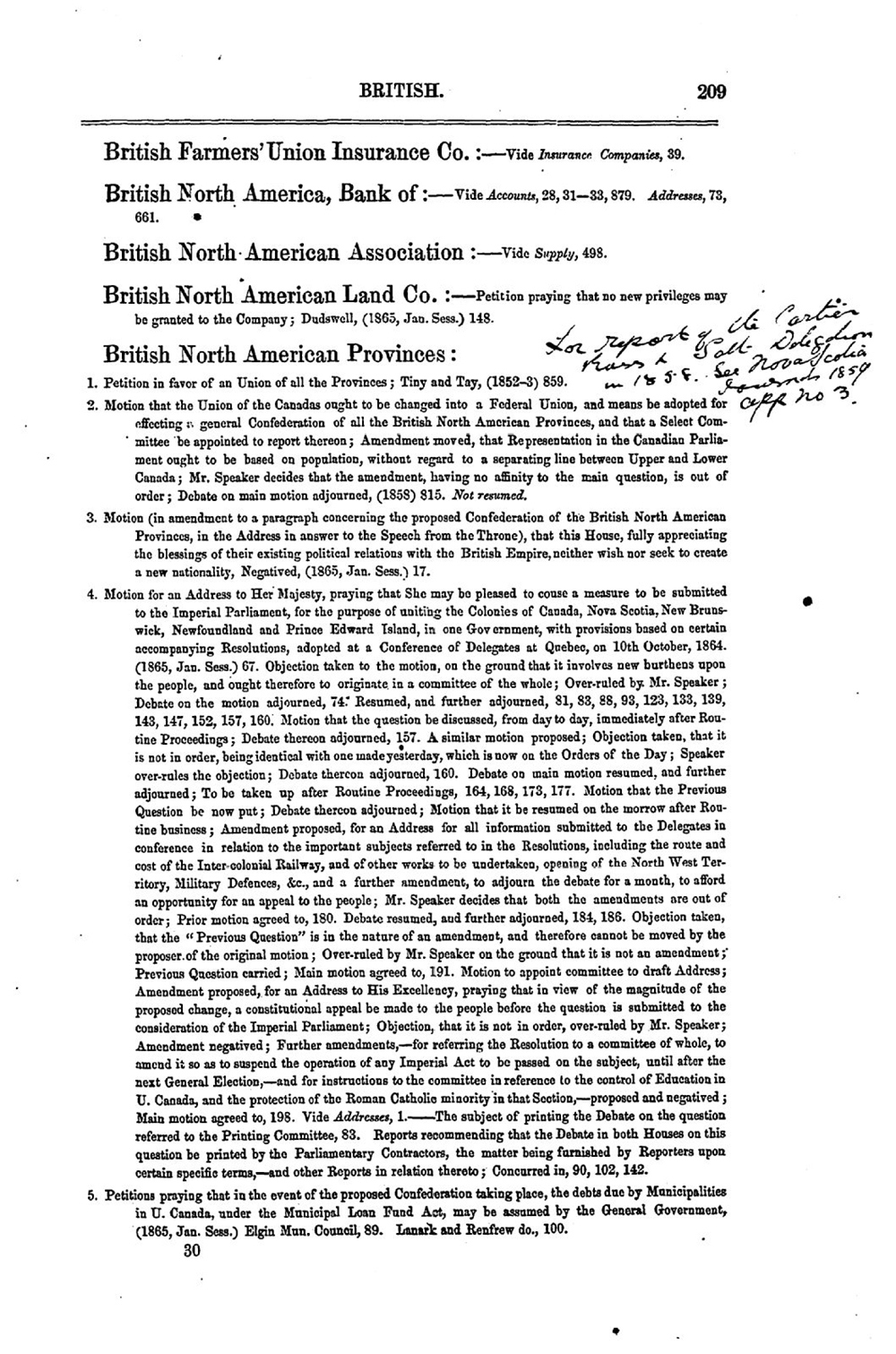
A typed page of an alphabetically arranged index.

General index to the Journals of the Legislative Assembly of Canada: in the 4th, 5th, 6th, 7th and 8th Parliaments, 1852–1866 by Alfred Todd, page 209. Source: Héritage.

You can access the Appendices and Sessional Papers of the Legislative Assembly via Damphouse’s The Legislative Assembly of the Province of Canada: An Index (…)

Legislative Council (Upper Chamber)

The Journals of the Legislative Council follow the same format as those of the Legislative Assembly. The sessional journals have indexes and appendices. A cumulative index includes the indexes from the individual sessions.

The Council’s reports and appendices were published separately as Sessional Papers until 1866 when they were replaced by the Sessional Papers of the Dominion of Canada.

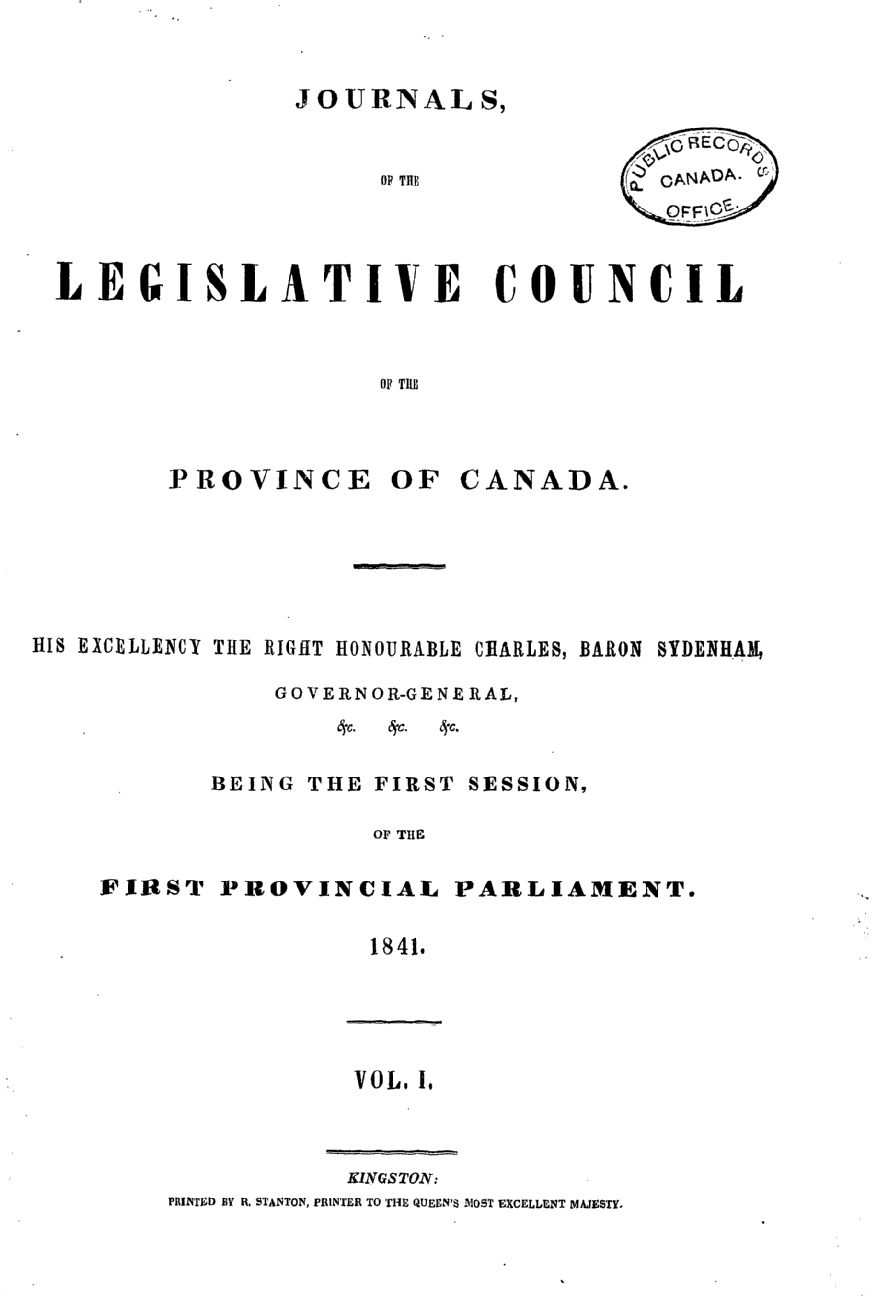
The cover page of the Journals of the Legislative Council of the Province of Canada.

Journals of the Legislative Council of the Province of Canada. First session of the first provincial Parliament, 1841, cover page. Source: Héritage.

The journals and appendices of the Legislative Assembly and the Legislative Council are available in English and French.

Many of the publications of the Province of Canada are available online in sources such as Early Canadiana Online. These documents also exist in alternative formats such as microfilm and microfiche, which are findable in the AMICUS online catalogue.

Additional Sources

The following publications provide additional information on the Province of Canada, its journals, appendices, sessional papers, and organization.

     Bishop, Olga B., 1911-. Publications of the government of the Province of Canada, 1841–1867. Ottawa: National Library of Canada = Bibliothèque nationale du Canada, 1963. AMICUS 1738026

This bibliography includes a list of departments with their publications. It complements the Appendices and Sessional Papers.

     Hardisty, Pamela. Publications of the Canadian Parliament: A Detailed Guide to the Dual-Media Edition of Canadian Parliamentary Proceedings and Sessional Papers, 1841–1970. Washington, D.C.: United States Historical Documents Institute, 1974. AMICUS 67351

Includes an analysis of parliamentary publishing and useful lists of legislatures and sessions, journals and appendices by session dates for both the Legislative Assembly and the Legislative Council, 1841–1866.

Should you need assistance in locating, retrieving or using the documents listed in this blog, please contact the LAC Reference Services.


Sandra Bell is a Reference Librarian in the Reference Services Division of Library and Archives Canada.

New podcast! Check out our latest episode, “Mr. Lowy’s Room of Wonder

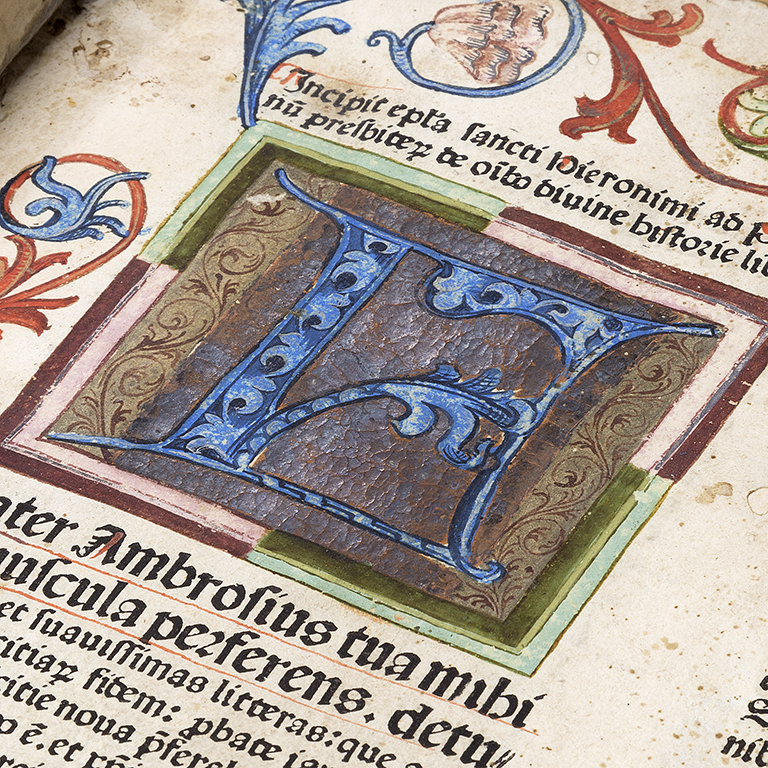
Vignette of a highly decorative manuscript keyOur latest podcast episode is now available. Check out “Mr. Lowy’s Room of Wonder.

Down an obscure hallway at our downtown Ottawa location, there is a mysterious room overflowing with majestic tomes and ancient wisdom. “The Lowy Room,” as it is affectionately called by Library and Archives Canada (LAC) staff, is a self-contained museum housing over 3,000 rare, often unique items dating back to the 15th century. In 1977, Jacob M. Lowy donated this collection of Hebraica and Judaica to LAC on the condition that it be kept together as a distinct collection and with its own dedicated curator.

In this episode, we pay a visit to the current curator of the Jacob M. Lowy Collection, Michael Kent, who gives us a guided tour of some of the incredible items in the collection and shares the stories surrounding their journey.

To view images associated with this podcast, here’s a direct link to our Flickr album.

Subscribe to our podcast episodes using RSS, iTunes or Google Play, or just tune in at Podcast–Discover Library and Archives Canada: Your History, Your Documentary Heritage.

For more information, please contact us at bac.balados-podcasts.lac@canada.ca.

Post-Confederation Land Patents issued by the Registrar General

By Rebecca Murray

Reference Services frequently receives requests about land patents in Canada. In this post, I will focus on post-Confederation land documents. You can also read the Crown land patents: Indian land sales post and my previous post on Pre-Confederation Land Patents issued by the Registrar General.

What is a Land Patent?

The Crown issues Land Patents to grant or confirm title to a portion of land. They represent the first title to land, and serve as proof that the land no longer belongs to the Crown.

How do I find a Land Patent?

The search for a Post-Confederation Land Patent is much more challenging than one for a Pre-Confederation Land Patent. You can only conduct it in person on site or by sending a request to Reference Services. This post will help you to identify the indices that you will need to consult to find a land patent for the 1867–1977 period.

If you are not able to research on site, please prepare a request for Reference Services by providing us with the three pieces of information required in Step 1, and references to the corresponding Key to the General Index and General Index (Step 2). This will help us to triage and respond to your request more effectively.

Step 1: As with pre-Confederation patents, please start with the following information: a date, a location, a person or organization (patentee).

Example:

  1. Date (specific or general): November 4, 1925
  2. Location (detailed or general): Toronto
  3. Patentee: Toronto Harbour Commissioners

It is best to use all three pieces of information (especially the date), since this will expedite the search process.

Step 2: Consult the Key to the General Index for the date in question

Here are the complete references you will need to find the Key to the General Index for 1867–1947:

  • 1867–1908 (reel M-1630, RG68 volume 899, part 1)
  • 1908–1918 (reel M-1632, RG68 volume 899, part 2)
  • 1920–1929 (reel M-1634, RG68 volume 902, part 1)
  • 1930–1939 (reel M-1635, RG68 volume 902, part 2)
  • 1940–1947 (reel M-1636, RG68 volume 902, part 3)

Using our example above, consult RG68 volume 902, “Key to the General Index,” 1919–1929, available on microfilm reel M-1634.

Please note that for the post-Confederation period, the key is in rough alphabetical order, so it is important to review the entire section (in our example, all entries for “T”) before proceeding to the General Index.

Find the patentee in question and copy down each pair of numbers next to the name, as they will allow you to locate the relevant entries in the corresponding General Index. The pair of numbers is associated with two columns: the “No.” column indicating “line,” and the “Folio” column indicating “page.” This allows you to jump directly to the correct page of the corresponding General Index and locate the relevant entry. From this entry, you have more information, namely the liber (register) and folio (page) numbers necessary to locate the patent itself.

Here are the complete references you will need to find the General Index for the period 1867–1947:

  • 1867–1908 (reel M-1631, RG68 volume 900)
  • 1908–1918 (reel M-1633, RG68 volume 901)
  • 1919–1929 (reel M-1634, RG68 volume 903)
  • 1930–1939 (reel M-1635, RG68 volume 904)
  • 1940–1947 (reel M-1636, RG68 volume 905)

Using our example, the corresponding General Index is available on microfilm reel M-1634.

The General Index tells us that the patent is in liber 298 on page 338.

Step 3: Find the complete reference

When on site at 395 Wellington Street, use finding aid 68-2 to look up the liber number and find the complete reference for the patent, including the corresponding microfilm reel number. If you need assistance while working on this request, please speak to our Reference Services team at the 2nd floor Orientation Desk.

Microfilm reels are available for self-serve consultation in room 354.

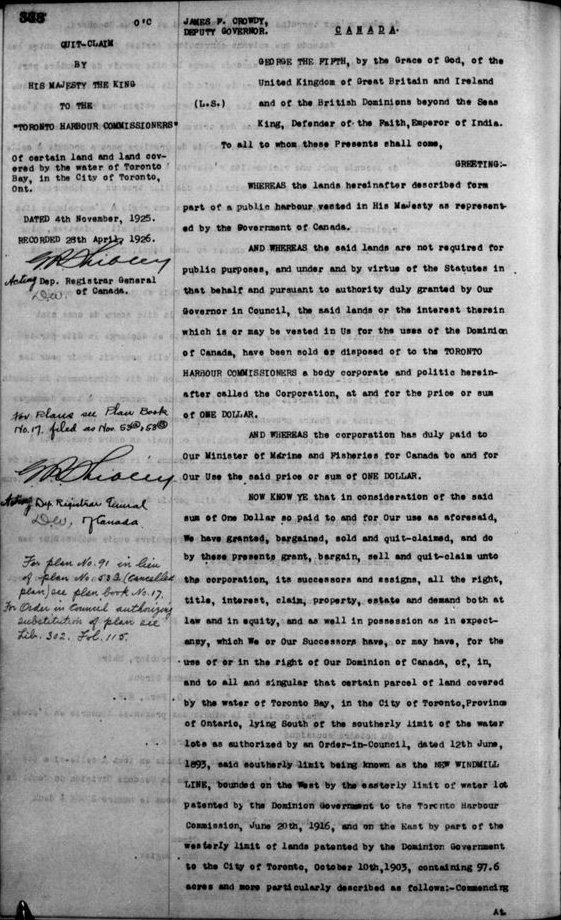
To successfully conclude our example: The complete reference for the patent is RG68 volume 658, liber 298 “Lands – Surrenders to the Crown,” 1915–1925. This volume is available on digitized microfilm reel C-4083. The first page of the document is shown below.

A black-and-white typed document dated November 4, 1925, and recorded by the Registrar of Canada on April 28, 1926, in which His Majesty the King cedes the land around the Toronto waterfront to the Toronto Harbour Commissioners.

Excerpt from RG68 volume 658, liber 298, page 338 (microfilm reel C-4083)

Further research

Your research may require access to indices for Indian and Ordnance Land Patents, which are available on microfilm reels M-1011 and M-3693 for the 1867–1960 period. Please note that Indian land patents for the 1886–1951 period are part of the Department of Indian Affairs and Northern Development fonds (RG10), and as such are organized separately in the Land Patents series.

For post-1947 land documents in the Registrar General fonds, please consult the corresponding General Index:

  • 1948–1954 (reel M-1637, RG68 volume 906)
  • 1955–1965 (reel M-1641, RG68 volume 907)
  • 1958–1964 (reel M-1642, RG68 volume 908)
  • 1954–1965 (reel M-5917, RG68 volume 908)
  • 1955–1967 (reel M-5918, RG68 volume 908)
  • 1967–1970 (reel M-5919, RG68 volume 908)
  • 1970–1973 (reel M-5920, RG68 volume 908)
  • 1973–1975 (reel M-5921, RG68 volume 908)
  • 1967–1977 (reel M-5922, RG68 volume 908)

Navigating this type of research can be very challenging, so please contact us if you need any assistance!


Rebecca Murray is a Reference Archivist in Reference Services at Library and Archives Canada.

George Burdon McKean, VC

By John Morden

Today in Library and Archives Canada’s blog series on Canadian Victoria Cross recipients, we remember George Burdon McKean, who earned his Victoria Cross one hundred years ago today for his heroic actions on the battlefield.

A black-and-white photograph of a smiling military officer.

Lieutenant George Burdon McKean, VC, June 1918 (MIKAN 3218939)

Born on July 4, 1888, in Willington, England, McKean immigrated to Canada in 1909 and settled in Edmonton, Alberta. Before enlisting on January 23, 1915, McKean was a schoolteacher. McKean joined the 51st Battalion of the Canadian Expeditionary Force and arrived in England in April 1916. On June 8, 1916, McKean transferred to the 14th Battalion.

Sometime in the night of April 27–28, 1918, while the 14th Battalion was stationed near Gavrelle, France, McKean earned the Victoria Cross, Britain’s most prestigious military decoration. During a scouting mission, the party of men led by McKean ran head-on into a strongly defended German position. While the rest of the unit was pinned down by machine gun fire, McKean charged into the German trench with “conspicuous bravery and devotion.” Upon reaching the position, McKean killed two German soldiers, held his ground and called for more bombs. After resupplying, McKean took another position and single-handedly killed another two German soldiers and captured four more. McKean’s example rallied his men and the mission was successful. As reported in the London Gazette two months later:

“This officer’s splendid bravery and dash undoubtedly saved many lives, for had not this position been captured, the whole of the raiding party would have been exposed to dangerous enfilading fire during the withdrawal. His leadership at all times has been beyond praise.”

London Gazette, no. 30770, June 28, 1918

Later, McKean was awarded the Military Medal and Military Cross on March 28, 1917 and February 1, 1919, respectively. He would survive the war, though he would be wounded in the right leg on September 2, 1918 during the Hundred Days Offensive. He remained in England for the rest of the conflict. Following his release from hospital, McKean served as acting captain at the Khaki University of Canada in London, England, until his retirement on July 19, 1919.

He chose to remain in England after leaving the army and was killed in an industrial accident on November 28, 1926. McKean’s final resting place is Brighton Extra Mural Cemetery in Sussex, England.

Today his Victoria Cross is kept at the Canadian War Museum in Ottawa. McKean is honoured with a mountain named after him in the Victoria Cross Ranges in the Canadian Rockies.

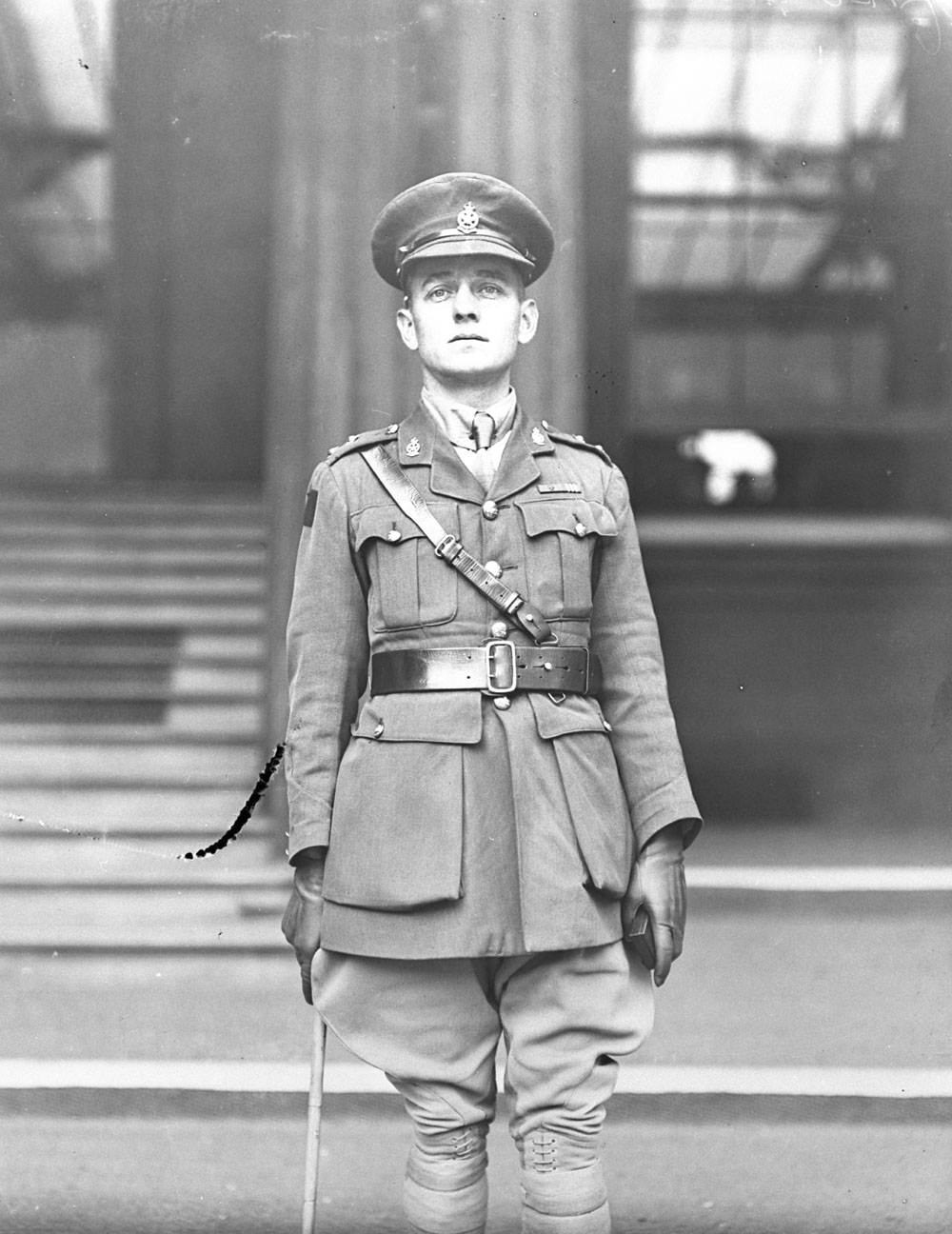
A black-and-white photograph of a soldier in an officer’s uniform with gloves and a cane standing in front of stairs and a window.

Lieutenant George Burdon McKean, VC, undated (MIKAN 3218943)

A black-and-white photograph of a group of soldiers standing and sitting in front of trees in the winter.

Officers of the 14th Battalion, France, February 1918 (MIKAN, 3406029)

Library and Archives Canada holds the digitized service file of Lieutenant George Burdon McKean.


John Morden is an honours history student from Carleton University doing a practicum in the Online Content Division at Library and Archives Canada.

Finding Royalton: Searching the 1921 Census

By Julia McIntosh

For those of you wanting to learn more about searching the Census of Canada, this blog will give you some helpful tips and techniques to use in your own research.

Background

In my work at the reference desk, I received a question about the population data for Royalton, New Brunswick, specifically the number of males between the two World Wars, as the query related to recruitment. “A piece of cake,” I thought, “How difficult can it be?” As a librarian, I tend to head to the first appropriate published document. To my surprise, Royalton was too small to have been mentioned in any of the standard print sources, which focus on larger towns and cities rather than on small rural hamlets or unincorporated villages. It was time to rethink my search strategy.

Two censuses took place between the wars: 1921 and 1931. The former was preferred because it was already digitized and my client would be able to access the documents online (see the 1921 Census).

The Issues

The first issue was to find the exact location of Royalton, according to the census districts and sub-districts. For this, I had to find a contemporary map and compare it with the 1921 Census Districts and Sub-districts: New Brunswick. I also had to determine in which county and parish Royalton was situated and then determine the correct sub-district by the written description provided. Sadly, Internet map sites tend not to provide the county detail required, nor do they provide easy access to maps of the era. However, the Provincial Archives of New Brunswick did just that. Their website told me that Royalton was “Located E of the New Brunswick and Maine border, 3.16 km SW of Knoxford: Wicklow Parish, Carleton County.”

Back to the census districts and sub-districts, I searched for Carleton, assuming that the district would be related to the county name. As we all know, assumptions can be problematic! The district was not under “C,” but “V”—District 48 – Victoria and Carleton. Who knew?

My trials and tribulations were not over, however. Complicating things, there were three sub-districts in Wicklow Parish, with nary a mention of Royalton:

  • Sub-district 11 Wicklow (Parish)
    “For all that portion of the Parish of Wicklow, north and east of the following described line: Beginning at the River Saint John at the Hugh Tweedie farm; thence west along the road known as the ‘Carr Road’ to the Greenfield Road, thence north along said Greenfield Road to the Summerfield Road; thence west along said Summerfield Road to the Knoxford Road, and thence northerly along said Knoxford Road and a prolongation of the same northerly to the line between Carleton and Victoria and to include all those who border on said roads.
  • Sub-district 12 Wicklow (Parish)
    “For all that part of the Parish of Wicklow, south and east of the following line, beginning at the River Saint John at Hugh Tweedie’s farm, thence west along the road known as the ‘Carr Road’to the Greenfield Road, south along said Greenfield Road to the south line of the Parish of Wicklow, and to include those bordering on said Greenfield Road, south of said ‘Carr Road.’”
  • Sub-district 13 Wicklow (Parish)
    “Beginning at a point where the Knoxford Road crosses the county line between Carleton and Victoria, thence running west along said county line until it reaches the American boundary line, thence south along said boundary line until it reaches the Parish of Wilmot, thence east along said Parish line until it reaches the Greenfield Road, thence north along the Greenfield Road until it reaches the Summerfield Road, leading from Summerfield to Knoxford Road, thence following the Summerfield Road west, until it reaches the Knoxford Road; thence north along the Knoxford Road to place of beginning.”

What map to use? As time was of the essence, I didn’t have the luxury of waiting for a 1921 Census map to be called up for me, so I checked our digitized map collection. The most current available was a Population map from the 1891 Census. At that time, Royalton was found in the Electoral District of Carleton. Hoping that not much had changed in 30 years, I compared the map with the written descriptions and deduced that Royalton was in Sub-district 13 – Wicklow (Parish). Worried that a map from 1895 might be too old, a subsequent check of the Electoral Atlas of the Dominion of Canada, 1915 confirmed the Electoral District of Victoria and Carleton, but surprisingly, Royalton was missing. At least the county hadn’t changed its boundaries in the intervening years!

A black-and-white map of the Electoral District of Carleton, New Brunswick, with boundaries indicated in a thick red line.

Map of the Electoral District of Carleton (N.B.) taken from the Electoral Atlas of the Dominion of Canada (1895) database. Original source is the Electoral atlas of the Dominion of Canada: according to the Redistribution Act of 1914 and the Amending Act of 1915 (OCLC 1004062506)

The second issue, the identification of those enumerated as living in the village of Royalton, should have been straightforward, but it quickly became evident that this also was going to be complicated. I went to the printed Volume I – Population of the Sixth Census of Canada, 1921, and found Table 8 – Population by Districts and Sub-districts. Under Victoria and Carleton, then Carleton County, I found Wicklow – population 1,689. However, there was no entry for Royalton under the heading Towns, nor was there a breakdown by sex. However, Table 16 – Population…classified by sex gave me the breakdown for Wicklow – 900 males and 789 females. This was definitely getting closer, but remember, Wicklow Parish has three sub-districts, of which no. 13 includes Royalton. I needed to get as close to the census numbers for the village as possible.

Results

My only option at this point was to consult the raw data collected for the census, which meant going to the digitized version of the 1921 Census on our website. A search by keywords Royalton and Province: New Brunswick gave zero results. However, Wicklow and Province: New Brunswick gave 1,600, which more or less tallied with the totals I had already found for the parish. The prospect of going through all those entries was daunting, to say the least.

Luckily, after opening a few pages and skipping around the document, I found a Title page for the enumerations of District 48, Sub-district 13, Wicklow Parish, pages 1-14. Success!

A handwritten title page in black ink, which reads: 1921, N.B. Dist. 48 Carleton, Sub. Dist. 13, Wicklow Parish. Pages 1–14.

Title page for the enumerations of Sub-district 13 – Wicklow Parish, District 48 – Carleton, New Brunswick, 1921 Census.

I still had the dilemma of the breakdown by sex, however. Even though the numbers would be smaller than for all of Wicklow Parish, it would still involve a fair amount of counting. Fortunately, the enumerator had tallied the numbers on the last page of the section for Sub-district 13, Wicklow:

Males – 340; Females – 316

Still hoping for the specific numbers for Royalton, I saw that column 5 on the form was titled “Municipality.” So, with happy expectations, I set out to do the smaller count.

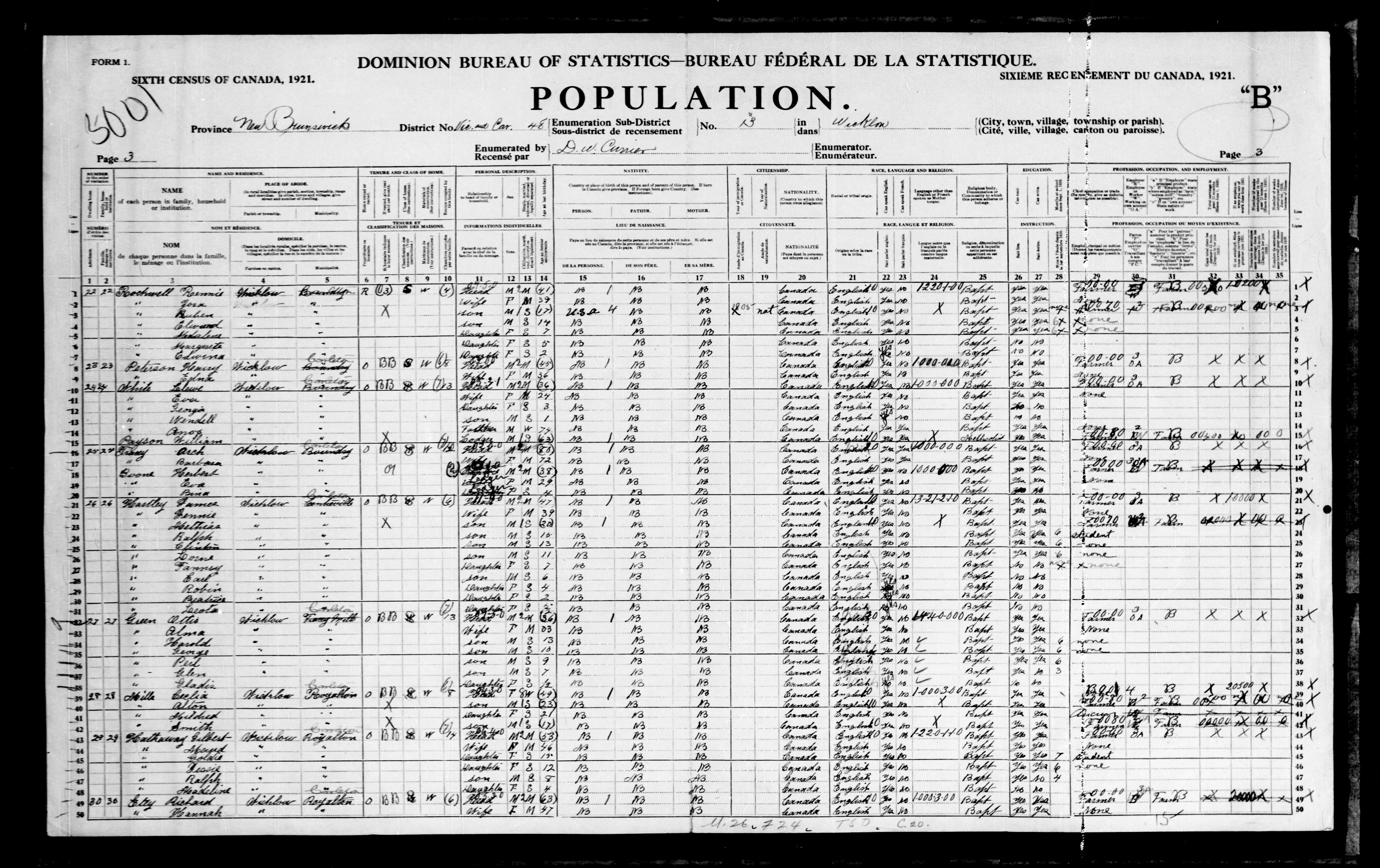
Remember those trials and tribulations that dogged me previously? They hadn’t disappeared in my search for the specific Royalton population count. Royalton first appears on page 3, line 39 for Sub-district 13. The enumerator starts by indicating Royalton by name in the municipality column, but then crosses these entries out and replaces the name with Carleton, which, as we all know, is the county! Subsequently, and consistently, the enumerator enters Carleton as the municipality by page 4.

First page of Census of Canada, 1921 document showing the enumeration entries for Royalton.

Census of Canada, 1921, Province of New Brunswick, District no. 48, Sub-district no. 13. See column 5, Municipality for Royalton.

At this point, I conceded that I wasn’t going to find the number of males in Royalton and passed along the information to my client, who may have been able to further tease apart the specific information by family name.

For more information on searching the 1921 Census, have a look at the section entitled Issues about this census and the database. There are some very helpful tips about navigating from image to image.

Happy searching to all who may be on a quest to find their own Royalton!


Julia McIntosh is a Reference Librarian in the Reference Services Division at Library and Archives Canada.

Images of laboratories now on Flickr

A black-and-white photograph of six women working on prototype boats at Dr. Alexander Graham Bell’s laboratory.

Women workers at Dr. Alexander Graham Bell’s laboratory, Beinn Bhreagh, Baddeck, Nova Scotia [MIKAN 3193548]

A laboratory is a place where scientific and technological experiments, as well as measurements, are performed. Different types of equipment and tools may be used in a laboratory depending on the field of study, such as science, engineering or pharmaceutics.

A black-and-white photograph of a woman testing synthetic rubber in the Polymer Rubber Corporation laboratory.

Laboratory worker Isobel Futcher of St. Thomas, Ontario, tests synthetic rubber in the Polymer Rubber Corporation laboratory, Sarnia, Ontario [MIKAN 3196991]

A black-and-white photograph of a woman filling 20-cc vials with penicillin at the Connaught Laboratory.

Worker Ruth Osborne fills 20-cc vials with penicillin at the Connaught Laboratory, Toronto, Ontario [MIKAN 3197854]

Early laboratories were small, sometimes even a single room in someone’s house. Dedicated facilities for laboratory research started to appear during the First World War. However, during the Second World War, Canada’s industrial war effort increased dramatically, which contributed to the growth of “big science.” Many laboratory settings became large industrial complexes employing significant numbers of people. Funding for large-scale research projects depended on government investment or consortium partnerships.

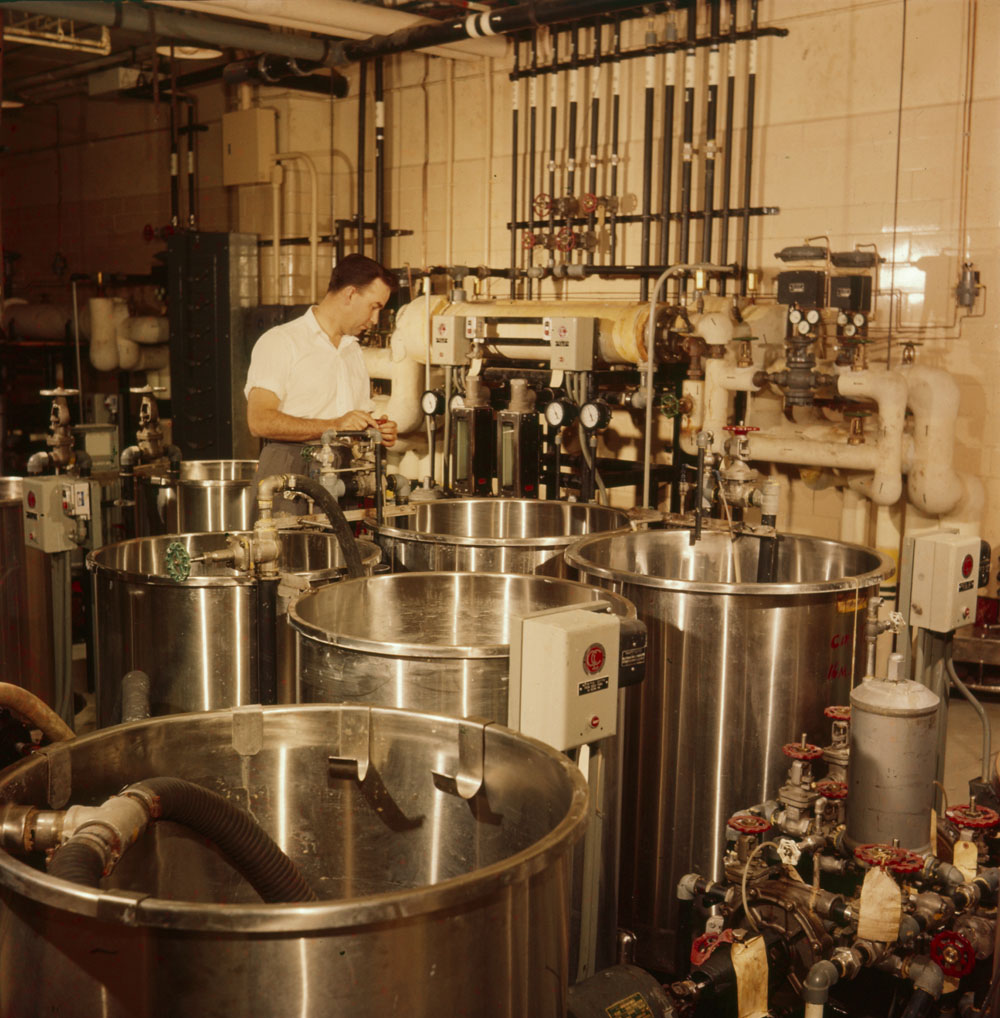
A colour photograph of a man in a chemical mixing laboratory preparing various fluids used in developing processes at the National Film Board of Canada.

Bert Hooper, head of the chemical mixing laboratory, supervises the preparation of various fluids for developing processes at the National Film Board of Canada building, Ville Saint-Laurent, Montréal, Quebec [MIKAN 4301640]

Canada has a variety of laboratory environments that range from small to large. Some are privately funded, while others rely on government funds. There is also a mix of co-operative funding between academic institutions, private organizations and public entities.

Visit the Flickr album now!

Come see our latest exhibition – Premiere: New acquisitions at Library and Archives Canada …

Web banner with the words: Premiere: New acquisitions at Library and Archives Canada showing a small picture of an otter fishing on the right

And keep an eye on this blog series…

There is something a bit different about Library and Archives Canada’s (LAC) latest exhibition, opening at 395 Wellington Street in Ottawa, on April 24, 2018.

New exhibition showcases variety

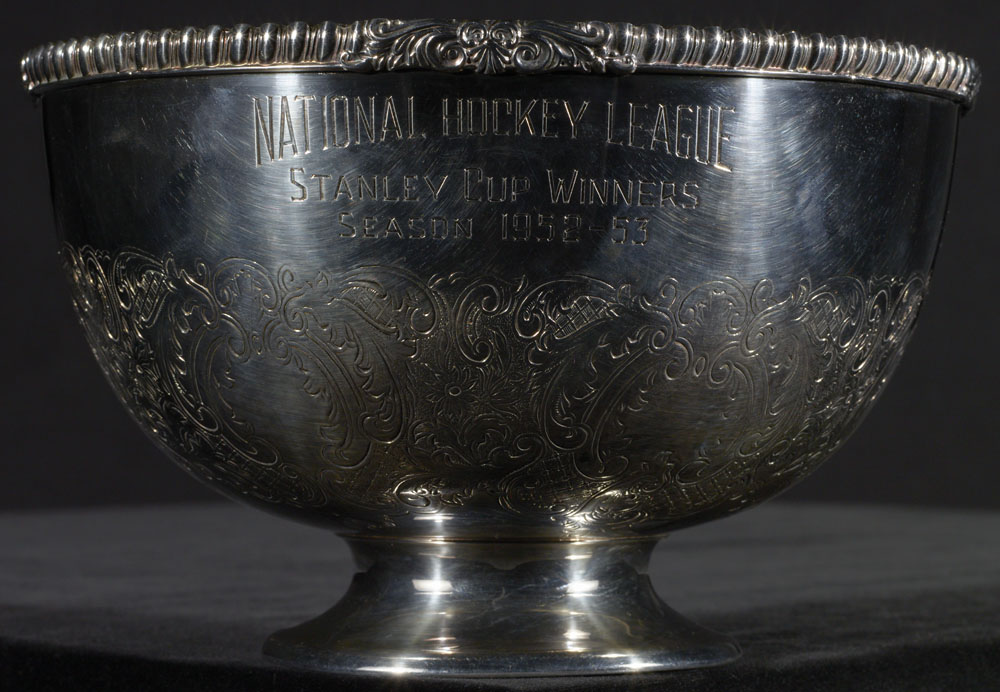
Like other exhibitions, Premiere: New acquisitions at Library and Archives Canada showcases the great variety found in LAC’s collection. A few examples include a Chinese embroidery and a 1952–1953 replica of the original Stanley Cup.

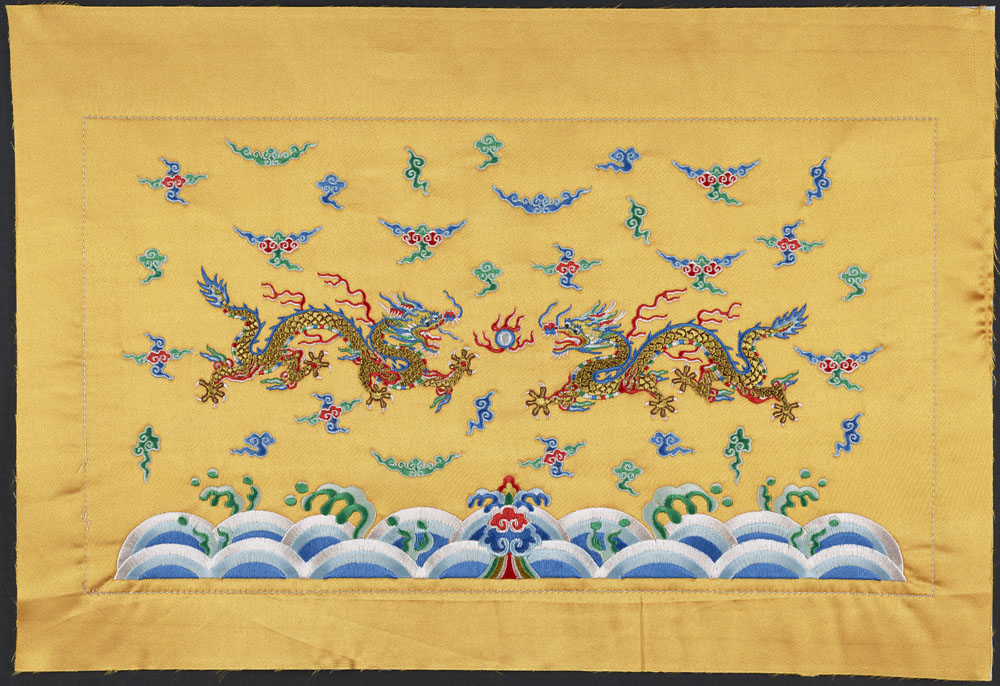
An embroidered golden cloth of two dragons reaching for a pearl and flying amongst clouds with ocean waves rolling below them.

Design for Canada Post’s Year of the Dragon Stamp, Punchline Embroidery Centre, 1998 (e011202235) ©Canada Post. Selected by Emma Hamilton-Hobbs, Archivist, Government Archives.

A colour photograph of a copper silver-plated bowl engraved with “National Hockey League, Stanley Cup Winners, Season 1952–53.”

1952–1953 Stanley Cup souvenir bowl awarded to Montreal Canadiens Executive Vice-President William Northey, Roden Brothers Ltd., 1953 (e011202220). Selected by Normand Laplante, Senior Archivist, Social Life and Culture Private Archives.

New exhibition also showcases acquisitions expertise

However, this exhibition featuring LAC’s most recent acquisitions also celebrates the expertise of LAC’s acquisition specialists. Every one of the items featured in the exhibition was thoughtfully selected by one of LAC’s librarians or archivists. The same librarian or archivist also prepared the exhibition text for his or her own item, and each text is “signed” with the name and title of the specialist who prepared it. The Librarian and Archivist of Canada, Dr. Guy Berthiaume, even selected an item!

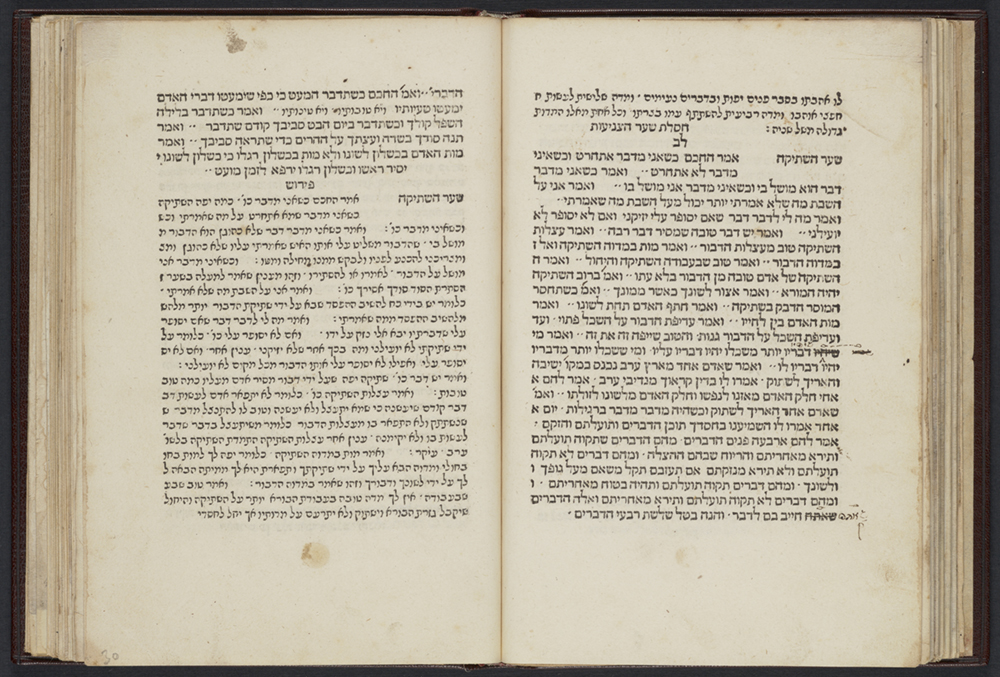
A colour photograph of an open book written in Hebrew.

Mivachar Ha-Peninim (Choice of Pearls) by Solomon Ibn Gabirol, 1484 (AMICUS 45283149). Acquired with the assistance of the Friends of Library and Archives Canada through the generous support of Ruth and Arnon Miller. Selected by Guy Berthiaume, Librarian and Archivist of Canada.

Whether donated, purchased, or assigned to LAC as part of established or evolving legal agreements, new acquisitions represent the lifeblood of Canada’s collection. Building a collection that captures Canada’s story is an essential part of LAC’s mandate.

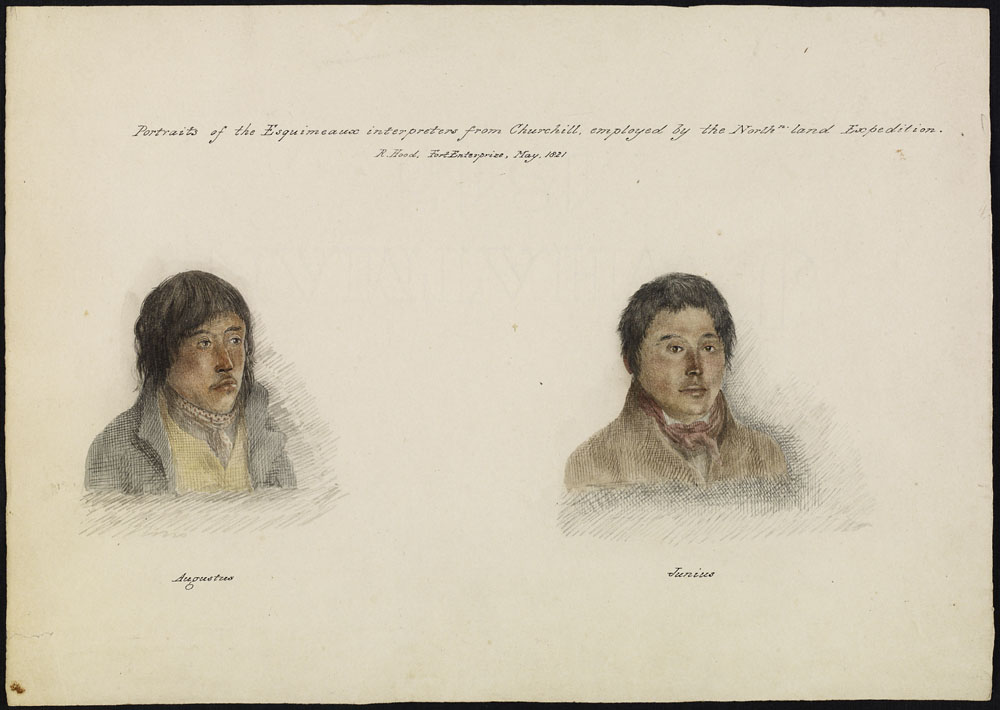
Watercolour portraits of two young Inuit men wearing western-style clothing. One is captioned Augustus and the other, Junius.

Inuit interpreters from Churchill, Robert Hood, May 1821 (e011154367). Selected by Shane McCord, Art Archivist, Social Life and Culture Private Archives.

… and keep an eye on the Premiere blog series…

Through this blog series, which features in-depth articles on many of the items chosen for the exhibition, this emphasis on the importance of expertise in acquisitions is underlined. Each of the blog articles in this series will feature the work of one of LAC’s acquisition specialists. The blogs will be published once a month.

A colour photograph of a record label that reads “Improved Berliner Gram-O-Phone Record. Manufactured by [illegible] Montreal, Canada. Patented [illegible] 1897. Ye Banks and Braes. Played by The Kilties Band – Belleville, Ont.”

Ye Banks and Braes (Caledonian Hunt’s Delight), performed by the Kilties Band of Canada, released October 25, 1902, arranged by Bonniseau. Listen here! (AMICUS 31383290). Selected by Margaret Ashburner, Project Librarian, Retrospective Music, Published Heritage.

Look for new articles during the course of the exhibition, which closes on December 3, 2018.

And please visit the physical exhibition in Ottawa!

Premiere: New acquisitions at Library and Archives Canada opens on April 24, 2018, at 395 Wellington Street in Ottawa and runs until December 3, 2018. Admission is free.

Introducing Co-Lab: your tool to collaborate on historical records

A turquoise banner with the words Co-Lab: Your collaboration tool Crowdsourcing has arrived at Library and Archives Canada (LAC). You can now transcribe, add keywords and image tags, translate content from an image or document and add descriptions to digitized images using Co-Lab and the new Collection SearchBETA.

Take on a challenge

To make it even more interesting, we will launch what we call “challenges”.  These challenges are content put together under a theme. For example one of our first challenges is on Rosemary Gilliat (Eaton)’s. Your challenge will be to transcribe her diary and describe her photographs from her Arctic travels. Or instead, try your hand at transcribing the love letters from Sir Wilfred Laurier to his sweetheart and future wife, Zoé – another challenge now available.

A screenshot of the Co-Lab Challenges page showing what challenges are available.Contribute using Collection SearchBETA

When you are conducting research using our new search tool and find images, you’ll see that you have the option to “enable this image for Co-Lab contributions”. After answering just a few short questions, you can enable an image found in Collection SearchBETA for Co-Lab use and transcribe/translate/tag/describe to your heart’s content. If an image has already been enabled for Co-Lab use, you’ll be able to add your own or edit the contributions of others’. If you create a user account, you will be able to keep track of your contribution history and be able to hear about new challenges and updates to Co-Lab.

A new way to view images

A screenshot of an excerpt of a handwritten letter in a window and on the right-hand side there’s a space to transcribe the letter and underneath is a box with the transcription status.

The launch of Co-Lab also introduces a new image viewer – which lets you scroll to zoom in on different parts of the image, or click and drag to move around the image itself. This is particularly useful when looking to transcribe or add keywords and image tags to describe small details!

What if something’s wrong?

It’s inevitable that mistakes will be made, especially when transcribing handwritten documents. Every image in Co-Lab is subject to review by other crowd members. If you see something written incorrectly, go ahead and edit it yourself, or mark it as “Needs review” for others to take a second, or third look.

The best thing about this new tool is that every contribution made by the public directly benefits fellow researchers and improves access. Every addition to a record becomes new metadata – which is searchable within 24 hours, helping LAC’s records become more “discoverable” day after day. Transcription of textual material that was previously just digital images also becomes accessible to those who use text-to-speech machines or screen readers, and translation of transcribed documents opens the door to unilingual Canadians.

For more info and frequently asked questions, you can read the About Co-Lab page. If you’re ready to start contributing, give a hand to history and try Co-Lab now.

The case of the patent leather photograph: a Library and Archives Canada pannotype mystery

By Tania Passafiume, with assistance from Shannon Perry

While working on a census of over 300 cased objects in Library and Archives Canada’s photographic holdings, I discovered a hidden treasure. I noticed that one of the cased images looked a bit odd, as it did not resemble a daguerreotype, an ambrotype or a tintype, which you would typically find as the photograph in one of these small leather, paper or plastic cases.

A colour image of a paper case with red velvet. On the right-hand side, a black-and-white photograph in a brass mat of a man wearing a dark jacket.

A pannotype of an unknown sitter, in a paper case (e011200812_s15-v8)

The questions began: What is this? What photographic process was used to create this object? The first clue that I was dealing with something different came when I noticed that the item was unsealed, meaning that there was no original sealing tape. Historically, paper tape was used to seal the package found within the cased object, for various reasons. But there was no indication of any original tape, so with no tape to disturb, I decided to open the package.

The findings

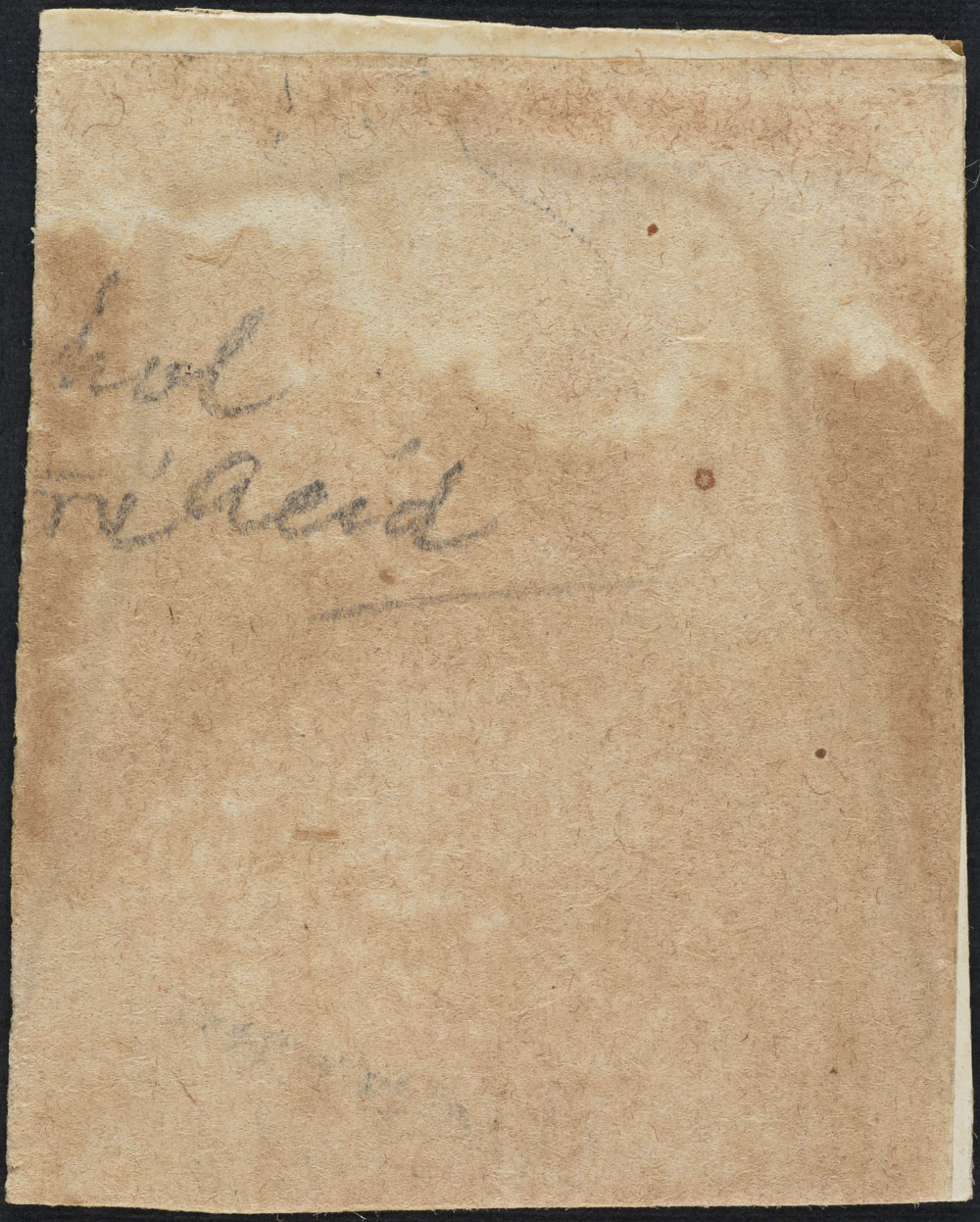
Immediately after removing the package from the paper case, I noticed a piece of thick card attached to the back of the package. This card appeared to be a leftover piece of paper. Handwritten in pencil in the top-left quadrant were some words that were partially cut off: “hol” and “acid.” There was also some sort of damage along the top. From the discolouration, it had to be a liquid stain. At first, I did not think much about the card. Since there was no longer any original sealing tape, someone might have previously removed the tape and placed a piece of paper behind the photograph. This finding was not unexpected, as photographic plates were often taken out of cases and the cases switched. Only later did I realize that the text was indeed vital to understanding the nature of the photograph.

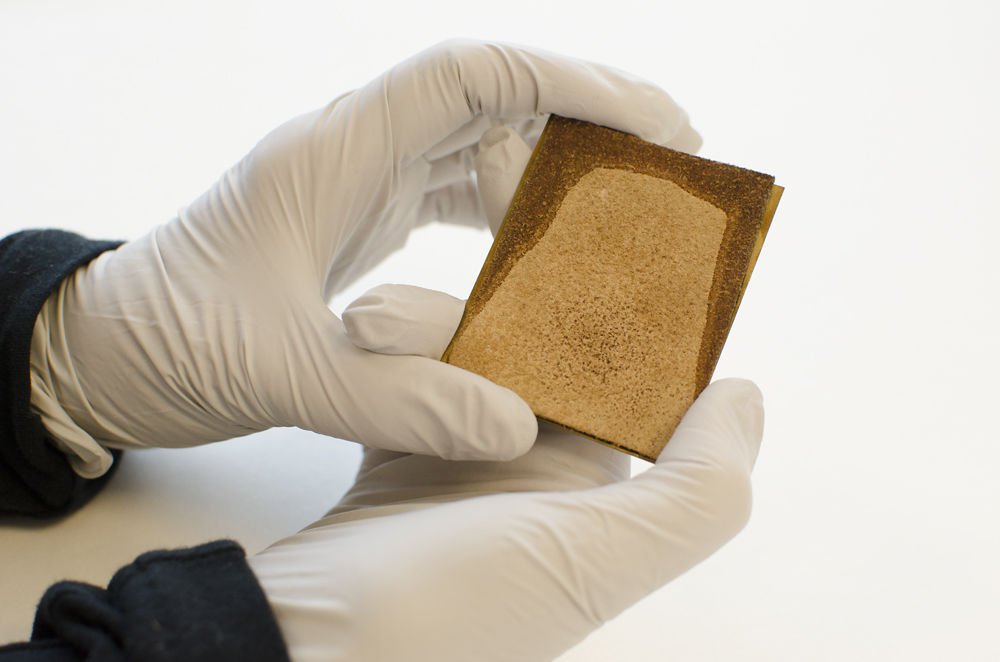
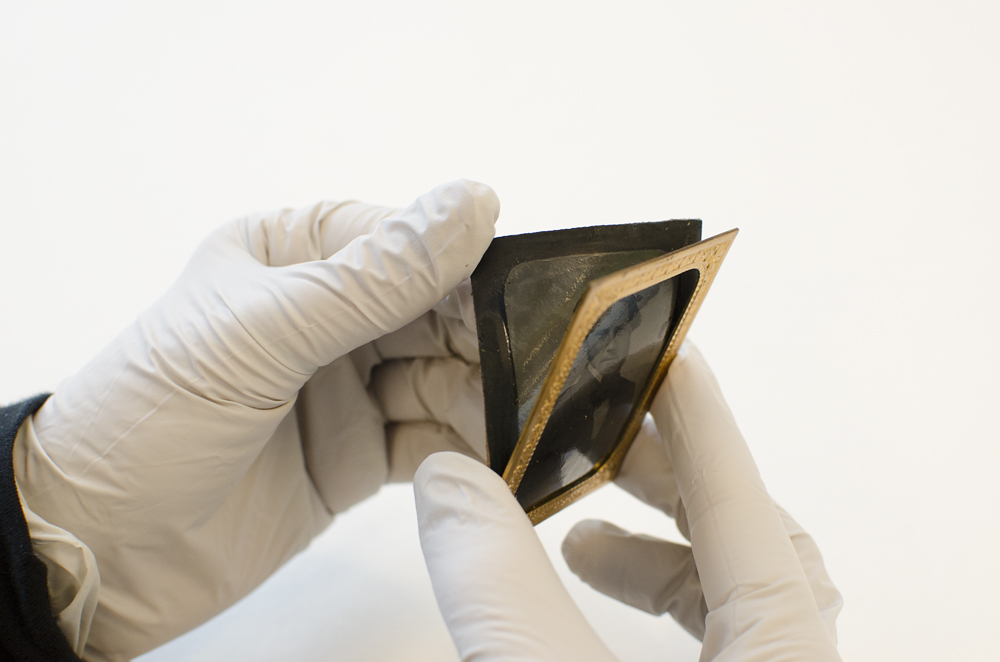
After I removed the card, I saw a piece of leather. I knew immediately what I was holding in my hands! The leather was not another layer that had been added behind the photographic plate. This was an actual photograph on leather! This photographic process is called pannotype (the prefix comes from the Latin pannos, which means cloth). I had read about pannotypes and seen modern recreations; however, it is very rare to find originals, let alone for them to be in good condition. I turned the object over and removed the brass mat with its cover glass. And there, under the deteriorated and soiled glass, was a glossy leather surface with, in excellent condition, the image of a man. The deteriorated glass had distracted me and made me question the type of photographic process. Now, through my careful analysis and with an added dash of serendipity, Library and Archives Canada has an identified 19th-century pannotype in its holdings!

The history behind the process

Pannotypes were a bit of a trend between 1853 and the early 1880s. They were made by a method similar to that for ambrotypes. But instead of glass, a piece of cloth or leather was used as a support. What is interesting is that pannotypes were made by placing drops of a dilute solution of nitric acid in alcohol onto an existing ambrotype. This was done to allow the photographer to remove the emulsion (which contained the actual image) from the glass support and place this emulsion onto a new support, such as a piece of leather. This brings me back to the handwritten partial words on the piece of paper that I found on the back of the leather, “hol” and “acid.” Could the words be alcohol and nitric acid: the very ingredients required to make a pannotype?

A colour image of a stained piece of paper with partial text “hol” and “acid” written on it.

The paper found at the back of the photograph, with the text “hol” and “acid” written in pencil. (e011200812_s25-v8)

A colour image of gloved hands holding a piece of leather that has been stained along the top and sides.

The leather back of the photograph. Photo credit: Carla Klück

A colour image of gloved hands holding a black-and-white portrait of a man, which is being peeled away from a brass mat with its cover glass.

The photograph (patent leather with emulsion) and the brass mat with its cover glass. Photo credit: Carla Klück

This pannotype photographic process was presented for the first time in 1853, to the French Academy of Sciences by the firm of Wulff & Co. Instructions for the process were made available for sale by that firm for 100 francs. Pannotypes soon became generally known, with many professional photographers making commercial use of them, as evidenced in surviving advertisements and journal articles. Customers were interested in the process at the time because pannotypes were believed to be more stable, since they could not break because they were not printed on glass like ambrotypes, nor could they be easily scratched like daguerreotypes or bent like tintypes. We know very little about how the pannotype process was developed and practiced here in Canada, but we do know that there were several prominent photographers using this process, including George Robinson Fardon (1807–1886) from Victoria, British Columbia. His images of “Portrait and Views on patent leather” were sent to the London International Exhibition, 1862, and they eventually became part of the Victoria and Albert Museum’s holdings.

Here and now

Today, discovering a pannotype is rare, as their durability was very limited because of their inherently fragile qualities. However, the newly discovered pannotype is on patent leather and is in excellent condition. The only difficulty here is that the original glass in the brass mat had begun to deteriorate; however, following some conservation work, the problem has been fixed. Our next step is to share this information with the public, and perhaps to try and solve the next mystery: who is the man in the photograph, and who was the photographer? Stay tuned!


Tania Passafiume is the Head Conservator of Photographic Materials in the Care of Collection Division of the Digital Operations and Preservation Branch at Library and Archives Canada.

Shannon Perry is a Photo Archivist in the Government Archives Division of the Archives Branch at Library and Archives Canada.