A rediscovered manuscript: the first journal of John Norton (Teyoninhokarawen)

Version française

By Isabelle Charron

This article contains historical language and content that may be considered offensive, such as language used to refer to racial, ethnic and cultural groups. Please see our historical language advisory for more information.

Photo of a handwritten page from a journal.

First page of the journal of John Norton (item 6251788)
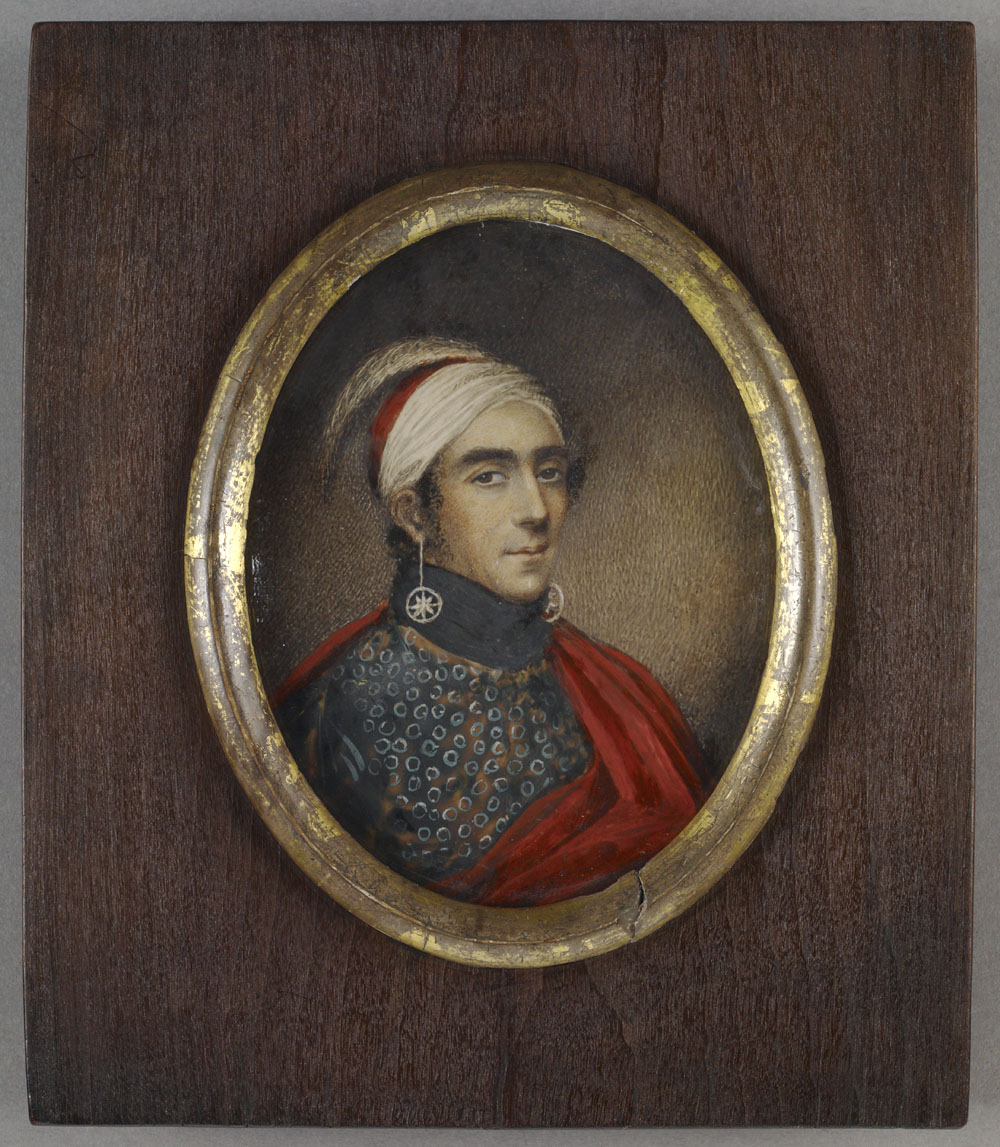
Image of an oval-shaped painting on ivory.

Portrait of John Norton by Mary Ann Knight, 1805 (e010933319)

Library and Archives Canada (LAC) recently acquired an unpublished autograph journal by John Norton (Teyoninhokarawen) (1770–1827), along with letters (John Norton Teyoninhokarawen fonds*). This acquisition was made possible by a contribution from the Library and Archives Canada Foundation. The journal’s existence was documented in correspondence from the early 19th century, but its location remained unknown until recently. These documents are an important link in the life and literary production of Norton, a fascinating character, as well as essential evidence for understanding the history of the Six Nations (Haudenosaunee), Canada and North America.

Born in Scotland, Norton had Indigenous ancestry: his father was Cherokee, brought to Great Britain by a British officer following the Anglo-Cherokee War, and his mother was Scottish. His family background shaped his astonishing journey. In addition, he was marked by military life from a very young age. His father, a soldier in the British army, took part in several campaigns in North America, during which his family followed him. In fact, Norton mentions in a letter that one of his earliest memories was the Battle of Bunker Hill (Boston, June 17, 1775) (item 6252667). Back in Scotland at an unknown date, he received an excellent education.

Norton and his parents were in the city of Québec in 1785. Like his father, he joined the army, but he deserted in 1787 at Fort Niagara. He later travelled and may have lived with the Cayuga Nation. In 1791, he worked as a schoolteacher in the Mohawk community of Tyendinaga (Bay of Quinte, Ontario). He then took part in battles in the Ohio Valley with various allied Indigenous peoples against American forces. He was also involved in the fur trade for Detroit merchant John Askin before being hired as an interpreter by the Department of Indian Affairs. He then lived with the Six Nations (Haudenosaunee) at the Grand River (Ontario) and became close to Mohawk Chief Joseph Brant (Thayendanegea). The latter adopted him as a nephew in 1797, and in 1799 Norton became chief for diplomacy and war for the Six Nations. He was given the Mohawk name of Teyoninhokarawen.

The Norton journal acquired by LAC is 275 pages long (item 6251788). He wrote it at the Grand River between 1806 and 1808 in the form of letters to a friend. He recounts his journey to England and Scotland in 1804–1805. It was at Brant’s request that he made this trip to clarify issues relating to Six Nations land ownership at the Grand River, in connection with the Haldimand Proclamation (October 25, 1784). His diplomatic mission failed because his authority was challenged by some, including William Claus, superintendent of Indian Affairs. However, on a personal level, Norton was able to reconnect with his maternal family and became a very popular figure among the political, business, religious, intellectual and aristocratic elite. He participated in social events and attended scientific conferences and debates in the House of Commons. He made valuable friends, including the brewer Robert Barclay, the Reverend John Owen and the second Duke of Northumberland (Hugh Percy), also a friend of Brant. During this time, Norton translated the Gospel of John into Kanien’kehá (Mohawk language), published by the British and Foreign Bible Society as of 1804 (OCLC number 47861587). In London, in 1805, artist Mary Ann Knight painted his portrait, now in LAC’s collection (item 2836984).

Pages from a handwritten journal.

Pages 183–185 of the journal of John Norton (e011845717)

In 1808, Norton sent his journal to Robert Barclay in England, who planned to publish it with the accompanying letters. This project, on which the Reverend Owen also worked, never materialized, and the documents remained in the Barclay family. In his journal, Norton describes his encounters and the places he visited. He expresses his thoughts on a variety of topics typical of his era and touching on colonial reality, such as the British army, American independence (and its consequences for Indigenous peoples on both sides of the border), freedom, slavery (he is an abolitionist), education, the status of women among Indigenous people, agriculture, trade (including the fur trade), business and land exploration. He plans several projects for the Haudenosaunee and is concerned about the education of young people. He questions the image of the Haudenosaunee portrayed by certain authors and insists on the refinement of their language. Christianity is also of great importance to Norton.

Norton’s correspondence reveals some details about his biography and his family (items 6252667 and 6258811). In it, he recalls his return to the Grand River in 1806, divisions in his community and his desire to take part in campaigns with the British army (item 6251790). He speaks about different Indigenous peoples and their relationships with British colonial authorities (items 6251794 and 6252528, for example). He promotes the alliance between Indigenous peoples and Great Britain but is very critical of the Department of Indian Affairs. This alliance proved essential in the War of 1812, during which Norton distinguished himself by leading groups of Indigenous warriors. He refers to this conflict in his letters (item 6258793), as well as his visit to the Cherokee in 1809–1810 (item 6258679). The correspondence also includes a transcript of a letter from chiefs of the Six Nations to Francis Gore, lieutenant governor of Upper Canada (item 6252665). Finally, a letter from someone close to Barclay confirms that George Prevost, governor-in-chief of British North America, held Norton in high regard (item 6258814).

It should be noted that Norton wrote a second journal while in England in 1815–1816, which covers his visit to the Cherokee, the War of 1812 and the history of the Six Nations. Still preserved in the Archives of the Duke of Northumberland at Alnwick Castle in England, this journal was published in 1970 and 2011, and the War of 1812 section was also published in 2019 (see references below).

A great traveller, polyglot, author, translator, letter writer, diplomat, politician, warrior, activist, trader, farmer, father, Scotsman, Cherokee, Haudenosaunee … so many epithets characterize John Norton, who already fascinated people during his lifetime. He is said to have been the inspiration for the main character in John Richardson’s 1832 novel Wacousta, a Canadian literary classic. Richardson had known Norton and was the grandson of John Askin, the fur trader for whom Norton had worked in his youth.

We hope that these newly acquired documents, which are important additions to our collection, will generate much interest and shed new light on Norton’s life and work, as well as on the history of the Haudenosaunee and Canada in the early 19th century.

Happy exploring!

To learn more

  • Alan James Finlayson, “Emerging from the Shadows: Recognizing John Norton,Ontario History, vol. 110, No. 2, fall 2018.
  • John Norton, A Mohawk Memoir from the War of 1812: John Norton—Teyoninhokarawen, Carl Benn, ed., Toronto, University of Toronto Press, 2019 (OCLC 1029641748).
  • John Norton, The Journal of Major John Norton, 1816, Carl F. Klink, James J. Talman, ed., introduction to new edition and additional notes by Carl Benn, Toronto, The Champlain Society, vol. 72, 2011 (1970) (OCLC 281457).
  • Carl F. Klinck, “Norton, John,” in Dictionary of Canadian Biography, vol. 6, University of Toronto/Université Laval, 2003 (1987).
  • Cecilia Morgan, Travellers Through Empire: Indigenous Voyages from Early Canada, Montréal & Kingston, McGill-Queen’s University Press, 2017 (OCLC 982091587).
  • Guest Curator: Shane McCord, Library and Archives Canada Blog, posted on September 14, 2017.

*Since these documents were created in English, their individual descriptions are also in English.


Isabelle Charron is a Senior Archivist in the Private Archives and Published Heritage Branch at Library and Archives Canada.

Charles Angus Cooke (Thawennensere): Language and knowledge keeper

On the left of the graphic, Tatânga Mânî [Chief Walking Buffalo] [George McLean] in traditional regalia on horse. In the middle, Iggi and girl engaging in a “kunik”, a traditional greeting in Inuit culture. On the right, Maxime Marion, a Métis guide stands holding a rifle. In the background, there is a map of Upper and Lower Canada, and text from the Red River Settlement collection.

This article contains historical language and content that some may consider offensive, for example, language used to refer to racial, ethnic and cultural groups. Please see our Historical language advisory for more information.

A painting depicting a canoe on a lake, with a house in the background, and trees and rocks in the foreground.
Ruins of Fort Senneville, Lac des Deux Montagnes, near Sainte-Anne, Quebec; view from west side of Tio’tia:ke (island of Montréal) looking northwest toward the Kanien’kehá:ka village of Kanehsata:ke (Oka), 1839 (c011891k)

The archival records of Charles Angus Cooke at Library and Archives Canada are invaluable for Kanienhkeha (Mohawk) language and culture revitalization. Cooke was born Thawennensere (Double Name) on Kanehsata:ke Territory (Oka, Quebec) in 1870. At age 11, he relocated to Wahta (Gibson, Ontario), and at age 23, he moved to Ottawa. These records of his important work are based on his knowledge of his ancestral language.

A typeset page of a newspaper with three columns.
Onkweonwe newspaper. Title from caption: “Aterientarajera naah ne Kasatstensera” (knowledge is strength). October 25, 1900 (OCLC 1007186921)

An original first edition of vol. 1, no 1 of Cooke’s newspaper Onkweonwe, dated October 25, 1900, is in Library and Archives Canada’s library collection. It is the only known surviving copy. The newspaper was groundbreaking because it was written entirely in the Kanienhkeha language and was the first to be produced in a First Nations language in Canada. Articles included current events, and topics such as foreign affairs, national affairs, the economy, sports, federal politics, hunting season dates, and the prices of produce and animals. The newspaper was a resource that could assist the economic endeavours of readers. It focused on and was distributed to communities in the region occupied by the Haudenosaunee (Iroquois) communities of the Six Nations all the way up to and including Wendake, a Huron-Wendat community in Loretteville, Quebec.

A map showing the grid of the Township of Gibson, with the labels Medora and Wood at the top and Baxter on the right.
Plan of part of the Township of Gibson, Ontario, now known as Wahta, around 1887 (e008311360)

When Cooke left Kanehsata:ke in 1881, he spoke only Kanienhkeha, but learned English after his first year at Wahta. He was a teacher there before being employed as a clerk for the Georgian Bay Lumber Company. At the age of 23 in 1893, Cooke was hired as a library clerk for what was then known as the Department of Indian Affairs in Ottawa. His position included being an interpreter, doing translation and performing clerical duties such as document classification. He was one of the early, if not the first, public servants from a First Nation to be employed by the federal government.

A black-and-white photograph of a street in winter. There is a signpost showing a railway crossing, houses, a person walking in the street and power line poles.
Street scene, Ottawa East, looking down toward the canal, December 14, 1895 (a view of Ottawa at the time that Cooke began his 33 years of employment at the Department of Indian Affairs) (a134222)

Cooke pursued progressive ideas for projects that would benefit First Nations, only to have his attempts thwarted by uncooperative supervisors. One of these projects included a dedicated Indigenous-specific library, but it was never implemented. In addition to his Onkweonwe newspaper, he was able to complete a Comparative and Synoptical Indian Dictionary.

A page with handwriting and stamps. At the bottom, it is signed “Yours sincerely, Charles Cooke.”
Saint François Agency, correspondence regarding the “Comparative Indian Vocabulary” (list of words frequently used by Indians), Charles A. Cooke, 1899–1902 (e007472965)

Additional language materials by Cooke are held in other institutions. An extensive compilation of Haudenosaunee names is held at the American Philosophical Society in Philadelphia, Pennsylvania. A copy of these records is kept at the Canadian Museum of History in Gatineau, Quebec, including a Kanienhkeha dictionary manuscript and other notes.

In 1913, Cooke assisted Marius Barbeau, an early ethnographer, in a grammatical study of Mohawk, Cayuga, Onondaga and Tuscarora languages. Barbeau would request his assistance again much later in Cooke’s life.

Cooke served as a recruiter during the First World War. He was seconded from the Department of Indian Affairs to help in enlisting what was to be a regiment composed entirely of First Nations soldiers, the 114th Battalion of the Canadian Expeditionary Force. He recruited in the Kanien’kehá:ka communities of Kanehsata:ke, Kahnawake and Akwesasne in Ontario and Quebec.

Cooke left the Department of Indian Affairs in 1926, having attained the position of Principal Clerk. He spent the next 12 years touring eastern Canada and the United States, reciting Haudenosaunee (Six Nations) and Huron-Wendat lore, songs and dances. In 1949 and 1951, he again assisted Barbeau as an interpreter at Six Nations of the Grand River in Ontario.

It is perhaps incomprehensible to the modern reader that, for all of his contributions and knowledge, Cooke worked in a political system that did not allow him to receive “Indian Status” under the Indian Act. As an adult, he made applications to register for First Nations Status, but these were never honoured. The applications would suggest that he was not registered as a child under the Indian Act. Cooke was born in 1870, six years before the Indian Act of 1876, so he may have not been registered during this time of upheaval for all Onkweonwe (First Nations peoples).

Between 1911 and 1926, Cooke sought recognition under the Indian Act as a member of the Dokis First Nation, based on his lineage from his Ojibwa grandfather, Showandai, who was a member of the Dokis Band. The Dokis Band refused Cooke’s claim. He was also never admitted into the Kanehsata:ke (Oka) Band or the Wahta (Gibson) Band.

Cooke’s life was an exceptional journey, from his ancestral roots to the intellectual and political front in Ottawa. He recruited his fellow Onkweonwe to join the armed forces for the First World War, was the cultural bridge for Barbeau’s research, and finally travelled and performed his Kanien’kehá:ka songs and dances throughout Canada and the United States. Cooke and his legacy are not forgotten by Onkweonwe today; he lives on through the important work he did, which is still accessible for the ongoing efforts of language and culture revitalization.

Elizabeth Kawenaa Montour is a project archivist in the Exhibitions and Online Content Division of the Public Services Branch at Library and Archives Canada.

Kahentinetha Horn: Flying over the Land

On the left of the graphic, Tatânga Mânî [Chief Walking Buffalo] [George McLean] in traditional regalia on horse. In the middle, Iggi and girl engaging in a “kunik”, a traditional greeting in Inuit culture. On the right, Maxime Marion, a Métis guide stands holding a rifle. In the background, there is a map of Upper and Lower Canada, and text from the Red River Settlement collection.

This article contains historical language and content that some may consider offensive, such as language used to refer to racial, ethnic and cultural groups. Please see our historical language advisory for more information.

By Elizabeth Kawenaa Montour

Kahentinetha Horn, of the Kanien’kehá:ka (People of the Flint), will be featured in an upcoming Library and Archives Canada (LAC) Indigenous podcast, in which a selection of events from her life will be highlighted. LAC holds a diverse collection of archival materials that feature Kahentinetha (or Kahn-Tineta) Horn. These include photographs, audio-visual material, film and correspondence. The materials document her vision, her resilience and her aspirations with respect to bringing Onkweonwe (First Nations) issues to the forefront.

Her name, Kahentinetha, translates to “flying over the land.” She has definitely lived, and continues to live, by her name. I am fortunate to have known Kahentinetha when I was growing up in Kahnawake. Kahentinetha was a vibrant force. She was tall, thin and athletic in stature, and had refined Kanien’kehá:ka (Mohawk) thick straight jet-black hair. In the opinion of many—myself included—she was in a class by herself. Her speech was concise, her voice always clear, never wavering. She had an inquisitive mind and was always ready to debate and bring new light to topics and situations of the time. As part of the podcast team, I gained deeper insight into—and greater appreciation of—her incredible life.

In February 2020, Kahentinetha and her daughter Waneek visited LAC to view archival materials. These materials included correspondence written by Kahentinetha to Maryon Pearson, wife of Prime Minister Lester B. Pearson, to the Minister and the deputy ministers of Indian Affairs, and to other federal government officials of the time, as well as internal correspondence and reciprocal letters. Also, among the textual papers were Kahnawake Mohawk Band Council correspondence and documentation that included a poignant Band Council resolution against Kahentinetha, which was never carried out.

A black-and-white photograph of nine people facing the camera. A man is holding a baby in a cradleboard. Uncut brush landscape is in the background. There are no buildings on the horizon

Caughnawaga [Kahnawake] reserve near Montréal [left to right: Kahentinetha Horn (née Delisle, grandmother of Kahentinetha Horn), Joseph Assenaienton Horn, Peter Ronaiakarakete Horn (Senior) holding Peter Horn (Junior), Theresa Deer (née Horn), Lilie Meloche (née Horn), unknown, Andrew Horn, unknown], c. 1925 (e010859891)

Kahentinetha remembers her father as a definitive influence in her early life. He stressed to her the need to use the Kanien’kehá language at all times. She continues to pursue this linguistic endeavour by collaborating with Kanehsatà:ke (Kanien’kehá:ka Oka) elders. Working with them, she documents the pronunciation and spelling of complex expressions that otherwise would be lost forever.

A black-and-white photograph of a woman smiling at the camera wearing buckskin regalia, a necklace, bracelets and a headband.

Carnival Queen Kahentinetha Horn tries her hand at the controls of a Viscount aircraft. A newcomer to Trans-Canada Airlines (TCA), she was crowned Queen of the Sir George Williams College Winter Carnival in Montréal just one week after she joined TCA. Kahentinetha is wearing buckskin regalia made by her aunt Francis Dionne (nee Diabo). (e011052443)

Kahentinetha was born in Brooklyn, New York, like many Kahnewakeronon, as her father needed to be close to where the iron work was. The family later returned to Kahnawake. Her father died tragically on the job, just a half hour from Kahnawake, at the Rouses Point Bridge, which links New York State and Vermont across Lake Champlain. She lived through the construction of the St. Lawrence Seaway in the 1950s. This canal permanently separated the community from its natural shoreline.

Kahentinetha studied economics at Sir George Williams University in Tio’tia:ke (Montreal). This afforded her the opportunity to work abroad, in Paris. She also studied economics at McGill University. This presented an opportunity to travel with two other students to Havana in December 1959, to observe the people of that country celebrating the first anniversary of the Cuban Revolution.

A black-and-white photograph of two women and a man in business attire.

Officer Harold Walker introduces Kahentinetha Horn to receptionist Pierrette Desjardins as Kahentinetha starts her first day of employment at Trans-Canada Airlines. (e011311516)

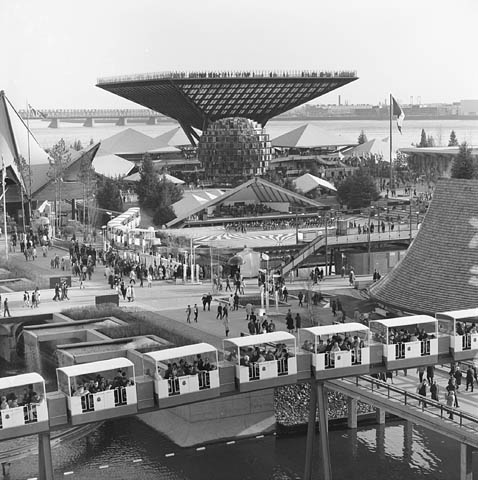
Kahentinetha’s resume includes employment as a secretary with Trans-Canada Airlines (name changed to Air Canada in 1965) and at the Power Corporation. Her career in fashion involved daily modeling at the Canada Pavilion during the Expo 67 World’s Fair in Montréal, Quebec, and being photographed for fashion advertisements in magazines. She also acted in film and television commercials. In 1973, she was employed as a public servant at the Department of Indian Affairs, in the National Capital Region. In the summer of 1990, while she was in the midst of doing scholarly research on Kahnawake, Kanehsatà:ke and Akwesasne, the Kanehsatà:ke Resistance (Oka Crisis) had reached a critical point. She knew her mission was to support and defend the Kanehsatà:ke land. She went to Kanehsatà:ke in July 1990 with all four of her daughters and remained there until September 26. On that date, the Canadian army entered the area, dismantled the barricades, and arrested the remaining supporters, including Kahentinetha and her two youngest daughters, Waneek and Kaniehtiio.

A black-and-white photograph of a crowd of people walking around large pavilions near the waterfront. There is a train with white cars in the foreground.

Crowd in front of Canada Pavilion at Expo 67. Date: 1967. (e001096693)

Beginning on February 21, 1991, Kahentinetha participated as an individual witness in the public hearing for the House of Commons that resulted in the publication of the Fifth Report of the Standing Committee on Aboriginal Affairs (May 1991). She followed this with a presentation to the Commissioners at the Royal Commission on Aboriginal Peoples (RCAP), in Kahnawake, in May 1993. The RCAP hearings were held across Canada to collect information, evidence and counsel, as well as to uncover issues on which action was required. Most recently, she was involved and took part in welcoming the Wet’suwet’en hereditary leaders on their arrival in Tyendinaga on February 20, 2020.

A colour photograph of a woman with a white sweater standing and talking to three women, who are seated on the other side of a long table.

Royal Commission on Aboriginal Peoples (RCAP), Kahnawake hearings. Seated are Kahente Horn-Miller (daughter), Kahentinetha Horn and Dale Dionne. Standing is Mary Sillett (Inuit, Nunatsiavut – Labrador), RCAP Commissioner. Kahnawake site, May 1993. (e011301811)

Of the many Kanien’kehá:ka elders Kahentinetha has known, the late Louis Karonhiaktajeh (Edge of the Sky) Hall gave her special insight and inspiration. Hall was a traditionalist, activist, writer and painter born in Kahnawake in 1918, who died in 1993 at age 76. Hall used his natural artistic abilities to paint vivid and powerful scenes of Kanien’kehá subjects. He painted the iconic red warrior flag with the profile of a Haudenosaunee warrior in the centre. When he was elderly, she brought him into her home and cared for him. He gifted her a portrait he had painted of her. This may be the only painting that left his private collection.

Kahentinetha would regularly visit at my home, usually with several other relatives and friends, sometimes from other places. My mother, Josephine Kaientatie (Things all over), always had a meal ready, and no one ever left hungry. One of my vivid memories of Kahentinetha was her arriving in a white leather fringed jacket, matching mini-skirt and white boots. It was the sixties, and she was able to carry off this look because she had confidence. Stories told in these visits were usually a combination of political and social issues. When the topics were mixed with Kanienkeha:ka humour, an abundance of laughter would fill our home.

There are other, less serious, memories, such as those from the summer of 1971. Kahentinetha had just purchased her first car, a new-edition Ford Pinto. Kahentinetha took my mother, her baby daughter, Ojistoh, and me on a road trip to visit our cousins. Heading west to two Kanien’kehá:ka communities, Tyendinaga and Ohsweken, of the Six Nations in Ontario, we sped down Highway 401 in our shiny red faux Cadillac.

Of great pride to Kahentinetha are her daughters, all of whom have pursued their own ambitions with great success. Her eldest, Ojistoh, is a medical doctor; Kahente holds a PhD and is a professor at Carleton University; Waneek an Olympic athlete and a Pan American Games gold medalist; and the youngest, Kaniehtiio, works in many facets of the media including roles in film and television.

A colour photo of three women smiling at the camera, sitting around a wood boardroom table.

Kahentinetha Horn, Hilda Kaheratahawi Nicolas and Nancy Kanahstatsi Beauvais at the Kanesatake Language and Cultural Centre, March 6, 2020. Photo by Elizabeth Kawenaa Montour.

Kahentinetha now spends her time at her home on the east side of Kahnawake, not far from where the Lachine Rapids flow. She enjoys tending her vegetable garden, with the help of her many grandchildren. A stream of water flows by the edge of her land. Through her life, she has influenced, and connected with people of many cultures from around the world. She continues her contributions by providing guidance and sharing knowledge of Haudenosaunee culture, language and history with those who seek it. I am thankful for this assignment, which enabled me to reconnect with her. She was and did so much more than I remembered or knew.

You can also listen to our Kahentinetha Horn podcast (Part 1 and Part 2) and flip through our Kahentinetha Horn Flickr album.

This blog is part of a series related to the Indigenous Documentary Heritage Initiatives. Learn how Library and Archives Canada (LAC) increases access to First Nations, Inuit and Métis Nation collections and supports communities in the preservation of Indigenous language recordings.


Elizabeth Kawenaa Montour is a project archivist in the Exhibitions and Online Content Division of the Public Services Branch at Library and Archives Canada.

Enfranchisement of First Nations peoples

Version française

On the left of the graphic, Tatânga Mânî [Chief Walking Buffalo] [George McLean] in traditional regalia on horse. In the middle, Iggi and girl engaging in a “kunik”, a traditional greeting in Inuit culture. On the right, Maxime Marion, a Métis guide stands holding a rifle. In the background, there is a map of Upper and Lower Canada, and text from the Red River Settlement collection.

This article contains historical language and content that some may consider offensive, such as language used to refer to racial, ethnic and cultural groups. Please see our historical language advisory for more information.

By Jasmine Charette

I have always been interested in the concept of identity in the Canadian context. I enjoy learning about how people tie themselves to identities to connect with their community, or sever those same ties for the benefit of being seen another way. However, this was not always done in fairness or voluntarily. A striking example of this is the enfranchisement of First Nations peoples.

What is enfranchisement?

Enfranchisement meant losing legal identity as an “Indian” in the eyes of the government to become a full Canadian citizen, with all the rights and privileges attached. This process was enshrined in the Indian Act of 1876, which consolidated several pieces of colonial legislation in force at the time.

A black-and-white typed page of a legal statute.

A page from the Indian Act as published in the Statutes of Canada, 1876 (Canadian Research Knowledge Network, Acts of Parliament)

Enfranchisement could be sought by a First Nations person, as long as certain requirements were met, including age, gender and competency in either English or French. Someone outside the band, such as a priest or Indian agent, needed to determine the person’s fitness for becoming enfranchised. Some records show individuals, in their own words or the correspondence of an Indian agent, wanting to enfranchise for the benefits of land titles and band monies. The loss of legal status meant they were no longer subject to the Indian Act.

Many people were enfranchised against their will, some because of employment as lawyers, doctors or clergy. Others were enfranchised because of serving in the First or Second World War, attending university, or simply because an Indian agent thought they were “civilized” enough. Eventually, compulsory enfranchisement expanded to include any First Nations woman who married a non-Status individual (see below for 1985 changes to the Indian Act).

What does this mean for First Nations peoples?

The Indian Act was and is still seen in many ways as restrictive for First Nations individuals. The loss of identity brought repercussions such as becoming ineligible for social services, the loss of hunting and land rights, and for many, becoming both physically and intangibly distant from their homes and cultures. There are examples in the record of Councils of Chiefs refusing the Enfranchisement of individuals because they do not believe the Franchise Act applies to them, noting a fear that lands may be sold off and the community would be lost.

For some, enfranchisement was a direct trespass on previous agreements. A petition from the Mohawk members of the Five Confederated Nations (now Six Nations of the Grand River) notes that a treaty with the British stated the British would never try to make those Indigenous persons British subjects. Enfranchisement involved breaking that promise.

A black-and-white reproduction of a handwritten petition addressed to His Excellency the Governor General of the Dominion of Canada, the Right Honourable Lord Stanley.

Six Nations agency—correspondence regarding a petition from the Six Nations Indians to be exempted from the provisions of the Franchise Act of 1885. (e006183352)

Was it only individuals?

One case exists of an entire band being enfranchised: Michel Band in northern Alberta. An Order-in-Council enfranchised all eligible members of the Michel Band as of March 31, 1958.

A black-and-white typewritten text outlining the disposal of the funds of the Michel Band and the lands of the Michel Indian Reserve No. 132.

Schedule B, “Plan for the disposal of the funds of the Michel Band and of the lands of the Michel Indian Reserve No. 132,” dated March 31, 1958. RG2-A-1-a, Volume 2215, PC 1958-375 (Canadian Research Knowledge Foundation, Orders-in-Council)

This enfranchisement order split the reserve lands among enfranchised individuals, dissolving the band entirely. Only three years later, compulsory enfranchisement was repealed, and some members of the historic Michel Band are still seeking to regain band status today.

Why is this relevant today?

When the Indian Act’s enfranchisement sections were repealed in 1985, they were replaced with what we now know as Indian Status. It became impossible to give up one’s Status, and many who were enfranchised regained Status through various provisions of the 1985 repeal, and subsequent amendments to the Indian Act. The gender-based discrimination in the Act was changed, and Status was returned to people who lost it by marrying a non-Status individual or because of the “double mother” rule of 1951 (Status was lost at age 21 if both the paternal grandmother and the mother had acquired Status through marriage).

Do you have a question about enfranchisement?

Reference Services is available to answer your queries and to help you navigate archival and published materials, including records on enfranchisement. Ask Us a Question; we are always glad to help!

Sources

This blog is part of a series related to the Indigenous Documentary Heritage Initiatives. Learn how Library and Archives Canada (LAC) increases access to First Nations, Inuit and Métis Nation collections and supports communities in the preservation of Indigenous language recordings.


Jasmine Charette is a reference archivist in the Reference Services Division of the Public Services Branch at Library and Archives Canada.