New additions to the Virtual Gramophone – Henry Burr

By Margaret Ashburner

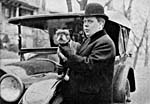
A black-and-white photograph of a man standing in front of a car, holding a small dog and wearing a Bowler hat.

Henry Burr. Source: Library and Archives Canada music collection, Public Domain.

A prolific recording artist, Henry Burr is estimated to have performed in over 12,000 recordings over the course of his life. His given name was Harry McClaskey, but he recorded under a wide variety of pseudonyms, the most well known being Henry Burr. Burr regularly performed not only tenor solos, but also in duets, quartets and other ensembles. He often performed alongside Albert Campbell.


Margaret Ashburner is the Special Collections Librarian of the retrospective music collection at Library and Archives Canada

Library and Archives Canada is releasing its latest podcast episode, “Former Enemies Are Now Friends”

Version française

Colour photograph of a sculpture of two enemy soldiers leaning over to shake hands over a rugby ball.For many descendants of First World War veterans, the act of researching the service files of their relatives opens up a world of new information regarding their families. In this episode, Former enemies are now friends, we speak with Tim Hack about the amazing journey he undertook to reconnect with his great-grandfathers, who fought on opposite sides of the First World War. Tim came across the Canadian Expeditionary Force files right after starting work at LAC. This discovery inspired him to retrace his great-grandfathers’ footsteps across northern Europe. He was gracious enough to share the audio diary of his trip with us. But before Tim embarked on his trip, we invited him into our studio to talk about where this journey began and what he was hoping to achieve by walking in his great-grandfathers’ footsteps one hundred years later.

To view images associated with this podcast, here’s a direct link to our Flickr album.

Subscribe to our podcast episodes using RSS, iTunes or PodLink, or just tune in at Podcast–Discover Library and Archives Canada: Your History, Your Documentary Heritage.

For more information, please contact us at balados-podcasts@bac-lac.gc.ca.

“Handle with Care, Fragile” now on Flickr

Circa 1981 –  Handle with Care, Fragile: A Guide to the Preservation of Archival Materials

“Improper handling is a major factor in the deterioration of archival documents. During the summer of 1976, the Archives Branch Conservation Committee attempted to illustrate techniques for the correct handling of archival materials through a photographic exhibition entitled HANDLE WITH CARE – FRAGILE – AVEC SOIN. The booklet resulting from that exhibition is intended to demonstrate, in a manner both pointed and humorous, these handling techniques. Only the most common archival media has been used as examples; similarly, only the most obvious causes of damage have been illustrated. We hope that this booklet will promote an appreciation of the fact that everyone who handles archival materials shares a responsibility towards our heritage.”

Wilfred I. Smith, Dominion Archivist

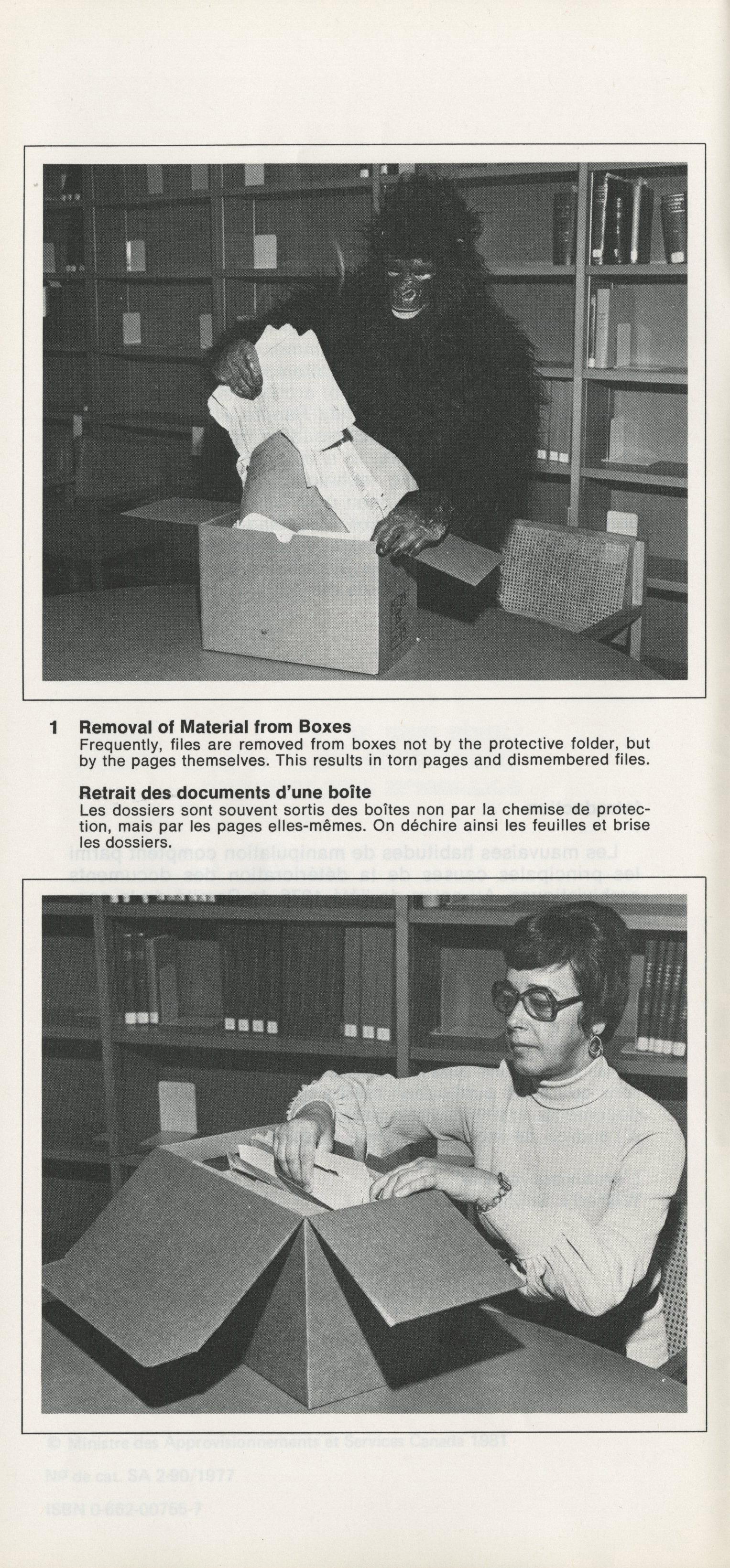
A black-and-white photograph displaying the improper and proper ways to remove archival material from a box. The improper manner shows a person dressed as a gorilla forcibly pulling the documents out. The proper manner depicts a female researcher carefully removing the documents.

Removal of Material from Boxes, Image 005 (AMICUS 23668326)

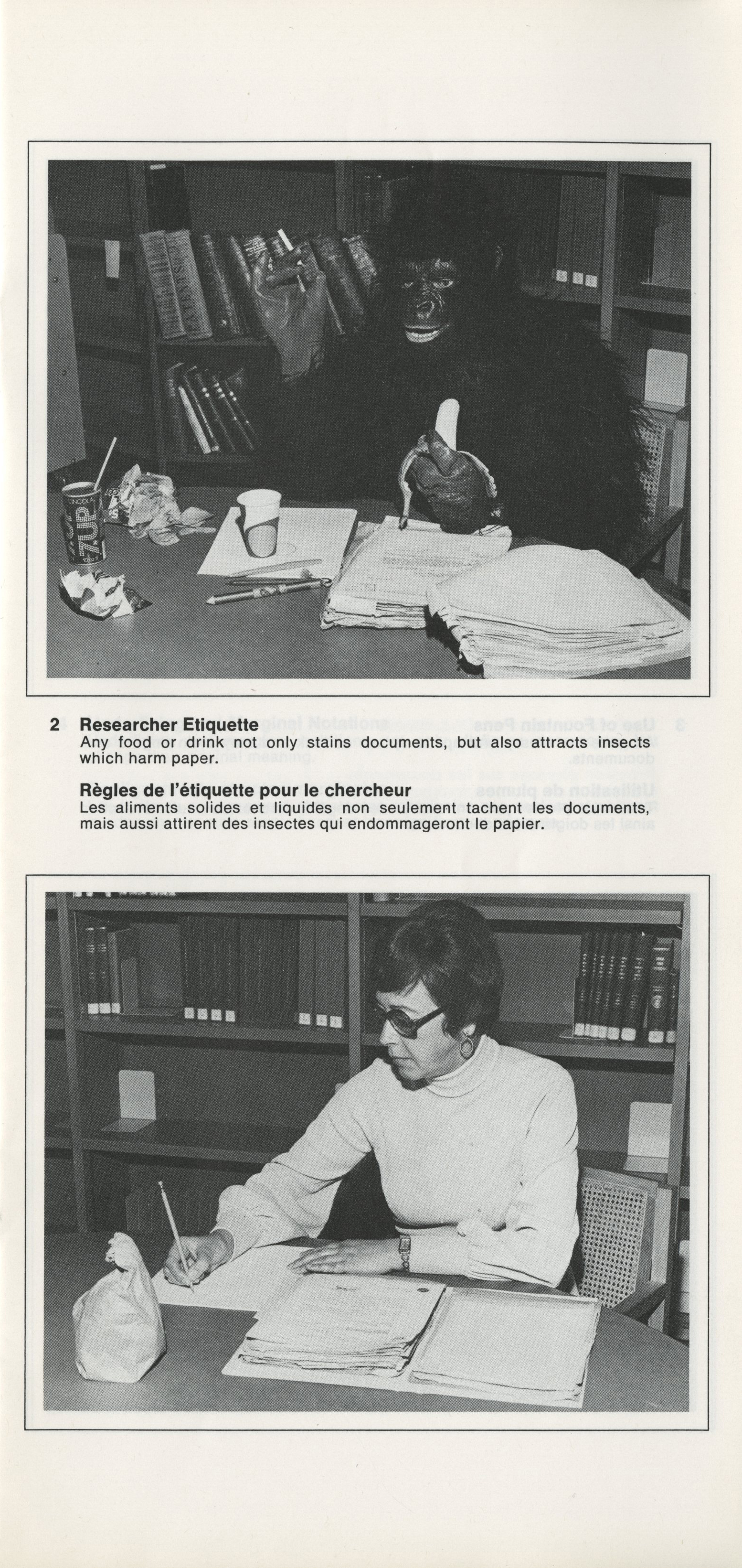
A black-and-white photograph displaying improper and proper research etiquette. The improper manner shows a person dressed as a gorilla eating a banana near the documents, with open beverages close by. The proper manner depicts a female researcher with no open food or drink near the documents.

Researcher Etiquette, Image 006 (AMICUS 23668326)

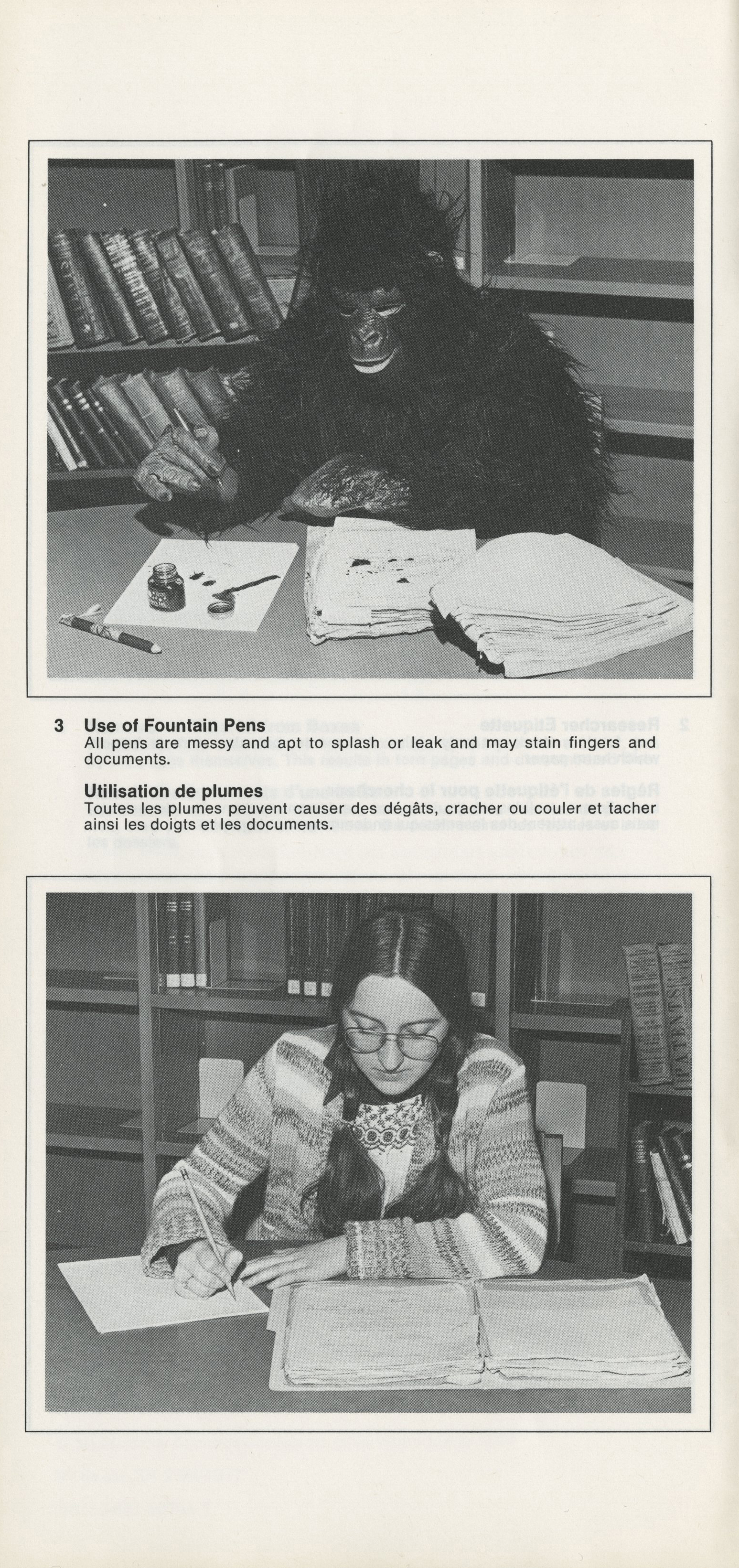
A black-and-white photograph displaying the improper and proper ways to handle archival documents. The improper manner shows a person dressed as a gorilla leaving fingerprints on documents after handling them without wearing white cotton gloves. The proper manner depicts a female researcher wearing white cotton gloves to handle the documents.

Holding Documents While Reading Them, Image 014 (AMICUS 23668326)

Visit the Flickr album now

Guest curator: Catherine Bailey

Banner for the guest curator series. CANADA 150 is in red along the left side of the banner and then the bilingual text: Canada: Who Do We Think We Are? and under that text is Guest curator series.Canada: Who Do We Think We Are? is a new exhibition by Library and Archives Canada (LAC) marking the 150th anniversary of Canadian Confederation. This exhibition is accompanied by a year-long blog series.

Join us every month during 2017 as experts, from LAC, across Canada and even farther afield, provide additional insights on items from the exhibition. Each “guest curator” discusses one item, then adds another to the exhibition—virtually.

Be sure to visit Canada: Who Do We Think We Are? at 395 Wellington Street in Ottawa between June 5, 2017, and March 1, 2018. Admission is free.


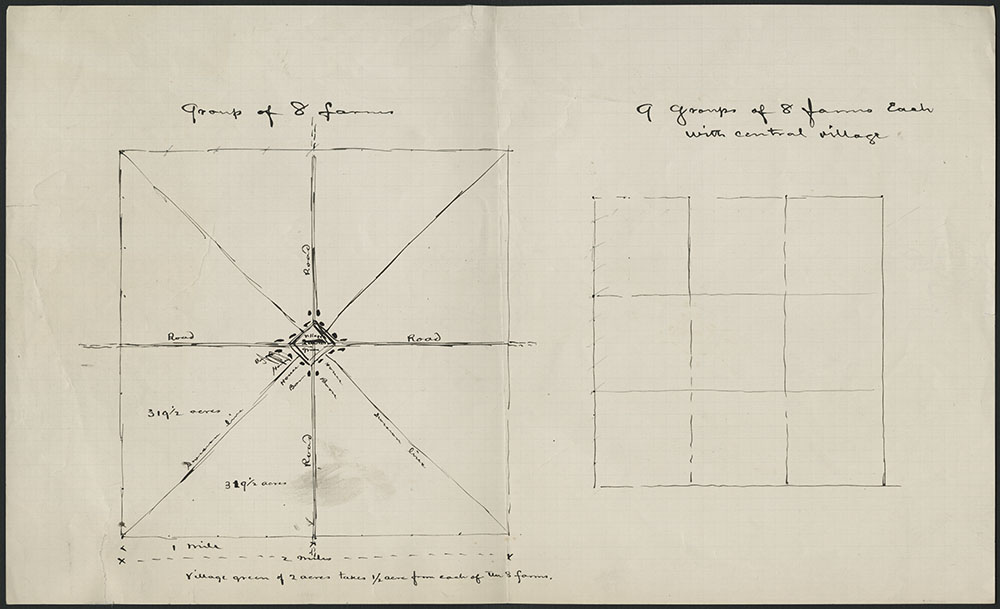
Plan for a group of eight farms by Sir William Cornelius Van Horne for the Canadian Pacific Railway, ca. 1889
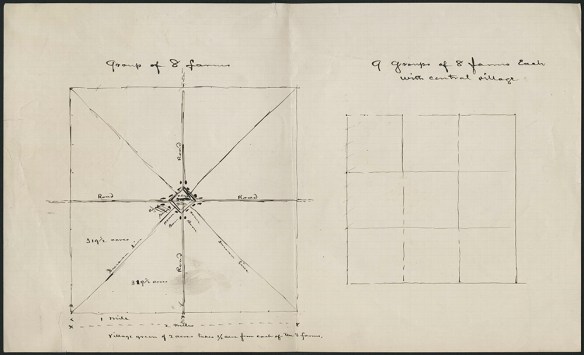
Page with two grids drawn in black ink separated into squares or triangles to represent farms.

Plan for a group of eight farms by Sir William Cornelius Van Horne for the Canadian Pacific Railway, ca. 1889 (MIKAN 2925396)

This doodled design hints at the power railroad companies held to influence the look of the country. Settlements along Canada’s railway lines still reflect the grid plans imposed on them back then.


Tell us about yourself

During four very happy summers as an archival assistant at the Provincial Archives of Alberta, I worked with government records, private manuscripts and cartographic records, and I answered many reference inquiries for homestead applications (through which homesteaders obtained letters patent to confirm that they had settled former Crown land and had received legal title). During my last summer, I catalogued the series of historical township plans (maps) that covered all of Alberta.

Is there anything else about this item that you feel Canadians should know?
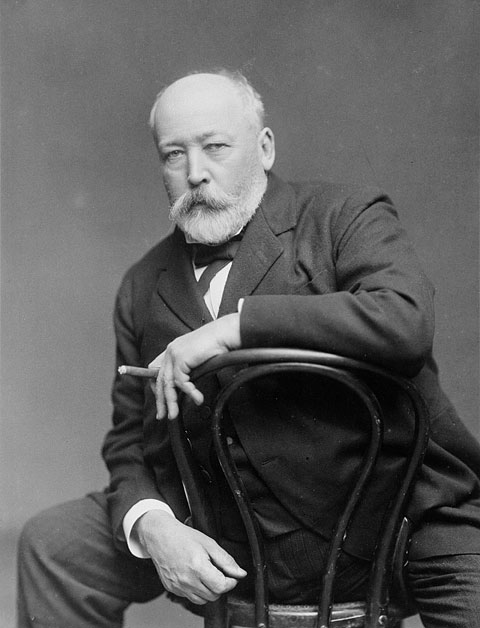
Portrait of a seated man in a suit, straddling a café chair and holding a cigar between two fingers.

Sir William Van Horne, builder of the Canadian Pacific Railway, ca. 1900–1910 by W.A. Cooper (MIKAN 3575931)

Since I am well acquainted with the Western Canadian land survey system and the homestead applications and township plans at the Provincial Archives of Alberta, this item from the Sir William Cornelius Van Horne fonds resonated with me. Those grid lines looked very familiar! But the Canadian Pacific Railway’s (CPR) influence on the look of Western Canada extends beyond this doodled sketch of a grid-based settlement plan; there is more to the story.

The CPR’s construction was supported by the government through the Canadian Pacific Railway Charter, which bestowed on the company a monetary subsidy of $25 million and land grants of 25 million acres (an area roughly the size of England), in addition to lands for rights-of-way, stations and yard works. Van Horne had direct responsibility for the CPR’s construction between 1882 and 1885, and was subsequently its Vice President, President and Chairman. Soon after the railway was completed in 1885, he and the other directors of the company realized that whatever small profits were made would be almost immediately swallowed up by the operating and maintenance costs of the difficult mountain sections.

Recognizing not only the potential lure of new settlement lands but also the grandeur of mountain scenery, Van Horne and the CPR used artwork and carefully crafted words in advertising campaigns that targeted settlement and tourism in Canada. The CPR’s influence and actions thus helped to shape Canada’s image abroad and contributed directly to the national economy.

Tell us about another related item that you would like to add to the exhibition

Van Horne is famously quoted as saying, “If we can’t export the scenery, we’ll import the tourists.” Both his passion for art and his business acumen gave him a keen interest in the development of the CPR’s tourism campaign.

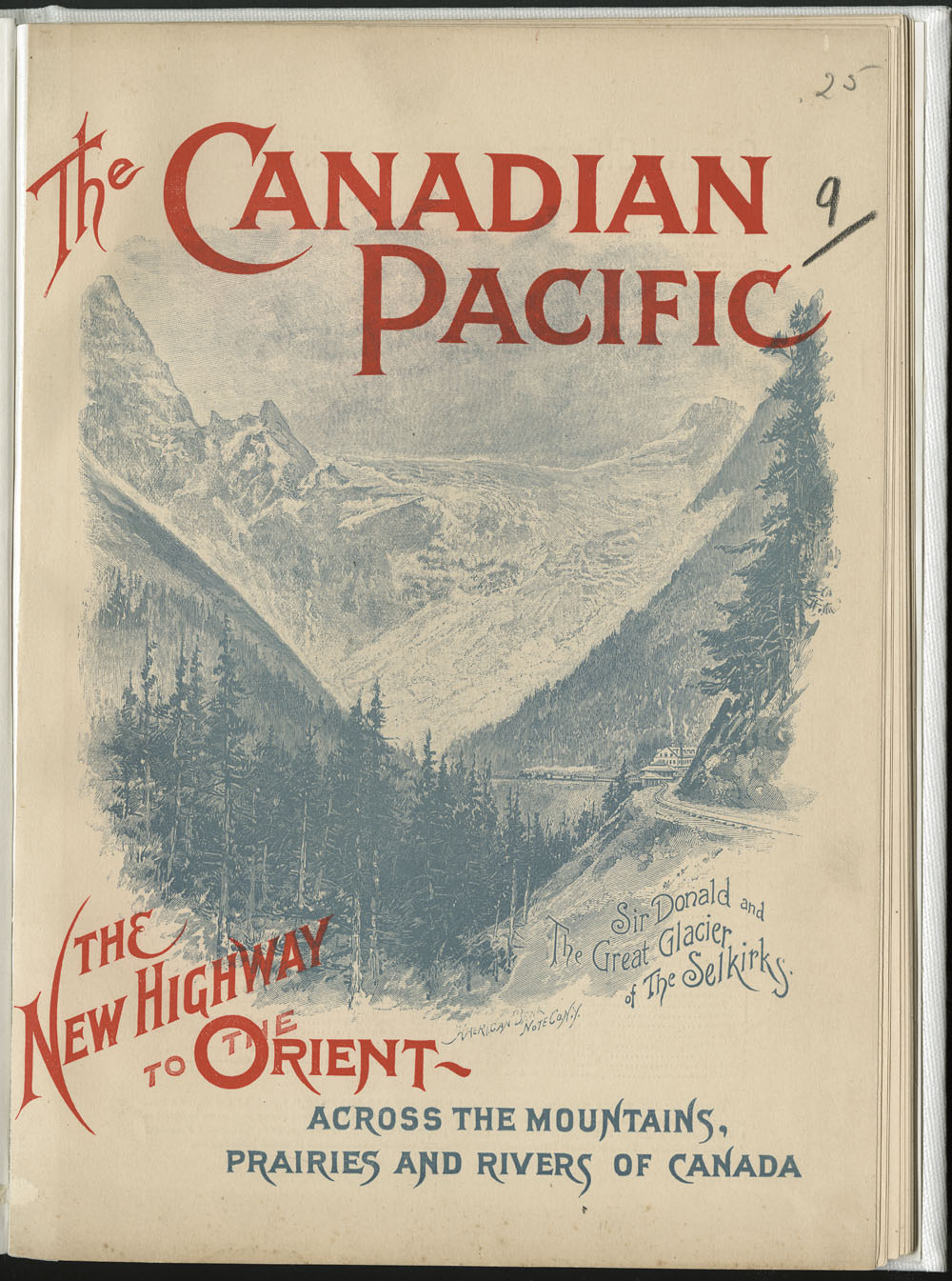
While there is a plethora of beautiful visual records at LAC and across Canada that could show how the CPR and Van Horne influenced the image of Canada abroad, I will focus instead on the complementary power of words, specifically those found in the 1891 version of the CPR tourist pamphlet The Canadian Pacific: The New Highway to the Orient Across the Mountains, Prairies and Rivers of Canada.
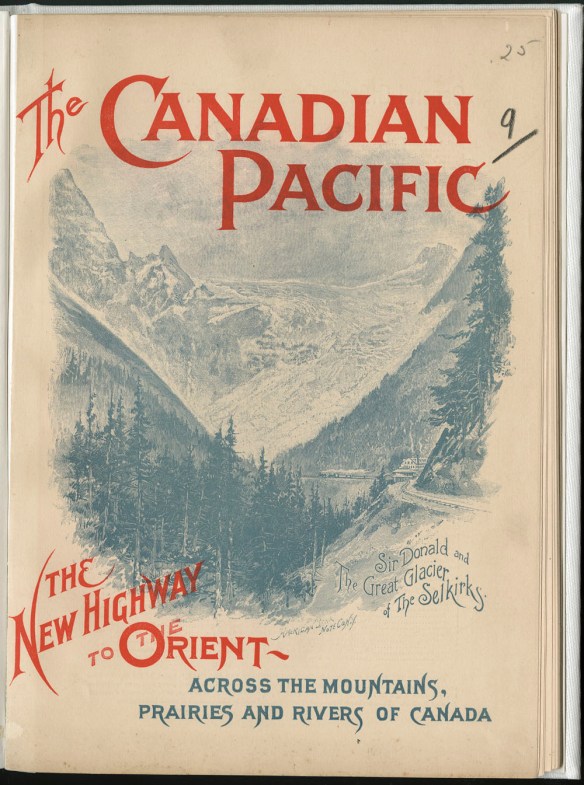
Image of mountain range with a small train leaving a train station, set between the title of the pamphlet at the top and bottom of the page.

Title page of The Canadian Pacific: The New Highway to the Orient Across the Mountains, Prairies and Rivers of Canada, published in Montréal by the Canadian Pacific Railway, 1891 (AMICUS 8155839)

Conceived and written by Van Horne himself, the 48-page pamphlet was originally begun in 1884 before the CPR was even completed, but it was not produced until 1887 because Van Horne insisted on having nothing but the best mountain illustrations to complement the text. He was one of the patrons behind the “Railway School” of Canadian artists that included John Arthur Fraser, Thomas Mower Martin, Frederic Marlett Bell-Smith and Lucius O’Brien. The artists were given free rail passes, with the only stipulation often being that the CPR would have first choice of the finished works for its own use.
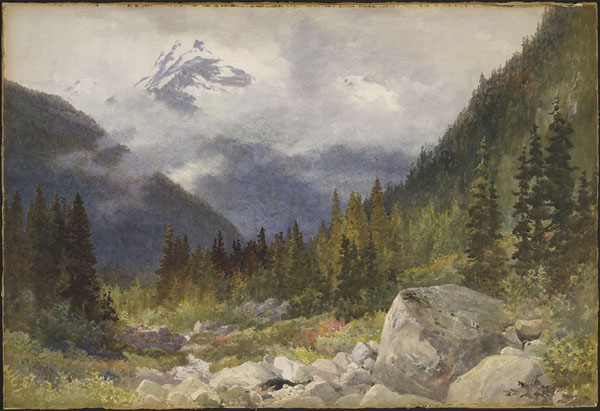
Colourful watercolour scene depicting a green forest in front of cloud-shrouded blue mountains.

View of the Rockies by Lucius O’Brien, 1887 (MIKAN 2886889)

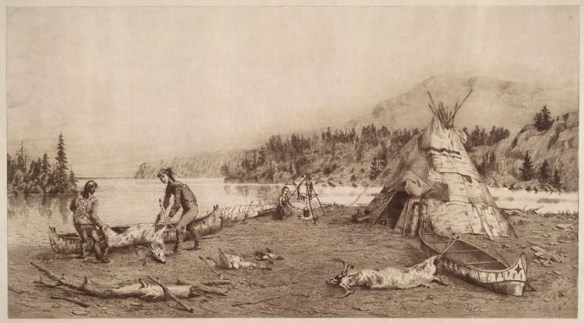
Etching of two men on a beach putting a dead deer in a canoe. Another canoe and a wigwam can be seen at the side in front of trees with a mountain across the river.

Aboriginal Hunters with Wigwam and Canoe by a River by Thomas Mower Martin, 1885 (MIKAN 3018705)

Notwithstanding Van Horne’s passion for art, as a businessman he was not above clearly reminding artists that they owed it to the CPR to portray the mountains in a suitably grand manner to entice visitors. In one notable circumstance, described in E.J. Hart’s book The Selling of Canada: The CPR and the Beginnings of Canadian Tourism (AMICUS 3976336), Van Horne wrote to John Arthur Fraser (who had been sent out in 1886 to sketch the entire CPR line):

The black and white sketches will hardly answer our purposes, the mountains not being sufficiently imposing. I made last night a rough sketch … which will illustrate my ideas; it is made mostly from memory and I have taken a great deal of license but I do not think that any one going to the spot without the picture in hand will ever accuse us of exaggeration. For the great glacier and Syndicate Peak I would like something similar to this. … I find the perspective in the glacier not right and the peaks projecting through the glacier are not treated broadly enough to give their proper distance. You will of course be able to make a great many improvements on my sketch, but I hope you will preserve the size.

Please make a sketch of Mount Stephen, treating it in something the same manner. (The Selling of Canada, p. 35)

The New Highway pamphlet itself was clearly aimed to entice tourists:

May I not tempt you, kind reader, to leave England for a few short weeks and journey with me across that broad land, the beauties and glories of which have so recently been brought within our reach? There will be no hardships to endure, no difficulties to overcome, and no dangers or annoyances whatever. You shall see mighty rivers, vast forests, boundless plains, stupendous mountains and wonders innumerable; and you shall see all in comfort, nay in luxury. If you are a jaded tourist, sick of Old World scenes and smells, you will find everything fresh and novel. … If you are a mountain climber, you shall have cliffs and peaks and glaciers worthy of your alpenstock. (New Highway, 1891, p. 8)

The language is so evocative that reading this today, we can actually imagine what it was like to travel across Canada on the CPR in the late 19th century. The story begins with an explanation of how to reach the Montréal terminus by steamship (unless it is winter, in which case Halifax is the destination), then noting: “But you are impatient to see the mountains, and if you will permit me to choose, dear reader, we will start from Montreal by the main line of railway, and in order that we may miss nothing we will return by the great lakes, and see Toronto and the Falls of Niagara then.” (p. 12)

The pamphlet goes on to extol the facilities of the train itself before providing a detailed description of each part of the journey to the West. The voyager is taken step by step from Montréal through the Ottawa Valley, then north of Lake Superior and into Manitoba, over the great plains of the then Northwest Territories, and into the majestic mountain ranges west of Banff, before emerging from the grand yet “terrible” Fraser Canyon into the Fraser Valley and Vancouver, and concluding with a combination of apology and exhortation:

I ask your pardon, patient reader, for my persistence in showing you all sorts of things as we came along, whether you wished to see them or not. My anxiety that you should miss nothing you might wish to see is my only excuse. You have been bored nearly to death, no doubt, and I have noticed signs of impatience which lead me to suspect your desire for freedom to go and see as you like, and as you have found that no guide is necessary, I will, with your permission, leave you here … (pp. 43–44)

In the end, the CPR’s appeal to the hearts and minds of tourists to promote and exploit the mountain scenery paid off not only for the company but also for Canada’s overseas image and the national economy, a fact that was recognized and further capitalized on by the federal government in the coming years. J.B. Harkin, the first Commissioner of Dominion Parks (1911–1936), shared Van Horne’s appreciation of the economic value of Canadian scenery, regularly including statistics in his annual reports to the Minister of the Interior. Citing the expenditures of foreign and Canadian visitors to Banff between 1910 and 1915 (approximately $15 million and $8.5 million respectively), he further praised the economic value of national park scenery:

It is unique in this regard that while it brings in large sums of money it means that the country does not give in return anything which represents a loss to the country. When wheat is sold we sell a portion of the fertility of our soil. But the tourist who pays his money to see our mountains and lakes and falls, our canyons and glaciers, not only leaves his money but also leaves whole and unimpaired all those natural attractions which brought him here. These beauties remain forever to attract more tourists and more tourist dollars.”

Want to learn more about the foundations of the Canadian tourist industry and the impact of Canadian railways? Take a look at the archived LAC web exhibition Canada, by Train.

Biography

Colour photograph of a woman with short hair and wearing a crimson blazer smiling.Catherine Bailey is a senior government records archivist at LAC, where she has been responsible for the health and social welfare, transportation, justice and security portfolios. While working on her Honours BA in Canadian History (UBC, 1986), she spent summers working as an archival assistant at the Provincial Archives of Alberta, before moving on to complete her Master of Archival Studies degree (UBC, 1988). General Editor of the Association of Canadian Archivists’ journal Archivaria from 2007–2008, she received the ACA Member Recognition Award (2004) and the Archives Association of Ontario’s James J. Talman Award (2012). She has written and presented widely on archival appraisal, especially the development of macroappraisal within the Canadian federal government.

Related resources

Beating hearts: John Alexander Hopps and the pacemaker

By Rebecca Meunier

Quick! Think of five inventions that have revolutionized the way we live.

Now try to think of five Canadian medical inventions. Not so easy, is it?

Why is it that most of us are able to think of five inventions that have helped to shape the world we live in, such as the wheel, but struggle to name even two Canadian medical inventions?

Though we might have the impression that countries such as the United States or England have the upper hand when it comes to the total number of medical inventions, we must not forget that Canada has long been a leader in the advancement of healthcare across the world. Some Canadian inventions include the discovery of insulin by Sir Frederick Banting; the invention of Pablum, an enriched infant cereal; and cobalt therapy.

There is one Canadian medical invention, however, that outshines all others. It has the power to make your heart beat steadily when you exercise and even when you are in love. That invention is the artificial pacemaker. Canadian electrical engineer John Alexander Hopps is credited with the invention of the artificial pacemaker (also known as the stimulator-defibrillator), and it is through Hopps’s work with Dr. Wilfred Bigelow and Dr. John Callaghan that the device first began to save lives.

A black-and-white photograph of an operating room scene with four men in surgical gowns and masks gathered around a prone patient who is hidden from view.

Dr. John Hopps in the background overlooking an operation in an operating theater, undated (a207051 )

John Alexander Hopps was born in Winnipeg on May 21, 1919. He graduated in 1941 from the University of Manitoba, where he had studied electrical engineering. He then worked at the National Research Council (NRC) in Ottawa on wartime radar development. In 1949 he was assigned to work in Toronto with Dr. Bigelow, who had recently discovered that there was a reduced risk of complications if, before an open-heart surgery, the patient was kept in a state of hypothermia. His work with Dr. Bigelow and Dr. Callaghan led to the development of the cardiac pacemaker in the 1950’s—a device that, though he did not know it at the time, would help prolong his own life. From 1957 until 1958 Hopps worked in Sri Lanka, helping to establish the first colonial engineering unit in Southeast Asia. Fifteen years later, in 1973, he became the head of the NRC’s new Medical Engineering Section. He continued to work on new medical innovations and became a leading voice for the importance of hospital safety standards. He was especially concerned with the protective measures taken by hospitals to reduce the risk of operating room electric shock hazards.

Hopps’s unique knowledge of technology and medicine brought him into contact with all kinds of challenges relating to technology and human health. He even wrote a research paper detailing his findings on the potential health hazards of a microwave oven used by the staff at the Riverside Hospital, concluding that there were no significant harmful effects associated with its use.

Hopps also became the first president of the Canadian Medical and Biological Engineering Society, and in this role continued to promote the use of engineering in the medical world.

The pacemaker that we know today looks very different from its predecessor. The world’s first pacemaker was about the size of a microwave oven and had to be placed outside the body. Over the years, countless doctors and inventors helped to shrink the size of the pacemaker so that it was eventually small enough to be placed inside the human body during a less invasive surgery.

A black-and-white photograph of a small machine with various knobs and dials. Two black wands are connected to the machine by a cord.

Operating room model of the stimulator-defibrillator (e011200816-v8)

The pacemaker became quickly invaluable to doctors and was included in mobile cardiac units.

A black-and-white photograph of a man wearing a lab coat, surgical mask and surgical cap. He is looking at his watch and standing next to a large machine with many drawers, knobs and wires. The machine has a sign on it that reads Mobile Cardiac Resuscitator.

Mobile Cardiac Resuscitator (e011200817-v8)

Black-and-white photograph of a young man wearing glasses and a bowtie.

John A. Hopps, circa 1945 (e011200814-v8)

In 1986, Hopps became an Officer of the Order of Canada. He died in 1998, after having permanently altered how medicine and technology interact with one another.

If you would like to read more about John Alexander Hopps and the pacemaker, you can explore his fonds, which is housed at Library and Archives Canada. Hopps’s fonds includes a wide range of materials, from textual documents relating to his work to pictures that help shed light on the evolution of the pacemaker to images of cardiac operations.


Rebecca Meunier is a student orientation technician at Library and Archives Canada.

Corporal Colin Fraser Barron and Private James Peter Robertson, Victoria Cross recipients

By Emily Monks-Leeson

Today the Discover Blog remembers Corporal Colin Fraser Barron and Private James Peter Robertson, awarded the Victoria Cross (VC) for gallantry one hundred years ago today during the Battle of Passchendaele, one of the First World War’s deadliest and most decisive battles.

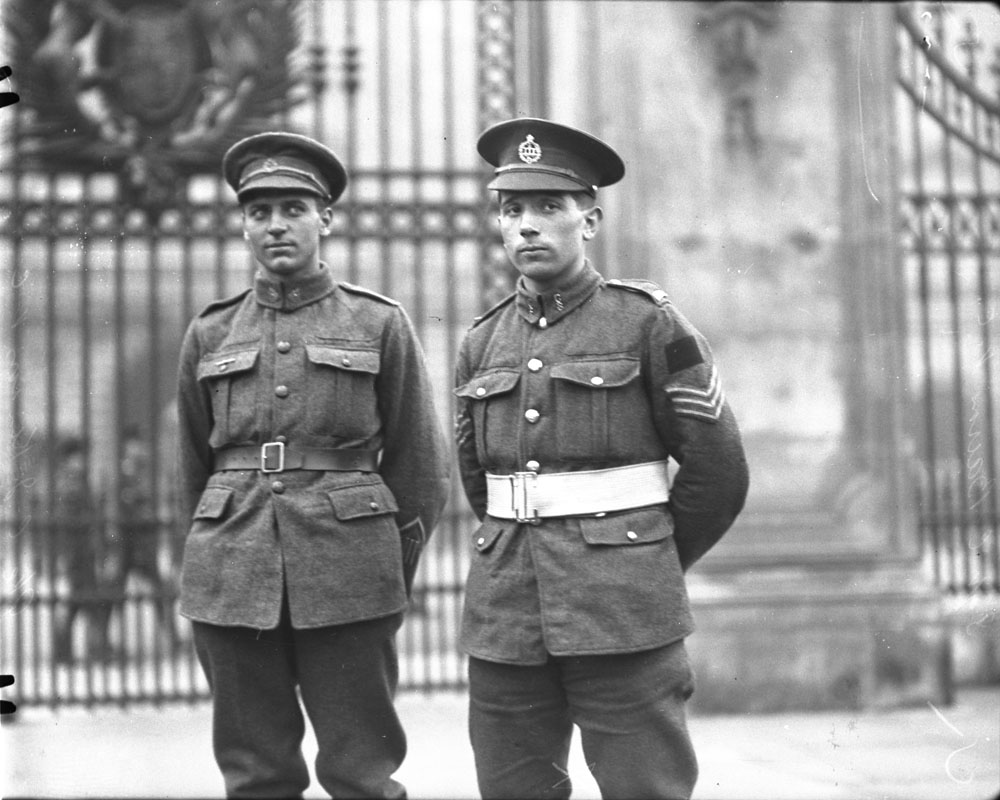
A black-and-white photograph of two soldiers standing in front of an elaborate wrought iron gate.

Sergeant Colin Barron, VC (right) and Private Cecil John Kinross, VC, undated (MIKAN 3405057)

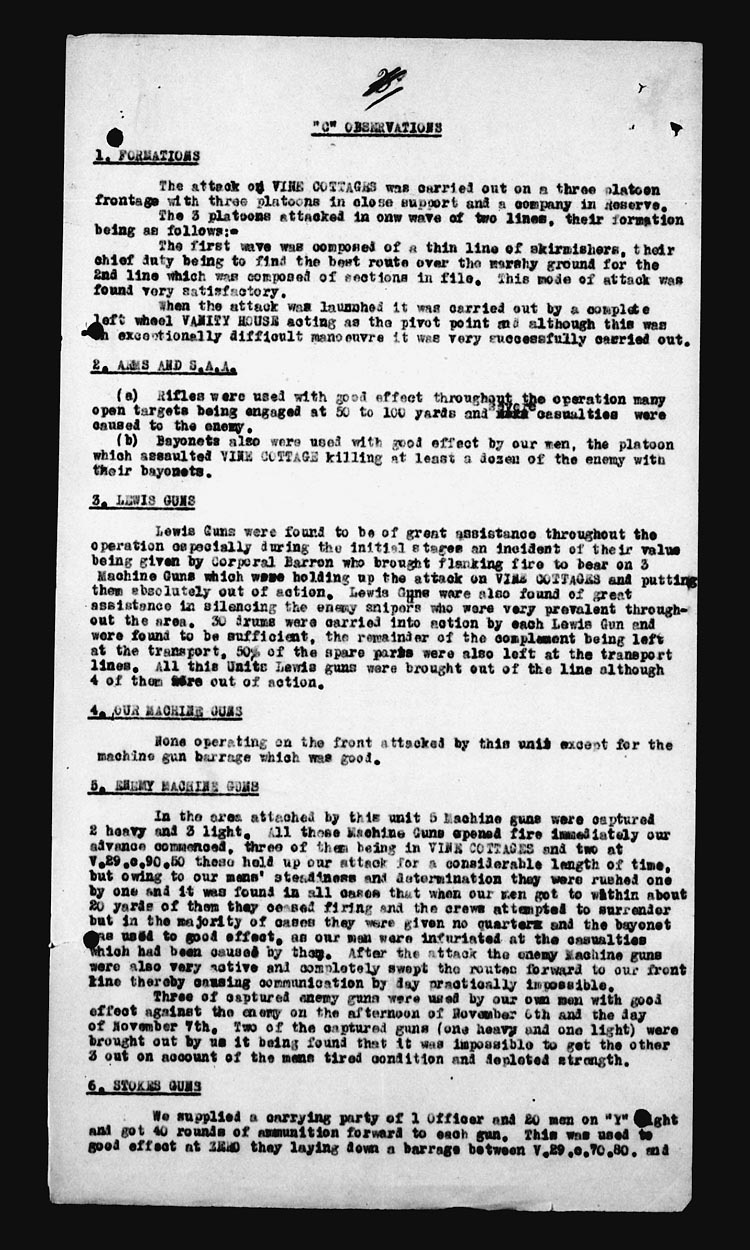
Corporal Barron was born in Boyndie, Banffshire, Scotland, in 1893. He immigrated to Canada in 1910 and enlisted with the Canadian Expeditionary Force (CEF) in Toronto in 1914. Barron was serving with the 3rd (Toronto) Battalion on November 6, 1917, at the Battle of Passchendaele. His unit’s objective was to capture a German pillbox at Goudberg Spur that was blocking the Canadian line of advance. Barron, with a Lewis machine gun, moved around the flank of the German position before opening fire and rushing the machine gun emplacements, killing four of the crew and capturing the remainder before turning the guns on the enemy to the rear. “The remarkable dash and determination displayed by this N.C.O. in rushing the guns produced far-reaching results, and enabled the advance to be continued” (London Gazette, no. 30471, January 11, 1918).

Colin Barron achieved the rank of sergeant-major. He survived the war and served during the Second World War with the Royal Regiment of Canada. He died in 1958 and is buried in the veterans’ section of Prospect Cemetery in Toronto.

A typewritten description of the events of the day.

Appendix C – Observations from the November War Diary of the 3rd Battalion (MIKAN 1883209)

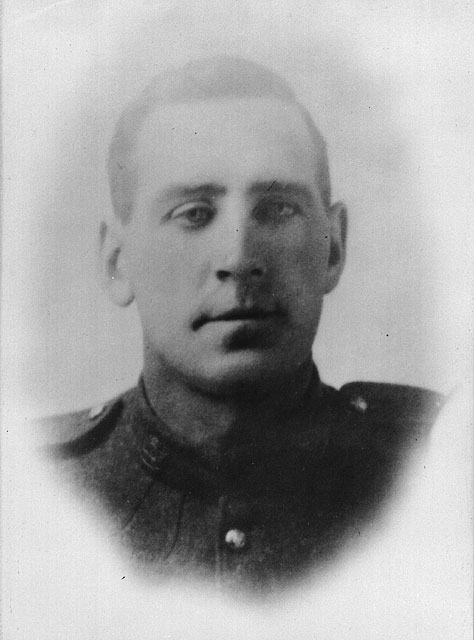
On that same day, Private James Peter Robertson was taking part in the final assault on Passchendaele Ridge with the 27th Infantry Battalion, CEF. Robertson, who was born in Albion Mines (now Stellarton), Pictou County, Nova Scotia, enlisted with the 27th (Winnipeg) Battalion in 1915. When his platoon was held up by barbed wire and machine gun fire, Robertson rushed the German gun. After a hand-to-hand struggle with the crew, he killed four gunners and sent the rest into retreat. Robertson’s citation in the London Gazette tells that, “carrying the captured machine gun, he led his platoon to the final objective. He then selected an excellent position and got the gun into action, firing on the retreating enemy.” Robertson used the machine gun to suppress sniper fire on his unit and, when two Canadian snipers were themselves badly wounded, he ventured out and managed to carry one man back under heavy fire. Tragically, he was killed by a shell as he returned with the second man. Private Robertson is buried in Tyne Cot Cemetery in Belgium.

A black-and-white photograph of a young man in uniform.

Private James Peter Robertson, VC (MIKAN 3645665)

Library and Archives Canada holds the complete service files for Corporal Colin Fraser Barron and Private James Peter Robertson.


Emily Monks-Leeson is an archivist in Digital Operations at Library and Archives Canada.

Library and Archives Canada docks at Pier 21 in Halifax

By Leah Rae

In May this year, a big change came for the Library and Archives Canada (LAC) Halifax team when we moved into the Canadian Museum of Immigration at Pier 21 in beautiful downtown Halifax. The time has flown since then, and we have already passed our first summer at our new location.

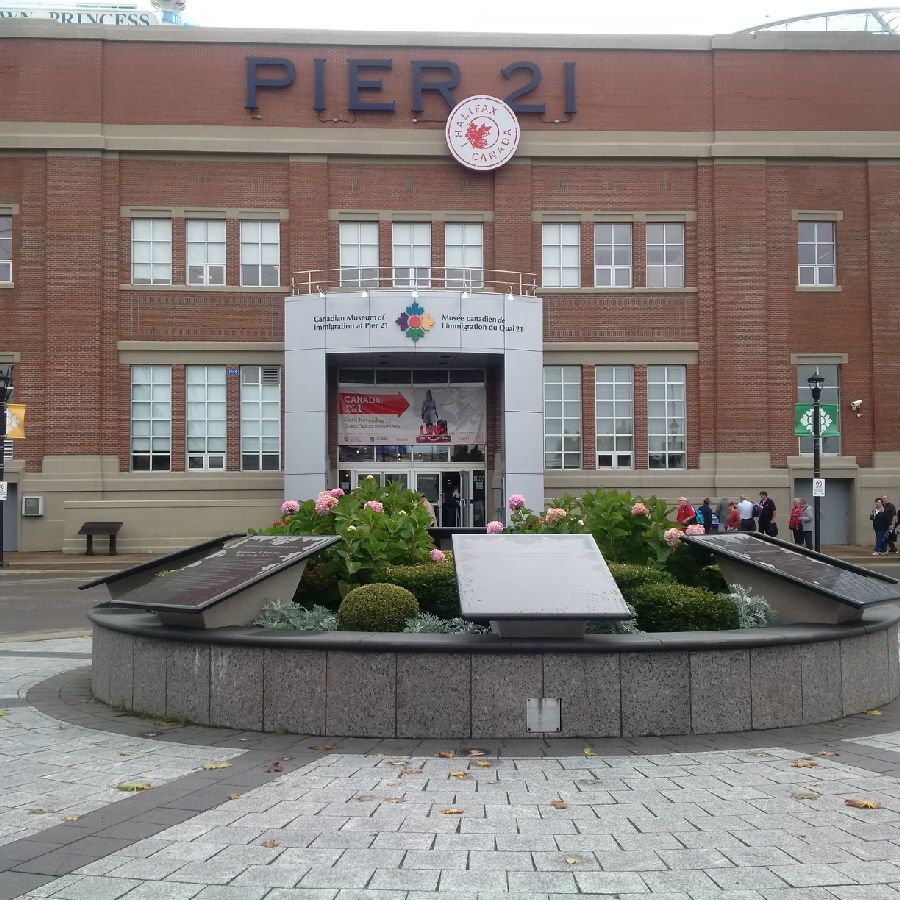
A colour photograph of a red brick building bearing the sign “Pier 21.” In front of its main entrance is a raised garden enclosed within a circular stone form that supports several large plaques.

Providing reference services to researchers in the Halifax region from our new service point at Pier 21.

Not only do we now share office space with Pier 21, we also opened a new service point to make LAC’s collection more accessible to the local communities in the region. Officially launched on June 19, it is located within Pier 21’s Scotiabank Family History Centre, just inside the museum. During the summer we have seen a steady increase in client visits. People come in with all different kinds of questions for us about lighthouses, immigration, family history, military history, war brides, home children, the coal mining industry in Cape Breton, Indigenous genealogy, and much, much more. In addition to the knowledgeable employees who staff our service point on weekdays, we also have a kiosk that provides clients with access to LAC databases, as well as other subscription databases, such as Ancestry.ca. Researchers can drop by anytime during our hours of operation to use the kiosk or speak with someone at the orientation and reference desk. For up-to-date hours of operation, please visit the Service Points Outside of Ottawa page. Researchers can also make an appointment with an archivist on site for assistance with more in-depth questions or with help preparing for a research trip to consult material at LAC in the National Capital Region, Winnipeg, or Vancouver.

A colour photograph of a woman sitting at a desk in front of a computer looking at the camera. On the wall behind her is the sign “Library and Archives Canada – Bibliothèque et Archives Canada.”

LAC archivist Leah Rae at the new orientation and reference desk

Co-locating with Pier 21 also gives us the opportunity to work with the museum on some of its most popular events. Canada Day has been the largest event for us so far, with this year marking the 150th anniversary of Confederation. We set up an information booth in the museum and were delighted to receive over 300 visitors. People were excited to meet us and to enter a draw to win one of five reproductions of original images from LAC’s vast collection.

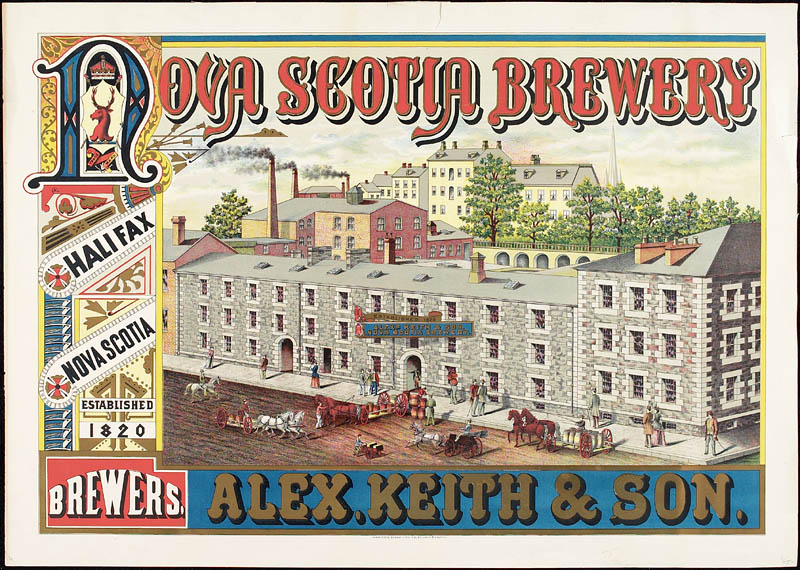
A colour print of an ad for Alex. Keith and Sons. Nova Scotia Brewery.

One of the prints reproduced for the draw on Canada Day (e000756699)

Canada Day was the first of many planned collaborative events between LAC and Pier 21. We are looking forward to more opportunities to highlight our collection to Haligonians and other visitors.


Leah Rae is an archivist based in Halifax in the Regional Services and ATIP Division of Library and Archives Canada.

Major-General George Randolph Pearkes, Victoria Cross recipient

By Emily Monks-Leeson

Major-General George Randolph Pearkes was born in Watford, England, in 1888, and immigrated to Alberta in 1906. In 1915, he enlisted with the 2nd Regiment, Canadian Mounted Rifles, and from September 1916 onward commanded the 5th Battalion, Canadian Mounted Rifles. He was awarded the Victoria Cross at the Battle of Passchendaele.

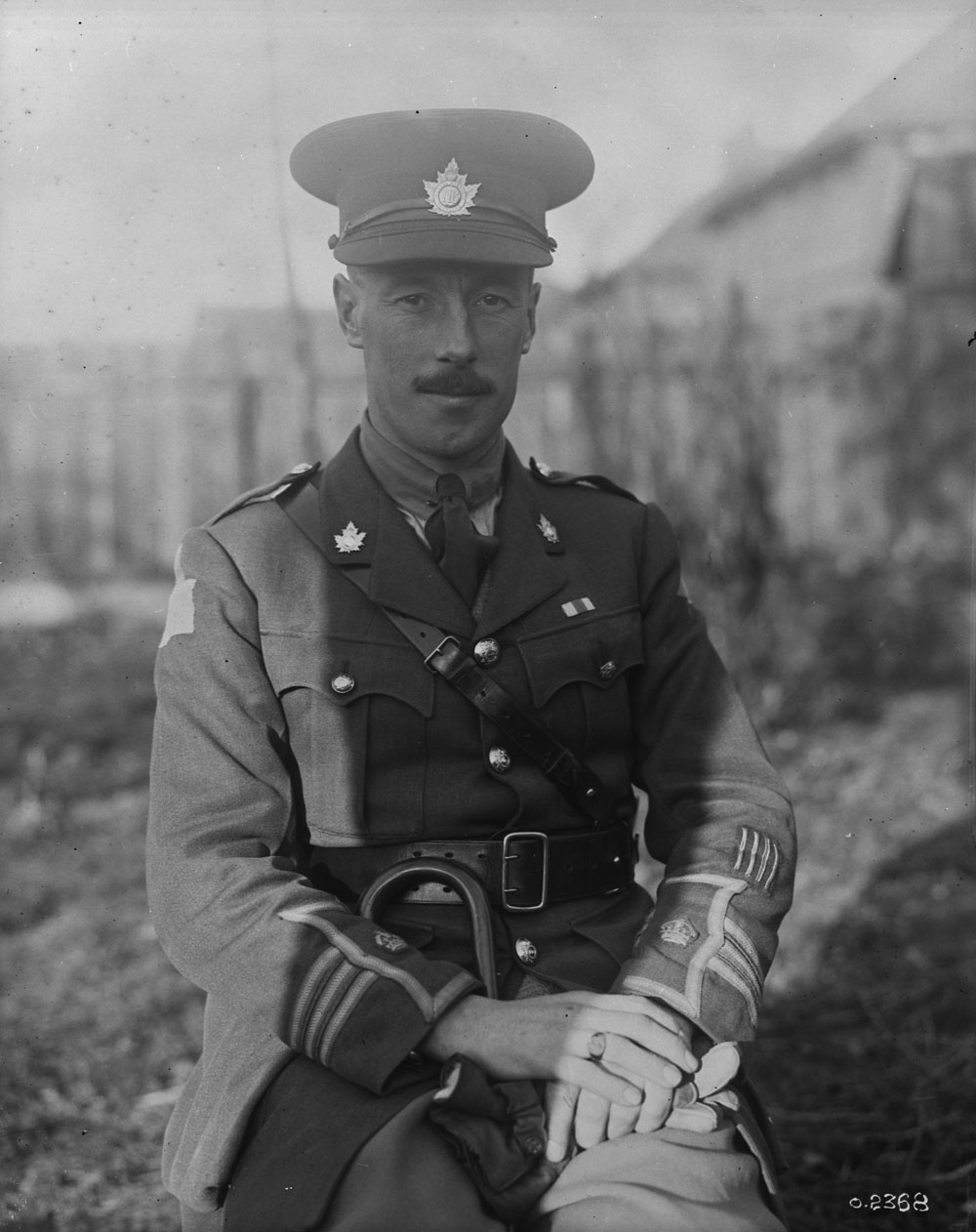
A black-and-white photograph of a seated officer wearing a cap, a Sam Browne belt (a wide leather strap around the waist with another narrower strap passing diagonally over the right shoulder) and arm stripes.

Major George Randolph Pearkes, VC, wearing the Military Cross service ribbon (he had not yet received the ribbon for the Victoria Cross). Note the four wound stripes on his sleeve. Photograph taken in December 1917 by William Rider-Rider (MIKAN 3219828)

Pearkes, then a major, was awarded the Victoria Cross in recognition of his skillful command during the capture and consolidation of his unit’s objectives and further ground in Passchendaele, Belgium, from October 30 to 31, 1917. Major Pearkes, who had been wounded in the thigh prior to his troops’ advance, led his unit throughout their attack. His citation in the London Gazette states that, when his unit’s advance was halted by a strongpoint, which a unit to his left had failed to capture, Pearkes himself captured and held the point, thus allowing the continued advance of Canadian troops.

It was entirely due to his determination and fearless personality that he was able to maintain his objective with the small number of men at his command against repeated enemy counter-attacks, both his flanks being unprotected for a considerable depth meanwhile.

London Gazette, no. 30471, 11 January 1918.

Before the end of the war, Pearkes would be wounded five times, promoted to lieutenant-colonel, and awarded the Victoria Cross, the Military Cross and the Distinguished Service Order. Following the armistice, he became a career officer, was appointed to Princess Patricia’s Canadian Light Infantry, and served as a staff officer at the Royal Military College of Canada. During the Second World War, Brigadier Pearkes commanded the 2nd Canadian Infantry Brigade, later becoming the general officer commanding in Chief, Pacific Command, where he oversaw defences on Canada’s west coast. He entered federal politics upon retiring from the army and was elected as the MP, Progressive Conservative Party, for Nanaimo, British Columbia in 1945. He was Minister of National Defence from 1957 to 1960, and became Lieutenant Governor of British Columbia in October 1960.

Major-General George Pearkes died in Victoria, British Columbia on May 30, 1984. The George R. Pearkes Building housing the Department of National Defence in Ottawa is named in his honour, as is Mount Pearkes on British Columbia’s mainland south coast. The complete digitized service file for Major-General George Pearkes is now available in Library and Archives Canada’s Personnel Records of the First World War.


Emily Monks-Leeson is an archivist in Digital Operations at Library and Archives Canada.

Private Kinross, Lieutenant McKenzie and Sergeant Mullin, VCs

By Emily Monks-Leeson

Private Cecil John Kinross was born in the village of Harefield, England, in 1896. He moved with his family to Lougheed, Alberta, in 1912. Kinross served with the 49th (Edmonton) Battalion during the Battle of Passchendaele.

A black-and-white photograph of a man wearing a cap with a grey wool cardigan, white shirt and dark tie.

Private Cecil John Kinross, VC, undated (MIKAN 3217741)

On October 30, 1917, Kinross and his company came under heavy German artillery and machine-gun fire. As casualties in his unit increased, Kinross advanced alone over open ground with only his rifle and a bandolier of ammunition, and destroyed a German machine-gun nest. His citation in the London Gazette states that his “superb example and courage instilled the greatest confidence in his company, and enabled a further advance of 300 yards to be made and a highly important position to be established.”

For his actions, Kinross was awarded the Victoria Cross. Seriously wounded in the arm and head, he was sent to Orpington Hospital, England, and later returned to Alberta. Kinross died in 1957. Mount Kinross in Jasper National Park is named in his honour.

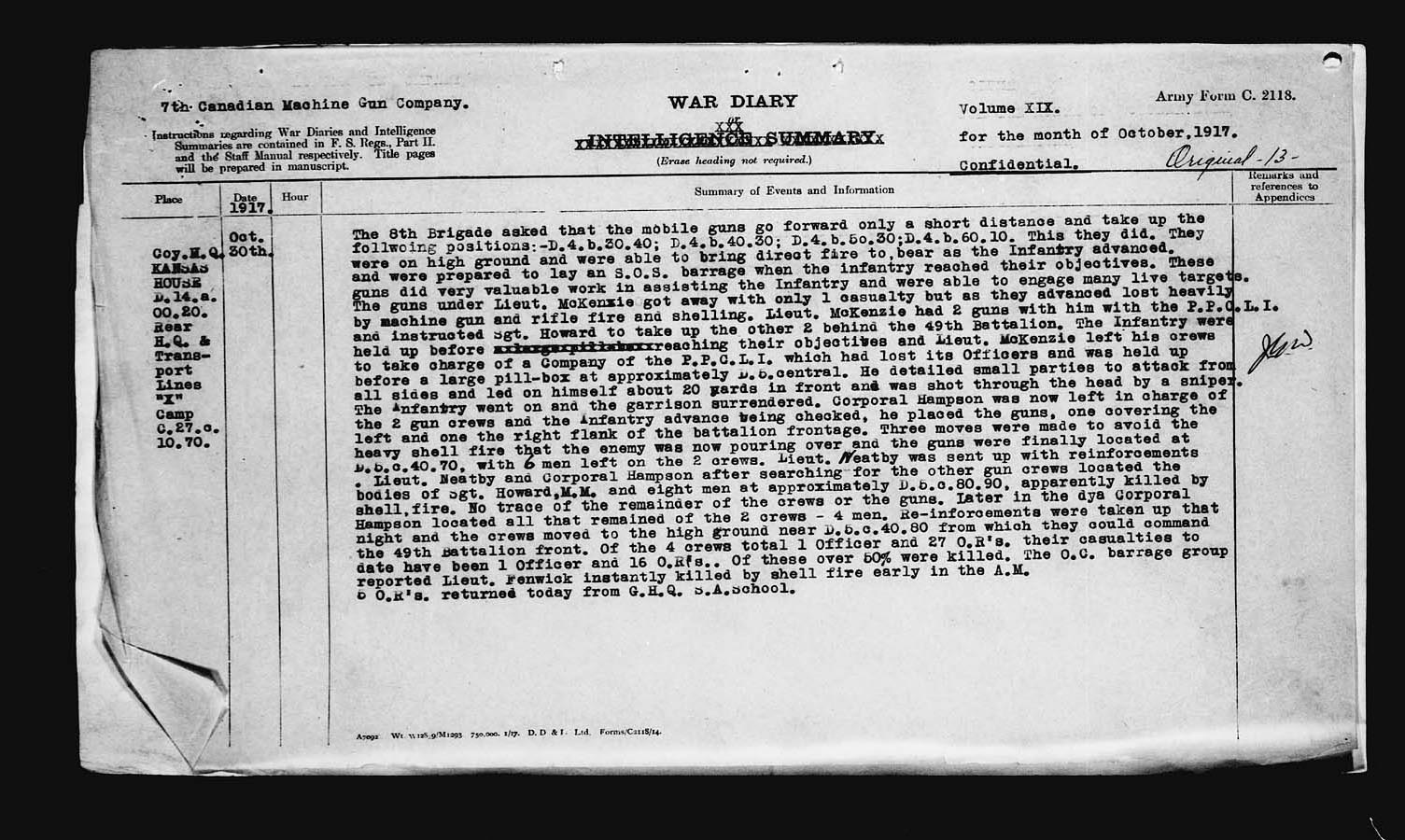
Lieutenant Hugh McKenzie was born in 1885 in Inverness, Scotland. He immigrated to Canada in 1911. McKenzie enlisted with the Princess Patricia’s Canadian Light Infantry as a private in August 1914. By January 1917, he had been commissioned as a second lieutenant. On October 30, 1917, McKenzie was in command of a machine-gun section accompanying infantry in an attack against German positions. When all officers and most non-commissioned officers of the company were killed or wounded, McKenzie took command of the remaining infantry. Using flanking and frontal attacking parties, McKenzie captured a machine-gun pill box that had inflicted heavy casualties. His actions saved the lives of many men, but he himself was killed leading the frontal attack.

A black-and-white photograph of a uniformed soldier with a small moustache.

Lieutenant Hugh McKenzie, VC, undated (MIKAN 3218971)

A typed detailed account of the events of October 30, 1917.

War diary of the 7th Canadian Machine Gun Company, October 30, 1917, page 16 (MIKAN 2004833)

Lieutenant McKenzie received the Victoria Cross and the French Croix de guerre for his actions. His body was never recovered. McKenzie’s name appears, along with the names of 56,000 other soldiers from Britain, Australia, Canada, and India with no known graves, on the Menin Gate memorial. In his citation in the London Gazette , his name is misspelled as “Mackenzie.”

Major George Harry Mullin was born in Portland, Oregon, in 1892. He immigrated with his family to Moosomin, Saskatchewan, at the age of two. Mullin enlisted in December 1915 and served in the scout and sniper section of the Princess Patricia’s Canadian Light Infantry. As a sergeant at the Battle of Passchendaele, Mullin single-handedly captured a German pill box that had caused heavy casualties among the Canadian troops. His citation in the London Gazette recounts how Mullin:

… rushed a sniper’s post in front, destroyed the garrison with bombs, and, crawling on to the top of the “Pill-box,” he shot the two machine-gunners with his revolver. Mullin then rushed to another entrance and compelled the garrison of ten to surrender. … [Mullin] not only helped to save the situation, but also indirectly saved many lives.

London Gazette, no. 30471, 11 January 1918

Sergeant Mullin was awarded the Victoria Cross for his actions, finishing the war as a lieutenant. He was appointed as Sergeant-at-Arms of the Saskatchewan legislature in 1934. He served in the Veterans Guard during the Second World War. Major Mullin died in Regina, Saskatchewan, in 1963.

A black-and-white photograph of a smiling soldier wearing a helmet and a leather jerkin.

Sergeant Mullin, VC, Princess Patricia’s Canadian Light Infantry, January 1918 (MIKAN 3219321)

Library and Archives Canada holds the Canadian Expeditionary Force (CEF) service files for Private Cecil John Kinross, Lieutenant Hugh McKenzie and Major George Harry Mullin. Complete digital copies are available in the Personnel Records of the First World War database.


Emily Monks-Leeson is an archivist in Digital Operations at Library and Archives Canada.

Guest curator: Taryn Dewar

Banner for the guest curator series. CANADA 150 is in red along the left side of the banner and then the bilingual text: Canada: Who Do We Think We Are? and under that text is Guest curator series.Canada: Who Do We Think We Are? is a new exhibition by Library and Archives Canada (LAC) marking the 150th anniversary of Canadian Confederation. This exhibition is accompanied by a year-long blog series.

Join us every month during 2017 as experts, from LAC, across Canada and even farther afield, provide additional insights on items from the exhibition. Each “guest curator” discusses one item, then adds another to the exhibition—virtually.

Be sure to visit Canada: Who Do We Think We Are? at 395 Wellington Street in Ottawa between June 5, 2017, and March 1, 2018. Admission is free.


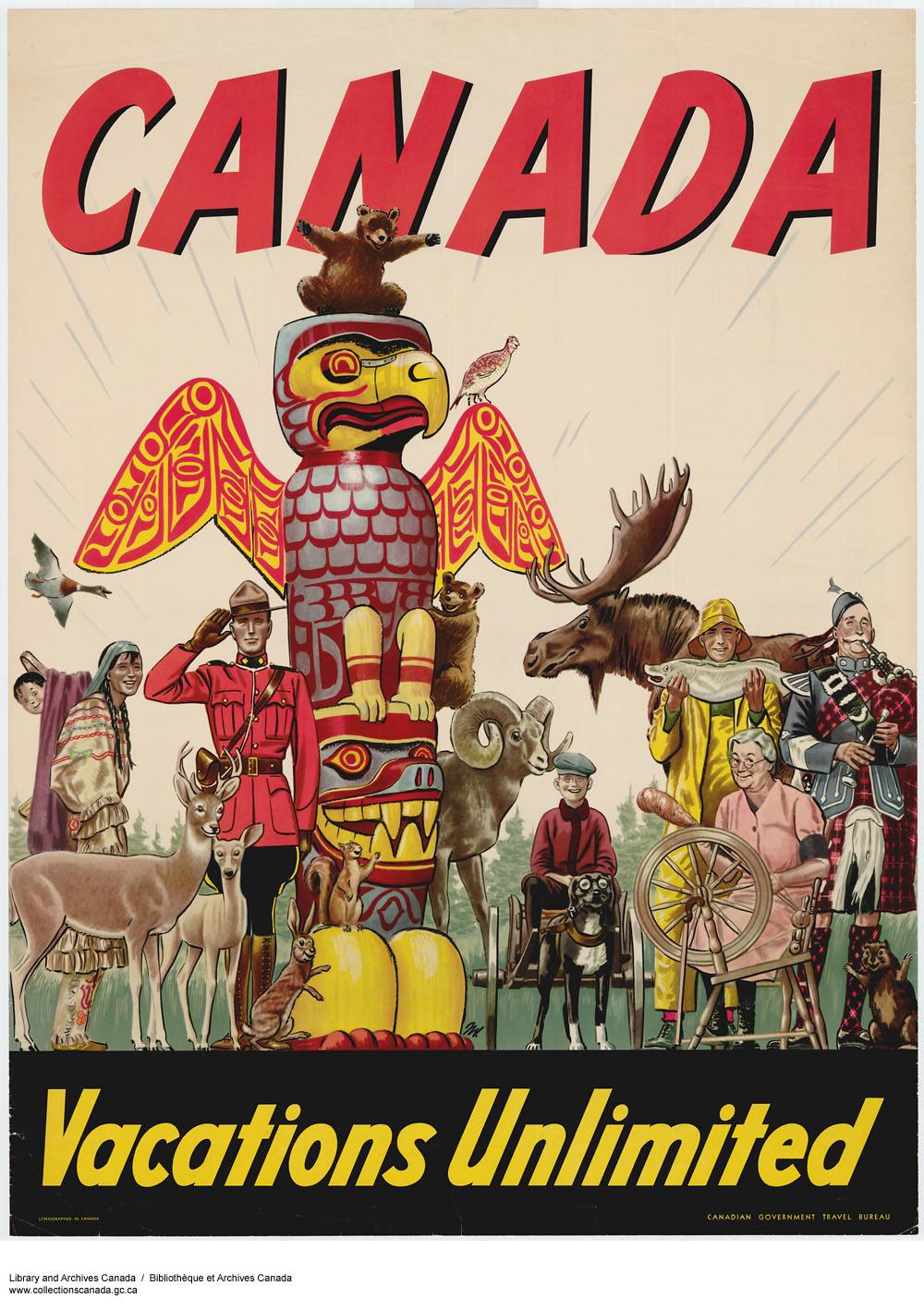
Tourism Poster from Canada Vacations Unlimited, ca. 1947

Colourful poster depicting a moose, deer, bears, a rabbit, a squirrel, a beaver, a fisherman, a piper, a woman spinning wool, a Mountie, an Indigenous woman and child, a boy driving a dog cart, and a totem pole. The words “Canada” and “Vacations Unlimited” are printed across the top and bottom of the poster.

Tourism poster from Canada Vacations Unlimited, ca. 1947 (MIKAN 3007692)

More American tourists preferred seeing sights to going camping, according to early market research. This ad campaign, featuring Canadian cultural symbols, was the—often questionable—response. Is any Canadian stereotype missing?


Tell us a bit about yourself

In 2015, I moved to Fort McMurray, Alberta to work at the Oil Sands Discovery Centre as an interpreter. I grew up in Hamilton Township, Ontario, near Lake Ontario. Our family spent a lot of time camping and visiting museums on vacations. My move from Ontario to Fort McMurray let me travel across the country and gave me a much better perspective on just how big Canada really is.

Is there anything else about this item that you feel Canadians should know?

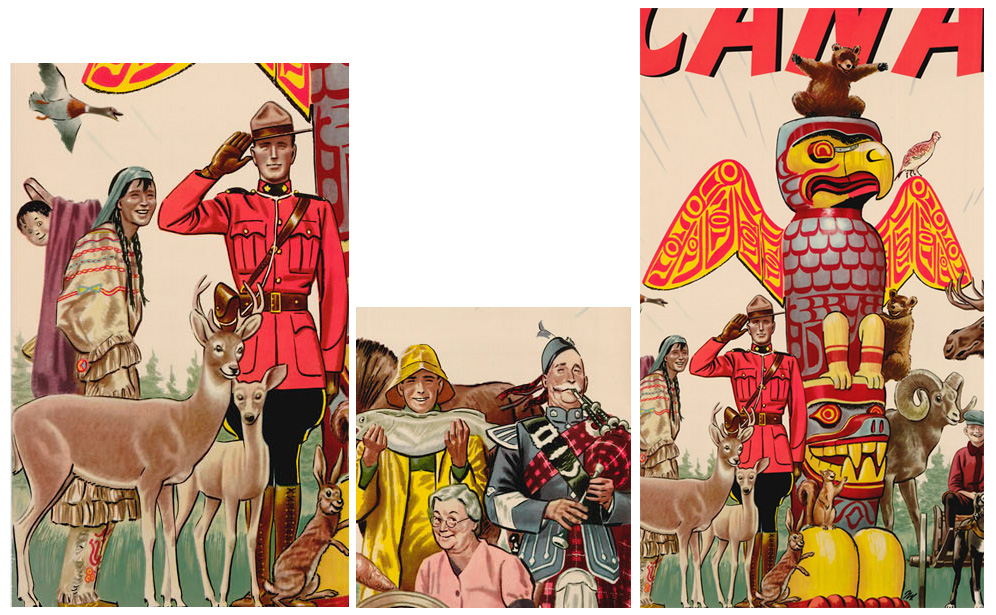
Three detailed images from the poster. One has a uniformed Mountie, and a First Nations woman wearing a blue-and-red striped dress carrying a baby on her back with deer and a rabbit in the foreground. The second has a fisherman in yellow rain gear holding a large fish and a man in a blue dress coat playing the bag pipes with a white haired woman seated between them. The third has a colourful totem pole shaped like an eagle with its wings spread on top surrounded by wildlife.

Detail of individual images from the poster: a Mountie and First Nations woman and child, a fisherman and a piper, and a totem pole. (MIKAN 3007692)

This Canada Vacations Unlimited poster captures a number of different Canadian stereotypes from the east to the west—the fisherman, the Mountie, the First Nations woman and child, and the totem pole. The poster also references some of the settlers who came to Canada such as the piper. Since the 1930s to 1950s when this poster was created, Canada has become even more diverse. While these are some of the prominent images of Canadians during that time period, it is important to recognize that not every “Canadian-ism” could ever be captured in a single image.

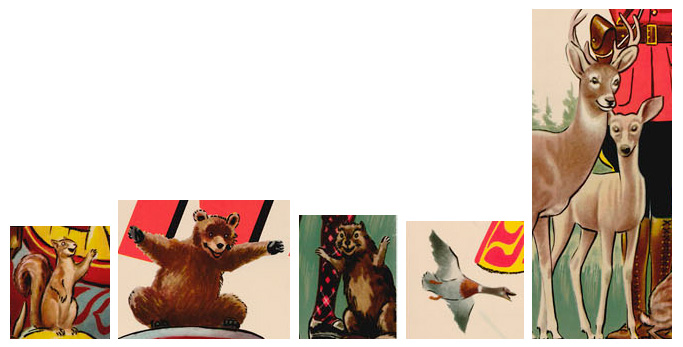
Details of a small brown squirrel; a crouching brown bear with his front paws spread out; a small brown beaver with his front paws spread out; a flying duck; and two brown deer, a stag and a doe.

Details of smaller animals from the poster. (MIKAN 3007692)

This poster features many wild animals as well as a forest in the background. While Canada has a lot of natural beauty, not everyone has a view of the Rocky Mountains or the Canadian Shield outcroppings. According to Statistics Canada, 66% of Canada’s population now lives within 100 kilometres of our southern border with the United States. This represents only four percent of Canada’s land area, which means there are many people living in metropolitan areas now. Some of our biggest cities such as Toronto, Vancouver, and Montréal have attractions that are also well known as tourist destinations.

Tell us about another related item that you would like to add to the exhibition

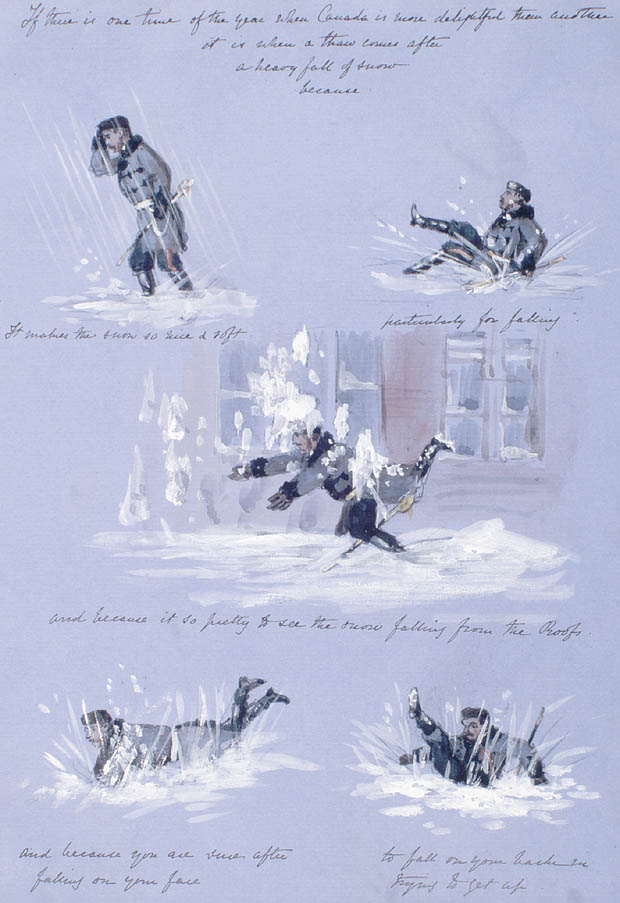
One thing that struck me when I was looking at the Canada Vacations Unlimited poster was that there were no signs of winter. While there are a number of other artifacts in Canada: Who Do We Think We Are that do focus on winter, it struck me that in this particular poster that focused on Canadian stereotypes there was no snow. For most of us in Canada, winter takes up a fair bit of the year. Yes, shovelling snow and driving through snowstorms are not activities that we tend to enjoy, but it is still better to make the most of what we have instead of just waiting for spring to arrive. To help provide a better look at what happens in Canada year-round, I think that this painting from the mid-1800s would be a good pairing for the Canada Vacations Unlimited poster.

A series of vignettes against a blue background depicting a male figure walking through soft snow, falling in various positions, or getting hit by snow. A running line of text describes each image: "If there is one time of the year when Canada is more delightful that another / it is when a thaw comes after / a heavy fall of snow / because / It makes the snow so nice & soft. / particularly for falling / and because it (sic) so pretty to see the snow falling from the Roofs. / and because you are sure after / falling on your face / to fall on your back in / trying to get up."

One time of year when Canada is more delightful than another. (MIKAN 2837052)

The painting focuses on a series of images of a man trying to walk through heavy snow. Its witty title is “One time of year when Canada is more delightful than another.” I think this is an interesting way to poke fun at something many of us grumble about during the winter—slogging through the snow, trying not to fall into it. The inscription that accompanies each figure works to turn an unpleasant experience into a tale of adventure.

Putting these two posters together shows Canadians in different walks of life surrounded by nature and finding ways to deal with the winter. This helps to express some of what Canada has to be proud of. Canada is more than just its natural beauty or its weather. Canadians are the ones who make the most of what this country has to offer and help to make it a better place to visit and live in.

Biography

A colour photo of a woman with glasses smiling at the photographer.

Taryn Dewar has a Master of Arts in Public History from the University of Western Ontario. She works as an Interpreter at the Oil Sands Discovery Centre in Fort McMurray, Alberta.