The Canadian Corps and the Battle of Hill 70

By Emily Monks-Leeson

Today marks a significant anniversary in Canada’s First World War history. Though overshadowed in popular memory by the Battle of Vimy Ridge, the Battle of Hill 70 in August 1917 was planned, fought and won almost exclusively by the Canadian Corps.

Following the victory at Vimy, Lieutenant-General Julian Byng, long-time commander of the Canadian Divisions, took command of the British Third Army, and Canadian-born Lieutenant-General Sir Arthur Currie became the new battlefield commander. In July 1917, Sir Douglas Haig ordered Currie to launch an attack on the German-held town of Lens. Currie insisted, instead, on capturing Hill 70 to the north, giving the Allies the advantage of higher ground and forcing German troops to counterattack from their heavily fortified and well-hidden urban defences.

Preparations for the assault were extensive. On the evening of August 14, Canadian artillery began an intense bombardment of the hill. The following morning, ten Canadian Expeditionary Force assault battalions drawn from the four Canadian divisions attacked. Canadian soldiers took their first objectives within twenty minutes, while low-flying aircraft helped to direct artillery against concentrated points of German resistance.

Thrown off the hill, the German army immediately counterattacked. Both sides used chemical gas and soldiers fought nearly blind through fogged-up respirators. Over four days, the Germans counterattacked 21 times, but, in the end, the Canadians held the hill overlooking Lens. Haig characterized the battle as “one of the finest minor operations of the war,” while Currie described it as among the hardest battles fought and won by the Canadian Corps.

The attack on Hill 70 left an estimated 9,000 Canadians dead or wounded and 41 taken prisoner. The Germans, who had committed five divisions to defend Hill 70, suffered an estimated 25,000 casualties, with 970 taken prisoner.

A black-and-white photograph of two men on stretchers. A group of medical personnel is attending to one of the men, while the other man lies on his side. Several soldiers are standing to the left of the stretchers, while others are sitting in the background. The scene is a bombed-out building with only the chimney still standing.

Dressing the wounds of Canadian soldiers during advance to Hill 70. August 1917 (MIKAN 3395845)

A black-and-white photograph of a convoy of carts moving down the road. A group of Scottish soldiers in full kilt pulls the last cart.

13th Battalion Machine Gunners going out to rest after Hill 70. August 1917 (MIKAN 3406033)

A black-and-white photograph of a column of soldiers marching through a town. Onlookers include some officers as well as children and other civilians.

General Sir Arthur Currie watching his men who took Hill 70 marching to camp after being relieved. August 1917 (MIKAN 3404812)

Six Victoria Crosses were awarded to soldiers of the Canadian Corps for their actions during and immediately following the Battle of Hill 70. Over the next week, Library and Archives Canada’s blog series, First World War Centenary: Honouring Canada’s Victoria Cross recipients, will profile each of the winners, one hundred years to the day that their actions took place.


Emily Monks-Leeson is an archivist in Digital Operations at Library and Archives Canada.

Guest Curator: Andrea Kunard

Banner for the guest curator series. CANADA 150 is in red along the left side of the banner and then the bilingual text: Canada: Who Do We Think We Are? and under that text is Guest curator series.Canada: Who Do We Think We Are? is a new exhibition by Library and Archives Canada (LAC) marking the 150th anniversary of Canadian Confederation. This exhibition is accompanied by a year-long blog series.

Join us every month during 2017 as experts, from LAC, across Canada and even farther afield, provide additional insights on items from the exhibition. Each “guest curator” discusses one item, then adds another to the exhibition—virtually.

Be sure to visit Canada: Who Do We Think We Are? at 395 Wellington Street in Ottawa between June 5, 2017, and March 1, 2018. Admission is free.


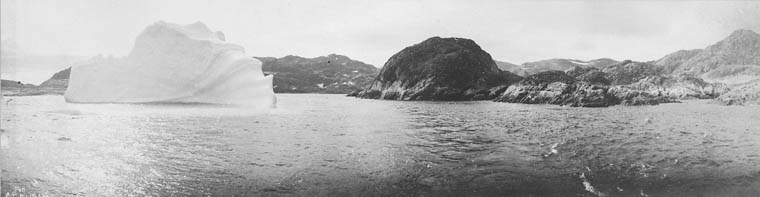
Entrance to Blacklead Island, Cumberland Gulf, Baffin Island, Northwest Territories (present-day Nunavut) by Albert Peter Low, 1903–1904.

Black-and-white panorama of a large iceberg close to a rocky island shot from a boat.

Entrance to Blacklead Island, Cumberland Gulf, Baffin Island, Northwest Territories (present-day Nunavut) by Albert Peter Low, 1903–1904. (MIKAN 3203732)

Canada claimed sovereignty of its Arctic territory in 1904: the law moved north and surveyors catalogued the land. This act reinforced old ideas on identity. It defined Canada, all over again, as a northern nation.


Tell us about yourself

When I first started doing historical research in photography during my master’s program at Carleton University, I practically lived at Library and Archives Canada. The collection is fantastic, and it was the most amazing experience for me to be looking at photographs taken over a 150 years ago. Since then I have continued to research historical photographs, as well as acting as curator for contemporary photography at the Canadian Museum of Contemporary Photography and now the National Gallery of Canada. I have always been interested in exploration photography, or government uses of the medium. The Humphrey Lloyd Hime photographs are particularly interesting in that they are the first known paper photographs made of the North American interior. The camera was a tool for various interests, but it also was a way to encapsulate many preoccupations of the period, especially the shifts that occurred in religion because of scientific discoveries. Many so-called objective photographs made at this time also reflect spiritual beliefs and morality. As well, Western aesthetic values play a part in communicating ideals and the best photographers of the period, such as Alexander Henderson, are highly adept at manipulating tone, line, shape and texture to merge the sublimity of the landscape with the period’s fervent faith in scientific and technological progress.

Is there anything else about this item that you feel Canadians should know?

Although this photograph presents a barren and seemingly empty landscape, the area was anything but inactive. Albert Peter Low (1861–1942), a senior Geological Survey of Canada officer, took this photograph of the entrance to Blacklead Island during a Canadian government funded expedition in 1903–04. He published an account of his journey in his famous book, The Cruise of the Neptune. Historically, Blacklead Island was an important whaling station, but at the time of Low’s expedition, whale stocks had nearly all but vanished in the area. As well, whaling stations had radically changed Inuit lifestyle, hunting cycles, and economies. The purpose of Low’s expedition was to establish Canadian sovereignty in the north through proclamations and rule of law. Low’s photograph, however, reveals nothing of this political agenda. Rather he presents a peaceful view, taking advantage of the panorama’s extended format and classic elements of the sublime. The iceberg appears gargantuan and overwhelming, alluring in its whiteness. The island, in contrast, is dark and more detailed. The two subjects, ice and rock, appear held in opposition, suspended between a cloudless sky and a rippling, frigid sea.

Tell us about another related item that you would like to add to the exhibition.

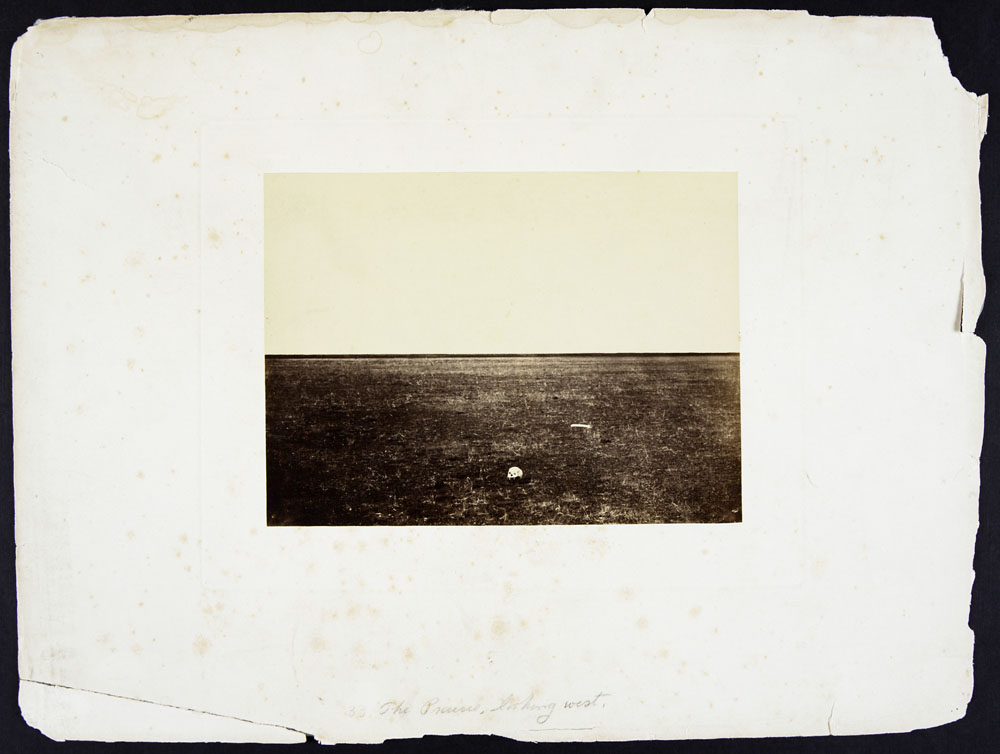
Sepia-toned image of prairie grass stretching to meet the sky with a skull and a bone in the foreground.

The Prairie Looking West by Humphrey Lloyd Hime, 1858 (MIKAN 3243322)

Humphrey Lloyd Hime’s The Prairie Facing West (1858) is one of most enigmatic images in the history of Canadian photography. It depicts an austere landscape in which a human skull and (human?) bone appear. The photograph was taken near the Red River settlement, now the city of Winnipeg. Hime was working for the Assiniboine and Saskatchewan Exploring Expedition sent by the government to assess the agricultural potential of the area, and its suitability for settlement. He depicts the land as empty, ostensibly awaiting human occupation. However, the presence of the skull is provocative. Most likely, Hime staged the photograph using the skull of an Aboriginal woman he had found earlier in an area of southern Manitoba. As he wrote in his diary on June 28, 1858, “…found a skull close to grave on prairie—it was all pulled about by wolves—kept the skull.…” This encounter informs the image in numerous ways. The photograph may represent Hime’s recreation of his experience, or be a way to incite drama into an otherwise nondescript landscape. The appearance of the skull is also tied to the fascination of 19th-century society with Indigenous methods of burial. However, as the caption does not state that the skull belonged to a native person, viewers might anxiously interpret the land as containing the possibility of their own death and hardship. At this point, the interior of the country was largely unknown, with many thinking it contained a wasteland of Biblical proportions.

Biography

A colour photograph of a woman wearing glasses looking directly at the viewerAndrea Kunard is an Associate Curator of Photographs at the National Gallery of Canada. She has presented several group and monographic exhibitions on contemporary photography including Shifting Sites (2000), Susan McEachern: Structures of Meaning (2004), Steeling the Gaze (2008), Scott McFarland: A Cultivated View (2009), Fred Herzog (2011), Clash: Conflict and Its Consequences (2012), and Michel Campeau: Icons of Obsolescence (2013). She is presently co-curating a major retrospective on Newfoundland-based artist Marlene Creates as well as a survey exhibition Photography in Canada: 1960–2000 for 2017. She has taught the history of photography, Canadian art and cultural theory at Carleton and Queen’s University. In addition, she co-edited The Cultural Work of Photography in Canada, published by McGill-Queen’s University Press. She has lectured on photography throughout Canada, and written articles on contemporary and historical photography in a variety of publications including The Journal of Canadian Art History, the International Journal of Canadian Studies, Early Popular Visual Culture, Muse, BlackFlash, and ETC Montréal. She is currently working on a major web-based project on documentary photography that centres on the National Film Board Still Photography Division collection at the National Gallery and Library and Archives Canada.

New additions to the Virtual Gramophone – English songs

By Margaret Ashburner

Library and Archives Canada (LAC) is fortunate to have a collection of early audio recordings that capture the popular music that Canadians were listening to in the early 20th century. This collection of newly digitized recordings is a broad sampling of popular songs recorded in the 78-rpm format.

Featured performer

Albert William Plunkett

Black-and-white image of a young man smiling.

Albert Plunkett. Source: Canadian Music Trades Journal, Toronto, Fullerton Pub. Co., ISSN 0383-0705.

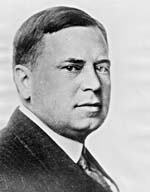
Plunkett is best known for his work as a soldier-entertainer with The Dumbells group. The Dumbells was run by Albert’s older brother Captain Mert Plunkett. The group started in 1917 and was active until 1932.

Harry Macdonough

A black-and-white image of a man wearing a suit.

Harry Macdonough. Source: Library and Archives Canada music collection, Public Domain.

Born in Hamilton, Ontario, as John Scantlebury Macdonald, the singer changed his name to Harry Macdonough in hopes that it would help his singing career. This popular ballad singer was a prolific recording artist and was involved in solo, duet and quartet recordings, many of which are among LAC’s collection.


Margaret Ashburner is the Special Collections Librarian of retrospective music at Library and Archives Canada.

75th Anniversary of the Women’s Royal Canadian Naval Service

By Laura Brown

Seventy-five years ago today marks the creation of the Women’s Royal Canadian Naval Service (WRCNS). Established on July 31, 1942, the WRCNS was the last of the three services to open its doors to women during the Second World War—the Royal Canadian Air Force Women’s Division (RCAF-WD) and the Canadian Women’s Army Corps (CWAC), having been created a year before. Those serving with the WRCNS were commonly called “Wrens,” the nickname used by their British counterparts, who were members of the Women’s Royal Naval Service (WRNS).

The women who joined the navy in Canada did so with the expectation that they would not serve on ships; rather, they carried out duties on shore so that more men could serve at sea. The need for women to staff positions on land became particularly important with the increased casualties that came with the Battle of the Atlantic. The first class of Wrens consisted of only 67 members, but by the end of the war, nearly 7,000 women had enlisted with the WRCNS.

A black-and-white photograph of a crowd of smiling <abbr title=

Wrens trained on “land ships” designated “Her Majesty’s Canadian Ship.” For example, HMCS CONESTOGA at Galt (now Cambridge), Ontario became the basic training centre for the WRCNS beginning in the fall of 1942. Other training locations included HMCS CORNWALLIS in Halifax, and HMCS ST. HYACINTHE in Saint-Hyacinthe, Quebec, which hosted a communications school. Following training, recruits took on a variety of jobs, including work as cooks, mailroom workers, drivers, visual signalers, and plotters (locating and tracking the positions of vessels).

A black-and-white photograph of the interior of a brightly lit plotting room showing a large group of women and several men at work. Figures sit at desks on the left-hand side of the room, while women dressed in dark uniforms examine vast maps attached to the walls on the right-hand side of the room. One woman stands on a short ladder set against the wall and plots information on the upper portion of a map.

Operations Plotting Room, Naval Service Headquarters, Ottawa, Ontario, December 1943. (MIKAN 3203640)

A Royal Canadian Navy press release from August 1943 noted that while not all of the tasks carried out by Wrens were glamorous, they were crucial for the success of Canada’s naval operations in the war: “Some of their jobs are routine, but they are jobs that must be performed efficiently to make sure that Naval personnel is well fed or paid on time; that Navy families are taken care of; that ships are built and ready for combat as soon as possible; that the men are trained to fight on these ships and that the ships are there to meet the enemy.” Whether working in a kitchen or in a secret position, many Wrens found that their service brought new opportunities and new friendships. This sentiment was echoed by Commander Isabel MacNeill at the end of the war when the WRCNS basic training centre at Galt was closed: “Most of us came here as strangers. We leave with many happy associations which we shall remember all our lives.”

A colour photograph of a member of the WRCNS sitting on top of a 16-pounder canon situated at the top of Signal Hill. Wearing a dark blue uniform, she is turned away from the camera as she gazes on the blue water of St. John’s harbour below. The city surrounding the harbour consists of buildings in muted tones and an expanse of low hills are seen in the background. The sky in the top third of the photograph is light blue with a haze of white, wispy clouds.

A Wren at Signal Hill, St. John’s, Newfoundland [ca. 1942–1945]. (MIKAN 450992)

Members of the WRCNS made important contributions to the war effort both in Canada and overseas. Approximately 1,000 Canadian women served with the WRCNS abroad during the war, of which half were posted to Newfoundland, a location that was considered an “overseas posting” as Newfoundland did not become part of Canada until 1949.

A black-and-white portrait of Adelaide Sinclair, seated with her arms resting on the back of a chair. She is dressed in her naval uniform, including a jacket with a white shirt and dark tie, hat and gloves. She gazes at the viewer with a slight smile on her face.

Commander Adelaide Sinclair, Director of the Women’s Royal Canadian Naval Service, July 1944. (MIKAN 3526940)

Library and Archives Canada has a rich collection of documentation about the WRCNS, including the fonds of Adelaide Sinclair, the Director of the WRCNS from 1943 to 1946, whose service was recognized in 1945 through the award of the Order of the British Empire. Check out the links below to learn more about the incredible stories of Canada’s first members of the WRCNS.

Related resources

  • Second World War military personnel files (MIKAN 158523)
  • Royal Canadian Navy Headquarters Central Registries (MIKAN 157647).This series in the Department of National Defence fonds contains includes a variety of documentation on the WRCNS, including information on recruitment and staffing.
  • Dobson family fonds (MIKAN 106782). This fonds consists of documentation belonging to a family that was highly involved in the WRCNS during the Second World War. Edith Archibald Dobson was one of the first women to join the WRCNS in August 1942, and eventually became a Lieutenant-Commander. Her twin daughters, Joan and Anne, also joined the WRCNS in 1942 and served as wireless
  • Isabel Janet MacNeill fonds (MIKAN 101945). A long-serving member of the WRCNS, Isabel MacNeill became the first woman to command a land ship in the British Commonwealth.
  • Katherine A. Peacock fonds (MIKAN 101865). Katherine Peacock served with the WRCNS during the Second World War and later became a federal public servant.
  • Colour photos of Canadian Second World War soldiers.

Laura Brown is a Military Archivist in the Government Archives Division.

“Unity Through Sport”: Organizing the first Canada Games in Québec in 1967

Version française

By Normand Laplante

Minus 33 degrees Celsius (wind chill: –52)! It was bone-chillingly cold when the competitions started at the first Canada Winter Games, in the city of Québec on February 12, 1967. Three days later, organizers and athletes faced more bad weather: a blizzard that dumped 76 centimetres of snow on the sports venues. Despite the harsh winter conditions, this first national multi-sport event, which brought 1,800 athletes together from across Canada, was a great success. Fifty years on, on the eve of the 26th Canada Games in Winnipeg, those first Games stand as an important milestone in the development of sport in Canada.

In 1962, the Canadian Sports Advisory Council decided to create a large national sporting competition that would bring together amateur athletes from every province and territory. The competition would be held every two years, alternating between winter and summer editions. André Marceau, a member of the newly established National Advisory Council on Fitness and Amateur Sport, proposed that Québec host the first Canada Winter Games. His proposal was accepted, and in 1963, a group of athletes from Quebec’s capital set up a corporation for those first Games, with Georges Labrecque as president and Marceau as vice-president. Guy Rousseau became chief executive officer for the Games.

In March 1965, the federal and Quebec governments officially announced that the first Canada Winter Games would take place in February 1967. The competition would be one of the events held to celebrate the centennial of Confederation. Organizers of the Games had initially planned on 20 sports, including winter Olympic sports, indoor sports and lesser-known disciplines such as barrel jumping, dog racing and ice canoeing. This list was revised many times in the months that followed because organizers had to consider a number of issues, including logistics. In the autumn of 1966, the corporation announced the 13 sports for the first Games: skiing (downhill and cross-country skiing, and ski jumping), speed skating, figure skating, hockey, curling, basketball, volleyball, badminton, wrestling, synchronized swimming, artistic gymnastics, shooting and table tennis.

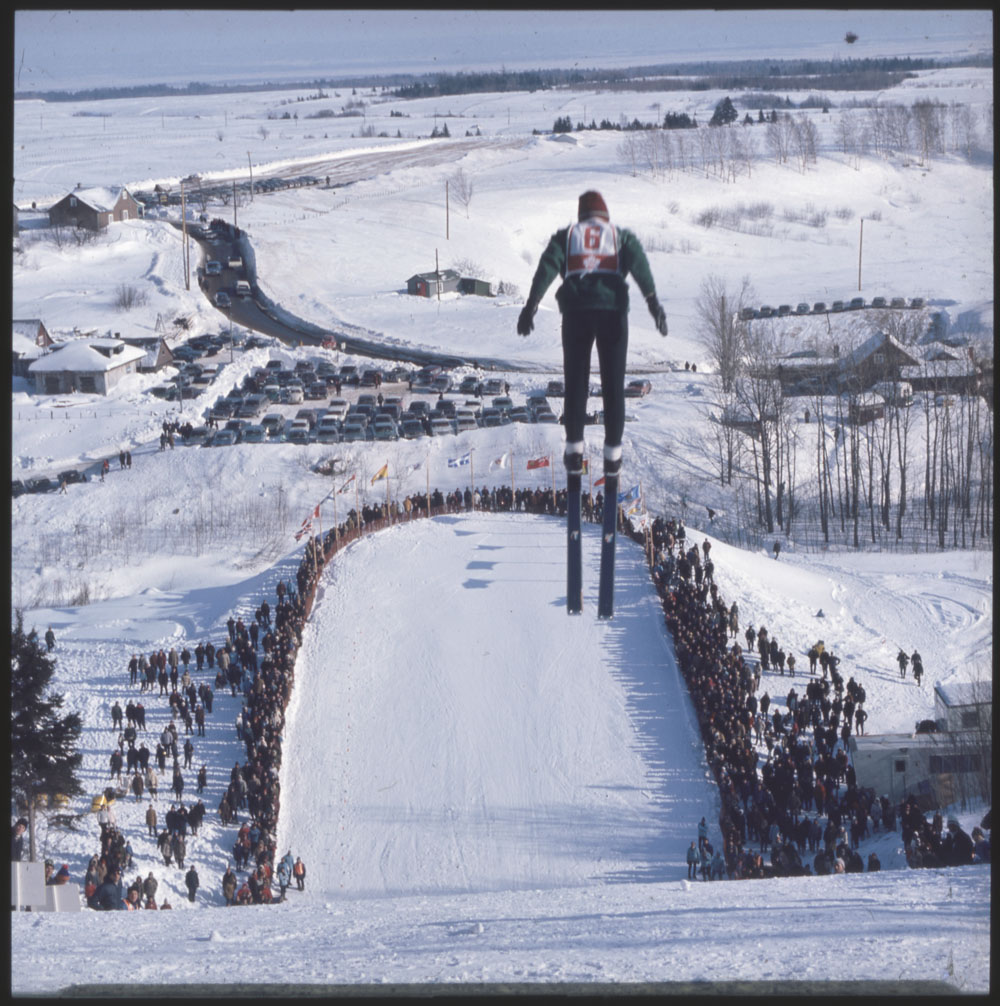
A colour photograph of a ski jumper flying above a crowd of spectators.

A ski jumper above a crowd of spectators at the first Canada Winter Games, Québec, 1967. (MIKAN 4741180)

A black-and-white photograph of a woman kneeling and aiming a rifle, surrounded by spent cartridges.

A shooting competition at the first Canada Games, Québec. (MIKAN 4741178)

Choosing the athletes for the provincial delegations required an unprecedented level of coordination between provincial governments, national sports associations and the organizers of the Games. The organizing committee of the Games in Québec estimated that 75,000 people participated in preparations for the first Canada Winter Games. These included not only athletes from the 10 provinces and 2 territories, who competed in elimination rounds to determine who would qualify for the teams, but also officials, organizers, coaches, and heads of provincial and national sports associations. One result of this exercise was the creation of many provincial administrative bodies responsible for sport.

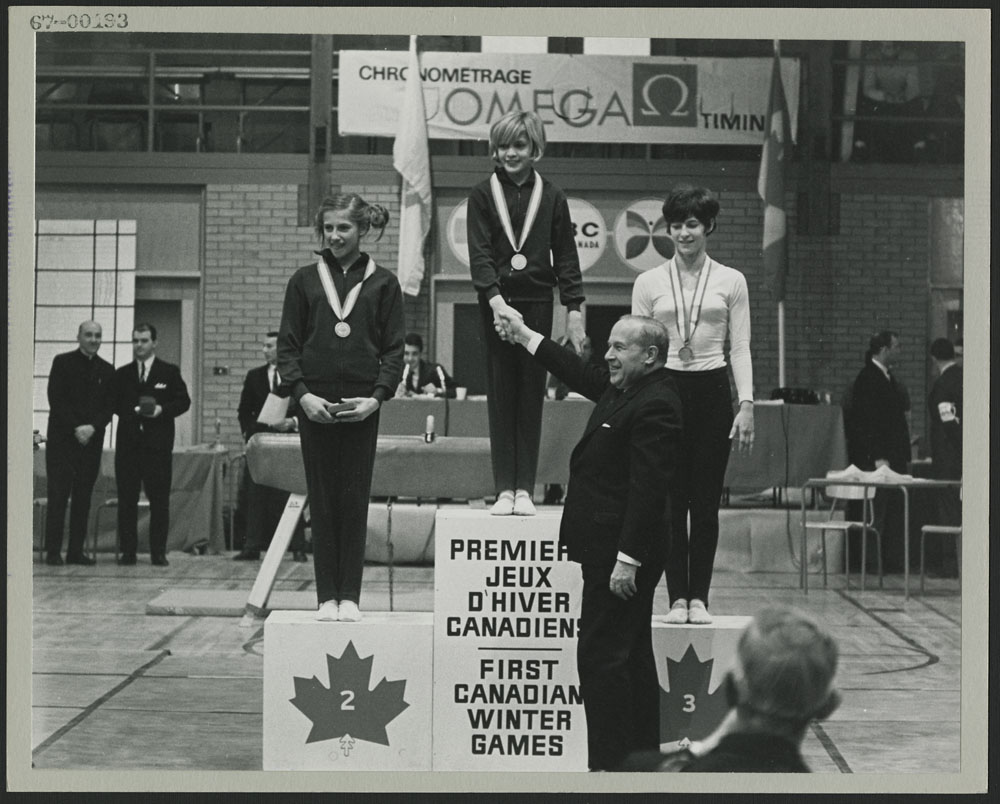
The Prime Minister of Canada, Lester B. Pearson, accompanied by provincial premiers Jean Lesage of Quebec, Louis Robichaud of New Brunswick and Alex Campbell of Prince Edward Island, opened the Games on February 11, 1967, in front of the Legislative Assembly of Quebec, with the theme of “Unity Through Sport.” During the nine days of competition, 184 medals were awarded. Ontario won the most medals, ahead of teams from British Columbia and Alberta. Teresa McDonnell, winner of three artistic gymnastics events, and Toller Cranston, gold medallist in figure skating and a future bronze medallist at the Winter Olympics, were two of the athletes whose performances stood out at these first Games.

A black-and-white photograph of a podium on which three young women wearing medals are standing. A man is shaking hands with the gold medallist.

The Prime Minister of Canada, Lester B. Pearson, congratulates Teresa McDonnell and her fellow medallists, Jennifer Diachun and Marie St-Jean, after a women’s gymnastics competition at the first Canada Winter Games in Québec, photographed by H. Leclair. (MIKAN 4741173)

The success of the first Games encouraged the national sports organizations and the federal government to hold the first Canada Summer Games in Halifax-Dartmouth, Nova Scotia, in 1969. In later years, several provinces would launch their own provincial winter and summer games, modelled on the Canada Games.

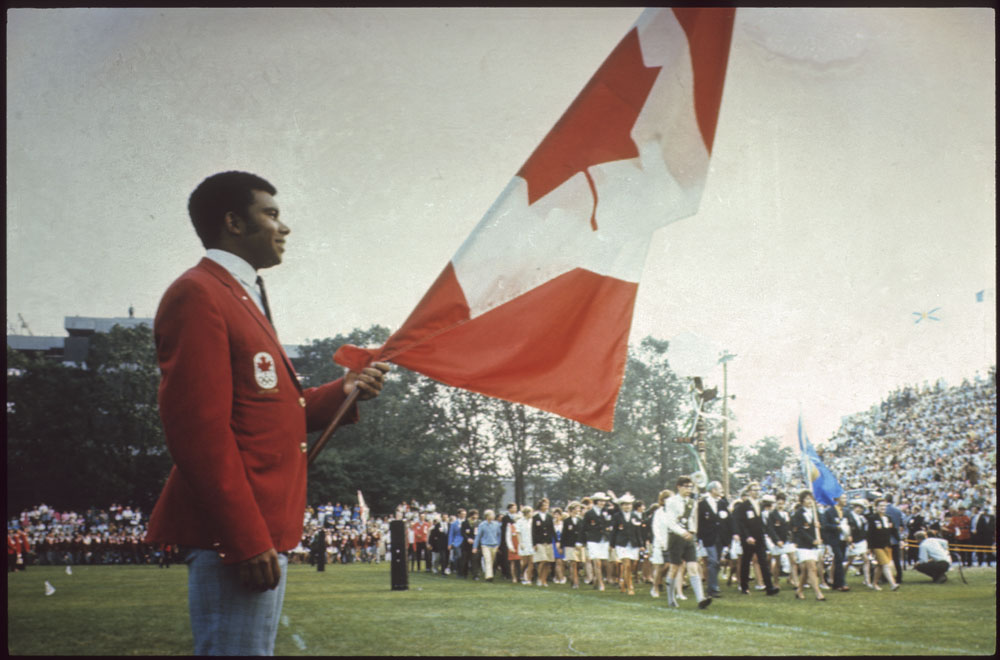
Colour photograph of a man in a red jacket carrying the Canadian flag while athletes enter the stadium.

Harry Jerome carries the Canadian flag at the opening ceremonies of the first Canada Summer Games in Halifax-Dartmouth. (MIKAN 4741182)

Additional Source:

Were you there? Do you have a story to tell?


Normand Laplante is a senior archivist in the Society and Culture Division of the Private Archives Branch at Library and Archives Canada.

Anything to declare? Yes, it’s of Canadian interest

By Louise Tousignant

The mandate of Library and Archives Canada (LAC) includes acquiring published material that is Canadian or of Canadian interest. In collecting this material, LAC aims for a national Canadiana collection that is as comprehensive as possible. Canadian material published in Canada is received through legal deposit while material of Canadian interest is published in other countries but has a Canadian creator or subject. Creators could be authors, illustrators, translators or artists. Works of Canadian interest, being published abroad, are acquired through gifts or targeted purchases.

Of those titles of Canadian interest received recently, there are studies on, and analyses of, Canada: Canada/États-Unis : les enjeux d’une frontière, Comparative North American Studies: Transnational Approaches to American and Canadian Literature and Culture, and Canadian Perspectives on Immigration in Small Cities.

Other works are also related to Canada; for instance, Negotiations in the Indigenous World: Aboriginal Peoples and the Extractive Industry in Australia and Canada and Indian Agents: Rulers of the Reserves delve into Indigenous matters.

Famous Canadians have also been the subject of scrutiny: painter Alex Colville in The Mystery of the Real: Letters of the Canadian Artist Alex Colville and Biographer Jeffrey Meyers; journalist and author Jane Jacobs in the biography Becoming Jane Jacobs; and singer and musician Alanis Morissette, whose work is explored in The Words and Music of Alanis Morissette. Canadians who made their names in Hollywood have also been featured in several books. William Shatner, born in Montréal and an ambassador for his hometown’s 375th anniversary celebrations and best known for his role as Captain James T. Kirk in the “Star Trek” television series, recently released Leonard: My Fifty-Year Friendship with a Remarkable Man. Acclaimed Hamilton-born actor Martin Short, who became a star on the “Saturday Night Live” TV show, authored the memoir I Must Say: My Life as a Humble Comedy Legend.

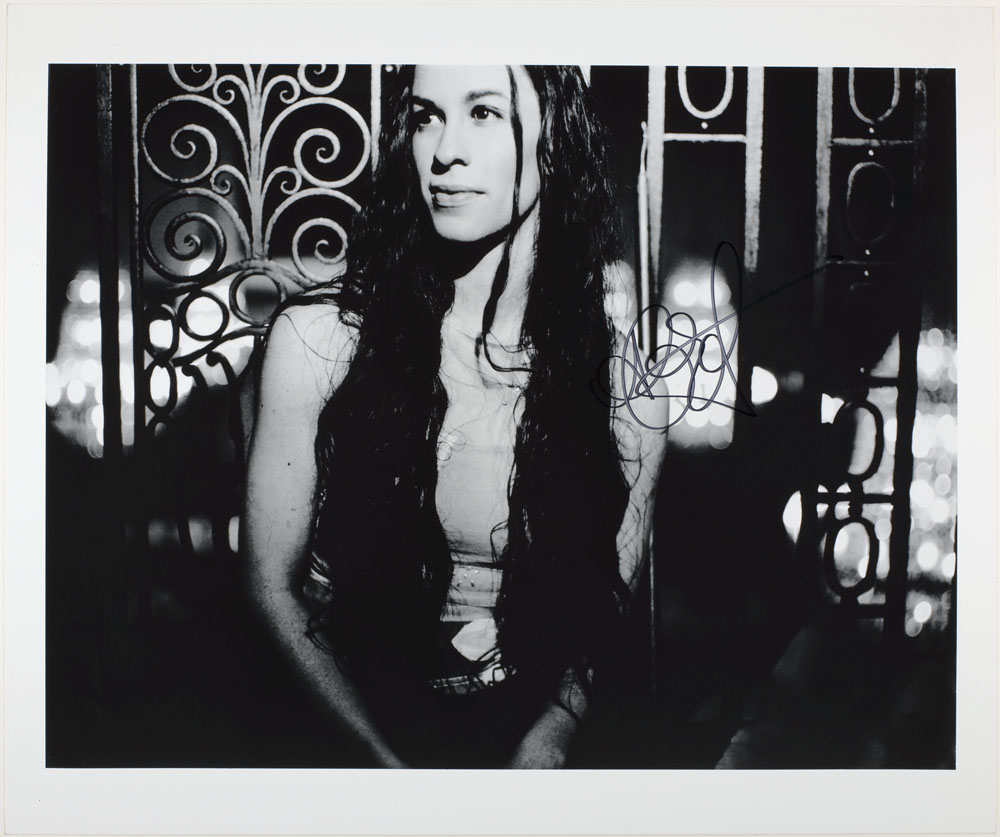
A black-and-white photo of a woman with long hair leaning against a wrought iron fence.

Portrait of Alanis Morissette by Bryan Adams. Photo signed by Alanis Morissette. 1999 (MIKAN 3614421)

Here at home, Canadians have also had their works published in other countries: Quebec’s Guy Delisle, with the comic book S’enfuir : récit d’un otage, published by Dargaud; illustrator Yanick Paquette, the man behind Wonder Woman, with his Wonder Woman, Earth One. Volume 1 comic book; and Louise Penny, with The Long Way Home, which was published by Minotaur Books and became a New York Times number 1 bestseller.

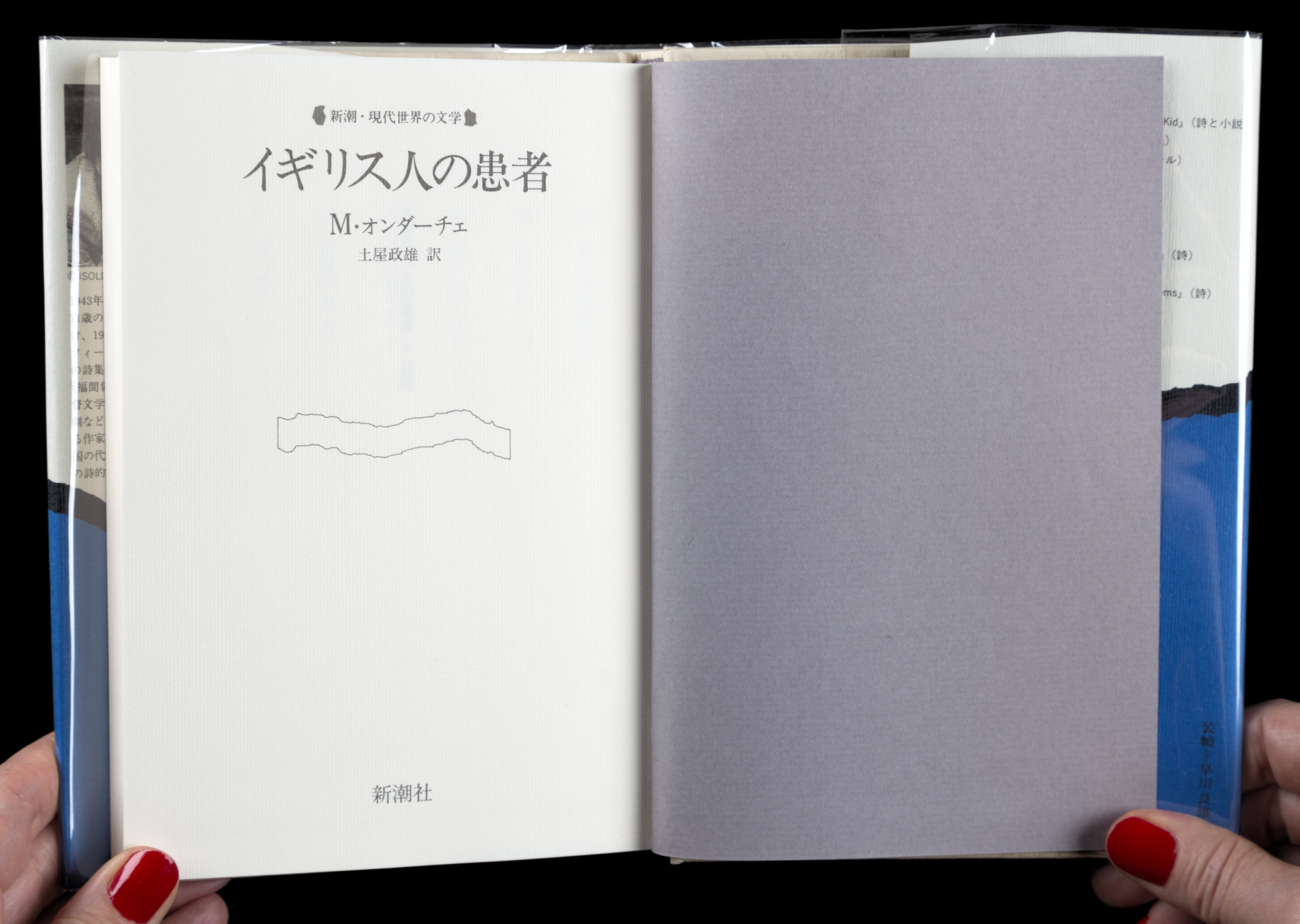
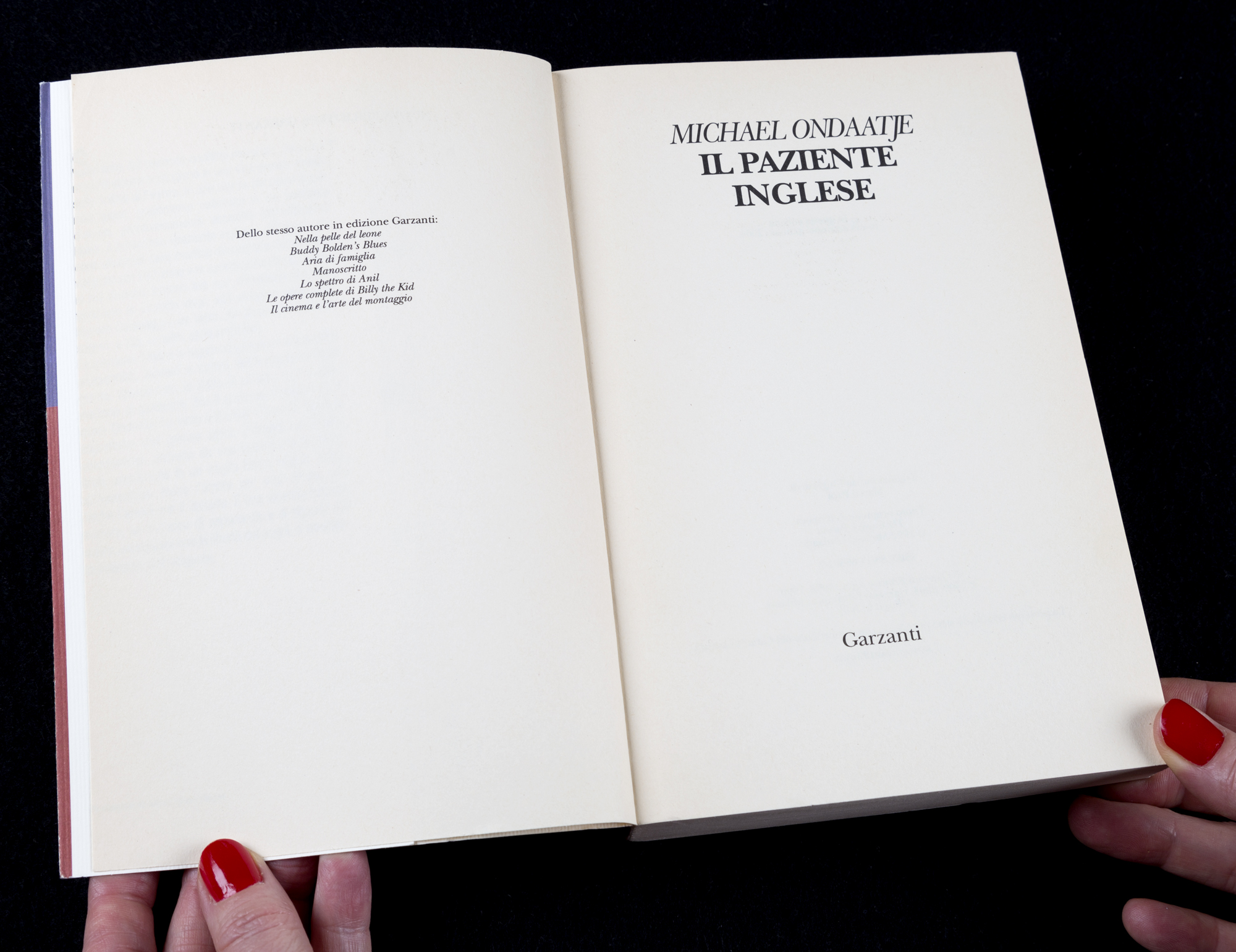
Finally, some titles of Canadian interest in the national collection are directly linked to LAC’s archival fonds. These holdings allow for greater in-depth study of authors and their international profiles, and support research into Canadian literature. Examples include translations of works by children’s writer and illustrator Marie-Louise Gay, and by Sri Lankan–born Canadian poet, novelist and filmmaker Michael Ondaatje. Regarding Marie-Louise Gay, ¿Alguna pregunta?, a Spanish translation of Any Questions?, was published in Mexico in 2015; Angela en de ijsbeer is a Dutch version of Angel and the Polar Bear; and Bolle-Bertils sirkus is Fat Charlie’s Circus translated into Norwegian. As for Michael Ondaatje, LAC holds no fewer than 20 translations of his best-known novel, The English Patient, including versions in Bulgarian, Japanese and Italian. His novel won the Booker Prize and the Governor General’s Award in 1992, while the film adaptation received nine Oscars at the Academy Awards in 1997.

A colour photo of a seated, smiling woman. Blurred pencil crayons can be seen in the foreground.

Marie-Louise Gay. Canadian children’s writer and illustrator. @Groundwood Books

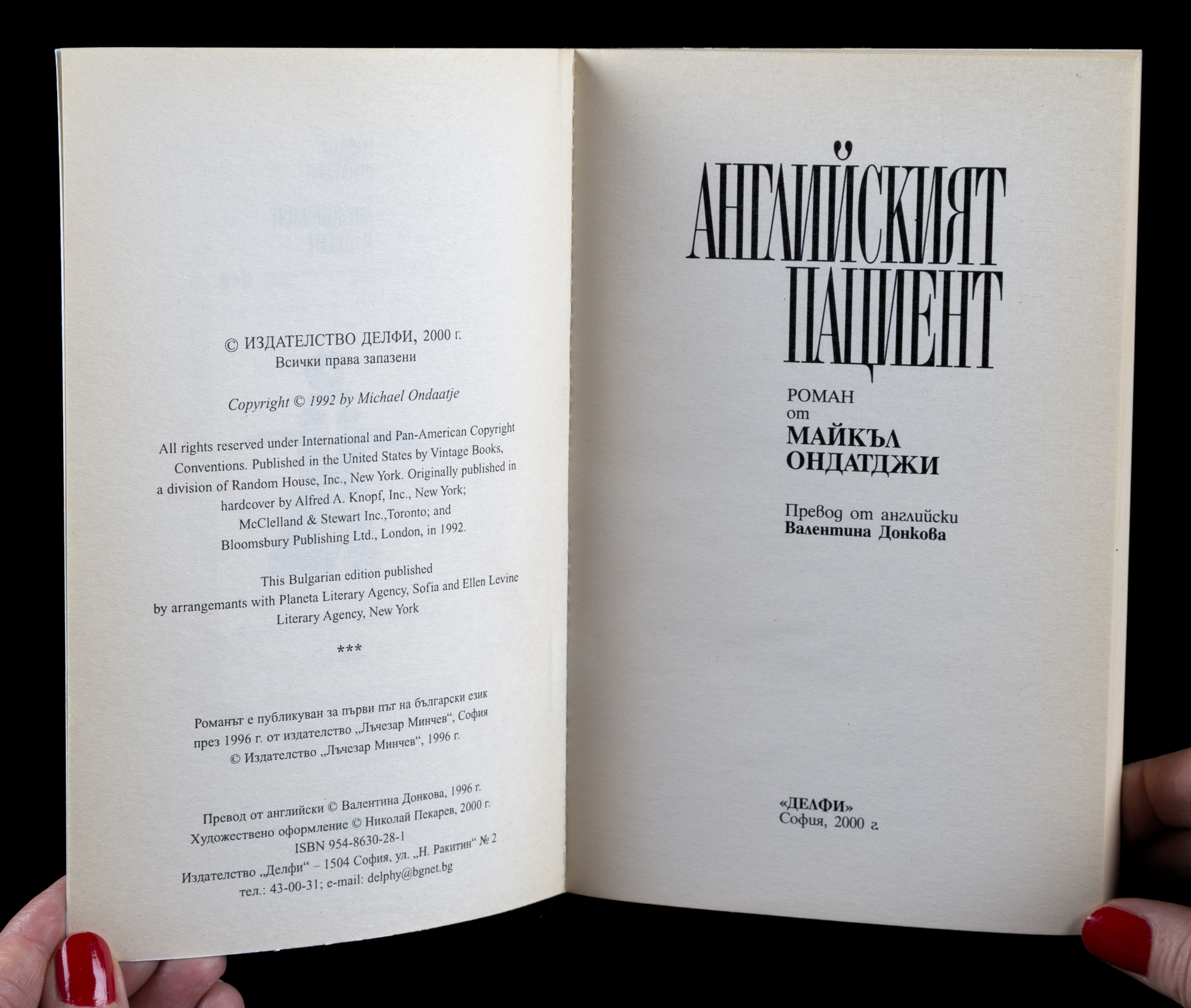
Colour photograph of a book open at the title page written in Bulgarian.

The English Patient published in Bulgarian by Delfi in 2000 (AMICUS 32172817)

Colour photograph of a book open at the title page written in Japanese.

The English Patient published in Japanese by Shinch⁻osha in 1996 (AMICUS 15875585)

Colour photograph of a book open at the title page: Michael Ondaatje Il Paziente Inglese.

The English Patient published in Italian by Garzanti in 2004 (AMICUS 32785464)

This brief overview is just a sampling of the variety of publications about Canada and of Canadian interest. The painstaking work of sorting through published material continues to ensure the growth of Canada’s documentary heritage and the development of the collections, and to make the national Canadiana collection the most extensive in the world.


Louise Tousignant is an acquisitions librarian in the Published Heritage Branch of Library and Archives Canada.

Images of Geese now on Flickr

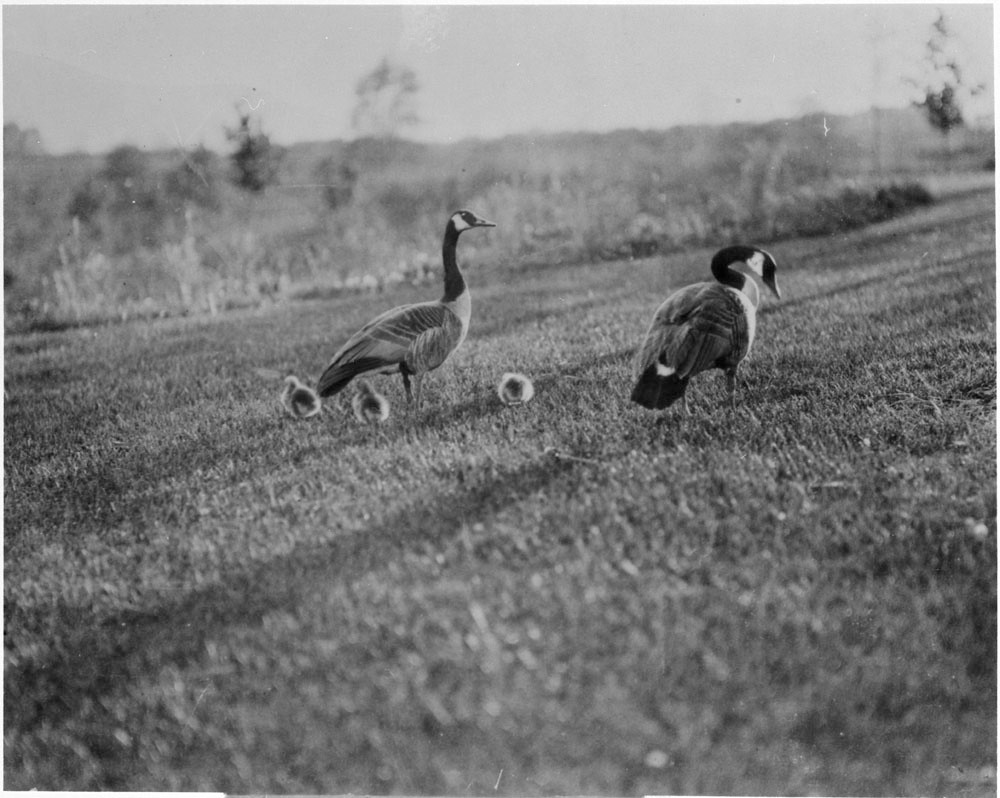
Geese are waterfowl and are found mainly in North America, Europe and parts of Asia. They range in size from the large Canada Goose to the small Ross’s Goose. Six species of geese (Brant, Cackling Goose, Canada Goose, Greater White-fronted Goose, Ross’s Goose, Snow Goose) breed in Canada’s boreal forest and tundra regions. Geese adapt to a variety of environments if there are plentiful grasses, grains and berries available. These waterfowl are migratory and normally spend their summer months in northern areas, heading south for the winter. However, being very adaptable birds, many geese stay in parks, golf courses and suburban areas as the weather gets colder.

A black-and-white photograph of two adult Canada Geese and three one-day-old goslings standing on a lawn

Canada Geese and one-day-old goslings, Kingsville, Ontario (MIKAN 3359099)

A black-and-white photograph of a man supporting a Canada Goose under his right arm and holding its neck with his left hand. The goose’s right leg has an identification band around it

John Thomas Miner holding a Canada Goose (MIKAN 4315320)

Visit the Flickr album now!

Library and Archives Canada’s Truth and Reconciliation Commission Web Archive collection is now available

Library and Archives Canada (LAC) is pleased to announce the launch of its Truth and Reconciliation Commission Web Archive collection.

This collection was created in collaboration with the National Centre for Truth and Reconciliation, and the University of Winnipeg and University of Manitoba libraries, both of which have also launched their own web archival collections.

LAC‘s Truth and Reconciliation Commission of Canada (TRC) web archive collection provides access to archival copies of the English- and French-language websites of organizations connected with the TRC, either as active partners at national events or through initiatives to support commemoration.

While the majority of this collection was harvested at the time of the TRC‘s final report in 2015, the collection is an ongoing project that continues to add new resources. It currently contains approximately 300 resources, consisting of full or partial websites, videos, newspaper and media content, and blogs.

Get more details or access all of the collections on the National Centre for Truth and Reconciliation website.

Guest curator: Adam Gaudry

Banner for the guest curator series. CANADA 150 is in red along the left side of the banner and then the bilingual text: Canada: Who Do We Think We Are? and under that text is Guest curator series.Canada: Who Do We Think We Are? is a new exhibition by Library and Archives Canada (LAC) marking the 150th anniversary of Canadian Confederation. This exhibition is accompanied by a year-long blog series.

Join us every month during 2017 as experts, from LAC, across Canada and even farther afield, provide additional insights on items from the exhibition. Each “guest curator” discusses one item, then adds another to the exhibition—virtually.

Be sure to visit Canada: Who Do We Think We Are? at 395 Wellington Street in Ottawa between June 5, 2017, and March 1, 2018. Admission is free.


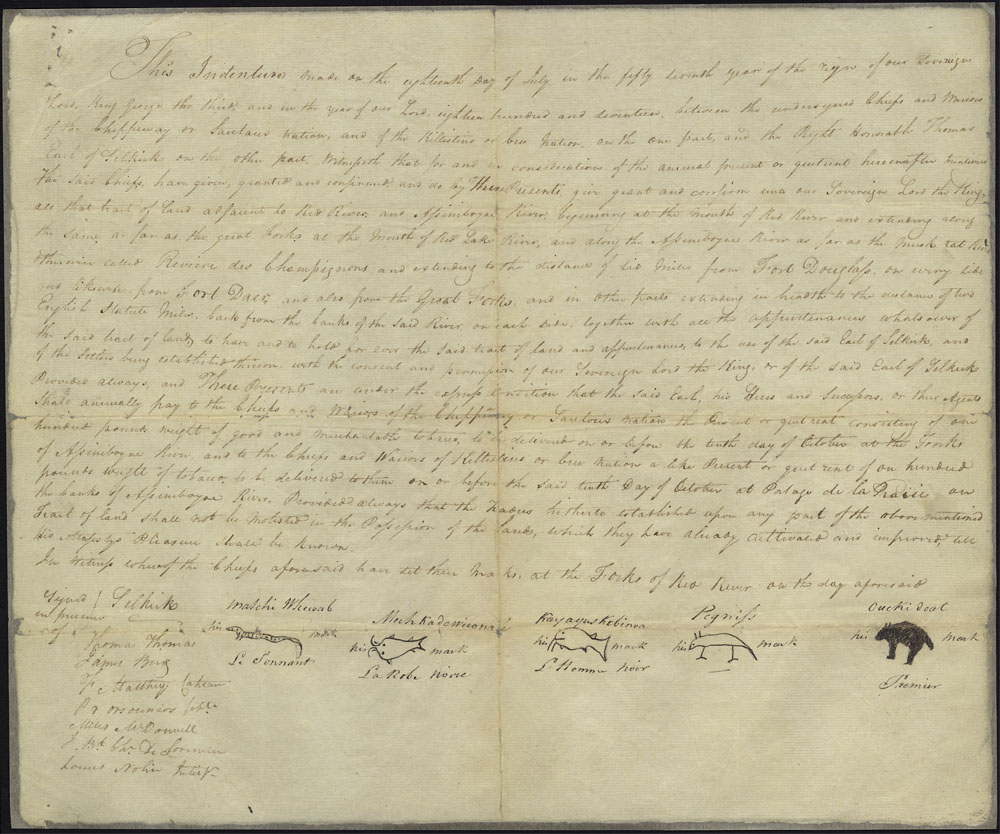
The Selkirk Treaty, 1817

Image of the Selkirk Treaty, a large handwritten document with the Europeans’ signatures and Chiefs’ marks at the bottom.

The “Selkirk Treaty”, July 18, 1817, signed by the undersigned Chiefs and warriors of the Chippewa or Saulteaux Nation and of the Killistino or Cree Nation and the Rt. Hon. Thomas, Earl of Selkirk, for King George III. (MIKAN 3972577)

Lord Selkirk saw Canada as the next big thing in farming. His vision included Scottish and Irish settlers. It excluded the land’s First Nations peoples and the Métis.


Tell us about yourself

In my academic life, I research Métis identity and political history. This means that a lot of my writing is focused on 19th-century Métis communities. I’m interested in how Métis viewed the major social, economic, and political forces that shaped their lives and how they organized themselves to influence (and thrive in) a changing prairie west. I’m Métis, and an Assistant Professor in the Faculty of Native Studies and the Department of Political Science at the University of Alberta.

Is there anything else about this item that you feel Canadians should know?

Black-and-white photo of Thomas Douglas dressed in a black jacket, white waistcoat, and white cravat.

Thomas Douglas, the 5th Earl of Selkirk (1771–1820). (MIKAN 3526168)

The Selkirk Treaty of 1817 was an agreement between Lord Selkirk—a land-speculating Scottish Earl and major Hudson’s Bay Company (HBC) shareholder—and the Nehiyawak and Anishinaabeg (Cree and Saulteaux) in the Red River Valley of what is now southern Manitoba. It allowed for the settlement of Scottish settlers in exchange for a substantial amount of tobacco as “an annual present,” or as Anishinaabe saw it, rent.

Before 1817, Selkirk had tried to settle the land without the permission of local Indigenous peoples by way of a land purchase from the HBC. The pretension to own this 116,000 square mile tract over which he had no presence or influence over was understandably infuriating for those who did in fact “own” the land. Between 1812 and 1816, substantial complaints were raised by many Indigenous leaders, dismissing the absurdity of an unknown outsider claiming to own their territory and threatening action against any outsider who would settle their lands.

This opposition was most pronounced among the bois-brûlés, the “New Nation” of the northwest, who would soon call themselves the Métis. Indigenous communities were also nestled in a complex network of alliances that linked them to two rival fur trading companies—the pro-settlement HBC and the anti-settlement North-West Company, the latter which had significant overlap in membership with the bois-brûlé leadership. In the summers of 1815 and 1816, bois-brûlé soldiers dispersed Selkirk’s first settlers and actively barred outside settlers in the Red River Valley. On June 19, 1816, the bois-brûlé emerged victorious from a spontaneous engagement with HBC servants, killing 21 of them, then seizing their fort, and later Selkirk’s settlement at Red River. While Métis weren’t party to this treaty with Selkirk in 1817, Métis agitation over 1815–1816 was a major motivator in the treaty’s negotiation, and it nonetheless shaped Métis-HBC relations for generations afterwards.

Watercolour of the fight showing the two sides armed with guns facing each other across a field under a cloudy blue sky. One side is mostly unmounted white HBC employees and the other side is mounted Métis and North-West Company employees.

The Fight at Seven Oaks, June 19, 1816, by Charles William Jefferys. (MIKAN 2835228)

Given the failure of Selkirk’s settlement to win favour with the prevailing political powers in the Red River Valley by 1816, Selkirk undertook the long journey to the region to bring about some form of resolution of the hostility. He thus negotiated with local Nehiyawak and Anishinaabeg to gain permission to settle Scottish families at Red River, in exchange for substantial annual presents that he called “quitrent.” While the treaty was understood by all involved as allowing for peaceable settlement by outsiders, there was little consensus on what the treaty meant in terms of land ownership. For years afterwards, Selkirk and the HBC claimed that the treaty assured the surrender of Indigenous lands to Selkirk and the Company. For Indigenous peoples, it established a long-term rental agreement that recognized them as the landlords while bringing new people into their country, it provided generous annual gifts for Nehiyawak and Anishinaabeg, and it solidified a new alliance with a powerful aristocrat. The Selkirk Treaty is important because the document shows that when attempting to gain ownership of the Red and Assiniboine River watersheds, British leaders needed to navigate ongoing Indigenous title via treaty if they wished to settle their subjects there.

The account of the treaty written down by Selkirk’s entourage is itself fascinating in its inherently contradictory language and confused terminology. Indeed, both of the above interpretations can be pulled from its text. However, it’s my opinion that if read critically, this treaty recognizes Indigenous peoples as “landlords” of the Red River Valley, relying upon feudal language to describe a tenancy relationship that would have been obvious to a Scottish nobleman.

The document is seemingly contradictory. On the one hand the document states that the Nehiyaw and Anishinaabe chiefs agreed with Selkirk “to give, grant and confirm unto our Sovereign Lord the King, all that Tract of Land adjacent to Red River and Assiniboyne River” for “the use of the said Earl of Selkirk, and of the Settlers being established there.” But on the other hand, it states that Selkirk would “annually pay to the Chiefs and Warriors” an annual “Present or Quitrent” of “one hundred pounds of good and merchantable Tobacco” from Selkirk, his heirs, and successors.

What I think is particularly telling in this regard is the language describing this exchange as a quitrent relationship. A common custom in Selkirk’s day, quitrent was a feudal practice in which a tenant farmer paid an annual fixed rent on the land that a peasant farmer occupied, which released him from all other duties owed to his lord. Older feudal conventions required peasants to contribute labour towards public works and military duties defined by their lord. But by the 19th century, in order to maximize their profitability, many estates consolidated all of these various feudal duties into fixed quitrents, or regular payments that replaced all other obligations. As a feudal institution, quitrent explicitly recognized the ownership of the land by the feudal lord as well as institutionalized a specific feudal relationship between lord and tenant. It was generally known in the 19th century that quitrent did not transfer the land title to the tenant and the land remained the property of the feudal lord. Being himself a land-owning nobleman in Scotland, the language of quitrent would have been a concept Selkirk and his associates understood intuitively. Thus, Selkirk also describes a relationship in which he gave an annual quitrent, 100 lbs. of merchantable tobacco, to his landlords in exchange for a right to settle tenant Scottish farmers on the lands around the Red and Assiniboine rivers.

Such an interpretation is also consistent with how Anishinaabe chiefs understood the treaty. Chief Peguis, one of the treaty’s signatories, was adamant that the treaty outlined an annual rental agreement for this tract of land. In 1859, Peguis gave a formal statement, recounting that “no final bargain was made; but that it was simply a loan… I say positively the lands were never sold.” And according to Manitoba historian J.M. Bumsted, Peguis’ son, Henry Prince, likewise told a Métis assembly in 1869 that “the land had only been leased and the annual gratuity now paid…by the HBC was part of the rental.” From the perspective of Peguis and his son, the treaty did nothing to change the ownership of the land in the Red River Valley, which continued to rest with the Indigenous peoples rather than with Selkirk, the Company, or the Crown. Indeed, since Selkirk was the one paying an annual quitrent; he was in the tenant role, in other words, Indigenous peoples were his landlords.

Selkirk in attempting to secure ownership and title of Indigenous lands through treaty-making, intentionally or not, ended up reinforcing Indigenous ownership of the land he wished to settle. Likely this was all he could do in an era of Indigenous political and military ascendency in the West. Having had his countrymen routed by a bois-brûlé party the summer before, he wasn’t exactly in a position to demand control of Indigenous lands, and Indigenous peoples have never been willing to surrender their land and their independence to others. Selkirk’s treaty is therefore an important reminder of Indigenous political power in the early 19th century. It was bois-brûlé power that forced Selkirk to negotiate and it was the Nehiyawak and Anishinaabeg who navigated Selkirk through a terrain of Indigenous power and diplomacy. Selkirk was only able to gain permission to settle his countrymen on Indigenous land in exchange for an annual quitrent, due to those who assumed the role of the country’s landlords. Thus this treaty is a record of a negotiation that initially sought the surrender of Indigenous lands, but Selkirk only succeeded in reinforcing Indigenous political and territorial primacy, by recognizing the ongoing ownership of others to the lands he wished were his own.

A thin line outlines Selkirk’s grant on the map of Assiniboia.

Map of 1817 Showing Lord Selkirk’s Grant of 116,000 Square Miles known as Assiniboia Including the Forts in The Five Forts of Winnipeg by George Bryce, ca. 1885. (AMICUS 5279616)
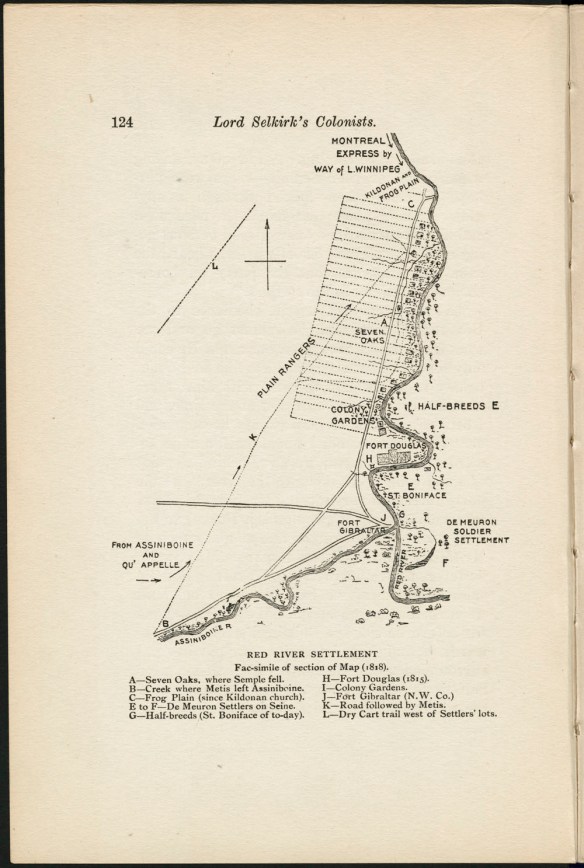
A map of the Red River settlement depicting the railway, settlements, and forts. A legend across the bottom lists the different points on the map.

Red River Settlement Facsimile of Section of Map 1818 in Lord Selkirk’s Colonists: the Romantic Settlement of the Pioneers of Manitoba by George Bryce, ca. 1909–1910 (AMICUS 5614009)

Canadians are usually taught to see treaties as documents intended to induce Indigenous peoples to surrender their rights and title, much in the way that Selkirk attempted in 1817. But the history of diplomacy on this continent is both ancient and complex. Rarely, (if ever) did Indigenous peoples see treaties with European empires as alienating land or jurisdiction. Instead treaties, like this one, sought to work out new ways for different peoples to benefit from each other’s presence on the same territory. Selkirk and his settlers were being welcomed into a new place to share in the bounty of the prairie landscape—for a price—and this also involved an ongoing recognition of the original inhabitants of the territory and ensuring that they too would benefit from the increased presence of Europeans. This treaty should remind us that the Indigenous peoples who negotiated these agreements were both powerful and sophisticated diplomats and able to force European negotiators to accept the norms of Indigenous diplomatic systems.

There are also pitfalls to viewing Indigenous-British treaty-making as rooted primarily in land cession and Indigenous disempowerment. Treaties were negotiated in public and in front of large audiences in ways that would ensure accountability moving forward. In these cases those present could remember what was discussed, what was agreed to, and of course what was not. In most cases, Indigenous peoples did not discuss, let alone agree to the permanent alienation of their lands. Much like Peguis and Henry Prince they remember only agreeing to share the bounty of their lands with new allies. Treaties like this sought mutual benefit, not restructuring political relations along lines of massive political inequality. If we view treaties as cession documents—not living, breathing agreements—we miss their purpose, indeed, this is why Selkirk’s treaty—indeed all Indigenous-Crown treaty-making—is so poorly understood. Most historians of the prairie west have long failed to understand either Indigenous motivations or the Indigenous diplomatic context in which negotiations were taking place. By first listening to Indigenous voices—past and present—that understand things differently, and secondly, permitting Indigenous voices the authority to narrate our own histories and political relationships, we’ll get a fuller, more accurate view of history.

Tell us about another related item that you would like to add to the exhibition

The same issue emerges when attempting to understand Indigenous-Crown treaties that follow Selkirk’s treaty in the West. The Numbered Treaties (Treaties 1-11, negotiated 1871–1921) are also said to have extinguished Indigenous title to the lands, turning it over the Crown—a claim that Indigenous peoples deny, arguing that no such discussion occurred and that their ancestors never agreed to such a thing. So much of this seems rooted in the imperial mentality that Indigenous peoples are too primitive and unsophisticated to have either understood what was being negotiated or were duped by more sophisticated agents of the Crown. These assumptions are both baseless and grounded in a normalized racism reinforced by generations of Canadian colonial practice. As Selkirk’s treaty shows, Indigenous peoples were well aware of what Europeans wanted, and were able to exert their own influence on events, meaning that treaty negotiations were just that—negotiations.

In later treaty-making, Indigenous peoples also were successful in guiding negotiations within their well-established diplomatic traditions. They negotiated the entry of new settlers onto their territory in exchange for ongoing annual presents which would recognize their ongoing stake in the territory. While the Numbered Treaties are still viewed as cession documents by the federal and provincial governments, Indigenous intellectuals take a different (and nearly unanimous) view that these agreements established an enduring relationship that recognizes Indigenous rights and title, rather than extinguishing them. As Canadians are beginning to think more critically of these agreements, developing a better framework from which to approach Indigenous-Canada and Indigenous-Crown relations is paramount.

A critical reading of the treaty documents in conjunction with the written records of the negotiation and the oral tradition is vital. Like Selkirk’s treaty, it is possible to read one line of an official document and assume that it eliminated Indigenous rights and title forever, but we must also go much deeper and understand the sophisticated new relationships being envisioned by all involved. Historians in particular have an obligation to take a broader view of these relationships and engage a broader archive of sources, some of which may not have been written down. In an era of reconciliation, intellectuals must look beyond standard accounts and standard approaches to narrating those accounts. Indigenous peoples have long held different histories about these events, and Canadian intellectuals must take those seriously. Critical readings of these events will allow us to see beyond the contemporary colonial context to see the different relationships envisioned by our ancestors in how we were to live together. Treaties, like the Selkirk Treaty, all provide guidelines for just relationships and co-existence—we just need to look more carefully at them, in order to realize that vision.

Biography

A colour photograph of a young man wearing a white shirt and tie, sitting in a field.

Adam Gaudry, credit Amanda Laliberté

Adam Gaudry, Ph.D., is Métis and an Assistant Professor in the Faculty of Native Studies and Department of Political Science at the University of Alberta. His research explores 19th-century Métis political thought, the formation of a Metis-Canada treaty relationship in 1870, and the subsequent non-implementation of that agreement. This project argues for the ongoing existence of a “Manitoba treaty” between the Métis people and Canada that necessitates the maintenance of a respectful and bilateral political relationship between the treaty partners. This work is being revised for publication as a book. He received his Ph.D. from the Indigenous Governance Program at the University of Victoria, and his MA in Sociology and BAH in Political Studies from Queen’s University. For his doctoral research on historic Métis-Canada relations, he received the Henry Roe Cloud Dissertation Writing Fellowship at Yale University. He is also a co-investigator on the SSHRC-funded Métis Treaties Research Project. He has published articles in Native American and Indigenous Studies, the Wicazo Sa Review, aboriginal policy studies, and the Canadian Journal of Native Education along with chapters in edited collections on Métis identity, research ethics, and methodology.

Related Resources:

  • Library and Archives Canada. Treaties, Surrenders and Agreements
  • M. Bumsted, Fur Trade Wars: The Founding of Western Canada, Winnipeg: Great Plains Publications, c1999. AMICUS 20975923
  • M. Bumsted, The Red River Rebellion. Winnipeg: Watson & Dwyer, c1996. AMICUS 15446457
  • Sharon Venne, “Understanding Treaty 6: An Indigenous Perspective,” Pp. 173–207 in Aboriginal and Treaty Rights in Canada: Essays on Law, Equity, and Respect for Difference, Michael Asch, ed., UBC Press, c1997. AMICUS 15883635
  • Michael Asch. On Being Here to Stay: Treaties and Aboriginal Rights in Canada, University of Toronto Press: 2014. AMICUS 42148617

Images of fishing now on Flickr

Indigenous peoples have been fishing the rivers and waterways of Canada for thousands of years, using a variety of fishing methods, such as hooks, lines, nets, traps and spears.

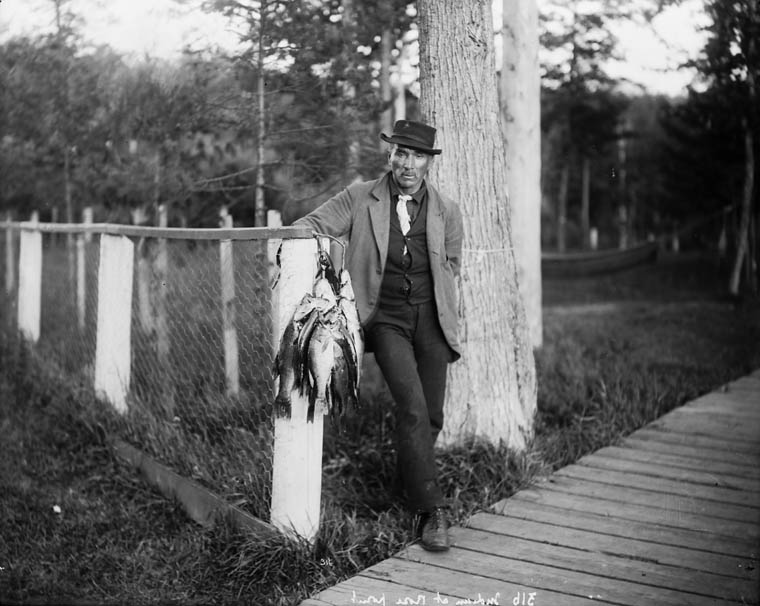
A black-and-white photograph of a man wearing a hat, coat and tie leaning against a fence post and holding a string of fish.

First Nations man with a string of fish (MIKAN 3385816)

Plentiful fish stocks in Canada provided a dietary staple for local communities and contributed to European exploration and eventual settlement. Harvesting this natural resource evolved with time, running the gamut from subsistence to sport to commercial fishing. The French were one of the first colonial powers to establish seasonal fishing stations for cod in Canada. And later, when the British arrived, the number of stations increased steadily, along with the diversity of species that were sought.

A black-and-white photograph of a man posing in front of Rupert Brand crates with two large salmon and two large halibut.

Halibut and salmon, Rupert Brand Fish (MIKAN 3359156)

Despite technological advances in commercial fishing, the pastime of solitary or small-group fishing continues to thrive, and is encouraged and supported in Canada to this day.

Visit the Flickr album now!