Do I have the right to vote? Letters from women to the Canadian government, 1918-1919

Canadian women received the federal right to vote in three waves of legislation. It began with Prime Minister Robert Borden initiating the Military Voters Act of 1917, which enabled Canadian women on active service to vote. Borden also implemented the Wartime Elections Act that same year, which extended the vote to Canadian women who were related to men in the military forces. Lastly, on May 24, 1918, royal assent was given to a bill extending the vote to Canadian women who met the same qualifications as voting men. These quick and successive formative events caused confusion for the public.

The collection of Library and Archives Canada (LAC) holds various letters written by Canadian women that demonstrate the impact of the vote and include questions about their own personal eligibility to cast a ballot. Seeking information directly from the source, women wrote to Prime Minister Robert Borden and other government officials.

In a letter dated December 1919, Mrs. King of Colonsay, Saskatchewan inquired if she was eligible to vote as a Canadian citizen married to an American citizen. Her inquiry was forwarded to the Department of Justice, which replied that she should be eligible to vote based on her information and enclosed a copy of the Act. They also noted that her inquiry was not typically an affair for the Department.

The confusion between the Dominion Elections Act and the temporary wartime voting measures is evident in a letter dated February 17, 1919 from Mrs. Lillian Dill of Oshawa, Ontario. Mrs. Dill requested a copy of the Act in order to understand its impact and her eligibility to vote. Continue reading
Let Them Howl: 100 Years of Women’s Suffrage—An exhibition in Ottawa and Winnipeg

The year 2016 marks the 100th anniversary of women first winning the right to vote in Canada. On January 28—the date that Manitoba became the first province to pass women’s voting rights into law—Library and Archives Canada (LAC), in partnership with the Canadian Museum for Human Rights, will officially launch an outdoor exhibition titled Let Them Howl: 100 Years of Women’s Suffrage.

The exhibition will feature reproduction portraits of some of the women who fought for equality and the vote. Be sure to check out the exhibitions January 28 to February 15, 2016 on the Rideau Canal Skateway in Ottawa (presented in partnership with Winterlude) and February 12–21, 2016 at the Festival du Voyageur in Winnipeg.

The exhibition features reproduction portraits from LAC’s collection of historic figures like Nellie McClung and Agnes Mcphail to modern women who have broken gender barriers, such as Adrienne Clarkson and Beverley McLachlin.

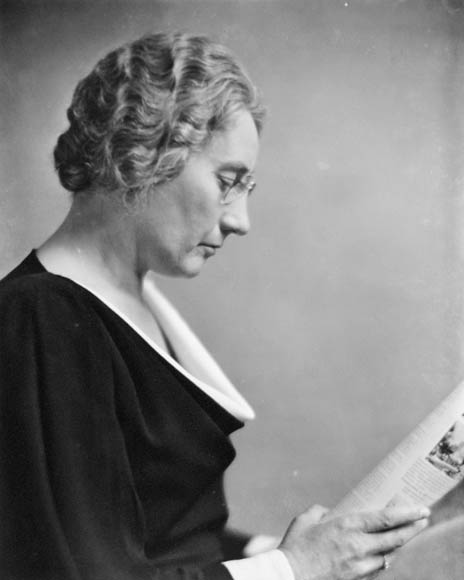
A black-and-white photograph of Agnes Macphail in profile, reading the paper.

Agnes Macphail by Yousuf Karsh, 1934 (MIKAN 3256551)

Continue reading

Patent of Invention Applications at Library and Archives Canada

A patent of invention application (for a patent) is a document that usually includes “an abstract, a specification, and drawings.” This type of application is important as it often becomes the official patent document once it is approved. Like the patent process itself, the structure of and type of information in each application is highly regulated. Here’s an overview of what Library and Archives Canada (LAC) holds in terms of patent applications. A subsequent blog post will detail the steps to follow when searching for a specific application.

The Canadian Intellectual Property Office fonds is one of the first places to look if you’re trying to get an idea of what LAC holds in terms of patents. You’ll find relevant holdings in the Patent Branch and the Industrial Design Division series within that fonds. Both series encompass the pre- and post-Confederation periods and include documentation that demonstrates the various stages of the patent application process. Please note that many of these are searchable through the Canadian Patents, 1869–1919 database. Continue reading

Orders-in-Council database

A new version of the Orders-in-Council database is now online. Digitized images for the years 1911 to 1916 are now available, plus new descriptions for the years 1916 to 1924 have been added. You’ll also notice new sorting features available in the Results pages.

Start searching the Orders-in-Council database now!

Temperance, social reform and the quest for women’s suffrage

At the beginning of the 19th century, many people considered that industrialization and urbanization were the source of society’s ills. This sparked the temperance movement, which advocated moderation or abstinence from alcohol because of its perceived detrimental influence on society.

Temperance societies, such as the Women’s Christian Temperance Union (WCTU), campaigned against alcoholism to protect the home and strengthen family life. In addition to temperance, they endorsed many social reforms including community welfare, education and women’s suffrage to combat inequities like poverty and child labour. WCTUs realized that in order to prompt social change women needed to be able to influence government policies, which meant gaining the right to vote.

The temperance movement got more women interested in participating in public life and actively engaging in political and social reform. Nellie McClung, who was instrumental in winning women the right to vote in Manitoba in 1916, began to get involved in politics with the WCTU.

A black-and-white photograph of a seated woman, right hand propping up her head, right elbow on a table, a book in her left hand. She is looking directly at the camera.

Nellie McLung by Jessop Cyril (MIKAN 3622978)

Continue reading

The Carignan-Salières Regiment

The colony of New France was in a precarious situation when France’s King Louis XIV acceded to the throne in 1661. The population and safety of the colony were a priority for him. In order to increase the population, the first contingent of the Filles du roi (“King’s daughters”) was sent there in 1663. Two years later, in 1665, the Carignan-Salières Regiment disembarked in New France to ensure the safety of the colony and, more specifically, to deal with the Iroquois threat.

A pen and watercolour sketch depicting an officer in the Carignan-Salières Regiment in profile. He is holding a lance in his right hand and wearing a sheathed sword on his left hip.

Officer of the Carignan-Salières Regiment, 1666 (c010368k)

Continue reading

Lucille Teasdale and Piero Corti: big dreams for a little hospital

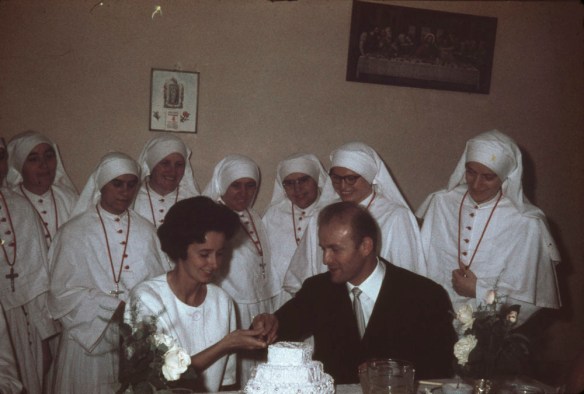
Canadian surgeon Lucille Teasdale first met Italian doctor Piero Corti at Saint Justine’s hospital in Montréal in 1955 while completing an internship. Both doctors dreamed of providing medical assistance to people in developing nations and Piero was immediately drawn to Lucille’s dedication to her profession. After parting ways, Piero and Lucille reconnected in Marseille, France. There, Piero shared his dream of developing a small clinic in Uganda into a world-class hospital, eventually convincing Lucille to join him. The couple were married in Gulu, Uganda in 1961 and worked together at St. Mary’s-Hospital Lacor for 35 years. In that time, the hospital went from a small outpatient unit with 40 beds to a 450-bed facility treating 150,000 patients per year before Lucille passed away in 1996 from AIDS, which she contracted from operating on one of her patients.

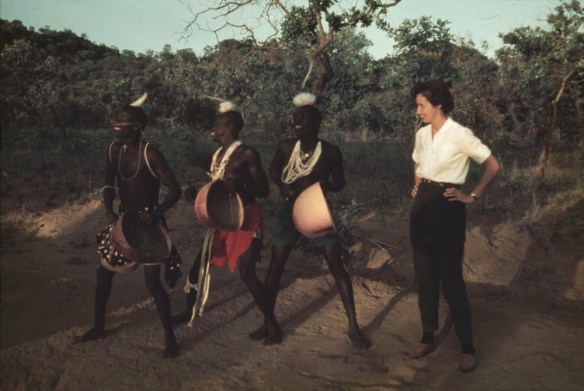
A colour photograph showing four people standing outdoors. Three are in traditional Ugandan dress while another is in western clothing.

Lucille greeted by locals upon arrival in Gulu, Uganda (MIKAN 4843368)

e011161370-v8

Lucille and Piero’s wedding in December 1961 (MIKAN 4843366)

Continue reading

Open government 101

The first time many of us heard of Open Government may have been in 1980, in the pilot episode of the BBC series “Yes Minister.” The first policy idea of newly-appointed minister Jim Hacker was being “open”; giving citizens the chance to connect with the people they had just elected.

Long-serving civil servant Sir Humphrey Appleby was dismayed at this idea, explaining that open government was an absurd concept—one must choose between being open or governing.

Today, citizens and governments across the globe disagree with Sir Humphrey’s outdated ideas. Indeed more than 68 countries have joined the Open Government Partnership (OGP), a multilateral initiative that advocates openness within government to promote transparency and empower citizens.

Canada joined the OGP in 2011 and the Treasury Board of Canada Secretariat released our first Action Plan in 2012. This plan was founded on three pillars: Open Information; Open Data, and Open Dialogue. Our second Action Plan, which builds on the original commitments and adds new commitments in areas such as government spending and contracting data, will be completed this summer.

At Library and Archives Canada (LAC), our main commitment to Open Government centres on open information. We are committed to increasing access to archived federal documents among LAC’s holdings by removing restrictions on this information wherever possible. In February of 2015, we wrote a blog post about Block Review. We’re happy to report that this work continues and that we have now opened almost 18 million pages of records in our holdings! We’re also working to ensure that, wherever possible, government records will be open when transferred to us in the future.

This past summer, we told you about the work we’ve been doing with historical datasets—migrating datasets from our holdings to Canada’s Open Data Portal. To date, we have migrated over 40 datasets. Keep checking our blog to keep up to date with our new additions to the Portal.

Enough about us! How can you get involved? Open Government is about facilitating a two-way conversation. Add your voice to the conversation—the best place to start is the Open Government portal. It’s a one-stop shop for everything the federal government is doing in the Open Government arena (including current consultation opportunities).

Keep checking back for more Open Government updates!

Lightkeepers Wanted!

Throughout the late 19th and early 20th centuries, lighthouses were an integral part of life in Atlantic Canada, which was home to over 135 of them. It was the responsibility of the lightkeeper to keep the light burning no matter what, a commitment that often involved his entire family. Library and Archives Canada holds records of many lighthouses from Atlantic Canada.

A lighthouse of particular interest is the Cape Bear lighthouse on Prince Edward Island. Next door to the lighthouse is the Marconi wireless station, which received one of the first distress signals sent from the Titanic.

But who were the lightkeepers who kept the lights burning?

Continue reading

Shaughnessy Hospital – dedication and innovation in war and peace

For over 75 years, Vancouver’s Shaughnessy Hospital served veterans and civilians of British Columbia, providing medical care and rehabilitation services, and becoming a research and teaching centre. Library and Archives Canada’s photos and other records of the hospital document this evolving role, with images including patient care and rehabilitation, buildings and equipment, and staff and volunteers.

The hospital opened in 1917 as a convalescent home for First World War veterans. By 1919 it had increased its capacity for medical services and patient care to become a military hospital.

A black-and-white photograph of uniformed men and nurses seated in front of an elaborate Elizabethan entrance.

Original staff of Shaughnessy Military Hospital – [1919?], copied 1952 (e011156698-v8)

Continue reading