A look inside former Governor General Adrienne Clarkson’s archives

By Thora Gustafsson and Rebecca Sykes

The Right Honourable Adrienne Clarkson is best known as a former Governor General of Canada (1999 to 2005), but she has been in the spotlight for many more reasons throughout her life. As a refugee, a household name at the Canadian Broadcasting Corporation (CBC) and Ontario’s first Agent-General in France, she touched the lives of Canadians long before she became a resident of Rideau Hall.

Adrienne Clarkson, née Poy, was born in Hong Kong in 1939. Following the surrender of Hong Kong on Christmas Day 1941, the Poy family lived under harsh conditions with little food during the Japanese occupation. Adrienne’s father, William Poy (Ng Ying Choi), had been a message courrier in the Volunteer Militia working for the British. He used his connections to write to Canadian trade commissioners in search of an escape for his family. Eventually, William, his wife Ethel Lam (Lam May Ngo), Adrienne and her older brother Neville were placed on a list alongside Canadian citizens to be exchanged by the Red Cross. With only 10 hours’ notice and one suitcase each, the Poy family left by ship for North America. A publicity photograph in Clarkson’s fonds shows her, only a few years old, eating an ice cream cone on her first stop on Canadian soil in Montréal. In her 2009 memoir, Heart Matters, Clarkson writes that the night her family was informed that they were to be exchanged was a formative moment in her and her family’s story.

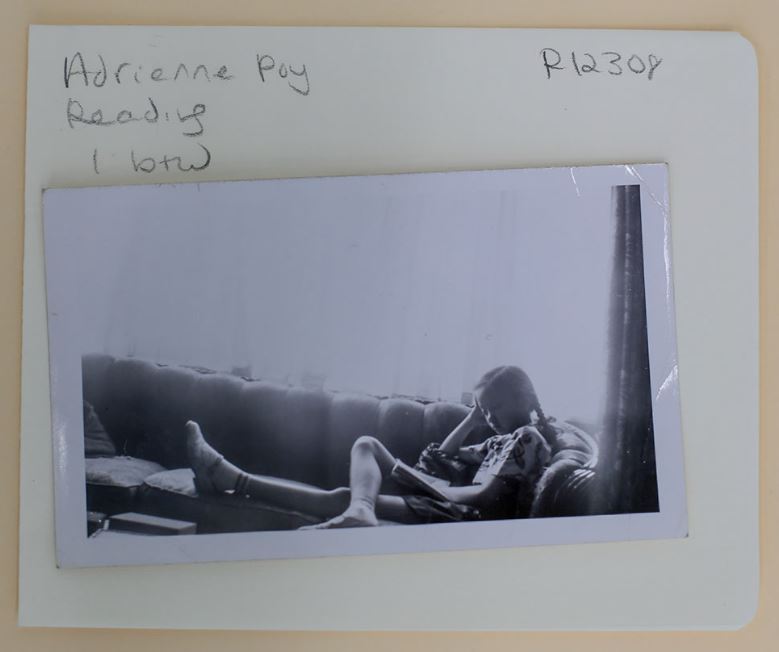
A girl reading a book while sitting on a sofa.

Adrienne Poy reading (R12308, vol. 189, file 1)

From a young age, Clarkson was a prodigious reader. In interviews, she has frequently remarked that her idea of hell is being trapped with nothing to read, and that she could read seven or more books in a week: “I read the way other people bite their nails, compulsively and voraciously” (R12308, vol. 159, file 13). At age nine, she was gifted a copy of Lucy Maud Montgomery’s Anne of Green Gables, and like for so many immigrants to Canada, the book became a favourite and a touchstone for understanding Canada and its people. Clarkson went on to earn a master’s degree in English literature from the University of Toronto and to lecture in the English department there. This led to her career in television.

Hired by CBC’s “Take 30” television series as a book reviewer in 1965, she was quickly promoted to co-host. There, she and Paul Soles discussed a broad range of topics including books, motherhood, cooking and issues of the day, such as abortion and illegal drug use. While on the show, she also discussed issues that are still very close to her heart, such as the first French-immersion schools and the experiences of immigrants in Canada.

In looking at the documents, it is clear how connected she felt to her viewers. In an article she wrote for the Winnipeg Free Press in 1966, she said she often thought of the so-called average viewer “as a third person in the conversation, someone you might meet at any party—pleasant and interested.” That sense of connection clearly went both ways, judging by her collection of letters from viewers. One viewer, who wrote on behalf of herself and her husband, compared watching “Take 30” to “having a friend come into our home.” The show also aired several episodes dealing with pregnancy and motherhood, which Clarkson co-hosted while she was an expectant mother. Many of the show’s fans were mothers themselves, and both new and experienced mothers wrote her letters with advice and book recommendations.

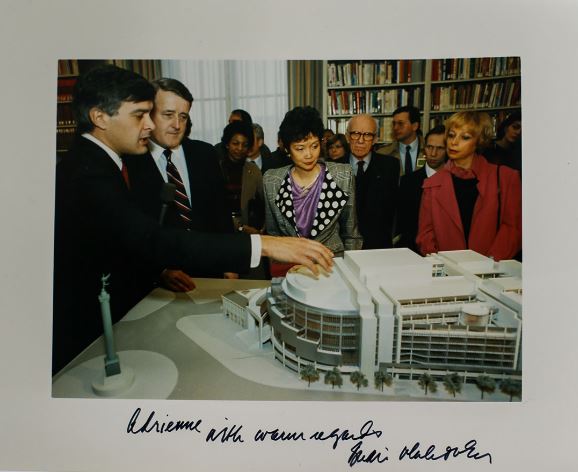
In 1982, Clarkson left her 17-year career in broadcasting at the CBC to become Ontario’s Agent-General in France. Clarkson is a lifelong Francophile. Photographs in her fonds show her family’s friendship with their French-Canadian neighbours and her travels through France as a young woman. Clarkson also studied the French language, achieving fluency during postgraduate work at the Sorbonne in Paris in 1962. In her position as Agent-General, Clarkson was responsible for promoting Ontario’s economic and cultural interests in France and other European countries. One of her proudest moments was when up-and-coming Uruguay-born, Toronto-based Canadian architect Carlos Ott was selected as the winner in an international design competition for the new Paris Opera in 1983. Through her work as Agent-General, Clarkson secured the budget to bring the competition judges to Toronto to counter their perception of Anglo-Saxon Canada and show them what a prosperous and diverse city it was.

Several people looking at a model of a building.

Clarkson (centre) and others beside a model of the Opéra de la Bastille in Paris (R12308, vol. 190, folder 5)

In 1999, Clarkson became Canada’s 26th Governor General since Confederation. The second woman to take up the post, and the first immigrant and person of colour to do so, she is credited with modernizing the role. She continued her efforts to connect with Canadians by travelling across the country to speak to individuals in person, which she was able to do fluently in both English and French.

Going through the Adrienne L. Clarkson fonds, from her youth through her time in broadcasting and her Agent-General days, shows how consistent Clarkson has been on issues that have interested her throughout her life. As an immigrant, broadcaster, Ontario’s Agent-General, Governor General, and co-founder of the Institute for Canadian Citizenship—her legacy project as Governor General—Clarkson has thought long and hard about being Canadian and what it means to belong here. Her early research on topics for “Take 30” was clearly informative for her later work and causes. Her lifelong love of the French language served her in her public service career and as Governor General in connecting with Canadians. Her records at Library and Archives Canada are rich sources of information that document Clarkson’s passionate and adventurous life.


Thora Gustafsson and Rebecca Sykes are archivists in the Governance, Military and Political section of the Archives Branch at Library and Archives Canada.

Catalogue shopping at Sears: Delivering the goods

Version française

By Jennifer Anderson

Have you done some online shopping recently? That remote connection you have to retail, complete with delivery to your doorstep, is so convenient. It makes it easier for everyone to gain access to high-quality goods, whether you are mobility-challenged, live far away from urban centres, or cannot visit a store for any other reason. It also saves time.

But shopping remotely was not invented yesterday.

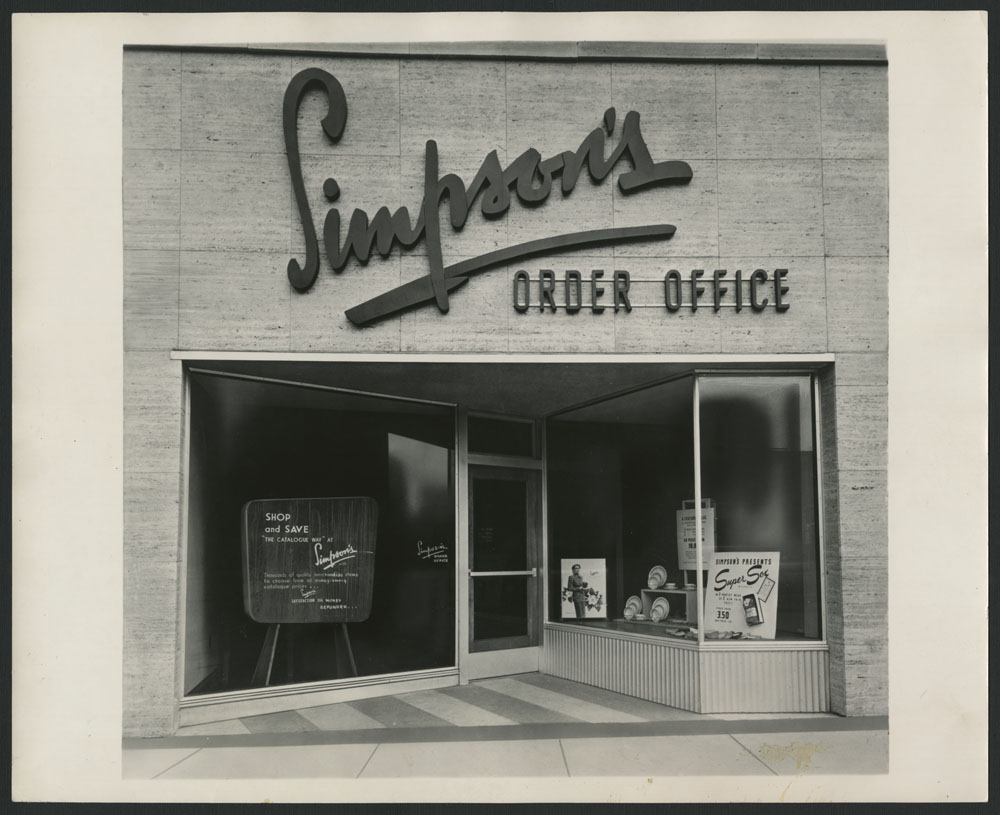
Before the Internet, consumers could shop from a distance using catalogues that were delivered regularly to their homes. They could also pick up their orders at small catalogue stores sometimes located within other shops, like florists and gift stores.

A black-and-white photograph showing the exterior of a catalogue store, with “Simpson’s Order Office” written above the door, and advertisements in the windows.
Simpson’s catalogue order office, Sarnia, Ontario, 1952 (e011172139)

In an earlier blog article, I mentioned that Library and Archives Canada (LAC) acquired the archives of Sears Canada in 2017. There are over 40,000 photographs in this archival fonds, many of which show the day-to-day operations of Simpson’s (and later, Sears) staff working on delivering goods to customers through the company’s catalogue service. Although originally the photographs were likely for public relations, today they offer researchers a window into the everyday working lives of the department store personnel.

After Sears arrived in Canada in 1952, purchasing Simpson’s and rebranding itself as Simpsons-Sears, it was the catalogue that remained the mainstay for the company, eventually outperforming Eaton’s, Dupuis Frères, Hudson’s Bay Company and all other department stores in the mail-order retail business. In the late 1970s, the company dropped the Simpsons name, and its stores became known simply as Sears. The company launched its toll-free telephone number in 1992, and a decade later, it was the most-called phone number in Canada. Sears launched its website in 1996, receiving millions of visits each year. But throughout this period, the catalogue’s popularity continued to grow.

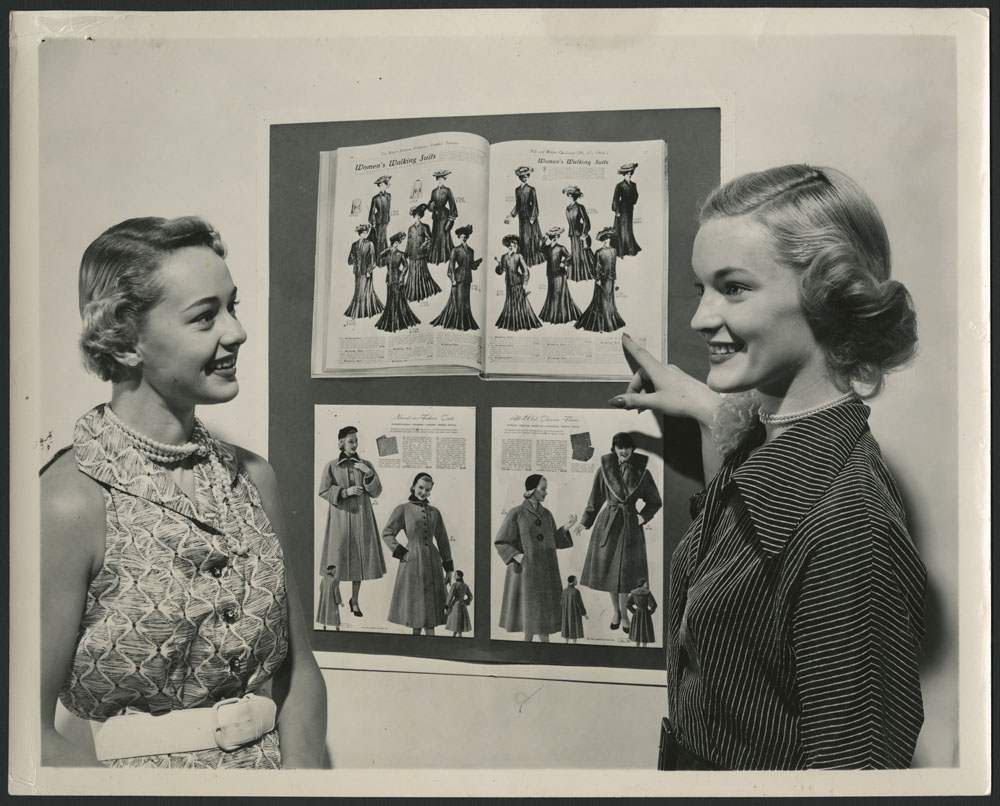
Early catalogue imagery was composed of hand-drawn silhouettes, rather than photographs, aimed at enticing customers to purchase attractive items and ensembles. In many cases, the artists were women, who faced barriers at commercial design firms.

A black-and-white photograph showing two smiling women standing on each side of fashion catalogues from the late 19th century and mid-20th century.
Catalogue shopping, always in style, 1953 (e011172110)

Similarly, the women who promoted fashion in catalogues and magazines had influential careers in journalism and played a role in social change. As Valerie Korinek showed in Roughing It in the Suburbs: Reading Chatelaine Magazine in the Fifties and Sixties (2000), Chatelaine was a powerful medium interacting with a community of Canadian women readers in a pre-Internet age. A photograph of Chatelaine’s fashion editor, Vivian Wilcox, suggests that she was involved in marketing the Sears catalogues.

A black-and-white photograph showing a camper trailer, and a woman unpacking a set of dishes at a table, with smaller images of details of the camper at the bottom of the advertisement.
Vivian Wilcox, fashion editor, Chatelaine, with an artist’s rendering of a silhouette, around 1955
(e011172116)

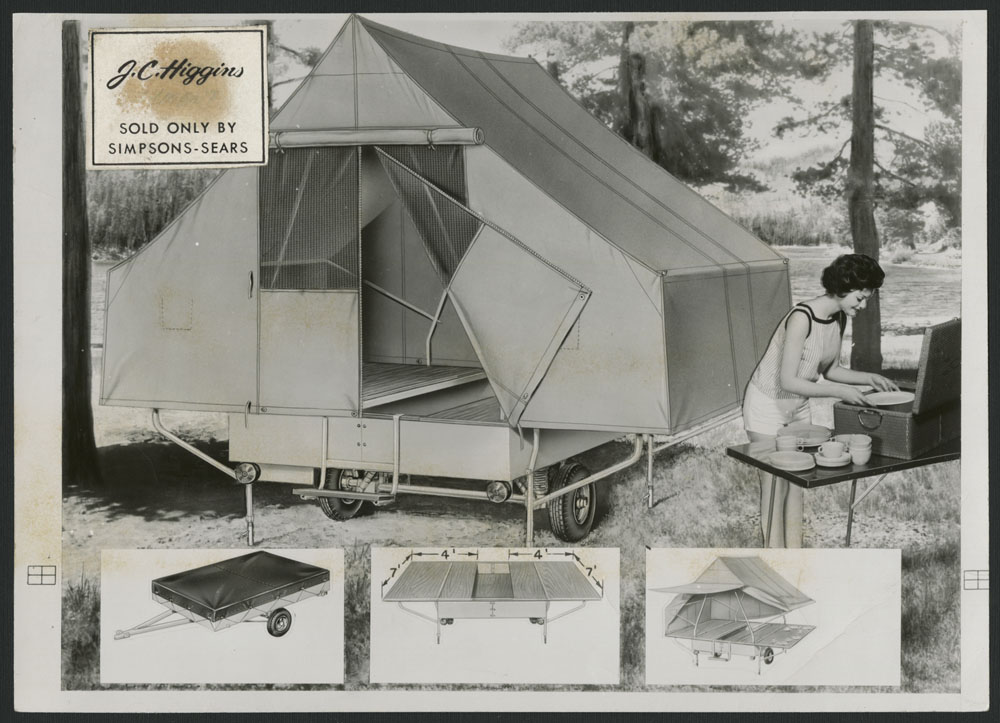
Marketing researchers and historians will have considerable scope for research projects based on the analysis of advertising in the catalogue, and the ways in which attempts to appeal to customers have changed over the years. For instance, consider this ad for a camper-trailer, from the 1950s, and the ease with which the solitary female camper appears to be preparing for a meal in the woods.

A black-and-white photograph showing a camper trailer, and a woman unpacking a set of dishes at a table, with smaller images of details of the camper at the bottom of the advertisement.
Advertisement for camper trailer, around 1950 (e011172156)

But the photographs in the Sears Canada fonds at LAC are about more than nostalgia or public relations. They reflect real change within the Canadian economy and society over time. The records speak to one company’s efforts to show resilience and adaptation as the economic environment changed. Today, the archival records related to the Sears catalogue are about more than marketing a particular product or a business; they are about how the Canadian retail sector, rooted in a transnational network, worked to remain relevant through the 20th century and into the 21st century.

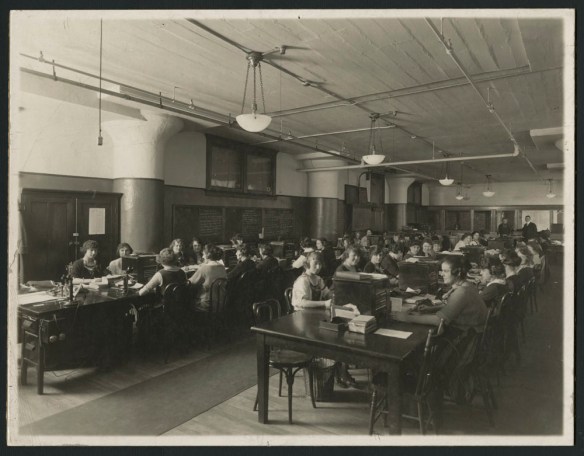
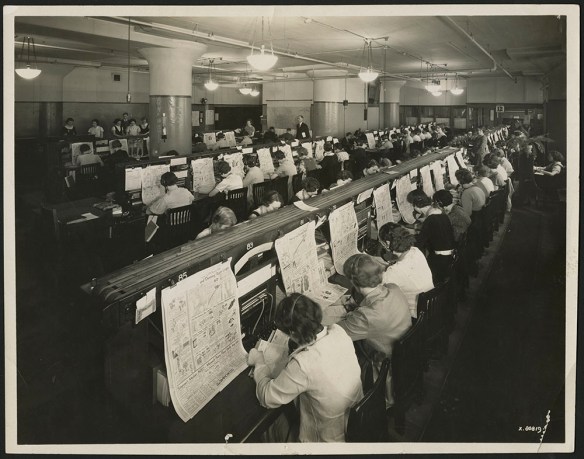
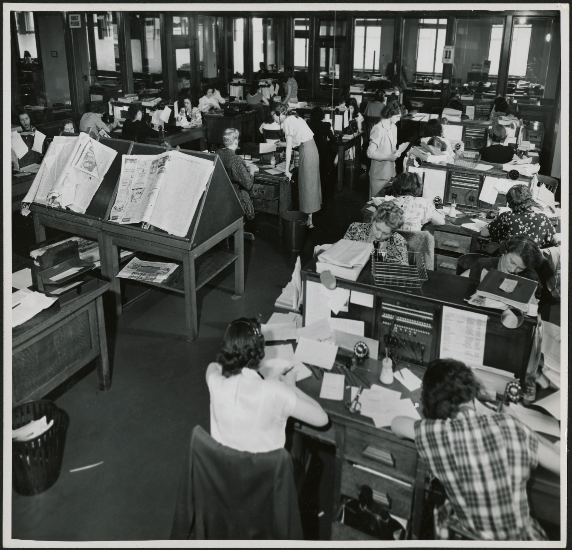
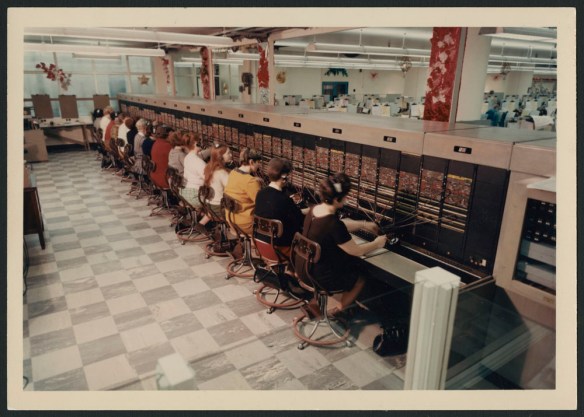
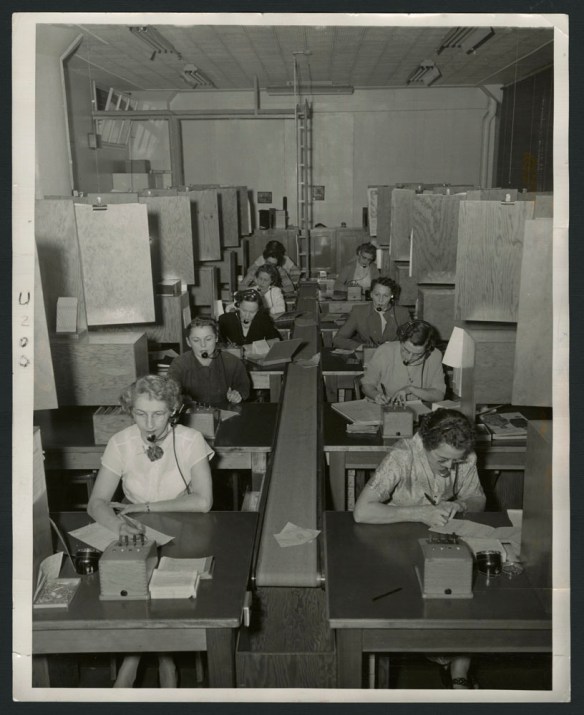
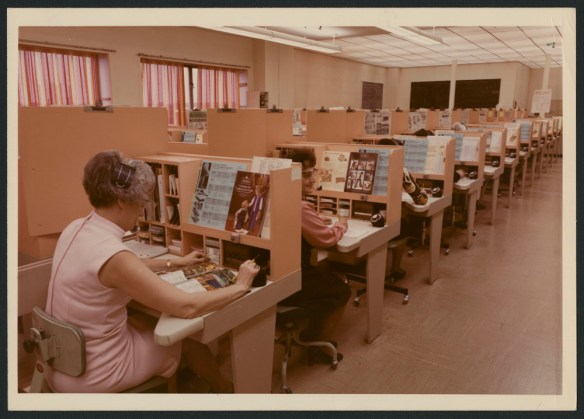
For example, consider this series of photographs showing the staff of Simpson’s, then Simpsons-Sears, and finally Sears, taking catalogue orders over the telephone. Dated from 1921 to 1972, they show real changes in the communications equipment used, in the desks and the clothing, as well as in the hairstyles. We can also see the change from black-and-white photography to Kodachrome colour photographs. However, the work itself, and the all-female staff, does not appear to change during this time.

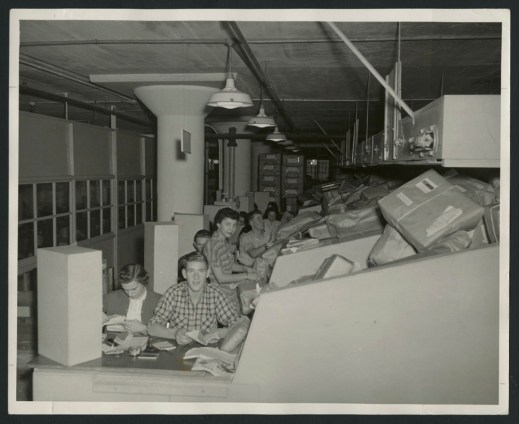
These behind-the-scenes photographs of customers’ orders being wrapped, sorted and labelled suggest a long-lost time, and yet they evoke actions that must be very familiar to anyone working for one of today’s major online retailers.

A black-and-white photograph showing two rows of women standing, wearing aprons and wrapping parcels at a long desk, with shelves containing parcels behind them, and a large roll of wrapping paper in the foreground.
Packing the order, around 1950 (e011213330)


  • Two black-and-white photographs, one showing a group of employees sorting parcels into bins, and the other showing women at desks checking addresses on parcels as the parcels slide down a ramp toward them.
  • Two black-and-white photographs, one showing a group of employees sorting parcels into bins, and the other showing women at desks checking addresses on parcels as the parcels slide down a ramp toward them.

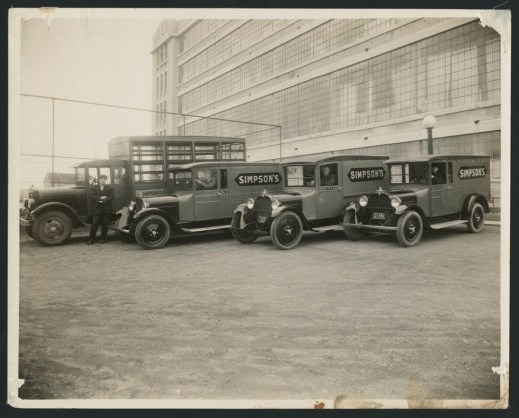
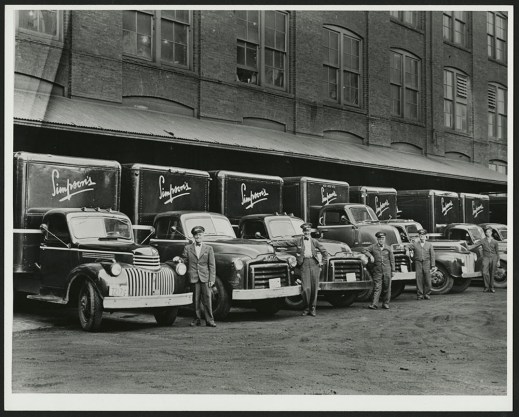
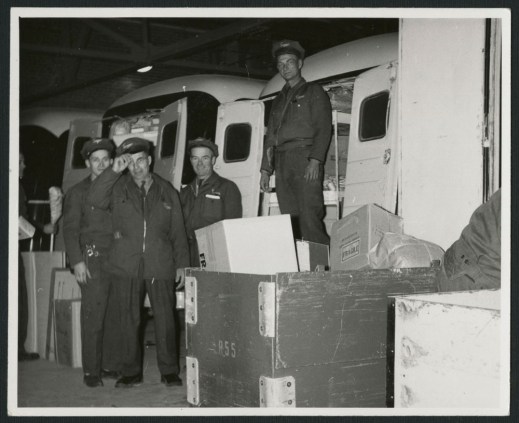
Similarly, this series of photographs of delivery personnel with their trucks strikes a modern viewer as both antiquated and yet somewhat familiar. Today’s delivery staff is as likely to be female as male, and it is extremely unlikely that they would wear bow ties! However, the uniform itself as a symbol of trust and the pride taken in ensuring customer satisfaction are doubtless still parts of the service standards of any contemporary enterprise.

  • Three black-and-white photographs showing men dressed in uniforms beside Simpson’s delivery trucks, over the decades.
  • Three black-and-white photographs showing men dressed in uniforms beside Simpson’s delivery trucks, over the decades.
  • Three black-and-white photographs showing men dressed in uniforms beside Simpson’s delivery trucks, over the decades.

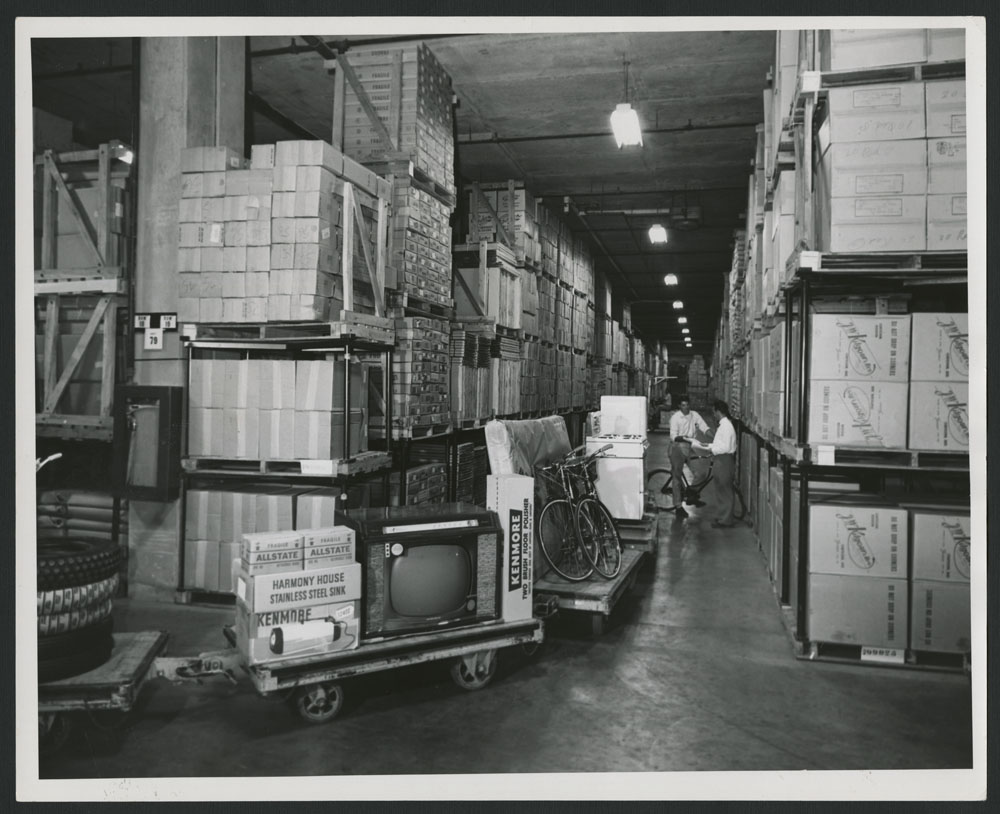
And certainly the economic importance of large distribution centres, both as places of employment and delivery hubs, is a familiar concept in today’s world of online shopping.

A black-and-white photograph showing two men checking paperwork in a large distribution centre, with merchandise visible on a series of rolling carts in the foreground and fluorescent lights overhead.
Kenmore distribution centre, Toronto, 1960 (e011172129)

One photograph, which may appear anachronistic today, but which was at one time central to the guarantees that large department stores offered their customers, shows the appliance repair and service department.

A black-and-white photograph showing three men repairing items in a workshop, and a fourth man moving a large appliance.
Kenmore service department, Toronto, 1960 (e011172130)
A black-and-white photograph showing two women ironing clothes and three women working at sewing machines.
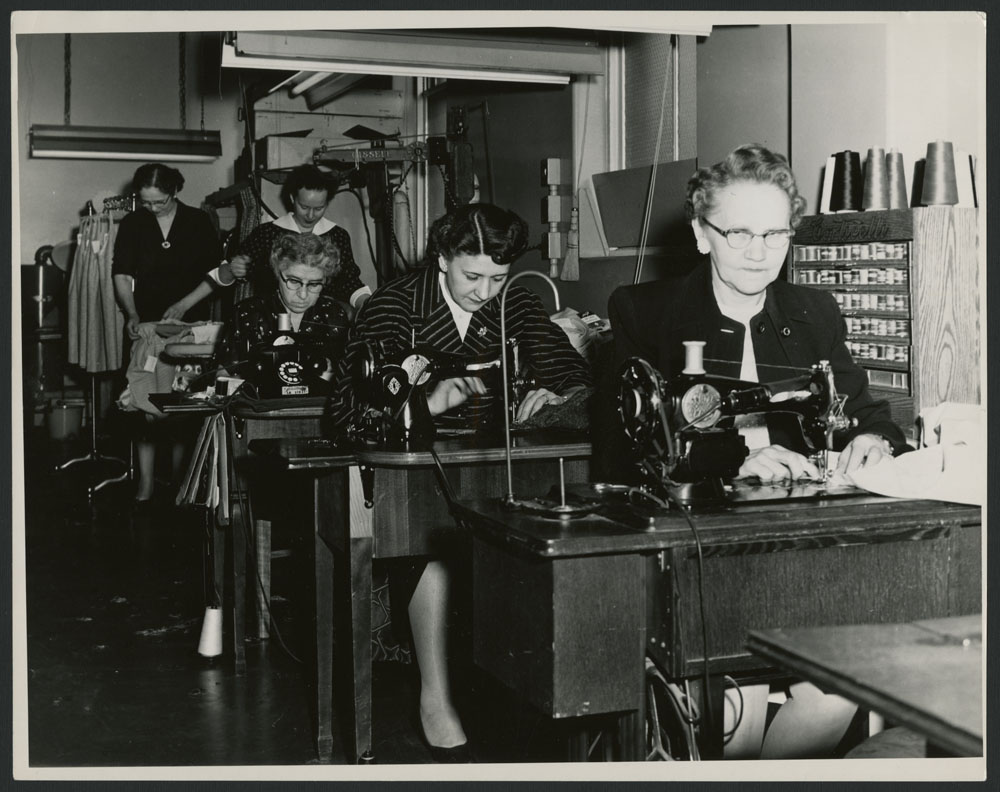
Women in a sewing room, around 1955; left to right: Louise Karst, Elizabeth Moehring, Anne Dawson, Madeleine Huzina and Helen Marg (e011172115)

The pages of these catalogues continue to generate high interest among LAC’s users, whether they are interested in the history of design, advertising, marketing or pricing. We are therefore confident that the Sears Canada fonds will generate an enthusiastic response from the research community and Canadians who are interested in the fascinating history of Sears Canada or have fond memories of the department store.

If you are looking into starting research on Sears Canada or a related subject, or have already begun, our reference specialists would be pleased to assist you. Simply use our Ask Us a Question form to contact us. We look forward to hearing from you!

Other LAC resources:


Jennifer Anderson was an archivist in the Public Services Branch, and she previously worked in the Science, Environment and Economy section of the Archives Branch, at Library and Archives Canada.


Manitoba: Kwaata-nihtaawakihk—A Hard Birth

On the left of the graphic, Tatânga Mânî [Chief Walking Buffalo] [George McLean] in traditional regalia on horse. In the middle, Iggi and girl engaging in a “kunik”, a traditional greeting in Inuit culture. On the right, Maxime Marion, a Métis guide stands holding a rifle. In the background, there is a map of Upper and Lower Canada, and text from the Red River Settlement collection.

This article contains historical language and content that some may consider offensive, such as language used to refer to racial, ethnic and cultural groups. Please see our historical language advisory for more information.

By William Benoit

The year 2020 marks an important year in the history of Canada. One hundred and fifty years have gone by since the 1870 transfer of Rupert’s Land and the North-Western Territory to Canada. It is also the year that Manitoba entered Confederation. This was no small feat. There were discussions as to whether the Canadian government would create a province or just keep it as a vast territory.

The Métis would push Canada toward creating the new province.

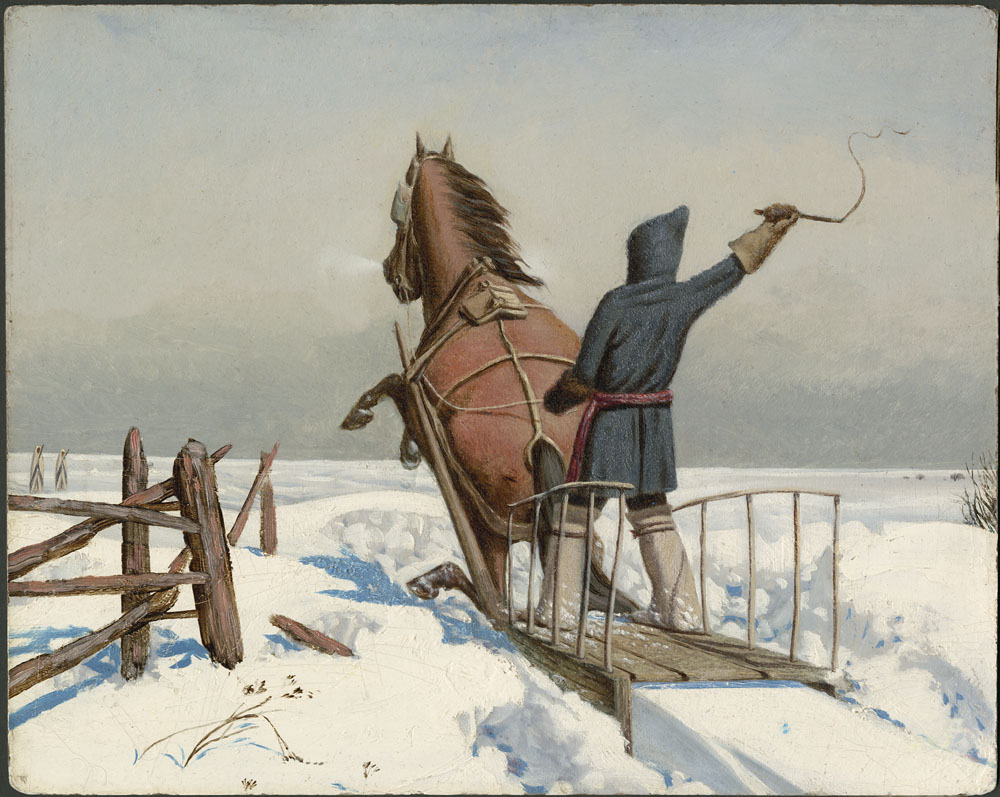
Painting of a person holding a riding crop above his head, standing on a sleigh being pulled through the snow by a rearing brown horse.

Breaking a Road in Manitoba (e011072986)

Manitoba would be the first addition to the list of four original Canadian provinces: Ontario, Quebec, New Brunswick and Nova Scotia. There was no template to use. Deep, careful and altruistic thinking about the future should have been the order of the day. Instead, for the Métis, what resulted from the experience were feelings of displacement, trauma and resilience. In post-Confederation Manitoba, the position of the Métis deteriorated. New settlers from Ontario were hostile. Métis elders, over generations, described that period as a “Reign of Terror” against the Métis.

Métis Nation Elder Verna DeMontigny recently described the province-building exercise that led to Manitoba as a hard birth, or Kwaata-nihtaawakihk in the Michif language. It was certainly difficult.

The Supreme Court of Canada, in its 2013 decision in Manitoba Metis Federation Inc. v. Canada, provides a detailed narrative of the Métis people, the Red River Settlement, and the conflict that gave rise to the Manitoba Act and Manitoba’s entry into Canada:

The story begins with the Aboriginal peoples who inhabited what is now the province of Manitoba—the Cree and other less populous nations. In the late 17th century, European adventurers and explorers passed through. The lands were claimed nominally by England, which granted the Hudson’s Bay Company […] control over a vast territory called Rupert’s Land, which included modern Manitoba. Aboriginal peoples continued to occupy the territory. In addition to the original First Nations, a new Aboriginal group, the Métis, arose—people descended from early unions between European adventurers and traders, and Aboriginal women. In the early days, the descendants of English-speaking parents were referred to as half-breeds, while those with French roots were called Métis.

On November 19, 1869, the Hudson’s Bay Company surrendered Rupert’s Land and the North-Western Territory under its letters patent to the British Crown. By Order-in-Council dated June 23, 1870, the British government admitted these territories to Canada, under section 146 of the British North America Act, 1867 (now the Constitution Act, 1867), effective July 15, 1870.

It took almost eight months from the Hudson’s Bay Company surrender until the completed land transfer took full effect.

The Canadian government, led by Prime Minister John A. Macdonald, intended to absorb the territories and open them up to settlement. Before this could happen, Canada would need to deal with the Indigenous peoples who were living in these territories. Under the Royal Proclamation of 1763, Canada was duty-bound to treat with the sovereign Indigenous nations to obtain their consent to the Imperial Crown to exercise its sovereignty over them. Written more than a hundred years before, the proclamation’s purpose was to organize and manage the newly expanded British North American territories after the Seven Years’ War. Included in the proclamation were regulations to stabilize relations with Indigenous peoples through the regulation of trade, settlement and land purchases on the frontier.

A drawing of people sitting in a circle around a person standing in the middle who is speaking. There is a building with people sitting and standing on the balcony in the background.

The Manitoba Indian Treaty; a chief lecturing at length at the Stone Fort (the Métis man seated on a chair within the circle may be the translator) (e010967476)

Therefore, for the First Nations, the process would be to enter into treaties, whereby they agreed to settlement of their lands in exchange for reservations of land and other promises. The government policy with respect to the Métis was less clear.

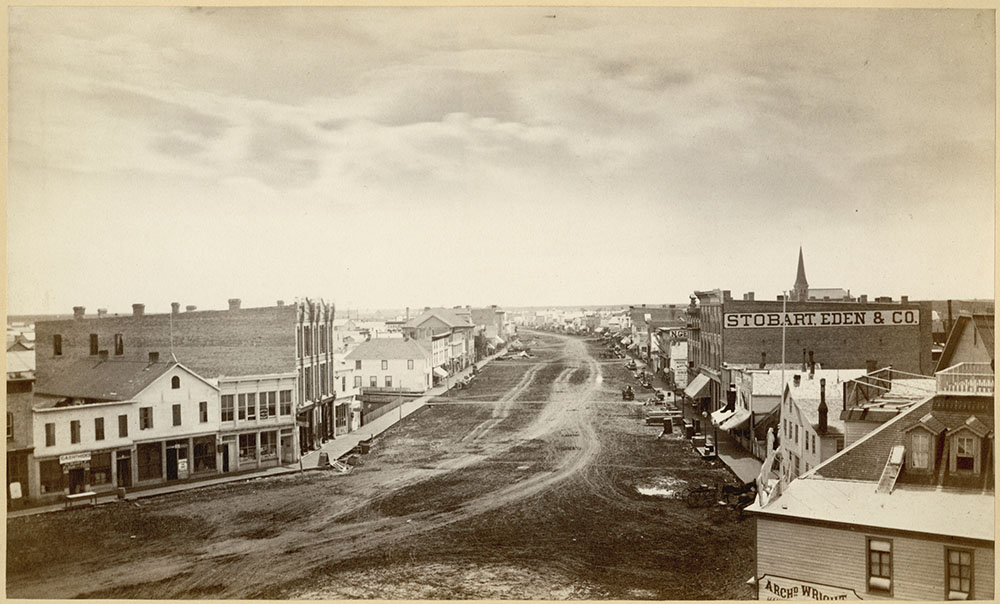
A sepia photograph of a town with buildings on either side of a wide dirt road with wagon tracks.

Main Street, Winnipeg, looking south, 1879; the street’s width was to accommodate the space needed for Red River Carts (e011156541)

Prior to confederation with Canada, white settlers had begun pouring into the Red River, displacing the social and political control of the Métis. This led to resistance and conflict. To settle the conflict and assure annexation of the territory, the Canadian government entered into negotiations with representatives of the Métis-led provisional government. The result was the adoption in 1870 of the Manitoba Act, which made Manitoba a province of Canada.

The Manitoba Act is a constitutional document with many treaty-like characteristics. It enshrines the promises and obligations that Canada has to the Métis people. These promises represent the terms under which the Métis agreed to surrender their claims to govern themselves and their territory, and to become part of Canada. These obligations remain in force today.

The Métis Nation is an internationally recognized Indigenous people. In Canada, it is one of three Indigenous groups with constitutionally entrenched Aboriginal and treaty rights, alongside First Nations (“Indians”) and Inuit (“Eskimos”). The Métis Nation Homeland is a vast area of land in west-central North America. The Métis, as the Founders of Manitoba in 1870 and Canada’s negotiating partners in Confederation, continue to play an important role in Canada’s development.

(In Michif: Li Michif Naasyoon nishtowinikaatew oobor lii piyii pi li moond nishtowiinikasowak li moond autochtone. Daan li Canada si te payyek enn band di moond avek lii dray tretii daan li constitution, aloon bor li Promii Naasyoon pi li Ziskimoo. Li Michif Naasyoon Nataal li piyii mitoni kihchi-mishow, li taryaen daan li sawntrel west Nor America. Lii Michif, koum li fondateur di Manitoba daan li 1870 pi Canada’s naasaasyi-iwow di maashkihtonikaywin daan li Confederation, kiiyapit il li enportaan daan li Canada’s oosishchikeywiin.)


William Benoit is the Advisor for Internal Indigenous Engagement in the Office of the Deputy Librarian and Archivist of Canada at Library and Archives Canada.

Kahkewaquonaby, the Grand Council, and First Nations Rights

This article contains historical language and content that some may consider offensive, such as language used to refer to racial, ethnic and cultural groups. Please see our historical language advisory for more information.

By Kelly Ferguson

In the Sir John A. Macdonald fonds, there are a series of letters exchanged between Macdonald and Dr. Peter Edmund Jones (Kahkewaquonaby). These letters offer a small glimpse into the work of Jones as well as organizations like the Grand General Indian Council of Ontario and Quebec in the struggle for the rights of First Nations during the 1870s and 1880s.

Jones was born in 1843 to Reverend Peter Jones (Kahkewaquonaby) and Elizabeth Field. In 1866, Jones earned a medical degree from Queen’s College in Kingston, becoming one of the first licensed Anishinaabe (and First Nations) doctors in British North America. After graduation, Jones worked as a practicing physician in Brantford, Ontario, Niagara, Ontario, and New York City. He eventually set up a practice in Hagersville, Ontario, next to the New Credit reserve. He served as Chief of the Mississaugas of the New Credit (now the Mississaugas of the Credit First Nation) from 1870 to 1874, and again from 1880 to 1886.

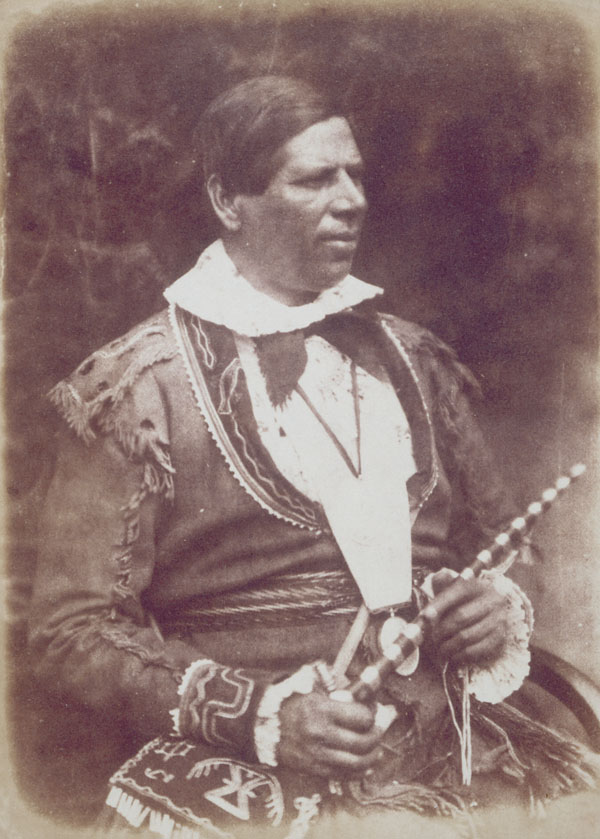
A sepia photograph of a seated man dressed in traditional quill design buckskin jacket and bag, holding a ceremonial pipe and a string of wampum beads.

Portrait of Kahkewaquonaby (Reverend Peter Jones), father of Dr. Peter E. Jones. The photograph was taken on August 4, 1845, and is by David Octavius Hill (photographer) and Robert Adamson (chemist). (a215156k)

Beginning in 1874, Jones served as part of the Grand General Indian Council of Ontario and Quebec. The Grand Council first met in 1870, and one of its primary tasks was reviewing the Indian Act and other pieces of legislation that related to the rights of First Nations.

By 1884, the Grand Council’s focus was on the Indian Advancement Act. The Act enforced significant changes to regulations and governing systems for First Nations in Eastern Canada, including limits on the size and functions of councils and the appointment of local Indian agents to preside over the councils.

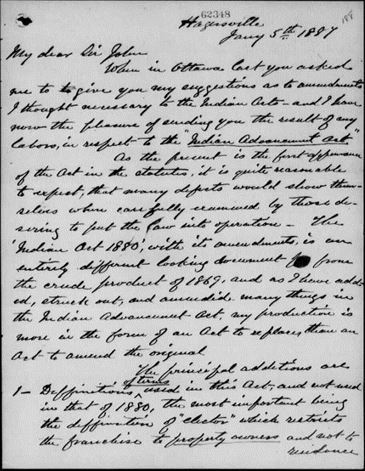
The Grand Council continued to debate the new Indian Advancement Act from 1884 to 1886. There were major objections to the Act, particularly the limits to the size of councils and the limits to their function, as well as the appointment of local Indian agents as chairmen. In 1887 Jones, then a delegate on the Grand Council, sent Macdonald a letter with suggestions and comments about both the Indian Act and the Indian Advancement Act. Jones’ recommendations included granting power to local councils to make decisions when the Indian agent was not there, extending equivalent powers to the chiefs, as well as increasing the number of councilors.

A black-and-white microfilm of a handwritten letter.

Letter to Sir John A. Macdonald from Dr. Peter E. Jones written January 5, 1887. In the letter, Jones offers suggestions and comments regarding the Indian Act and the Indian Advancement Act. (e007956445)

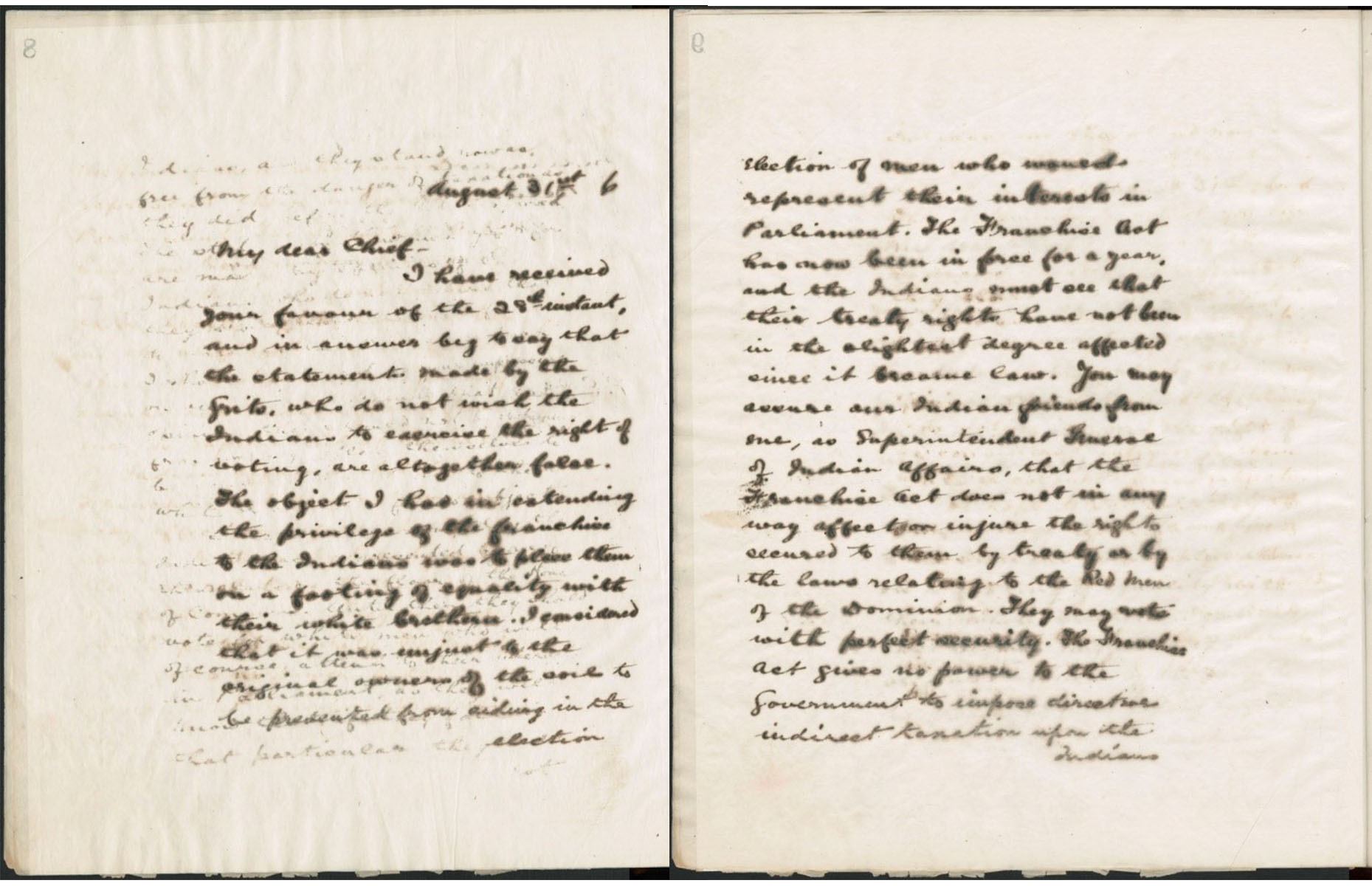
Jones also wrote to Macdonald with recommendations on the Electoral Franchise Act. Although, in theory, First Nations men had been able to vote since 1867, enfranchisement meant that they were required to give up their status under the Indian Act, as well as the accompanying treaty rights. Jones was supportive of enfranchisement, but not at the expense of status. He saw the Electoral Franchise Act as an opportunity to support a version of enfranchisement that maintained a person’s status under the Indian Act and protected treaty rights.

A sepia scan of a handwritten letter.

Letter to Dr. Peter E. Jones (Chief) from Sir John A. Macdonald, written August 31, 1886, discussing the Electoral Franchise Act. (e011198071-001-v8) (e011198071-002-v8)

A black-and-white microfilm of a two-page letter written on Department of Indian Affairs letterhead.

Letter to Sir John A. Macdonald from L. Vankoughnet, Deputy Superintendent of the Department of Indian Affairs. Dated March 28, 1887, the letter discusses amendments to jthe Indian Act, including suggestions offered by Dr. Peter Edmund Jones. (e007956441) (e007956442)

In the end, the Macdonald government ignored Jones’s recommendations regarding the Indian Advancement Act, and Wilfrid Laurier’s Liberal government later repealed the Electoral Franchise Act. The franchise would not be fully extended to status Indians under the Indian Act until 1960, and subsequent amendments to the Indian Act throughout the 19th century continued to assert increased control over the lives of First Nations. That said, these letters still provide a small glimpse into the work of organizations and individuals in the struggle for the rights of First Nations. Both in the 1880s and today, Indigenous Peoples have fought for the right to self-determination and the protection of their Indigenous, Aboriginal and treaty rights, and these letters offer a small window into one of many examples.


Kelly Ferguson is a political archivist in the Science and Governance Private Archives Division of Library and Archives Canada.


Shopping at Sears: A window into the archives

By Jennifer Anderson

So much has changed in 2020. Working with archives is about studying change over time, and reflecting on what that has meant to people’s lives. A case in point: the retail industry. What can we learn from studying the archives of a major department store?

Sears Canada was an icon of the retail industry through the second half of the 20th century, with stores in cities large and small, and a mail-order catalogue that spanned the country. The company was part of the Canadian urban landscape, and a major employer. The Sears department store often anchored local shopping malls, and the mall itself was a popular destination for purchasing household goods as well as for leisure shopping. The Sears Wish Book Christmas catalogue was familiar to Canadian families, rural and urban alike, and consumers were used to scoping, pricing and comparing big-ticket items like mattresses and appliances in its pages. Several brands of merchandise carried by Sears were themselves household names, including Craftsman tools, Kenmore appliances, Silvertone electronics and the Jessica clothing line.

Sears was a transnational success story, rooted in North American retail culture. U.S.-based Sears, Roebuck and Co. entered Canada in 1952, partnering with the Canada-based Robert Simpson Company (Simpsons) to create Simpsons-Sears Ltd. This new company operated a mail-order business worth $100 million in its first full year. It opened its first store in Stratford, Ontario, in 1953, and then expanded its retail stores to cities across the country. The new shopping experience offered by Simpsons-Sears challenged, most notably, the other Canadian retail behemoth: Eaton’s. Together these enterprises drew millions of Canadian shoppers to their stores and their catalogues, and they touched Canadians in their work and leisure pursuits.

In 2017, Sears Canada transferred its archives to Library and Archives Canada (LAC). This included 200 boxes of textual, photographic and audiovisual material, as well as another 200 boxes of published catalogues. These boxes contained more than 40,000 photographs, depicting Canadians shopping as well as Sears Canada employees working and participating in staff social events.

Since Sears Canada had maintained its own archives over a long period of time, it was relatively easy for LAC to arrange the material and begin to make it available to the public. The records came from a clean and well-organized facility, and for archivists, this facilitated the task of labelling files and arranging online descriptions. Recognizing the likelihood that the public would be interested in the photographs, LAC also moved quickly to digitize photographs. I am pleased to be able to share this collection with you here, along with a few suggestions for possible research avenues.

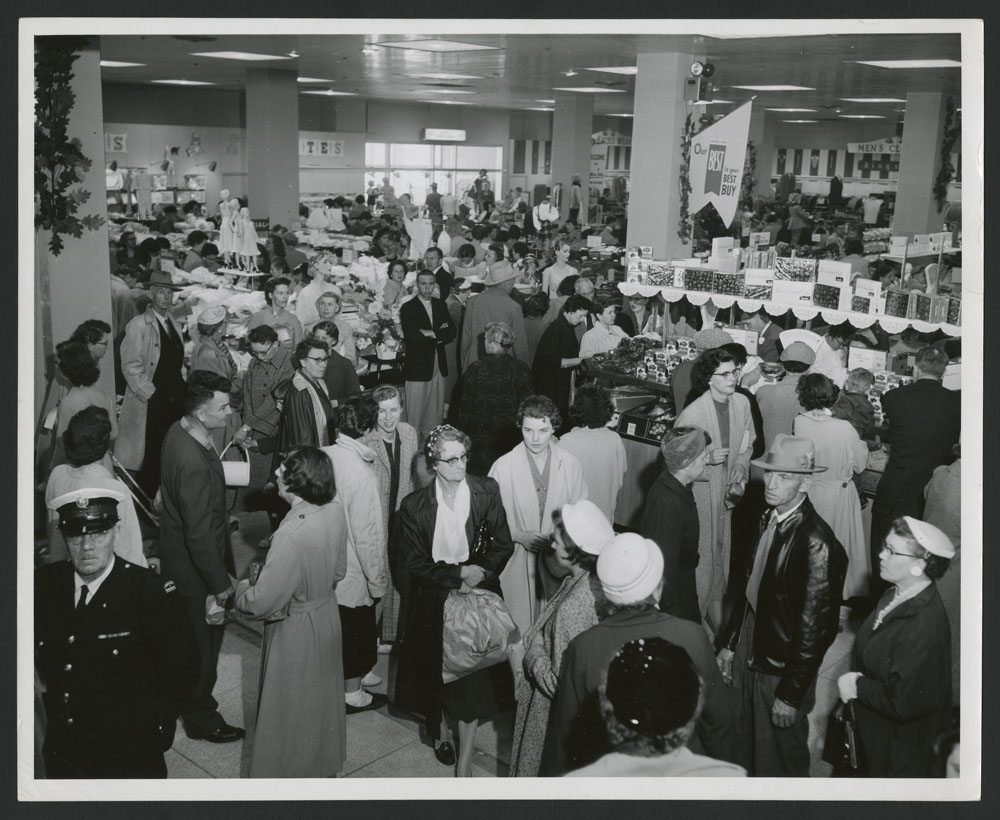
At first, the photographs included in this archival collection struck me as pure fun! For instance, I was amazed by the crowds at store-opening events.

Black-and-white photograph showing a crowd shopping in a department store, with a security guard in the left foreground.

A crowded store, Regina, Saskatchewan, 1957 (e011172149)

For younger generations of Canadians, who are used to making most of their purchases online, these stores might be unfamiliar, and yet the shopping centres built around them have been part our communities since before many of us were born. We did not personally experience the transition from having your clothes made at home or by a self-employed seamstress or tailor, to purchasing them in a small community shop, to buying factory-made, accessibly priced fashion in the large department stores of the postwar era. I had read about the establishment of shopping malls only in history books like Donica Belisle’s Retail Nation: Department Stores and the Making of Modern Canada (2011). Yet these changes took place in a relatively short time.

Black-and-white photograph of four women closely examining the jewelry on a department store table, which has a sign that reads “Special: Necklaces, Earrings and Broaches, $1.00.”

Shoppers at the jewelry counter, Burnaby, British Columbia, 1954 (e011172138)

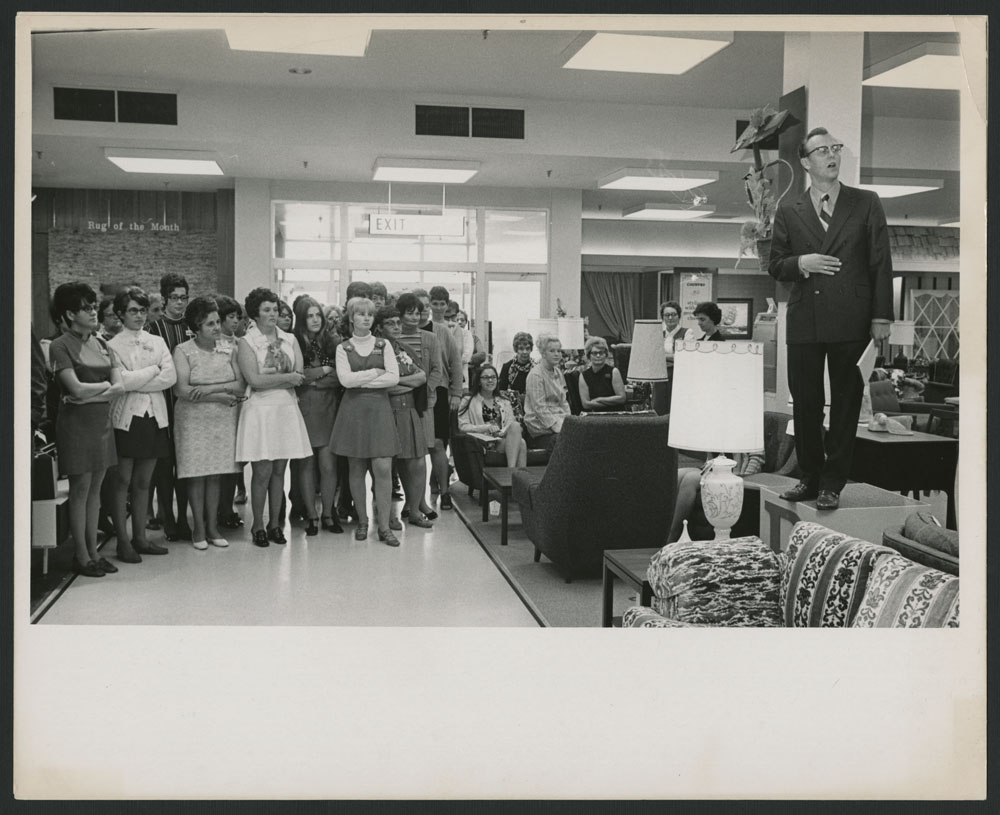
Sometimes the photographs in the Sears Canada collection show how things have changed, and at other times, how they have remained the same. I was interested in the way that the photographs reflected a gendered workplace, where by and large the men were managers and the women worked the sales floor. On the other hand, the photographs depict auto service as a masculine workplace, as it still tends to be today. I had read about the high degree of “emotional labour” required for those working on the department store floor in Joan Sangster’s Transforming Labour: Women and Work in Postwar Canada (2010), but the photographs illustrate this concept graphically.

Black-and-white photograph of a man standing on a table speaking to a large group of women.

Manager addressing department store staff, Oshawa, Ontario, 1968 (e011172137)


Black-and-white photograph of a mechanic wearing an overcoat and a cap who is working on a tire with a counter in the background and part of a car visible in the foreground.

Mechanic Bill Youngson working in a garage, around 1955 (e011172122)

I remember slogans like “Your money’s worth and more!” but I did not know that Sears once offered mortgage and real estate services, or that the stores included pharmacies.

Black-and-white photograph showing three women and a child at a counter, and three women working behind the counter, with “Prescriptions” on a sign above their heads.

Pharmacy counter, Regina, Saskatchewan, around 1950 (e011172153)

But I do remember when you could buy a bicycle at your local department store.

Black-and-white photograph showing the sports department of a department store, with hockey sticks, clothing, fishing rods and figure skates visible on the shelves.

Sports department, around 1950 (e011172157)

In the many hours that I spent carefully organizing and describing the photographs in this collection, I found myself considering some other themes evoked by the material: leisure shopping, accessible fashion, connections to community through local stores, and sales staff. You could finish an afternoon spent chasing a good deal with a sociable cup of coffee or tea in the store cafeteria!

  • A black-and-white photographs showing the staff at department store cafeterias. It shows customers in line to purchase food items, a woman working at the cash register and a man at a table with a cup of coffee
  • A formal posed group shot with seven women seated and seven women and two men standing, wearing white staff uniforms.
 

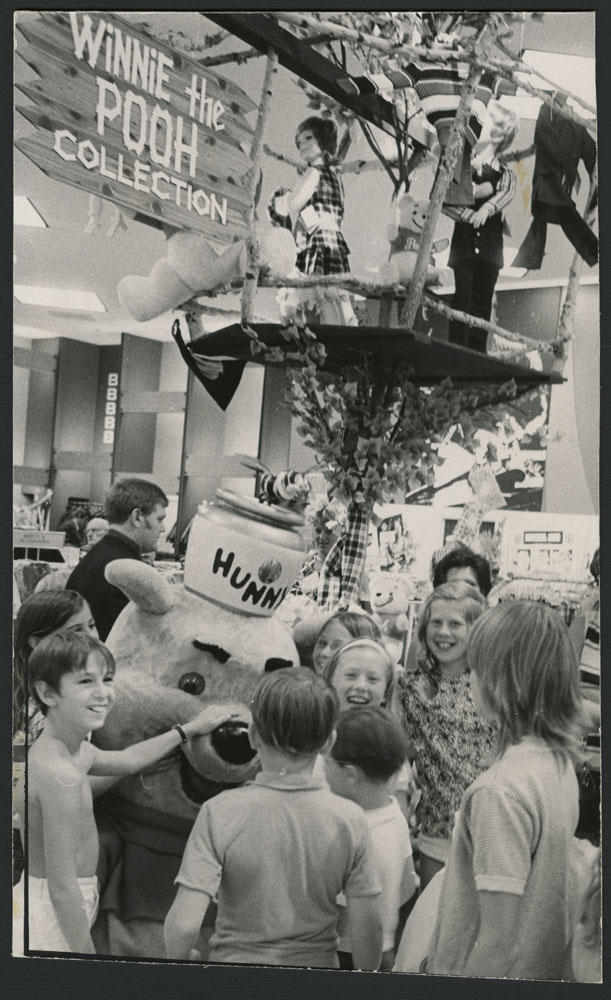
The careful attention paid to window displays, lighting and signage, and celebrity appearances and endorsements, spoke volumes about the marketing techniques of the late 20th century.

Black and white photograph showing children gathered around a large Winnie-the-Pooh mascot, with a treehouse and a “Winnie-the-Pooh Collection” sign in the background.
Winnie-the-Pooh at store opening, Kelowna, British Columbia, 1971 (e011172158)

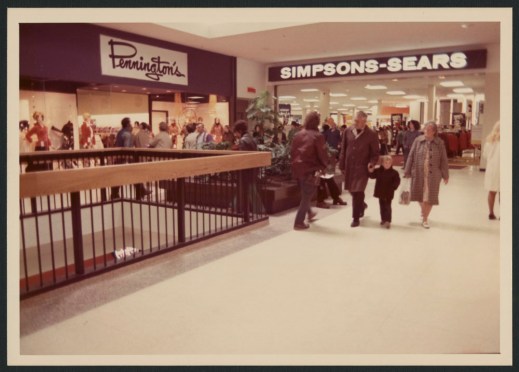
As I continued to work through the archival photographs, I moved closer to my own era. One day, I remembered that my first social outing with close friends, with my freshly minted driver’s licence, was to the shopping mall. Then I came upon the original photograph used in the Sears catalogue for clothing that I remember having convinced my parents to purchase for me. And later I found photographs of places where I had shopped recently. I knew then that the public would also find this archival material relevant to their everyday lives.

  • The interior photograph shows shoppers on the upper floor of the mall with “Pennington’s” and “Simpsons-Sears” signs in the background.
  • The exterior photograph shows cars parked at the edge of the road, people walking on the sidewalk, and the “Simpsons-Sears” sign on the wall of the building
 

As a long-standing transnational private enterprise, Sears Canada touched Canadians’ economic and social lives through employment, income, finance, leisure and consumer products. The company sponsored charitable organizations, cultural festivals, concerts and other performing arts, and in its appeal to shoppers, it diffused messages about leisure pursuits, consumer culture, fashion and suburban living in Canada. After 65 years in business, it officially closed all Sears Canada stores in 2018.

Researchers interested in the history of other department stores in Canada should look to the Archives of Ontario for the T. Eaton Company fonds, the Archives of Manitoba for the Hudson’s Bay Company Archives, and Bibliothèque et Archives national du Québec for archival records related to Dupuis Frères.

In common with my colleagues at these institutions, my goal is to emphasize the importance of verifiable primary sources, and to make archival resources publicly known and accessible, so that collectively, we can better understand our past. In the case of the Sears Canada fonds (R15993), it is my hope that the collection will enable the study of economic history and bring new perspectives to Canadians’ personal memories of the late 20th century. What memories do these photographs evoke for you? What do you notice that is different today? What research would you like to see or do using these archival materials?

Please let us know if we can help you get started on your research project.


Jennifer Anderson was an archivist in the Public Services Branch, and she previously worked in the Science, Environment and Economy section of the Archives Branch, at Library and Archives Canada.

Manitoba history and the penitentiary at Lower Fort Garry, 1871–1877

This article contains historical language and content that some may consider offensive, such as language used to refer to racial, ethnic and cultural groups. Please see our historical language advisory for more information.

By David Horky

The records documenting the Manitoba Penitentiary’s beginnings at the “Stone Fort” (Lower Fort Garry), from 1871 to 1877, are almost as old as the province of Manitoba itself and are a testament to the turbulent origins of the new province. Many of the records from this early period of the penitentiary, such as the Inmate Admittance Books, Warden’s Order Books and Surgeon’s Daily Letters, held at the Winnipeg office of Library and Archives Canada (LAC), are also available online at Canadiana Héritage. There are also various other documents pertaining to the Manitoba Penitentiary held by LAC or other sources, many of which are accessible online. Together, these records supply details about the penitentiary and some of the inmates themselves, providing a fascinating perspective on Manitoba’s early history immediately following its creation in 1870.

The Stone Fort

A black-and-white photograph of a white building with a dark roof behind a fence.

Fur store, interior of Lower or Stone Fort, 1858 (e011156706); this building housed the original Manitoba Penitentiary and Asylum from 1871 to 1877

The Manitoba Penitentiary was established at Lower Fort Garry in 1871, shortly after Manitoba entered Confederation as the Dominion of Canada’s fifth province in 1870. The fort was originally built by the Hudson’s Bay Company in 1830 on the western bank of the Red River, 32 kilometres north of the original Fort Garry (in present-day Winnipeg), and it served as a trading centre and supply depot for the Red River settlement.

The Stone Fort had previously been the headquarters for the British and Canadian troops under the command of Colonel Garnet J. Wolseley. This military force was sent by the Canadian government in 1870 to establish peace and maintain order following the Métis-led Red River Resistance that ushered in the creation of the province of Manitoba. Ironically, the Canadian troops, particularly those from Ontario, were widely accused of conducting a “Reign of Terror” (English only) of violence and intimidation with impunity against the Métis of the Red River settlement.

When Wolseley and the British troops vacated the fort in 1871, the Canadian troops were relocated to Upper Fort Garry and the Fort Osborne barracks. One of their number, Samuel L. Bedson, a quartermaster sergeant in the 2nd (Quebec) Battalion of Rifles, remained behind to serve as the first warden of the Manitoba Penitentiary at Lower Fort Garry.

Within the fort, the stone warehouse was converted into a prison for criminals and an asylum for people living with mental illness. Bars were added to all windows and dormers, the western doorway was blocked up, the eastern door was adapted for prison security, a signal mast and ball were added, and palisades were erected.

No ordinary prisoners: Indigenous inmates and Manitoba’s history, 1871–1877

A two-page ledger with handwritten entries.

Inmate Admittance Book, 1871–1885 (T-11089, Image 810; R942-29-1-E, RG73-C-7)

The number of inmates listed on the admittance register for the first couple of years of the Manitoba Penitentiary’s operations was quite small, only seven. In 1871 and 1872, the crimes listed involved horse theft, petty larceny, theft, and breaking and entering. Even at this early date, the inmates had surprisingly diverse origins: a Swede, a few Americans, an Englishman, some Canadians from Ontario, and a few from the Red River settlement itself. Included in this early listing is a person identified in 1874 as a “lunatic”—a harsh term then used to describe someone living with a mental illness. The penitentiary, both here and at its later location at Stony Mountain, served as an asylum for these people until the opening of the provincial asylum in 1886 in Selkirk, Manitoba, which was the first of its kind in Western Canada.

The admittance register recorded the names, convictions and sentences of this initially small number of inmates. However, other sources provide information about the circumstances leading to their imprisonment. In the case of Indigenous prisoners from First Nations and Métis communities incarcerated at the Manitoba Penitentiary at Lower Fort Garry, the context of contemporaneous events within the Red River settlement, and more broadly the Northwest Territories, is especially important.

In fact, the very first inmate listed on the admittance register in May 1871 was John Longbones from the Dakota First Nation, sentenced to two years for “assault with intention to maim.” A few years later in 1873, two other men from his community, Pee-ma-ta-kow and Mc-ha-ha, would be sentenced to prison at Lower Fort Garry for larceny and breaking-and-entering respectively.

The small number of First Nations inmates at Lower Fort Garry at this time reflected the fact that they were being punished for breaking the law—and being caught—within an established settler community. Indeed, at the time, the broader applicability of the law of the Dominion of Canada to the outlying regions of the northwest was not recognized by First Nations peoples, nor was there then a means to enforce it.

On the question of extending the laws of the Dominion of Canada to First Nations communities, the Manitoba Penitentiary was to play a significant, if largely symbolic, role. The Canadian government sought to prepare the way for the orderly settlement of the new province of Manitoba and the recently acquired Northwest Territories. With an increasing number of newcomers arriving from Eastern Canada (particularly Ontario) and abroad, the Canadian government attached great importance to negotiating treaties with First Nations as a key element in establishing “peace, order and good government” in the Canadian West.

A typed page from a government report.

Adams G. Archibald, July 29, 1871, Report of the Indian Branch of the Department of the Secretary of State for the Provinces, 1871 (e18710014)

As fate would have it, the first of these treaties took place under the shadow of the Manitoba Penitentiary at Lower Fort Garry on July 25, 1871, as the topics of law and punishment became central issues in the negotiations. In a report by the Indian Branch dated July 29, 1871, Adams George Archibald, the first Lieutenant Governor of Manitoba and the Northwest Territories, describes his meeting with the Chiefs of the Chippewa and Swampy Cree to negotiate the signing of Treaty No. 1. To his astonishment, the Chiefs were unwilling to proceed until first a “cloud was dispersed.” Archibald learned that the Chiefs were troubled by the imprisonment of a number of their brethren at the Manitoba Penitentiary for breach of contract and desertion of service with the Hudson’s Bay Company. In reply to the Chiefs’ demands for their freedom, Archibald insisted, “every offender against the law must be punished.” Nonetheless, given the importance of the treaty to the Canadian government, he assented to their release, not as a matter of law but as a “favour” extended on behalf of the Crown. Negotiations then resumed, and Treaty No. 1 was signed a few days later on August 3, 1871.

At the same time that the Canadian government was initiating treaties with First Nations, there was also growing concern with continued Métis unrest in the Red River settlement. Angered and frustrated with the Reign of Terror perpetrated by the Canadian militia and with the broken promises over the protection of their rights and land, a small number of Métis allied themselves with a group of Fenians operating across the American border at Pembina (in present-day North Dakota). The Fenians were Irish nationalists living in the United States who sought to capture Canadian territory to exchange for Irish independence from British rule.

In October 1871, a few Métis participated in the Fenian-led raid (English only) on a Hudson’s Bay Company outpost at Emerson, near the American border. Intended as a prelude to a potentially wider incursion on the entire Red River settlement, the raid was foiled by the intervention of the American cavalry from Pembina. Some captured Métis participants were later taken by Canadian officials to Winnipeg for trial for “feloniously and unlawfully levying war against Her Majesty.”

Only one of these Métis, Oiseau Letendre, is among the small number of inmates recorded on the Manitoba Penitentiary admittance register for 1871. Listed as being from Red River, Letendre actually resided across the American border at Pembina. No reason is given for his incarceration, although it clearly shows that he was given a hefty 20-year sentence. A small note subsequently added indicates that he was later released in 1873 by order of the Governor General.

A lined page with handwritten entries. The words “capital case” and the number 1673 are written at the top.

Oiseau Letendre was tried before Mr. Justice Johnson in a capital case at Fort Garry, Manitoba, for levying war on Her Majesty; the sentence was commuted to [imprisonment] for 20 years, 1871–1872 (e002230571)

Records from his capital case file indicate that Letendre was a buffalo hunter and cart driver on the trails that transported goods between Fort Garry and St. Paul. Letendre had numerous family ties to the Red River settlement and the community of Batoche along the South Saskatchewan River. Consequently, Dominion officials were fearful that Letendre’s opposition to the Manitoba government was not an isolated case, so he was made an example and sentenced to hang. In an act of clemency, Letendre’s sentence was commuted to 20 years by Prime Minister John A. MacDonald. However, as Letendre claimed American citizenship, substantial diplomatic pressure was exerted by the United States government for his release. Consequently, Letendre was granted a pardon by the Governor General in January 1873 on the condition of his exile from Canada until the expiry of the 20-year sentence.

Shortly after Letendre’s release, there was another and even more high-profile case involving the arrest and trial of a prominent Métis individual who was also incarcerated at the Stone Fort, though briefly. Ambroise Lépine, Louis Riel’s adjutant in the provisional government, was arrested in September 1873 and tried for his involvement in the execution of Thomas Scott during the Red River Resistance in 1870. Ironically, both he and Riel opposed Métis involvement in Fenian plans to invade the Red River settlement. In fact, while both were still fugitives, they returned surreptitiously in October 1871 to lead volunteer troops from St. Boniface to defend the settlement against the Fenian threat.

After his capture, Lépine was initially conveyed to the Penitentiary at Lower Fort Garry for “safe keeping.” It is not clear how long he was incarcerated there, as his imprisonment was not recorded on the inmate admittance register. At some point toward the end of 1873 or the beginning of 1874, Lépine was transferred to the new provincial prison that was being built next to the courthouse in Winnipeg. This is where Lépine’s subsequent trial took place and where he later served his sentence.

Lépine’s trial was followed with intense interest not only in Manitoba, but also throughout the country. As would be the case a dozen years later with Riel’s trial in Regina, Lépine’s trial in Winnipeg also polarized the nation, provoking his condemnation in Ontario while evoking sympathy for his cause in Quebec. And like Letendre, Lépine was initially sentenced to hang. However, the Governor General eventually commuted his sentence to two years but nonetheless revoked his civic rights indefinitely. Later, Lépine was even offered a full amnesty subject to exile for five years, but he refused and served his full sentence, finally obtaining his release in October 1876.

Hand-drawn portraits of four men on a page.

Frontispiece to the book Preliminary Investigation and Trial of Ambroise D. Lépine for the Murder of Thomas Scott, 1874 (a digitized version is available at Internet Archive); Lépine is at the bottom, Riel at the top, and Lépine’s lawyers J.A. Chapleau and Joseph Royal are to the left and right respectively

End of an era

Many of the issues encountered during the early history of the Manitoba Penitentiary at Lower Fort Garry, reflecting the turbulent origins of the province and its uneasy relations with First Nations and Métis communities, would have wider repercussions as the Canadian government promoted settlement further westward.

By 1877, the Canadian government had negotiated most of the numbered treaties 1 through 7 with First Nations, covering vast portions of the Northwest Territories in present-day Manitoba, Saskatchewan and Alberta. This paved the way for the development of the Canadian Pacific Railway and the advancement of colonial settlement across the Prairies. Conversely, as settlement progressed, the situation of many First Nations became more desperate as their traditional means of securing food supplies were increasingly compromised or—in the case of the bison hunt—had suffered irreversible collapse.

The Métis communities of the Red River settlement were also reeling under the pressure of more settlers pouring into Manitoba from Eastern Canada and abroad. Despite the assurances made in the Manitoba Act, the Métis had suffered from the Reign of Terror conducted by the Canadian Militia and from land swindles perpetrated in the law courts. Consequently, thousands of Red River Métis left Manitoba in the 1870s in a westward diaspora, either joining pre-existing or establishing new Métis communities in present-day Saskatchewan and Alberta.

Perhaps in anticipation of encountering increased trouble in Manitoba and the Northwest Territories from the desperate and dispossessed, the Canadian government took steps to extend the long arm of Canadian law in the northwest. Territorial courts were established for prosecution, and the North West Mounted Police was created for enforcement. Moreover, preparations were being made as early as 1872 to replace the Stone Fort at Lower Fort Garry with a new and larger federal penitentiary to serve as the site of punishment for the entire region.

Thus, the era of the Manitoba Penitentiary at Lower Fort Garry ended with the completion of the new Manitoba Penitentiary at Stony Mountain in 1878. By this time, Manitoba was also entering a new era in the nation’s history, assuming its role as the “keystone province,” the administrative and logistical centre for all of Western Canada.

The Winnipeg office of Library and Archives Canada also has many of the records of the Manitoba Penitentiary at Stony Mountain (or Stony Mountain Penitentiary, as it was later called), available online at Canadiana Héritage, but they are deserving of many more, equally fascinating, stories.


David Horky is a senior archivist in the Winnipeg office of Library and Archives Canada.

“It made you intensely proud to see it standing there”: How the Vimy Memorial survived the Second World War

By Andrew Horrall

Canadian Army Newsreel No. 42 must have been very exciting to watch in September 1944. In an era before television, cinema audiences followed the events of the Second World War through these short films.

Scenes of liberated cities in this newsreel indicated that the war in Europe had entered its final phase. A particularly poignant segment showed Lieutenant-General Harry Crerar, commander of the Canadian Army, visiting the Canadian National Vimy Memorial, which commemorates the Battle of Vimy Ridge in the First World War.

: A black-and-white photograph of a small airplane in the sky near a stone war memorial featuring two tall vertical columns.

Lieutenant-General Harry Crerar’s plane approaching the Vimy Memorial, September 11, 1944 (e011166203)

The Vimy Memorial, which was unveiled in 1936 before thousands of Canadian veterans and their families, dominates the battlefield and is the most moving shrine to Canada’s wartime sacrifices. Photographs of Adolf Hitler visiting the memorial soon after it was captured by the Germans in 1940 were the last images that Canadians had seen of it, and many believed it had been destroyed. When Canadian war correspondent Ross Munro visited the newly liberated memorial on September 1, 1944, he marveled that it “seemed almost as if it had been swept and polished for this visit, but it had been like this through four years of war. It made you intensely proud to see it standing there, a symbol of the gallantry and sacrifice of the last war and which might well become the same for this war.”

A colour photograph of a man in a military uniform standing in front of a stone war memorial. A man in a tweed coat and beret is partially visible nearby.

Lieutenant-General Harry Crerar and Paul Piroson (left) at Vimy Ridge, September 11, 1944 (e011166202)

Newsreel images of General Crerar’s entourage walking across well-tended grounds to the memorial, which gleamed in the late-summer sun, confirmed Munro’s description. The group was followed by a man in a tweed jacket and beret who was eventually seen speaking with Crerar as the narrator proclaimed, “Even during the occupation, the caretaker kept the Vimy Memorial grounds in order.”

The man in the newsreel was Paul Piroson. Still photographs taken during the visit also show Crerar talking to George Stubbs, who seems too old for his private’s uniform. The two men told Crerar about how they and their wives had safeguarded the memorial during the German occupation.

A group of men in military uniforms talking, watched from a distance by a man in civilian clothes. A stone war memorial featuring two tall vertical columns can be seen in the background.

Lieutenant-General Harry Crerar talks to George Stubbs, with Paul Piroson in the distance, Vimy Ridge, September 11, 1944 (e011166202)

George Stubbs was an English-born butcher who joined the Canadian Expeditionary Force in Winnipeg in 1914. He fought at Vimy Ridge, married a woman named Blanche in 1919 and settled in England.

Like many veterans, Stubbs had been deeply moved by the war. He returned to Vimy in the early 1920s, paying tribute to those with whom he had served by helping the Canadian government to preserve the battlefield. Piroson, who had grown up nearby, was hired at about the same time.

Stubbs became a familiar figure at Vimy, helping to build the memorial and explaining the valour and sacrifice of Canadians to thousands of visitors each year. When the memorial was unveiled, he became its official caretaker.

George and Blanche Stubbs decided to remain at Vimy with their four children when the Second World War started in 1939. The Allies still controlled France the following spring, when George sent $25 to the Canadian Legion, expressing a desire to help “those of my comrades who are not so fortunately placed as myself.” The words seem ironic today, because the Germans overran France within weeks, sending the Stubbs family racing to the port of Bordeaux in hopes of escape. They were too late and went into hiding, but were arrested in October 1940.

George Stubbs spent the rest of the occupation in an internment camp near Paris, while Blanche and the children returned to the family cottage at Vimy, where they reunited with Paul Piroson and his wife Alice.

The trio of adults ensured that the memorial was treated respectfully while in enemy hands, by explaining to German soldiers about its significance and also preventing damage from vandals. While they were outwardly courteous and deferential, Paul hid weapons for the Resistance in the tunnels under the battlefield.

When George Stubbs was liberated in August 1944, the Canadian Army provided him with the uniform he wore to meet Crerar. Though Stubbs was a civilian, these were likely his first new clothes in years. George then joined Blanche and the Pirosons at Vimy, where they greeted Allied soldiers, told their stories to reporters, and hired local workers to clean and repair the site.

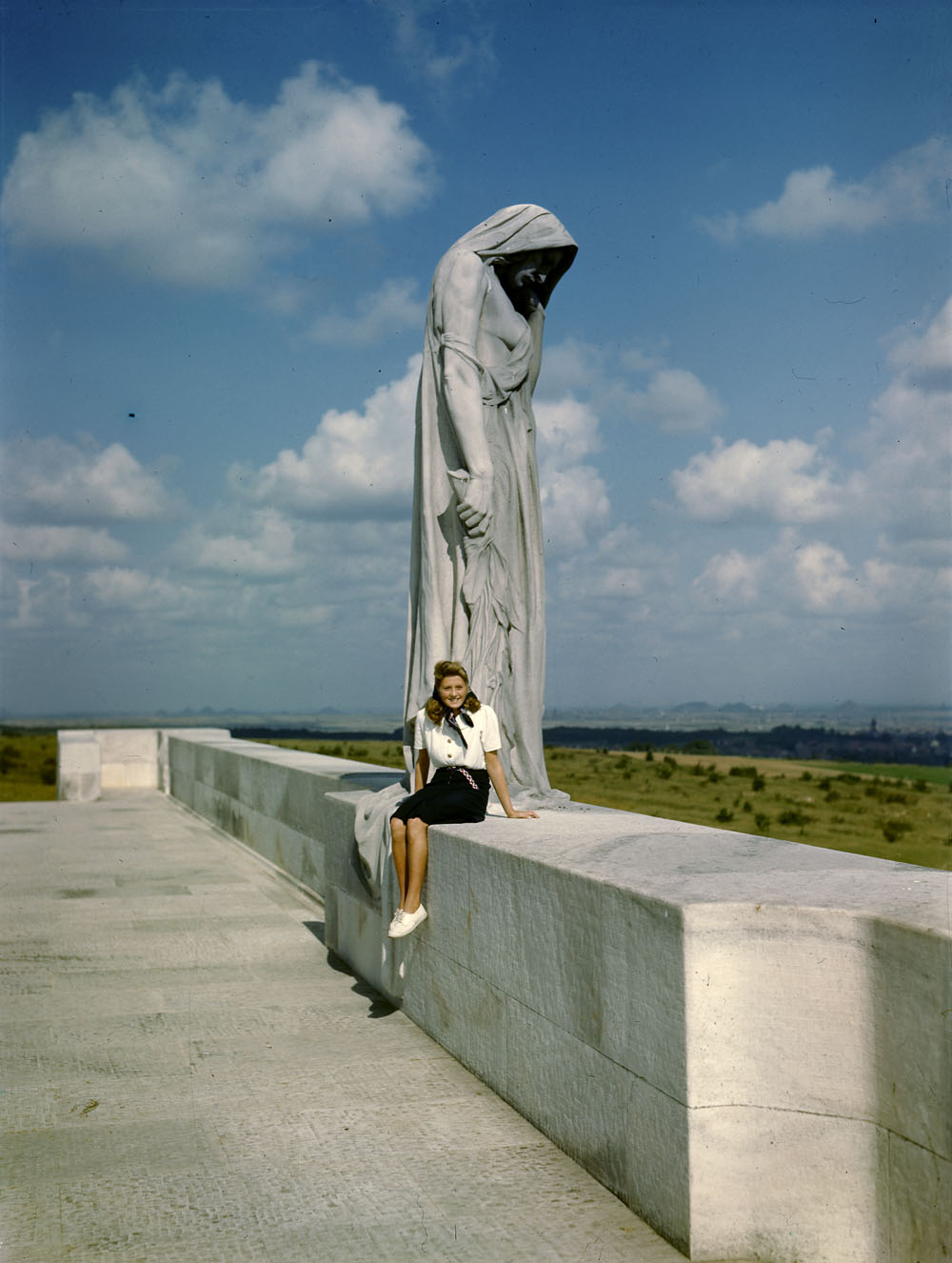
A colour photograph of a young woman in a white blouse and dark skirt, sitting in front of a large stone statue of a mourning woman.

Simone Stubbs, daughter of George and Blanche Stubbs, on the Vimy Memorial, ca. 1944–1948 (e010786286-v8)

George and Blanche Stubbs stayed at Vimy until 1948, when they returned to Canada. After experiencing two world wars, it is not surprising that George proclaimed he would never go back to Europe.

Paul Piroson succeeded George Stubbs as the Vimy Memorial’s caretaker, protector and guide. The Pirosons were devoted to Canada, a country they had never visited at the time. The couple named their cottage “The Maple Leaf” and always wore the symbol on their jackets. Though only Paul was paid, the pair both led tours and enforced a strict, old-fashioned reverence for the site—women were not permitted to wear shorts, children had to be well behaved, and food was forbidden. Each year on Remembrance Day, Paul laid a wreath for the Canadian government.

When Paul retired in 1965, veterans convinced Prime Minister Lester B. Pearson to invite the Pirosons to Canada as official guests for the 50th anniversary of the Battle of Vimy Ridge. Though Pearson’s invitation dates from a time when women’s work was regularly overlooked, he thanked the pair equally for their “close personal association with so many Canadian service personnel during both world wars, your great kindness to so many of them and your hospitality and help to Canadians who have returned to Vimy Ridge.”

The Pirosons took part in Vimy commemorations across Canada in 1967. When a reporter asked about their impressions of the country they had represented for so long, Alice replied, “We both think a lot of Canadians.” Her simple words expressed the deep gratitude for Canadian wartime sacrifices that had inspired the devotion of the Stubbs and Piroson families to the Vimy Memorial.

Visit the Flickr album for images of Canadian National Vimy Memorial.


Andrew Horrall is an archivist at Library and Archives Canada.
Dressing the Troops: Knitting During the Wars

Version française

By Cara Downey

Canadian knitters played a significant role in outfitting those who served in various wars, including the First and Second World Wars, as well as the Korean War. Knitters made socks, sweaters and other items for soldiers, pilots, sailors, merchant seamen, the sick and wounded, as well as prisoners of war and refugees. This work was encouraged by various volunteer groups: the Canadian Red Cross Society, the Imperial Order of the Daughters of Empire (IODE), branches of the armed services and their auxiliaries (for example, the Navy League), and others. Special patterns were printed, and the required knitting materials were distributed to volunteers. (See Shirley A. Scott, Canada Knits: Craft and Comfort in a Northern Land, pages 32 to 39)

The patterns listed strict requirements for the garments, with knitters generally requested to stick to “plain knitting” (that is, stocking stitch), since unnecessary decoration decreased speed and increased use of yarn. (Shirley A. Scott, Canada Knits: Craft and Comfort in a Northern Land, page 39) 

The book Red Cross Knitting Instructions for War Work, issued by the Canadian Red Cross Society in 1940, provides further instructions:

  • Knit items in specific colours, for example:
    • Socks for the Navy were to be knit in navy blue or grey, Army socks in khaki, grey or “heathers,” Air Force socks in black or grey, bed socks for hospitals in white or grey;
    • Toques were to be knit in navy blue for the Navy and in khaki for the Army; toques were not required for the Air Force.
  • Join wool by splicing, not with knots;
  • Cast on all ribbing stitches loosely;
  • “Join two socks of pair together with light coloured wool pulled through two inside thicknesses of cuff. Do not knot, but tie in firm bow. Fasten one size label (on each pair of socks) on the outside on cuff, if size runs between sizes, label smaller size.” (Red Cross Knitting Instructions for War Work, pages 3, 13, and 15).
    A black-and-white photograph of soldiers in uniform sitting outdoors while knitting.

    Resting but busy (e010963520)

    Knitting was generally performed by women on the home front (regardless of class), children (particularly girls), as well as the sick or injured. The photo Resting but busy (dated c. 1918–1925) shows convalescing soldiers knitting as a form of relaxation and therapy. 

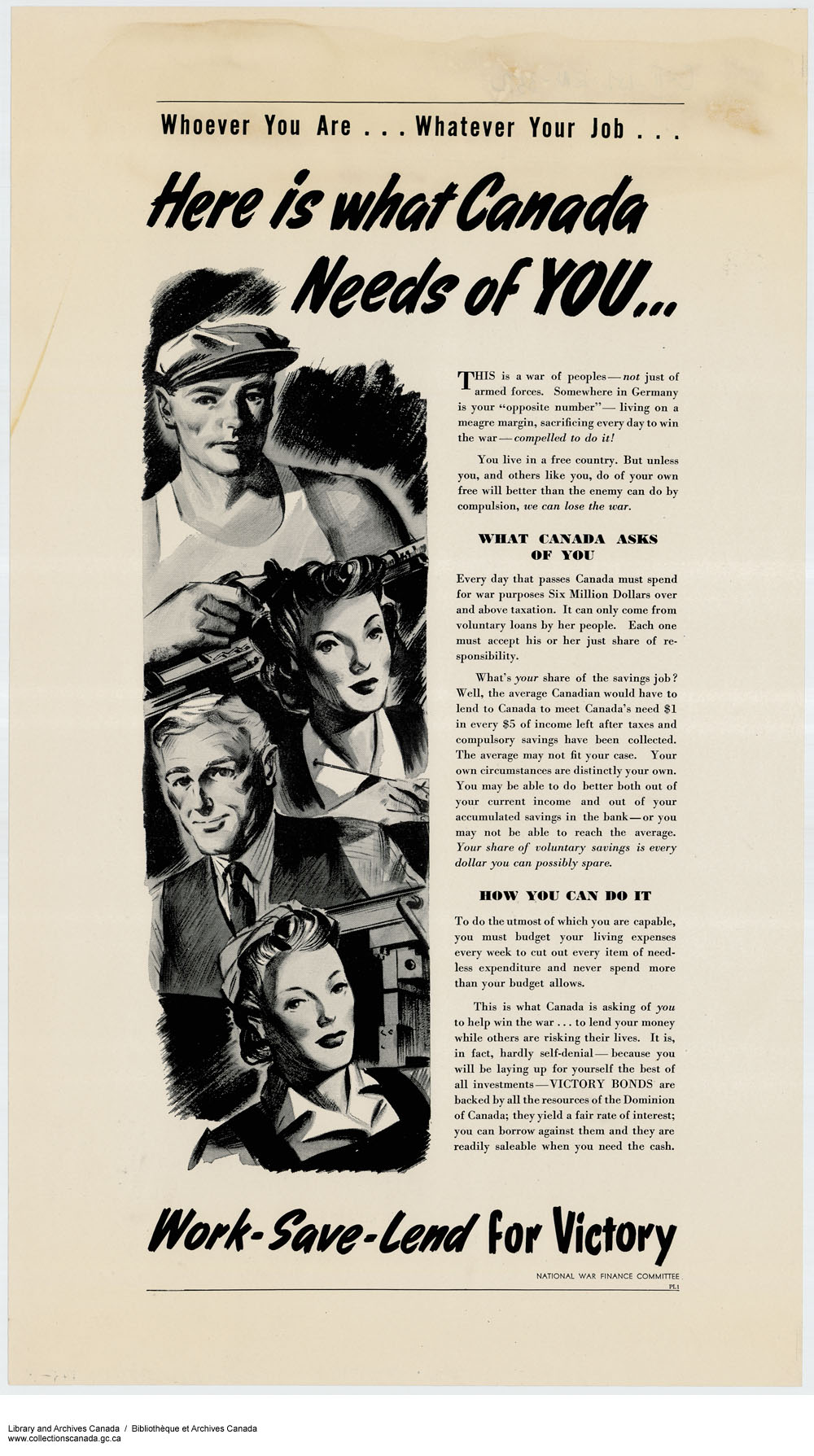
    Knitting was encouraged through various means. One example is the printed posters exhorting people to “knit for the boys.” The American Red Cross produced the poster Our Boys Need Sox, Knit Your Bit during the First World War, and Canada’s National War Finance Committee published the poster Whoever You Are … Whatever Your Job … Here is What Canada Needs of YOU … Work – Save – Lend for Victory in 1942, which included a picture of a woman knitting.

    A poster that reads “Whoever You Are ... Whatever Your Job ... Here is What Canada Needs of YOU ... Work - Save - Lend for Victory” and features drawn portraits of two men and two women.

    Whoever You Are … Whatever Your Job … Here is What Canada Needs of YOU … Work – Save – Lend for Victory (e010695660)

    Knitting was so common during this time that it entered popular culture—in songs such as Knitting socks for Daddy’s men (published in 1915) and The pretty little mitt that Kitty knit (published in 1940)—and in books. Characters in L.M. Montgomery’s Rilla of Ingleside (published in 1921) participated in knitting circles and knitted at home to contribute to the war effort. Katherine Hale dedicated the book Grey Knitting and Other Poems (published in Toronto in 1914) to “The Women Who Knit.” 

    The contribution of knitters should not be dismissed. While it is difficult to count the number of items given to the diverse groups that collected goods and to know the number of individuals involved, the Canadian Red Cross estimates that a total of 750,000 volunteers knit 50 million articles (for soldiers, the sick, refugees, and others) during the Second World War alone. (Halifax Women’s History Society, “The Monument Design: The Design for The Volunteers.”) For the Scotia Chapter of the IODE during this period, this meant a contribution that included 350 pairs of socks, 525 sweaters, 125 helmets, 50 pairs of mittens, 12 pairs of gloves, and 65 scarves. (Sharon M.H. MacDonald, Hidden Costs, Hidden Labours: Women in Nova Scotia During Two World Wars, page 141)

    Visit the Flickr album for more images of knitting!


    Cara Downey is a senior analyst in the Governance, Liaison and Partnerships Division. 

Canadians and the military occupation of Iceland (1940–1941): from squalls to the “black death”

By Marcelle Cinq-Mars

During the Second World War, the participation of Canadian military personnel in the occupation of Iceland, then a neutral country, is a little-known episode in Canada’s military history.

From the beginning of the conflict, the Allies tried to stop the expansion of German troops as they began to invade Germany’s neighbours. After invading Denmark, the Germans were preparing to capture Norway in April 1940. Would Iceland, Norway’s neighbour, be the next to suffer the same fate? In order to prevent the Germans from invading Iceland, the Allies decided to take a position there first, sending troops to occupy it despite opposition from the local government.

Although history shows that the Germans never invaded Iceland and never intended to, the Allies could not know this in 1940. What is certain is that, at the time, this island represented a very strategic point for the Allies. Iceland offered a major advantage for the defence of sea convoys transporting troops and equipment from America to Britain. As soon as an airport was built there, planes would be able to take off, patrol the area and detect the well-known German U-boats. In addition, Ferry Command pilots―responsible for flying North American-built military aircraft to Britain―would be able to land and refuel aircraft en route to their final destinations. This underscored the strategic value of Iceland for Allied Forces.

Colour photograph of a large ship in front of an island.

HMCS Assiniboine patrolling the waters off Iceland, May 1942. (e010777260)

The British vanguard arrived in Iceland on May 8, 1940. A week later, an entire brigade disembarked and settled there, in an operation codenamed Alabaster. The country is rough; the roads are covered with gravel; and there is no airport. Reykjavik harbour has to be adapted to allow the arrival of soldiers and military equipment.

The British quickly realized that they would need more soldiers to occupy and defend the island in the event of an attempted German invasion. On May 18, the Canadian government was asked, and agreed, to send reinforcements to Iceland. Brigadier L.F. Page was given command of Canadian troops, comprising three battalions: the Royal Regiment of Canada, the Fusiliers Mont-Royal and the Cameron Highlanders of Ottawa (Machine Gun). Canadian troops and service units were designated by the code name “Z” Force.

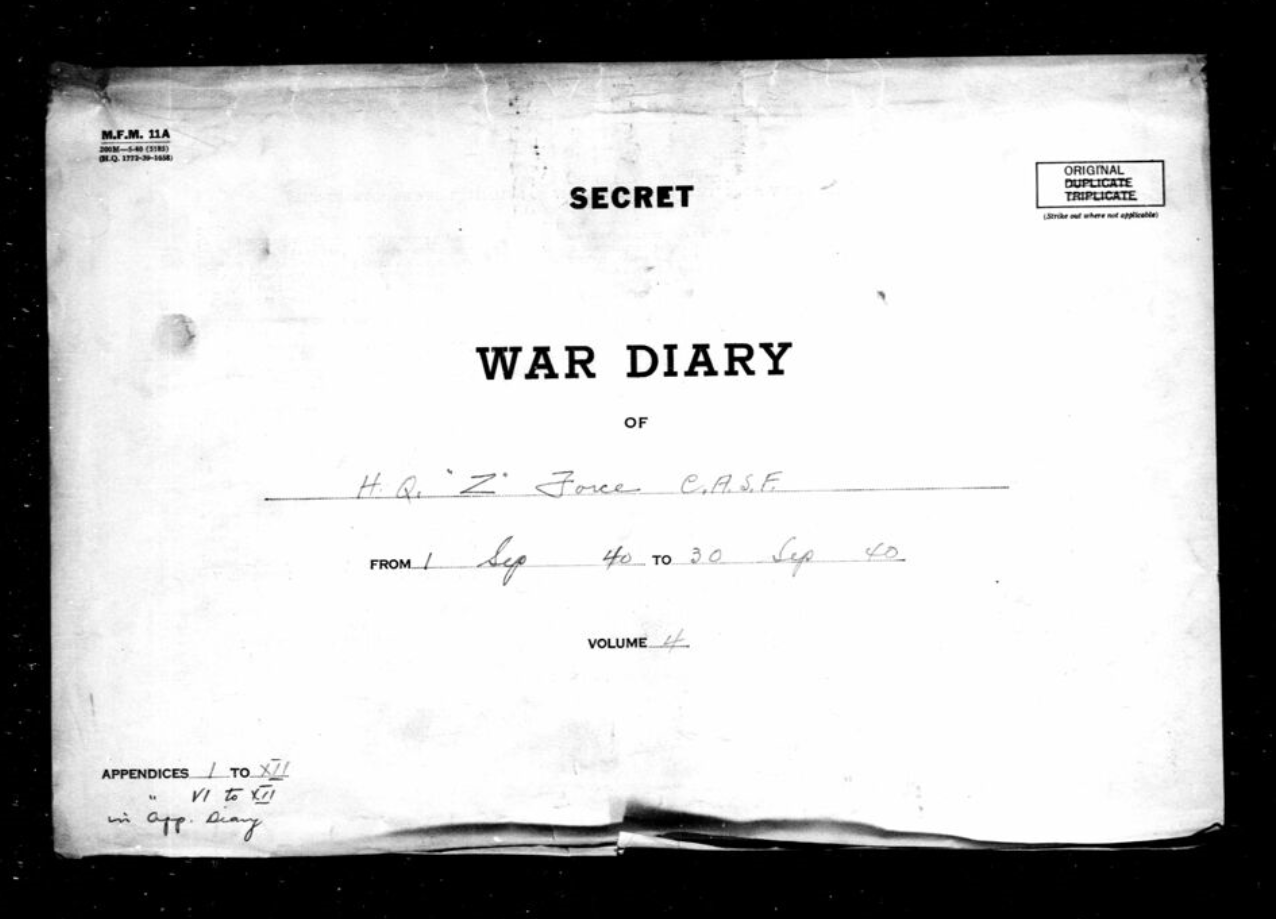
The Canadian “Z” Force joined Operation Alabaster. The Canadian Troop War Diary contains a wealth of information and details about this operation; a historical report written after the fact also provides a very good summary of the operation.

Cover page of a war diary. The words “Secret” and “War Diary” are written in black ink on a white background.

Cover page of the “Z” Force Headquarters War Diary, September 1940. It is available online at Canadiana Heritage. (RG24, vol. 13813)

Upon arriving in Iceland, the Canadians experienced a series of setbacks that hampered their settlement. The main problem was the small size of Reykjavik’s harbour, which could accommodate only one ship at a time. The British insisted that their cargo had precedence over that of the Canadians. When Canadian ships were finally able to access the dock, there was no unloading crane. All equipment had to be transported by teams of men. The Government of Canada had shipped everything necessary to build Yukon-style cabins. However, the equipment was not shipped in kits. Soldiers had to wait for all the cargo to arrive before they could assemble their first cabin. As if that weren’t enough, there were no assembly plans shipped with the material to guide its construction.

By mid-September, as nights began to reach freezing temperatures, only half of “Z” Force had a roof over their heads; the rest had been sleeping in tents since June. And it wasn’t in Yukon cabins that Canadians slept, but rather in Nissen cabins provided by the British! The strong winds, heavy rain and gusts of wind that constantly rage in Iceland in the fall would sweep away the tents and bundles of clothing of units stationed near the coast. This was a constant concern for Brigadier L.F. Page, who cared deeply for the well-being of the troops under his command.

The soldiers, for their part, were growing accustomed, as best as they could, to living conditions in Iceland. Between work chores and shooting exercises, they used their free time to go into town. In his monthly report to the military authorities, Brigadier Page reports that these outings to town were a source of drunkenness and indiscipline. Deprived of Canadian alcohol in their camps, the soldiers quickly developed a taste for a local alcohol nicknamed “black death” by the Icelanders: it was most likely aquavit, a flavoured brandy with a high alcohol content. In order to remedy the situation, “Z” Force placed an order for the products that the soldiers needed each week:

  • 100,000 cigarettes in packs of 10
  • 12,000 bars of popular branded chocolate of standard quality
  • 120 bottles of whisky, 60 bottles of brandy, and 18,000 bottles of good beer (12,000 bottles of John Labatt (India Pale) and 6,000 bottles of Molson)
  • 75 pounds of good-quality, popular branded coffee

Thanks to Brigadier Page’s repeated interventions, the living conditions of Canadian soldiers began to improve in Iceland. Meanwhile, the British Prime Minister, Sir Winston Churchill, visited the Canadian troops still in training in Great Britain. It was then that he learned that some of the Canadians had been sent to Iceland to serve as occupation and defence troops. On July 7, 1940, he wrote to the Secretary of State for War (War Secretary):

“You shared my astonishment when General McNaughton declared that the entire 2nd Canadian Division was to go to Iceland. It would certainly be a great mistake to allow the use of these excellent troops in such a distant theatre (of operations). It seems that the first three battalions are already there. No one has been informed. We request that two Canadian divisions work together in one corps as soon as possible.”

The British Prime Minister has such a high opinion of Canadian soldiers that he could not understand why they were being underutilized for the defence of Iceland, a role he preferred British territorials to fulfil. After discussions with the Government of Canada on the matter, the decision was made that Iceland’s Canadian troops would join the rest of the Canadian Corps in Britain. Brigadier L.F. Page left Iceland in October 1940 with the majority of “Z” Force troops. The last Canadian elements left the island in April 1941. The following month, the Americans accepted the request of the Icelandic and British authorities to take over the defence of Iceland, where they have remained, in various capacities, ever since.

Typed page of a historical report. The words “Cancelled” and “Declassified” can be read in black ink on a white background, in the upper right-hand corner.

First page of Historical Report No. 33 on “Z” Force operations in Iceland, December 1949. (RG24, vol. 6924)

The War Diary and the Historical Report are essential sources for documenting this little-known chapter of Canada’s military history.


Marcelle Cinq-Mars is Senior Archivist of Military Affairs, Government Archives, at Library and Archives Canada.
Canadian achievement in the air: the Avro Canada CF-105 Arrow

Version française

By Kyle Huth

I first saw the Avro Canada CF-105 Arrow when I was 10 years old. It was on the cover of a book in a bookstore in Bobcaygeon, Ontario, some 40-plus years after the last Arrow had flown. Something about this sleek-looking white jet in Canadian markings climbing skyward captivated me. I would spend the rest of that family vacation poring over my newly purchased book; I wanted to learn everything I could about the Arrow! From an early age, I, like so many other Canadians, had my imagination captured by the Arrow.

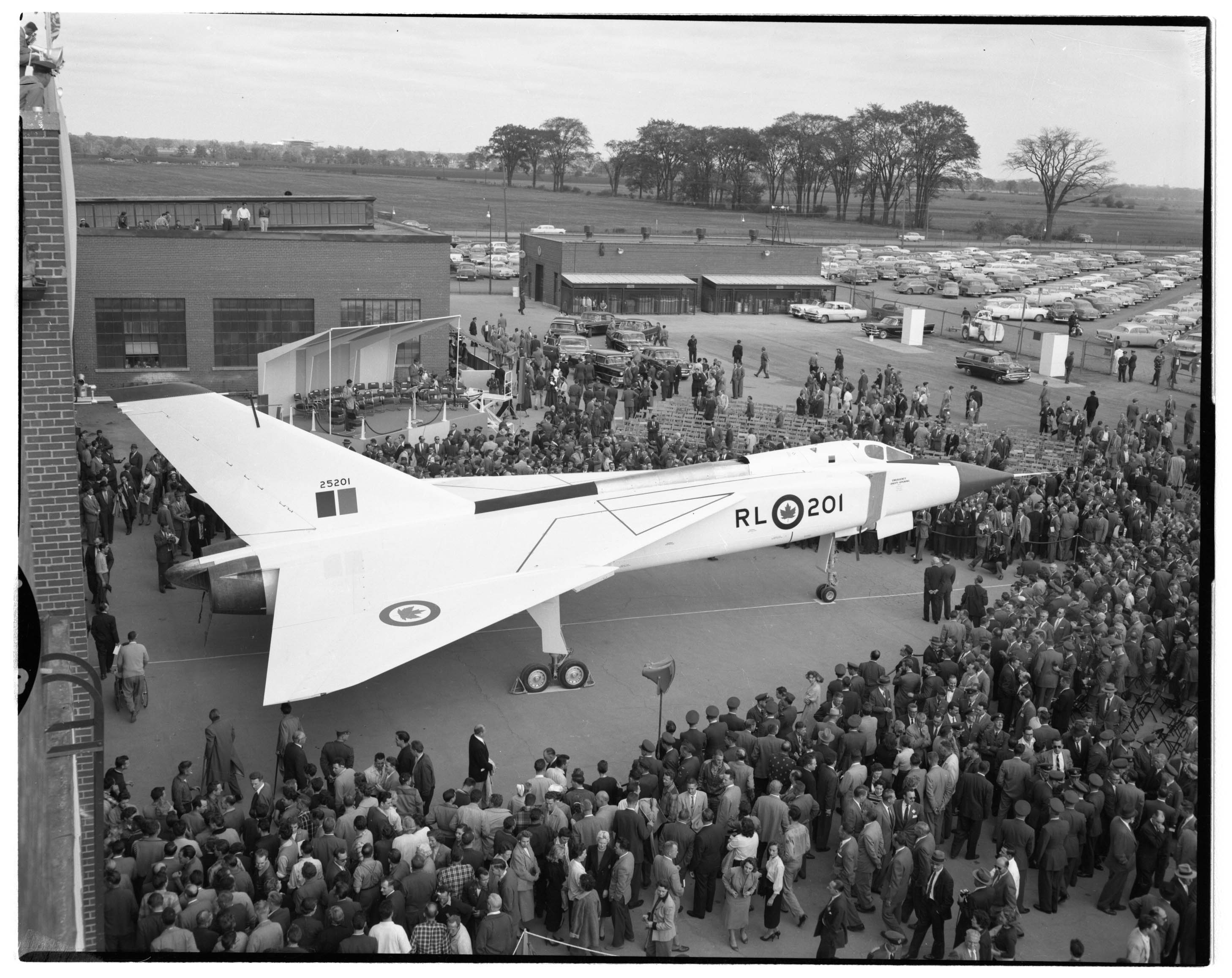
The first Arrow, serial number 25201, was rolled out of the Avro Canada aircraft manufacturing plant in Malton (present-day Mississauga), Ontario, and unveiled to the public on October 4, 1957. A product of the Cold War, this large twin-engined delta-winged jet interceptor was designed to guard Canadian cities against the threat of Soviet jet bomber aircraft attacking from over the North Pole.

A black-and-white photograph of a crowd of people around a white aircraft.

The rollout of the first Avro Canada CF-105 Arrow in Malton, Ontario, October 4, 1957. The people in the crowd give a sense of the size of the aircraft. (e999912501)

Avro Canada began design work on the Arrow in 1953, and by the end of the year, the Royal Canadian Air Force (RCAF) had ordered two developmental prototypes. The RCAF wanted an aircraft that could operate at Mach 1.5, at an altitude of at least 50,000 feet, and be armed with the latest array of guided missiles. At the time, no aircraft company in the United States, the United Kingdom or France had an aircraft in production or on the drawing board that could meet these requirements.

As Cold War tensions increased, so did the need for the Arrow. Soviet long-range jet bomber development was proceeding faster than expected, threatening to make the RCAF’s current jet interceptors obsolete. In 1955, the RCAF increased its order to 5 pre-production flight test Arrow Mk. 1s and 32 production Arrow Mk. 2s. The urgent need for the Arrow meant that it would go straight into production, skipping the traditional development phase for an aircraft of its type.

The Arrow Mk. 2, the production variant destined for RCAF squadron service, was to be powered by two Canadian-built Orenda Engines PS-13 Iroquois turbojet engines and equipped with the Astra I weapons control system and Sparrow II missiles. All three would be developed alongside the airframe, adding extra costs to the Arrow program. To avoid delaying the program, the Arrow Mk. 1s that were used to evaluate the design’s flight and handling characteristics were powered by two American-built Pratt & Whitney J-75 turbojet engines.

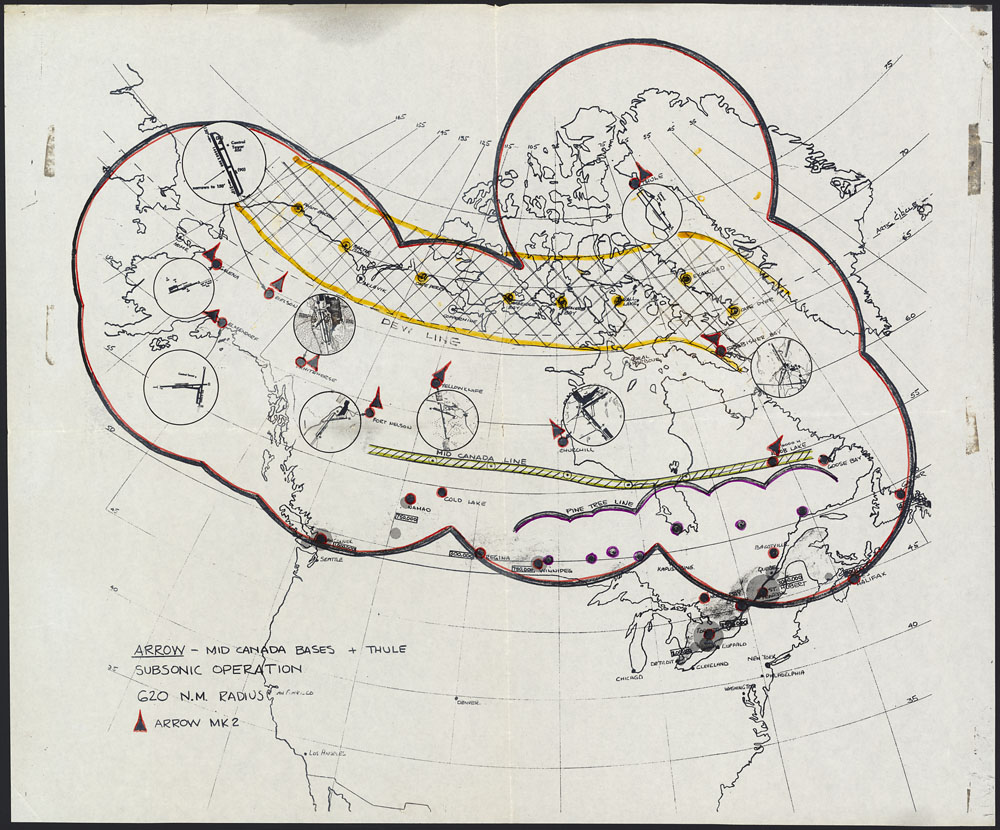
A hand-drawn map of North America with a red circle drawn around Canada and yellow, green and purple lines.

A map showing the subsonic operational range and proposed bases in Canada, Alaska, and Greenland for the Arrow Mk. 2, as well as other RCAF airbases (red). The locations of the Distant Early Warning (DEW) Line (yellow), Mid-Canada Line (green) and Pine Tree Line (purple) radar sites are also shown. (e011202368)

After five months of ground testing, Arrow 25201 took to the air on March 25, 1958, with famous test pilot Janusz Zurakowski at the controls. Over the next 11 months, four additional Arrow Mk. 1s would join the flight test program, with the Arrow Mk. 2, equipped with the more powerful Iroquois engines, slated to fly in March 1959.

While the flight test program was proceeding mostly as planned, and test pilots commenting positively about the performance and handling of the Arrow Mk. 1, behind the scenes, all was not going well for the Arrow program.

As development costs rose, the program was coming under increased financial scrutiny from Prime Minister John Diefenbaker’s newly elected Progressive Conservative government. At the same time, Soviet rocket development had overtaken the West, (they launched Sputnik 1 the same day the Arrow was unveiled to the public) and it now appeared that Soviet intercontinental ballistic missiles, not bombers were the main threat facing Canada. This technological shift cast doubts over the need for the Arrow and, there were those, such as the Minister of National Defence, George Pearkes, who questioned the need for manned interceptor aircraft altogether, believing that anti-aircraft missiles could replace them for a fraction of the cost. In September 1958, the government announced that it would order the Boeing CIM-10B Super Bomarc long-range surface-to-air missile, and it cancelled the Arrow’s troubled Astra I weapons control system and the Sparrow II missile program. Furthermore, the government notified Avro Canada that the rest of the Arrow program was up for review in March 1959.

On February 20, 1959, Diefenbaker announced to the House of Commons that the Arrow program was cancelled. In response, Avro Canada immediately terminated the 14,500 employees who were working on the program, claiming the company had been caught off guard by the government’s announcement.

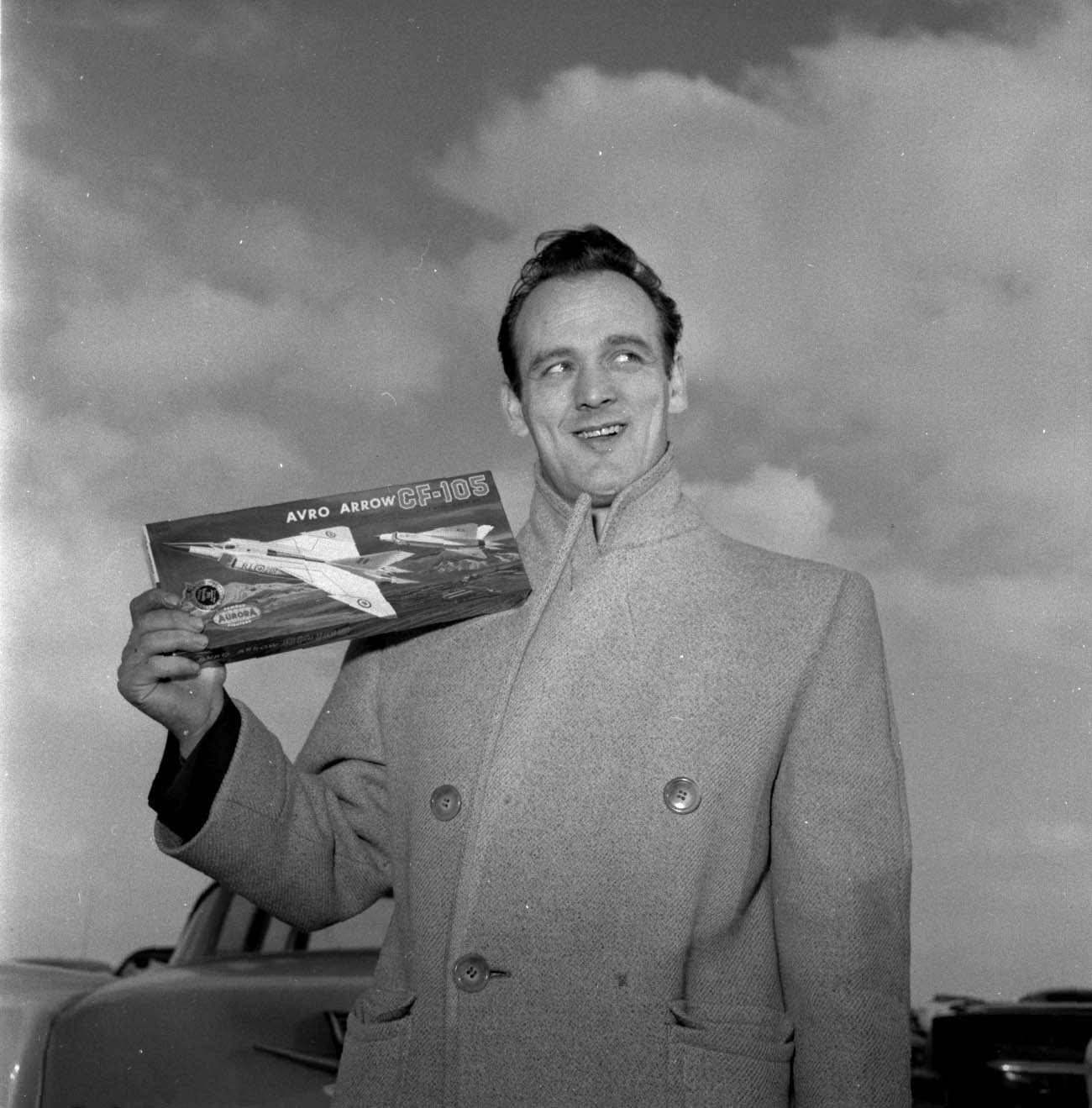
A black-and-white photograph of a man holding a model airplane kit.

“Better get one of these in memory of the plane that will never see the air,” quips recently laid off Avro Canada employee Pat Gallacher as he holds up the Arrow model kit he purchased at the Malton plant’s hobby store on February 20, 1959. (e999911901)

At the time of the cancellation, the five existing Arrows had flown 66 times and chalked up a total of 69:50 flying hours. The first Iroquois engine powered Arrow, 25206, was 98 percent complete on the day of the government’s announcement. Attempts to save one or more of the five completed Arrows for use as high-speed test aircraft failed. In the end, all completed aircraft, along with those on the assembly line, as well as the related drawings, were ordered destroyed on May 15, 1959. The Cabinet and Canada’s Defence Chiefs of Staff cited security concerns over the advanced nature of the aircraft and the classified material involved in the project as the reasoning behind the order. Arrow 25201 made the last flight of any Arrow on the afternoon of February 19, 1959, the day before the announcement of the Arrow’s cancellation.

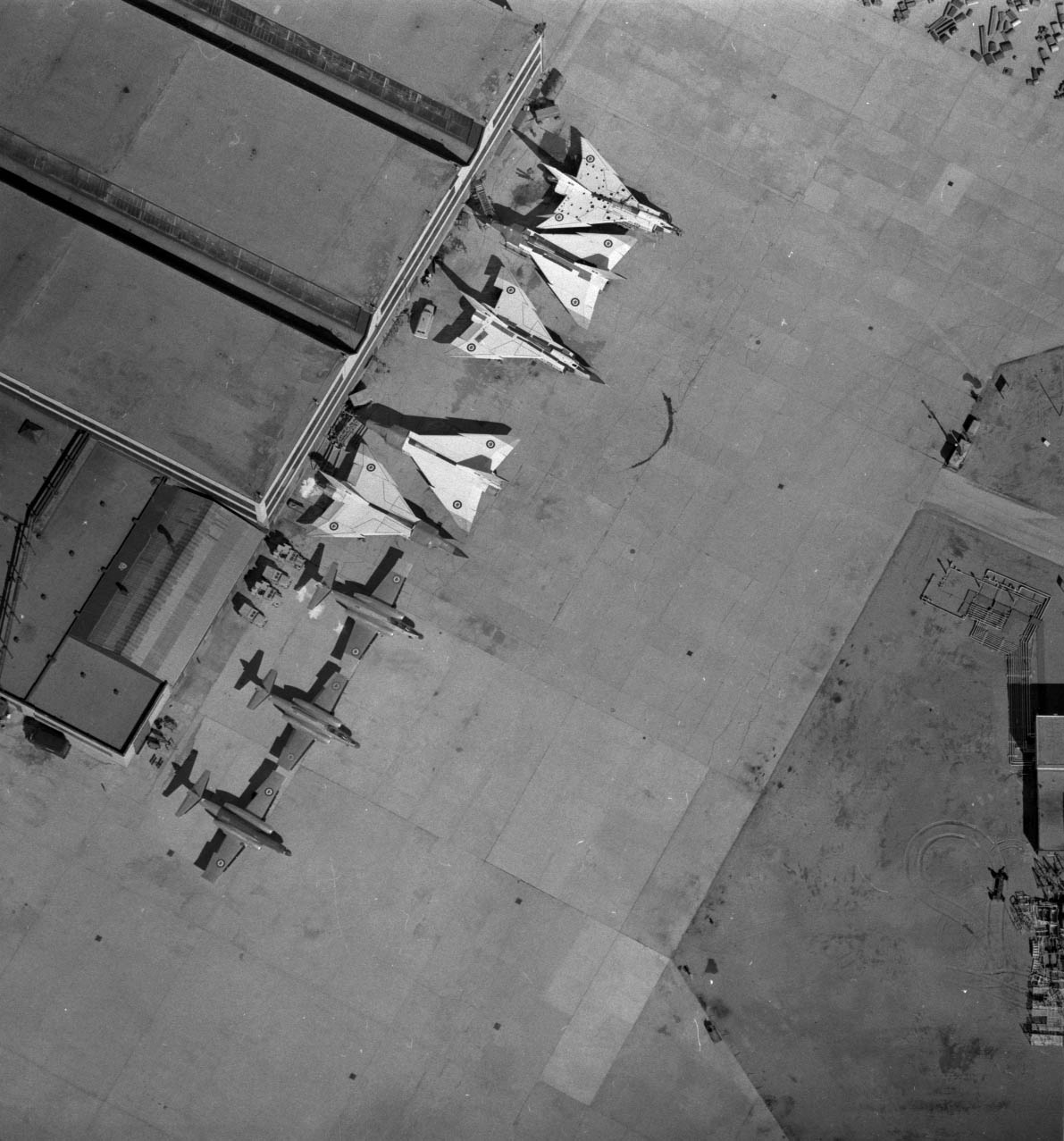
A black-and-white photograph of eight airplanes and a building, seen from above.

Arrows 25202, 25205, 25201, 25204 and 25203 (from top to bottom) await their fate outside Avro Canada’s experimental building in Malton, Ontario, May 8, 1959. Three straight-winged Avro Canada CF-100 Canuck jet interceptors, the aircraft type that the Arrow was meant to replace, are parked alongside the Arrows. (e999911909)

The Arrow would not end up fulfilling its intended purpose of patrolling Canadian skies; instead, its impact on Canada would be a cultural one. Since its cancellation, the Arrow has been the subject of countless books, magazine articles and documentaries, as well as starring in its own CBC miniseries alongside Dan Aykroyd in 1997. The largest remaining pieces of the Arrow are the nose section of 25206 and the wing tips of 25203, held by the Canada Aviation and Space Museum in Ottawa. To this day, the Avro Canada CF-105 Arrow continues to be a symbol of Canadian achievement, a source of much debate and speculation, and a point of pride and fascination for Canadians.

To learn more about the Avro Arrow, check out the following Library and Archives Canada resources:


Kyle Huth is an archival assistant in the Government Records Initiatives Division at Library and Archives Canada.