Reflecting on my path in photography

Version française

By Ellen Bond

Photos surround us every day. Whether its framed photos hanging on a wall, advertisements seen as you drive by, or folks taking selfies, images are everywhere. In honour of World Photography Day, I want to share how much photography means to me and how it has shaped my world.

Photography brings me joy. I remember my parents’ Polaroid camera and the excitement of seeing the photo magically appear after it slid out of the camera and the air exposed the image. Though the quality wasn’t as great compared to a film camera, the instant gratification was like today’s cell phone cameras—you could see what you captured right away.
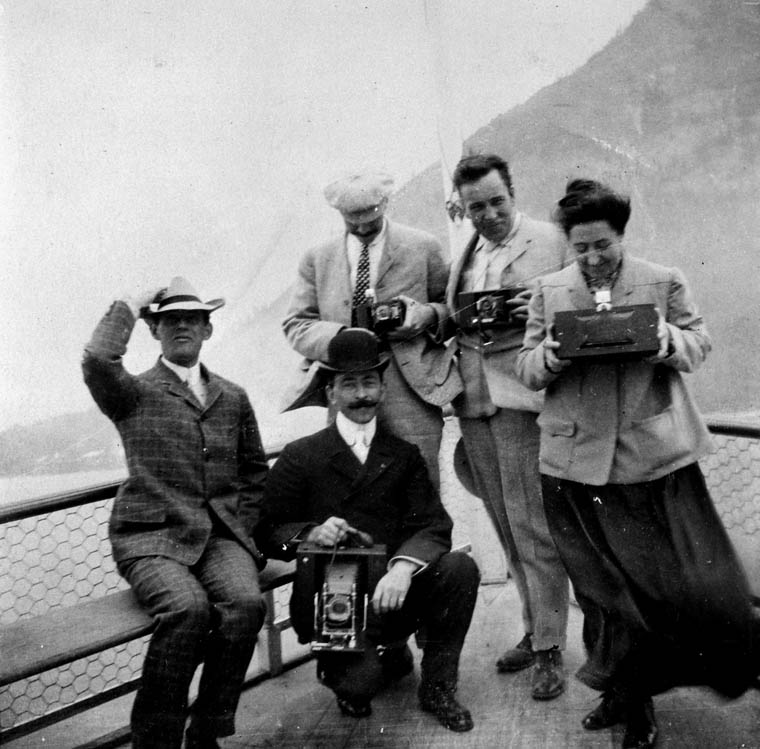
A woman and four men posing for a photograph. Four of them are holding cameras of their own.

People showing various types of cameras, 1904. (a148285)

While finishing my photography diploma, I began taking pics for a community newspaper in Ottawa. This had me visiting local stores and events and interviewing and photographing locals for a regular feature. The summer between my first and second year, I shot thousands of photos in and around Ottawa. At the end of my last semester, our class took a field trip to Library and Archives Canada’s (LAC) Preservation Centre in Gatineau, and I knew I wanted to work there.
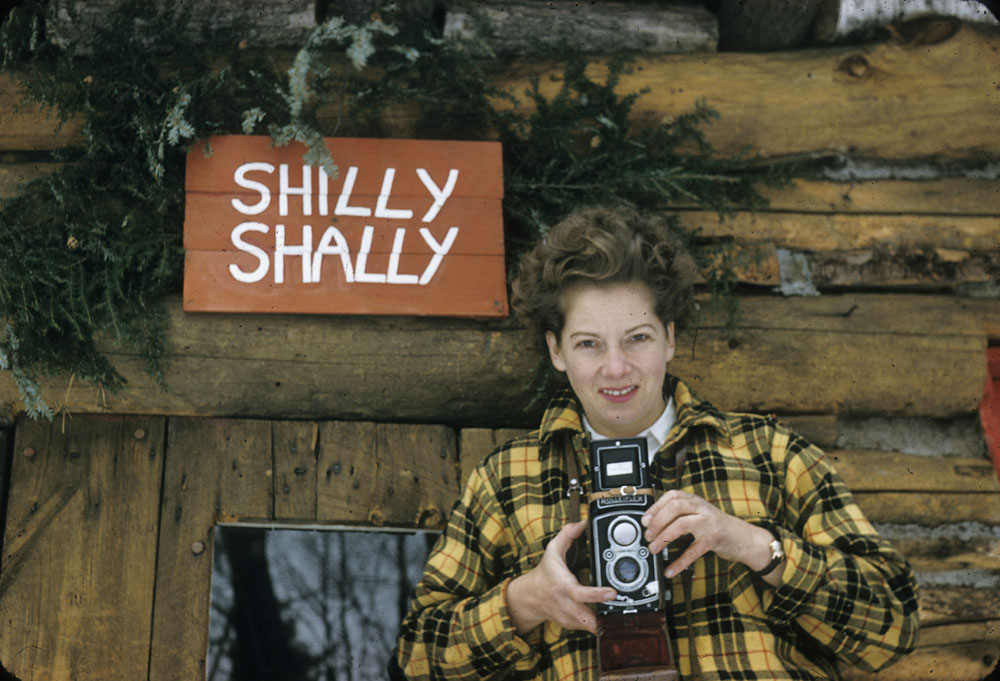
Woman holding a camera while posing for a picture leaning against a wooden cabin with a Shilly Shally sign.

Photographer Rosemary Gilliat Eaton holding a twin-lens camera. LAC holds many of Gilliat’s photos in its collection. Credit: Rosemary Gilliat Eaton. (e010950230)

In the summer of 2016, after graduating, my vision came true. I began working on LAC’s Canadian Expeditionary Force digitization project, during which time I helped digitize over 622,000 files relating to Canadians who served in the First World War. You can now search for those files by name using LAC’s Personnel Records of the First World War database. I used my skills to digitize a variety of files, maps, certificates, X-rays, pay forms, medical forms, attestation papers, personal correspondence, and too many files labelled “missing in action” or “killed in action.” I gradually learned more and more about LAC and applied for a job with their Online Content team.

When I started working with the Online Content team, I contributed to blog posts, the podcast, and finding photos for Flickr albums. I also began working on Project Naming and eventually became the project manager of this endeavour, which is rooted in sharing historical photographs of First Nation, Inuit and Metis Nation people whose names were not recorded when their photos were captured.
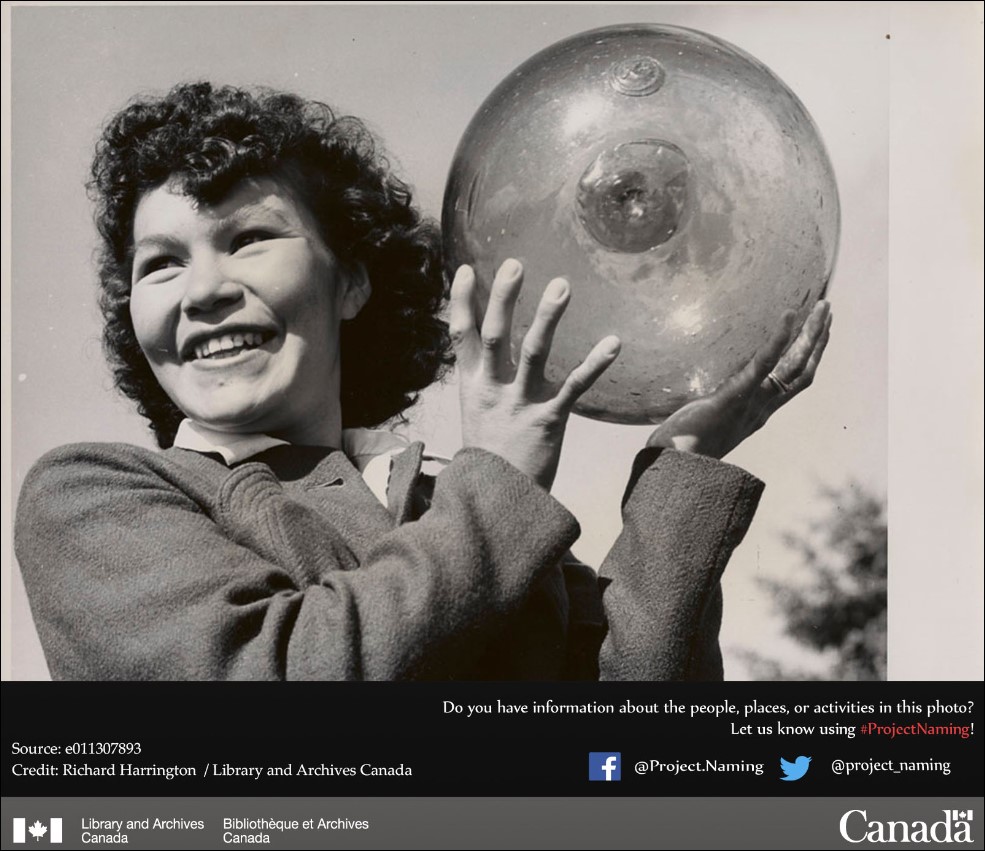
A photo used as part of Project Naming with text inviting the public to provide information about the person photographed.

A Haida woman holding up a Japanese glass net float, Skidegate, Haida Gwaii, British Columbia, ca. 1959. Thanks to Project Naming, the person in this photo was identified as Flossie Yelatzie, from Masset. Credit: Richard Harrington. (e011307893)

Participation in Project Naming helps improve the narrative of photographic records held at LAC. Photos are posted three times a week on Project Naming’s social media pages. When names or information are received, the records are updated, which helps preserve and honour the people in the photos for generations to come. As a way of saying thank you, we offer a high-resolution print of the photo at no charge to the people who shared the information. The best part of my job is adding someone’s name to the record database. That name becomes attached to the record, making it searchable forever.

Outside of LAC, I continue to hone my photography skills by working for local college athletic teams and theatres, a local newspaper, other athletic teams, and various Ottawa events. This past year, I photographed the Professional Women’s Hockey League (PWHL) for The Hockey News. This led to an opportunity to take photographs at the 2024 International Ice Hockey Federation (IIHF) Women’s World Championships, where Canada defeated the United States in the gold medal game. I hope to someday donate my hockey photos to LAC to document the first year of the PWHL, Canada’s gold-medal win, and this major step in women’s hockey.

Female hockey players celebrating their win on the ice with the crowd celebrating them in the background.

The moment after Canada defeated the United States for the gold medal at the 2024 IIHF Women’s World Hockey Championship. Photographer: Ellen Bond.

Female hockey players posing with their gold medals, championship banner and trophy on an ice rink.

Team Canada, 2024 IIHF Champions. Photographer: Ellen Bond.

I look forward to the future with my camera in hand!


Ellen Bond is a Project Manager with the Online Content team at Library and Archives Canada.

Census 1931, a peek into digitization

Version française

By Melissa Beckett and François Deslauriers

A glimpse into the microfilm room

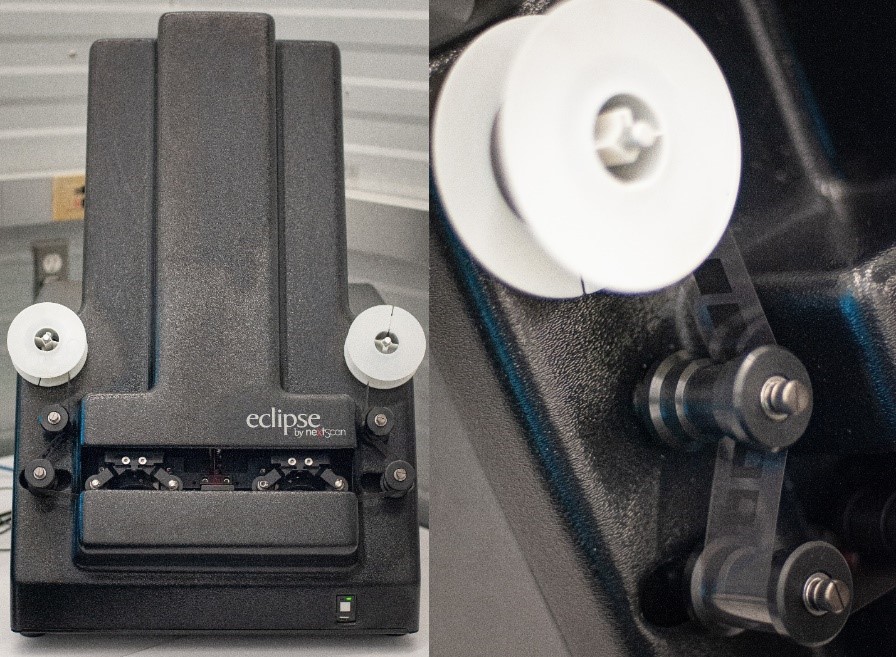
Two photographs of the Eclipse Rollfilm scanner by nextScan; on the left, a view showing the full scanner, and on the right, a close-up of the reel with some film threading past two of the rollers.

The Eclipse Rollfilm scanner by nextScan. Credit: François Deslauriers

In a dimly lit room, two imaging specialists sit in opposite corners. Each stares at their screen, where a series of images is constantly flowing from one side to the other. The rhythmic mechanical sounds of the microfilm scanners are occasionally interrupted by the high-pitched whine of the rewind, and a clunk as the last of the film winds back around its reel. With white-gloved hands, a specialist removes the reel from her scanner and places it back into its round metallic canister, which she returns to its archival box. She removes the next canister and slices around the taped edge with a pocket knife. She takes out the reel and mounts it on the scanner, winding the film around a series of rollers and then onto another plastic reel.

Meanwhile, the other specialist has stopped the process on his scanner. He needs to readjust some settings because the images in this section of the reel are much brighter than the earlier ones. He adjusts the exposure values in the software until he is satisfied with the appearance of the images in the preview window. The specialist scans a short section of film and opens it in the auditing software to double-check. He views one of the documents at full size, examining it closely. He then rewinds the film to the beginning, starting the scanning process all over again.

The project

For the Census 1931 project, the Digitization Services team digitized 187 microfilm reels, for a total of 234,678 images. At this time, by law, the reels were still subject to statistical secrecy, and a security procedure/protocol had to be followed. Only “deemed employees” who had taken the Statistics Canada Oath or Affirmation of Office and Secrecy were authorized to view the material. Reels were kept locked in a secure room, and all digitization was performed completely off-line.

The Census 1931 microfilm reels contain about 1200 images of census documents on each reel of 35-mm black-and-white polyester film. The imaging specialist digitizes from the print master, a copy of the archival master reel, in order to prevent any deterioration of the original.

Microfilm is an effective means of preserving information for long periods of time (reels can last for 500 years). Microfilm stores vast quantities of information in a small amount of space and supports preservation of the documents contained by removing the necessity of handling them. Digitizing microfilm reels provides another level of preservation as well as of accessibility to the public, who are then able to view the images from anywhere with an Internet connection.

The scanning process

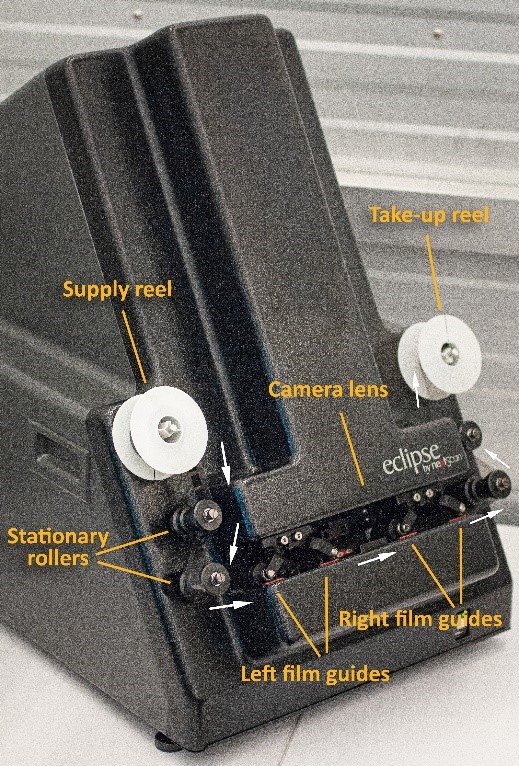
A photograph of the Eclipse Rollfilm scanner by nextScan, with labelled supply reel, stationary rollers, film guides, camera lens and take-up reel.

The Eclipse Rollfilm scanner by nextScan, with main components labelled. Credit: François Deslauriers

For this project, the digitization of the 1931 Census was performed with the use of the Eclipse Rollfilm scanner by nextScan, a dedicated microfilm scanner designed to digitize both 16-mm and 35-mm reels, in conjunction with an off-network computer. Film is threaded from the supply reel past stationary rollers and film guides to a take-up reel. The pinch rollers lower to hold the film in place on the film guides, automatically adjusting the tension of the film. The film is guided past a macro lens and digital sensor above, while lit from below through the film emulsion by a strip of red light. The reel is digitized as one long, uncompressed, grey-scale image file, referred to as a ribbon.

The imaging specialist handles the film using cotton gloves, being careful to touch the edges only. With the NextStarPLUS® Capture software, the reduction ratio (which is noted on the film and allows images to be reproduced at a 1:1 ratio) must be set, in addition to the resolution, film type (16-mm or 35-mm) and polarity (negative or positive). Before scanning, the specialist must also ensure that the exposure of the images is correct and that the lens is focused so the image is sharp.

With a live view on the screen, the specialist makes adjustments to the exposure and the focus. The specialist may zoom in on a focusing chart, as well as on the manufacturer’s information, printed along the edge of the film at regular intervals. The appearance of scratches or dust on the film can also be useful for determining sharpness. While the documents can be used to focus, this is only reliable if they were originally photographed with perfect sharpness.

A preview window during scanning allows the specialist to see when it is necessary to readjust settings over the course of scanning. When the documents were initially photographed, there may have been changes in lighting and exposure settings over the course of the reel. This results in some images appearing brighter or darker. The goal in digitizing each reel is to ensure that most of the documents will be legible, since adjustments in tonal values can only be made for the entire length of the film and not for each individual document.

After scanning is complete, the specialist rewinds the film and returns the reel to its canister.

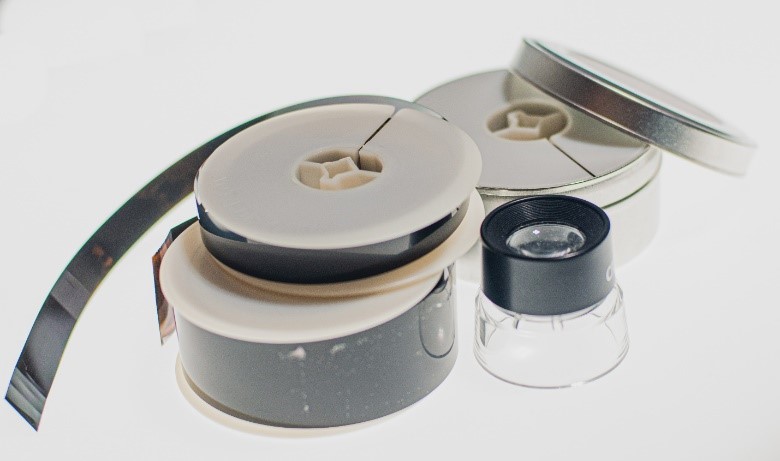
A photograph of a 16-mm microfilm reel stacked on top of a 35-mm microfilm reel, next to a loupe, in front of a 35-mm microfilm reel in its canister.

16-mm and 35-mm microfilm reels. Credit: François Deslauriers

The auditing process

After scanning the reels, the imaging specialist uses the NextStarPLUS® Auditor software to process the ribbons (the long image files associated with each reel). The software is used to detect and select each individual document within the ribbon so that they can be exported as separate image files. According to its detection settings, the software generates coloured rectangles around the documents. The specialist scrolls past rows of documents to select those that were not detected by the software and to adjust any rectangles that do not contain the whole document. On a second scroll through, a blackout setting changes the contents of the rectangles to black. This leaves any unselected white parts visible, making it easier to spot anything that may have been missed on the first pass, for additional quality control.

Each digitized document in the census is assigned an e-number, a unique identifying number used in this project to sort the images by place.

The images were initially exported as 10-megabyte TIFF files. TIFF is a “lossless” file format, meaning that there is no image compression. For the purposes of the project, JPEG derivatives (a “lossy” file format that requires less storage space and is more accessible) were created to aid in matching the digitized images to the census geographic districts and sub-districts, as well as for external partners working in artificial intelligence (AI). Information Technology created a script to efficiently turn the TIFF files into JPEGs.

Yesterday and tomorrow

Working in digitization at Library and Archives Canada means constantly improving processes and exploring new techniques and technology, to create the best-quality images possible. The 1931 Census was no different. As imaging specialists, we have been glad to play a small part in keeping Canada’s history alive and making it accessible to the public.


Melissa Beckett is an acting Imaging Specialist in the Digitization Services Division at Library and Archives Canada.

François Deslauriers is an acting Manager of Reprography in the Digitization Services Division at Library and Archives Canada.

Lights on portrait photography

by Francois Deslauriers

I have always been captivated by portrait photography and the way it goes behind the camera. When I was young, photographs of artists, album covers featuring my favorite bands, and portraits of authors on the dust jackets of books fascinated me. I feel this way even now, when I view portraits of historical figures in the Library and Archives Canada collection on which the digitization team has the opportunity to work. When looking at these images, I ask myself: “How did the photographer arrive at this result? And what brings depth to a portrait?” It’s not just luck. It’s all in the lighting!

Of course, there are several other important aspects to the making of an image: the composition, the shot, the choice of lens, and more. Lighting techniques in portrait photography, as well as in filmmaking, including today’s cinema, have a very solid foundation dating back to the 17th century in the works of the painter Rembrandt. One of the most frequently used lighting technique in modern photography has been named after the Great Master: Rembrandt lighting.

Let’s take a look at this technique and its origins.

The Rembrandt lighting technique owes its name to the Great Master who often used this method in his own portraits. The scenes and portraits he painted often represent scenes lit by light sources such as windows or candles.

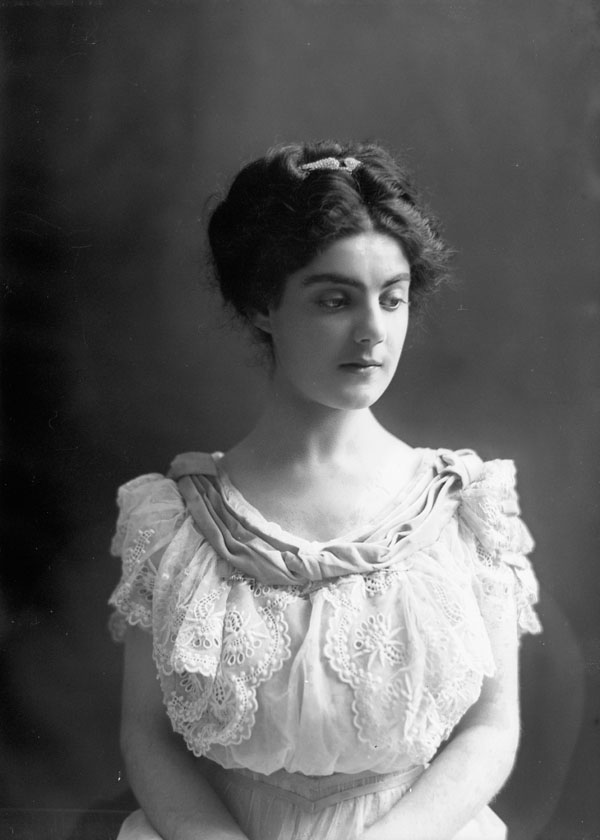
Black-and-white photo of a young woman in a white lace dress, facing the camera.

Éva Gauthier, 1906. Photo: William James Topley (a193008)

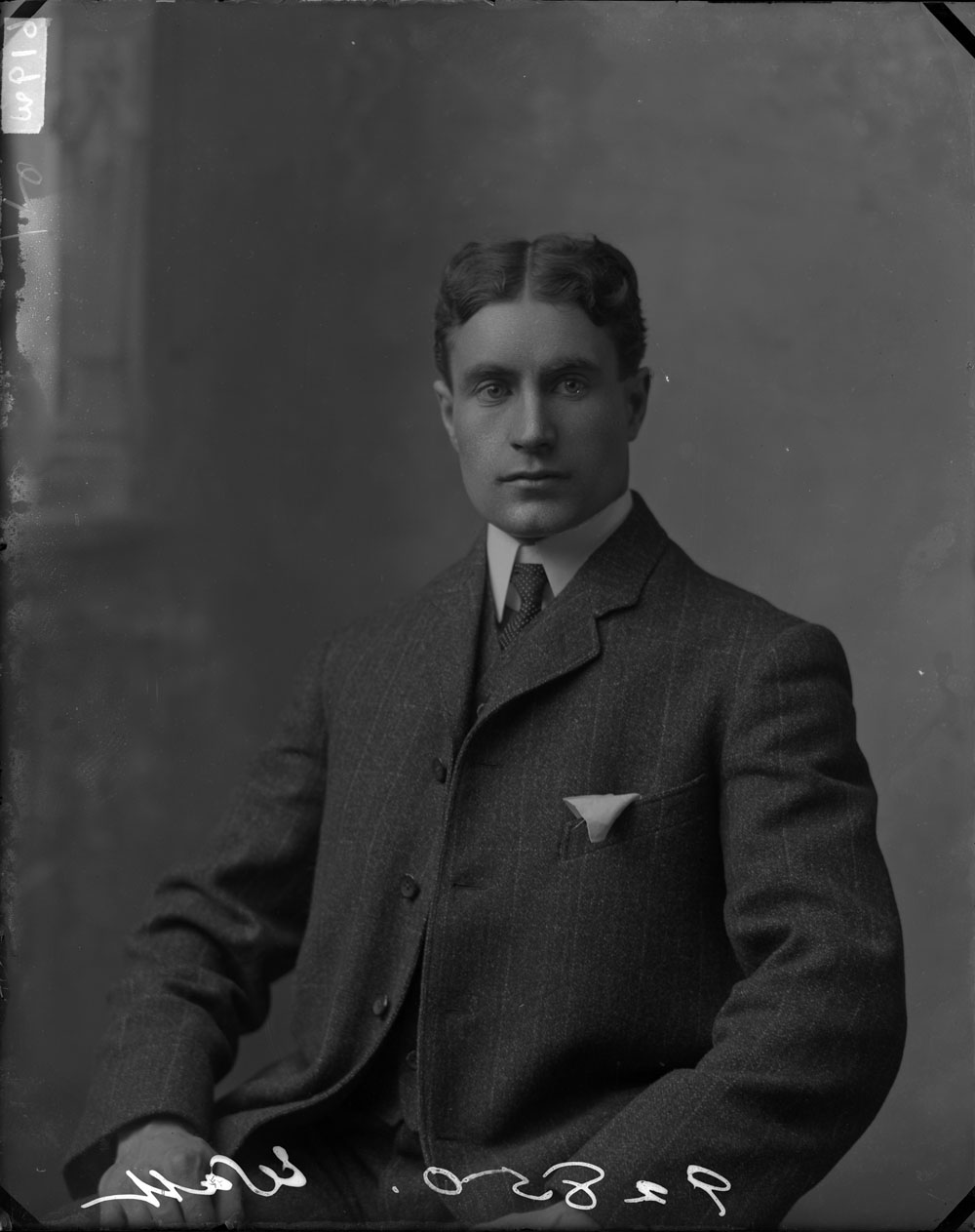
At its most basic level, Rembrandt lighting is usually done with a single light source placed at about 45 degrees from the subject and slightly higher than eye level. The concept is to create an inverted triangle of light on the subject’s cheek on the shadow side. This is very flattering, as it creates lighting that “shapes” the subject’s face and can be controlled. As viewers’ eyes are generally drawn to bright areas of an image, this technique allows the photographer to highlight a profile of the subject, in particular through distinct bright areas of light, while at the same time creating an opposite side in the shadows. (See also: Chiaroscuro) This can be used to the advantage of the subject in order to highlight and emphasize features with bright areas and conceal others by keeping them in the shadows. The contrast thus created between the bright side and the shadow side also brings dimension, atmosphere and drama to the photograph, and therefore gives greater impact to the image.

Black-and-white photo of a man in a dark suit, facing the camera.

Mr. Norman Watt, 1905. Topley Studio (e011169853)

Colour photograph of a woman with glasses looking towards the camera. Beakers and bottles containing liquids are in the foreground.

Portrait of Deborah Zamble, 2002. Susan King (e006610232) Copyright: Susan King.

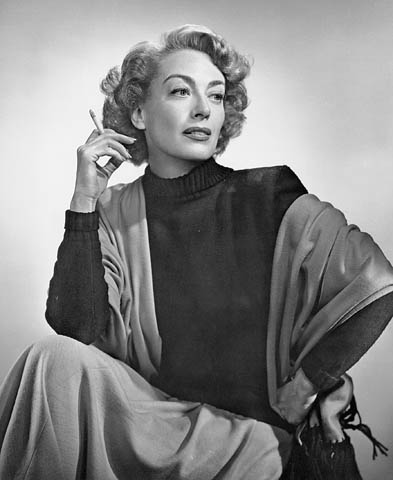
A black-and-white photograph of a woman holding a cigarette.

Joan Crawford, actress. Photo credit: Yousuf Karsh (a212246)

It is important that the viewer’s attention be on the eyes of the subject. This is achieved by creating a catch-light in both eyes. What are “catch-lights,” you may ask? These are the small white dots that appear in the subject’s eyes when the reflection from the light source hits the eyeballs. In a portrait, the position of the light is key. The light source is usually positioned high enough to create that light triangle, and low enough to create catch-lights in the eyes. The viewer’s attention is thus drawn to the eyes, which seem to sparkle.

A black-and-white photograph of a man with his hands clasped together in front of him.

Albert Einstein, 1948. Photo credit: Yousuf Karsh. (A212510 )

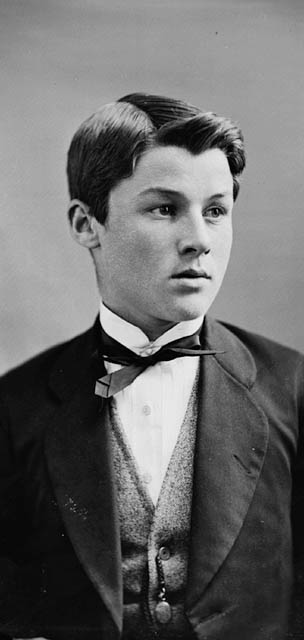
A black-and-white photograph of a boy in a suit.

Sir Charles Hibbert Tupper, 1870. Photo credit: William James Topley. (a025346)

The beauty of technology is that today we have powerful light sources, such as flashes or LED light panels, which are daylight color balanced and portable. These light sources are certainly much more convenient than candles!

Rembrandt lighting is a simple, effective and flattering method of lighting for a wide variety of subjects. If you are attentive, you will be able to see it in many portrait photographs found in the collection, even in your favorite movies and television series.


Francois Deslauriers is a digital imaging technician in the Digital Operations and Preservation division at Library and Archives Canada.

Tunniit/Tattoos: The Complicated History of Photographing Inuit Tattoos

On the left of the graphic, Tatânga Mânî [Chief Walking Buffalo] [George McLean] in traditional regalia on horse. In the middle, Iggi and girl engaging in a “kunik”, a traditional greeting in Inuit culture. On the right, Maxime Marion, a Métis guide stands holding a rifle. In the background, there is a map of Upper and Lower Canada, and text from the Red River Settlement collection.

This article contains historical language and content that some may consider offensive, such as language used to refer to racial, ethnic and cultural groups. Please see our historical language advisory for more information.

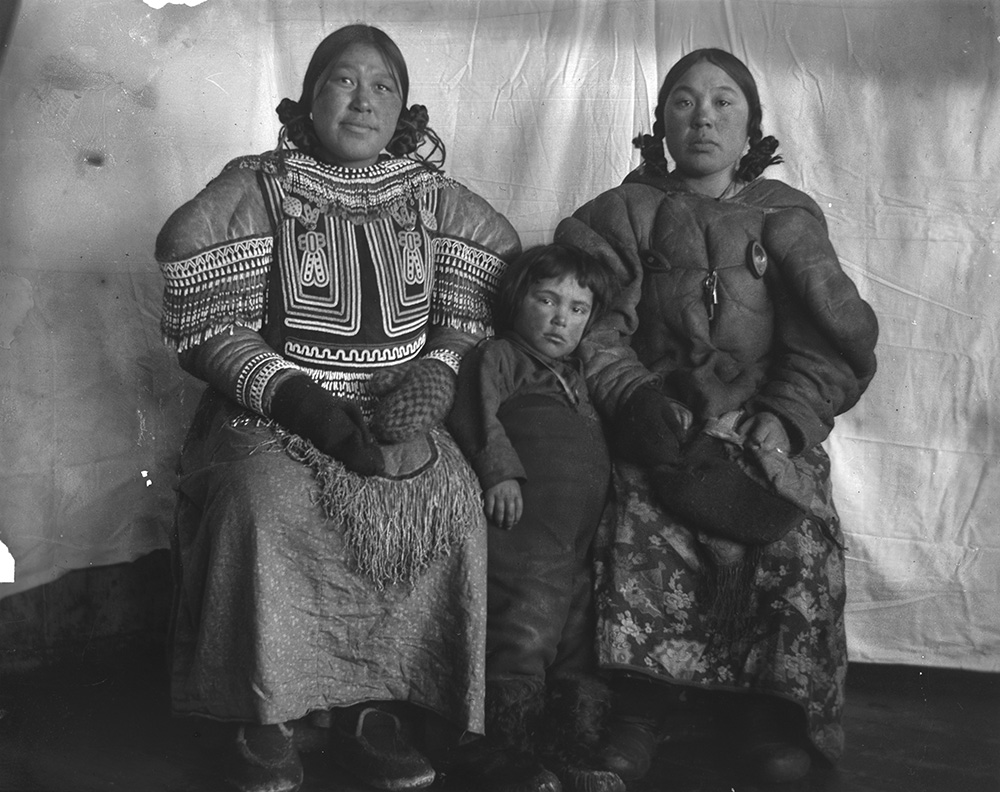
Last year my colleague Beth Greenhorn and I were chatting about a photograph she had come across of two Inuit women and a child. They were wearing elaborate atigii (inner parkas) with a cloth background behind them. One of the women was wearing odd mittens—one black and one with a distinctive knitted diamond pattern. I was sure I had seen this woman before. I have been researching Inuit tattoos for over ten years, as part of my own art practice. At first, I just collected images and did not take note of the source of the material, something I have been kicking myself for ever since! A few years ago, I started creating a more detailed collection, saving the original image identification numbers. When I began working at Library and Archives Canada (LAC), in 2018, I started searching through our collection for more images and created a list for future reference. In that list, I found “Hattie.”

Black-and-white photograph of two women and a child wearing parkas, sitting in front of a fabric background.
[Two Inuuk women and a child]. The woman on the left is Ooktook (Niviaqsarjuk, also called Uuttuq), who is Qairnirmiut. Her name means “lying on the ice.” She was called “Hattie” by photographers Geraldine and Douglas Moodie. The boy is Harry Unainuk Gibbons. The woman on the right is Taptaqut, Harry’s mom. Photo credit: George Comer, 1905. (e011310102).

At least four different people have photographed “Hattie”: George Comer, Geraldine Moodie, Albert Peter Low, and J.E. Bernier. In some photos, I think she has been misidentified. In others, a different woman is also called “Hattie,” “Ooktook,” and “Niviaqsarjuk.” This is perhaps because the women had similar-sounding names, or they were thought to look alike, or the photographer simply got confused after returning to the south and having the photographs processed.

Another institution instrumental to my work that informed my findings is the Glenbow Museum. This museum houses the Geraldine Moodie collection, which also includes photographs of women from the same region and time period. In the Glenbow descriptions, and in a comment on our Project Naming Facebook page, this woman was identified as Ooktook. Through Project Naming, people are identified by community members. For this reason, I consider it to be the most reliable source.

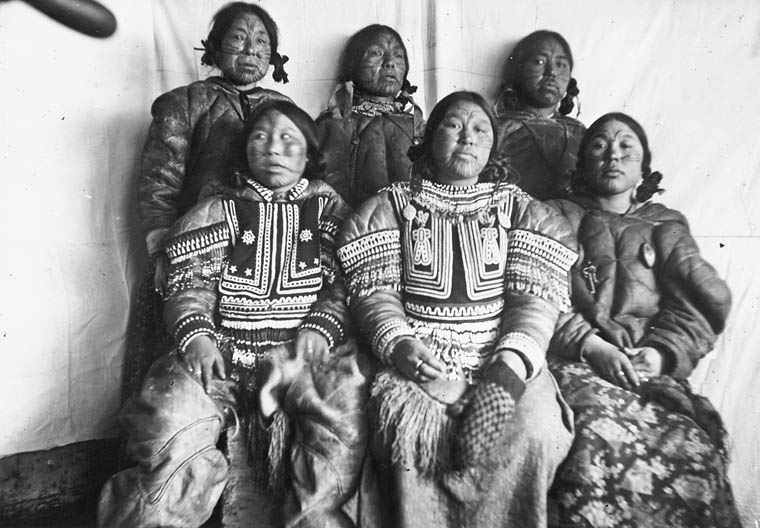
A black-and-white photograph of six women with facial tattoos wearing parkas, before a cloth backdrop.
[Photograph of six women with facial tattoos wearing parkas, before a cloth backdrop. Niviaqsarjuk is seated in the centre in the first row] [Left to right—back row: [unknown], Atunuck, Uckonuck; front row: Aka “Pikey” Niviaqsajuk/Shoofly?, Taptaqut], March 8, 1905. Credit: J.E. Bernier (C-001499)

In the image above, one can see the woman seated at front and centre is the same person Ooktook/Niviaqsarjuk/Hattie. She is wearing the exact same outfit as in the photo by Comer right down to the patterned mitten on her left hand, except that, in this photo, she has facial tattoos. In the original photo Beth shared with me, her face is bare! What does this mean? Is it the same woman? Are the tattoos draw on? Were they tracing pre-existing tattoos, or were they completely fabricating these designs?

Recently, I came across an interesting article about the photographic work of Michael Bradley and his project Puaki, which featured photographs of Maori people of New Zealand, well-known for their facial tattoos called Tā moko. The process Bradley uses is wet plate collodion, popular in the 1800s. When Maori people with tattoos were photographed by means of this process, their Tā moko disappeared! The collodion process could not properly capture colours in the blue/green spectrum. Is this what happened with the tattoos of Inuit women from the early 1900s?

With the guidance of Joanne Rycaj Guillemette, the Indigenous Portfolio archivist for Private Archives here at LAC, we did some digging to see exactly which photographic process was used in this photograph of Niviaqsarjuk. Mikan (LAC’s internal archival catalogue) did not have the answer; neither did the former paper-based filing system. The Comer collection of photos are actually copies, and it turned out the originals are held at the Mystic Seaport Museum, in Connecticut. Going through my personal collection of photos, I found an image that looked familiar, and then searched the Mystic Seaport Museum for the ID number. I found the woman referred to by Comer as “Jumbo.” In the description, I found what I was looking for. It states:

Glass negative by Capt. George Comer, taken at Cape Fullerton, Hudson Bay, on February 16, 1904. Comer identified this image as a young girl known as Jumbo, showing the tattooing of the Southampton Natives. This is one of a group of photos taken by Comer to record facial tattooing of various Inuit groups of Hudson Bay. He had Aivilik women paint their faces to simulate the tattooing styles of various other groups. Information from original envelope identifies this as Photo 55, # 33. The number 30 is etched into emulsion on plate. Lantern slide 1966.339.15 was made from this negative. Identical to 1963.1767.112. 1963.339.58 shows the same young woman in a similar pose.

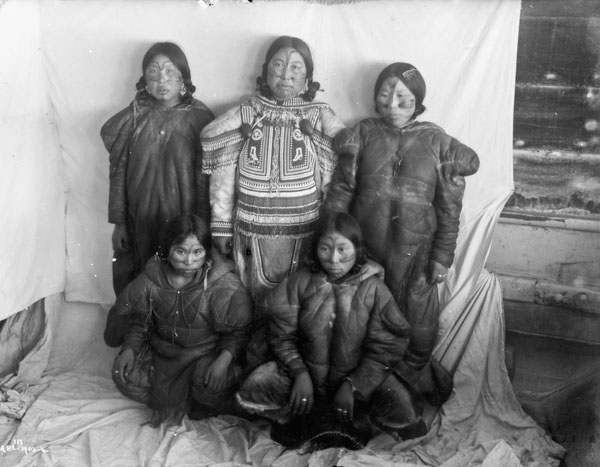
This was the confirmation I needed that the designs were in fact painted on and that the designs were from other regions! I do not know how often this happened, but finding similar images from other collections has me concerned about the authenticity of tattoo designs in photographs from this period and into the 1950s. I searched the Comer collection further and found more than one woman photographed with and without tattoos, including the woman called “Shoofly,” Comer’s “companion,” whose real name was Nivisanaaq.

A black-and-white photograph of five Inuit women with facial tattoos standing in front of a white cloth backdrop
Aivilliq Women, 1903–1904. Credit: Albert Peter Low (a038271). Nivisanaaq (nicknamed “Shoofly) at centre in a beaded atigii with painted tattoos. Note the woman to her right, whom we also see in the image below.
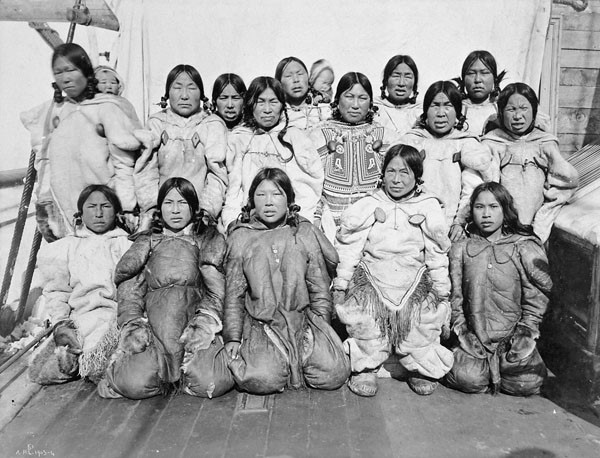
A black-and-white photo of 15 women and two babies, posed in three rows.
Aivillik women and children on the “Era” Credit: Albert Peter Low 1888–1909, location unknown. (a053565) Nivisanaaq is present again, to the right of centre, second row, in this photograph, wearing her beaded atigii with boot motifs. Note that the woman at her left in the image above is now in front of her at centre; both are without tattoos in this photo.

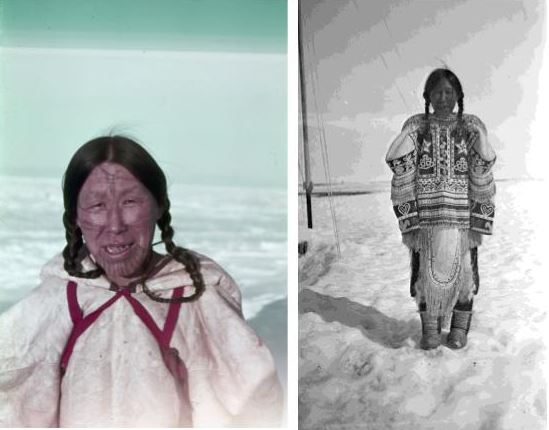
In the Donald Benjamin Marsh fonds, also held at LAC, we see another example of painted tattoos. The unidentified women from Arviat in these two photographs by Donald Benjamin Marsh are most likely the same person, as one can tell from comparing their facial features, especially the broken or missing tooth on the left side of her mouth. On the right side of her face, she has no tattoos; on the left side, however, the tattoos are quite prominent. The lines are very dark and wide. When one compares these images to photographs of women with authentic tattoos, one can see the difference. Here, the lines are quite fine and faint, but still visible.

Left: A colour photo of an Inuk woman with facial tattoos wearing a white parka with red straps looking at the camera. Right: A black-and-white photo of an Inuk woman wearing a decorated parka standing in snow.
Left: Inuit woman with facial tattoos and braids. Donald Benjamin Marsh fonds, Arviat, date unknown. (e007914459) Right: [Smiling Inuk woman in a beaded amauti]. Original title: Smiling Inuit woman in a decorated amauti, Donald Benjamin Marsh fonds, Unknown Location, N.W.T. [Nunavut]: c. 1926–1943. (e004922736)
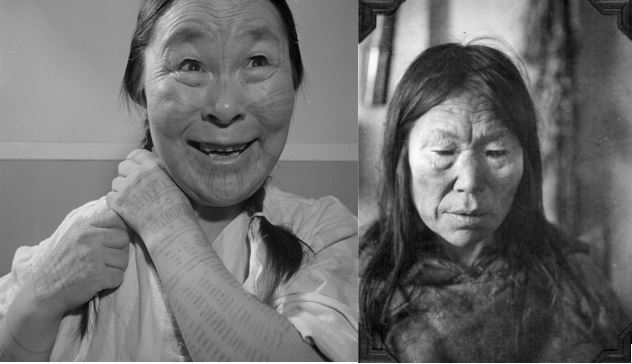
A black-and-white photograph of an Inuk woman with tattoos on her face and arms smiling while braiding her hair. Right: A black-and-white photograph of an Inuk woman in a fur parka.
Left: Mary Edetoak, a patient, who still has traditional Inuit tattoos, 1958. (e011176882) Right: Elderly Inuit woman with her hair down [graphic material], 1929. Inscription reads, “Old native woman Eskimo, heavily tattooed but does not photograph.” Credit: G.H. Blanchet (e004665345),

This discovery reminds me of the actions of well-known photographer Edward S. Curtis, who travelled through North America photographing Native American peoples. (Note: We use the term “First Nations” in Canada, but “Native American” is used in the United States of America). Curtis often manipulated scenes by dressing sitters in clothing from an earlier era, removed contemporary elements, and added props that created a romanticized and inauthentic representation of them. Not only is this type of manipulation dehumanizing, it leaves behind a legacy of misinformation.

As a reaction to colonialization and assimilation policies, Indigenous Peoples are going through a period of cultural resurgence. When those of us who are looking to reclaim elements of our culture, such as tattooing, come across these images and assume the designs originate in the region the people are living in. Someone in Arviat, seeing a photo of her great-grandmother, for example, might want to reclaim the markings of her relative and mistakenly get the same markings, not knowing the design is from a completely different family and region. One can only imagine how distressing this would be.

A main goal of We Are Here: Sharing Stories is to update descriptions to make them culturally sensitive and accurate. To this end, we are updating descriptions for the above-mentioned collections, to add the women’s correct names if known and a note explaining the significance of the tattoos. This note also addresses the practices of some photographers of the time that may result in tattoo designs that are not authentic to the women or their region. Although we cannot change the past, it is my hope that these actions will help inform researchers and community members alike from this point on. Nakurmiik (thank you).

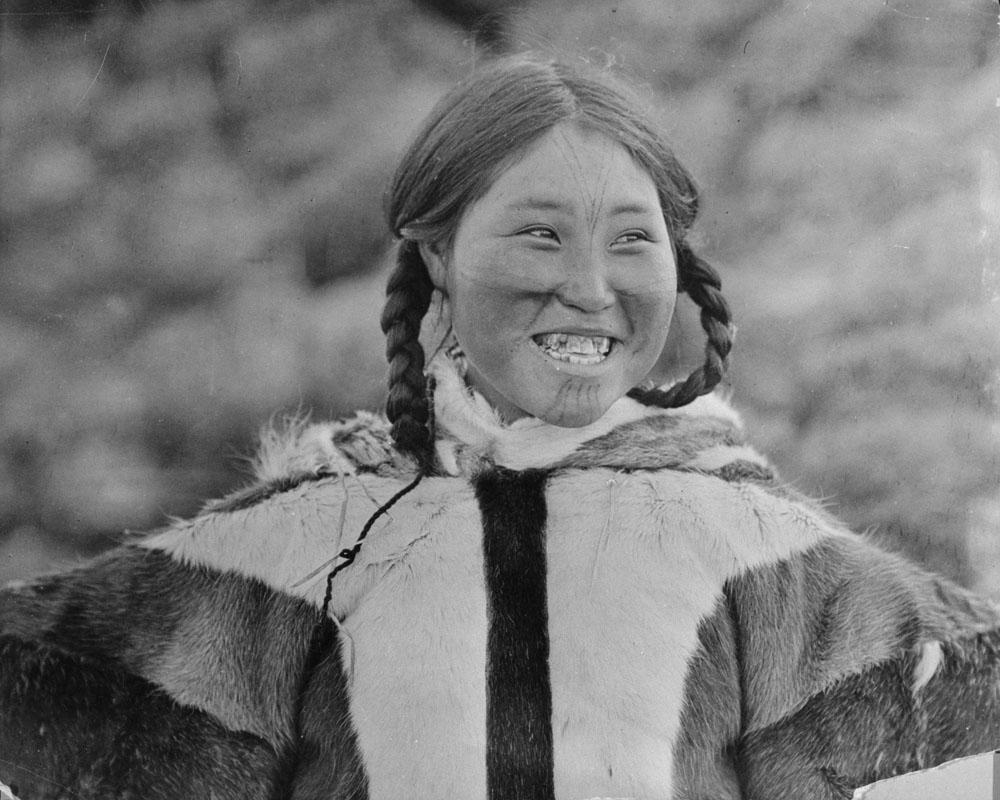
A black-and-white photograph of a smiling Inuk woman with facial tattoos.
Kila, a tattooed Inuit woman, from the Dolphin and Union Strait area, Coronation Gulf, N.W.T. [Nunavut], 1916. (a165665)

This blog is part of a series related to the Indigenous Documentary Heritage Initiatives. Learn how Library and Archives Canada (LAC) increases access to First Nations, Inuit and Métis Nation collections and supports communities in the preservation of Indigenous language recordings.

Brodie Macpherson: Early photo printer

By Samantha Shields

Biography

Brodie Macpherson, born Archibald Brodie Macpherson, nicknamed “Handlebars” (presumably for mustache-related reasons), was a notable figure in Canada for his role in the photographic community during the rise of colour printing.

A colour portrait photograph of Brodie Macpherson in a military uniform sporting a handlebar moustache. The figure is cropped at the chest and appears against a blank background.

Self-portrait, approx. 1945 (e010767976)

Born in Toronto, Ontario, on November 26, 1909, to University Professor Walter Ernest and Elsie Margaret Macpherson, Brodie was the eldest of three children and the first to attend the University of Toronto. He enrolled in the Faculty of Applied Science and Engineering in 1927 and graduated in 1931. He would go on to serve as a member of the Royal Canadian Air Force in the Second World War before returning home to start his photography business in early 1946. Macpherson’s engineering background, in conjunction with his subsequent years of experience working in the lithography business, would serve him well in the colour printing trade.

The rise of colour photography

Colour photography began to gain momentum in the mid-1930s with the advancement of colour transparencies. Colour prints were also possible at this time, but they were far less popular with photographers than black-and-white prints. The process of making and printing separation negatives was too expensive and complicated for most hobbyists, and the finished prints were rarely worth all the effort for professional photographers. Portrait and scenic photographers were certainly not interested in spending a small fortune to produce prints that critics would frequently describe as garish, vulgar, and unnatural.

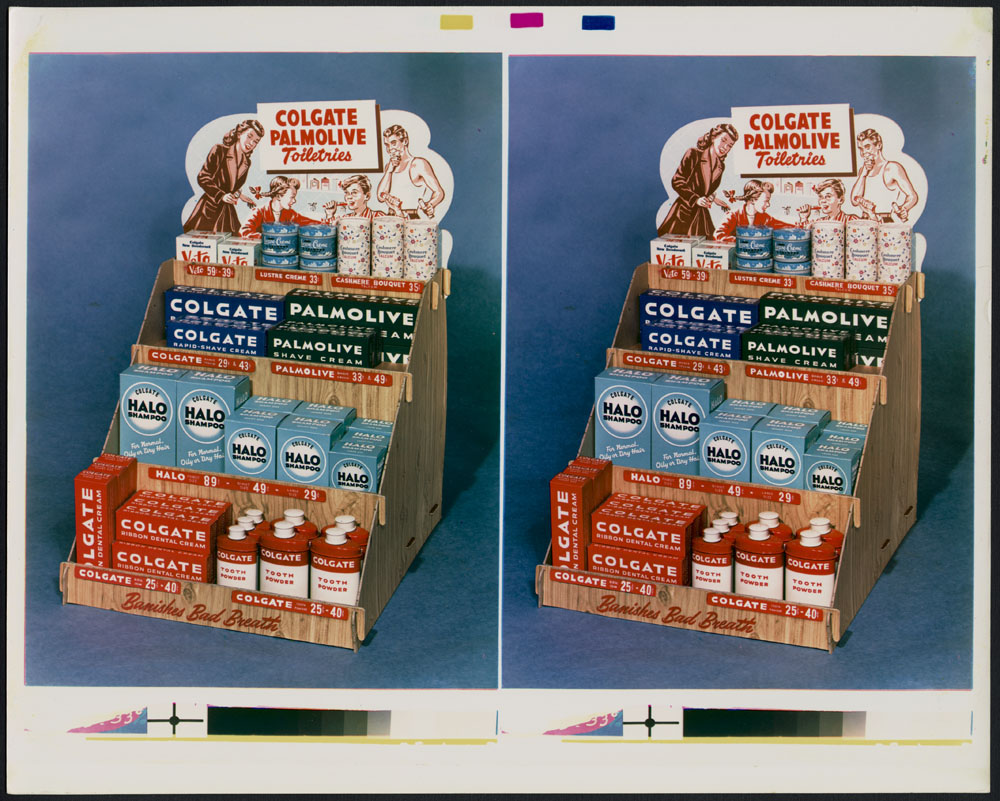
Dual colour photographs of a tiered display holding Colgate and Palmolive products, such as shaving cream, shampoo, dental cream, and tooth powder. The display was photographed in-studio against a blue background.

A shop display for Colgate Palmolive toiletries. (e011312591)

Despite its many shortcomings, colour truly excelled in the realm of advertising. While bright and clashing colours can be visually jarring, they are also excellent for attracting attention. During this era, colourful photographs increasingly adorned the pages of magazines, billboards, and sales tools.

Advertising was ideally suited for colour, since much of it involved bulk orders, where repetition and quantity could distribute the high cost and complexity of making an initial print over multiple copies.

Brodie Macpherson – the business

In February 1946, rather than resume his pre-war employment with Harris Lithography, Macpherson, embarked on making and selling quantities of colour photographs using modified versions of Eastman Kodak’s Wash-off Relief and Dye Transfer processes. Given the operational similarities, a background as a lithographic camera operator proved particularly useful in this work.

Macpherson’s business approach was simple: provide the best possible product for the lowest reasonable price. This goal was achieved by

  • limiting sales to colour prints, thereby reducing the need to stock equipment and materials to process black-and-white prints, and promoting a specialization in colour.
  • selling prints in bulk only, thereby maximizing the life of the chemicals and lowering costs overall. As chemicals would begin to expire rapidly when poured into trays, it was not economical to let materials spoil between small orders.
  • experimenting and mixing his own chemicals. Macpherson was able to further streamline his printing process, maintain a consistent quality, and avoid some of the higher costs associated with purchasing prepared chemicals. These cost savings were passed on to the consumer.
  • building and customizing tools, from production equipment (e.g., cameras and lights) to printing (e.g., lightbulbs and tray rockers). Macpherson was continually designing, experimenting, and tweaking to improve and perfect the process.
  • communicating and collaborating with suppliers, manufacturers (including Kodak), fellow photographers, and printing labs, and continually sharing research, information, and resources to help improve the production of colour photography.

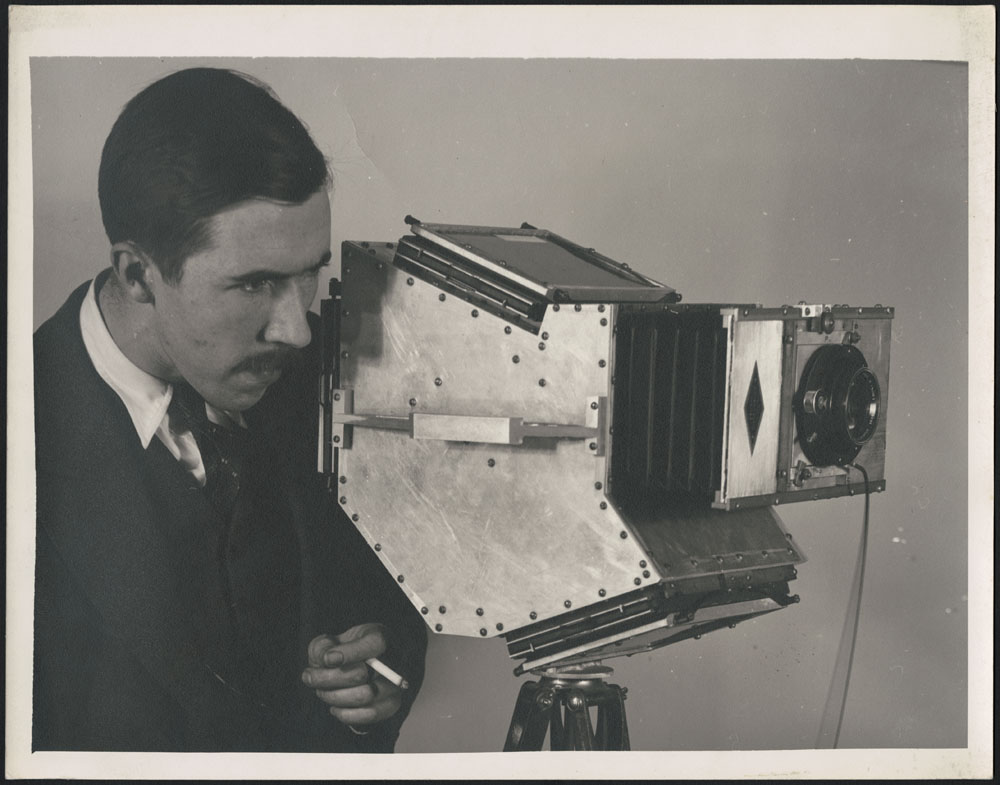
A black-and-white photograph of Macpherson’s camera.

Macpherson built his own one-shot colour separation camera, which allowed him to expose three plates behind different coloured filters simultaneously. Otherwise, the exact same photo would need to be taken successively for each filter colour. (e011312590)

From the outset, clients considered the quality of Macpherson’s colour prints to be strong, and his prices—while still more expensive than those of black-and-white or hand-colour photographs—reasonable. His price lists were consistently lower than those of other colour-printers in the area, and remained unchanged for the duration of the business. Over the next 18 years, Macpherson would go on to fill orders for clients from all over Canada and from the United States.

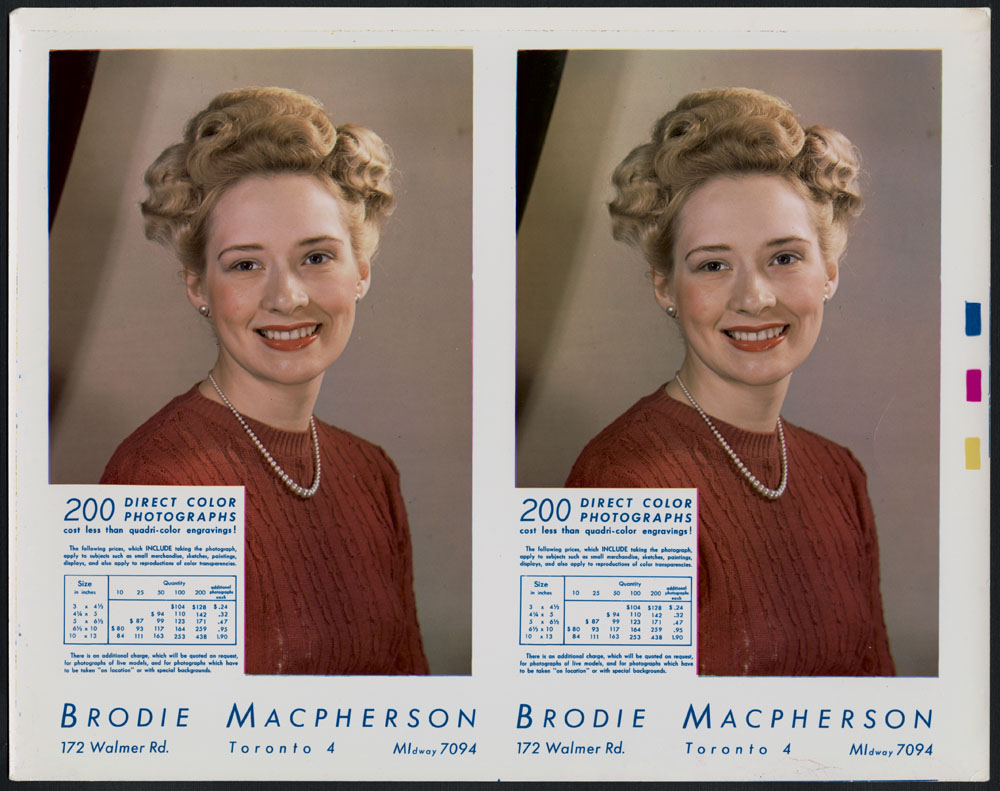
Two identical studio portraits of an unknown woman with blond hair, red lipstick, and a red knit sweater. Macpherson’s price list and contact information is superimposed on the bottom left-corner and also appears below the image.

An advertisement and price list for ordering coloured photographs from Brodie Macpherson.
(e011312588)

The colour studio, located at 172 Walmer Road, in Toronto, in the basement of his family home, operated officially until Macpherson’s retirement in 1964.

The Toronto Camera Club (TCC) – Colour Print Group

According to the President of the Toronto Camera Club, Frank E. Hessin, Macpherson was “unquestionably [the] driving force in the [Toronto Camera] Club” for the promotion of colour prints. In 1946, he proposed the creation of—and subsequently chaired—the TCC’s Colour Print Group. Over the next several years, he employed the TCC’s facilities to teach the colour separation process to anyone willing to learn.

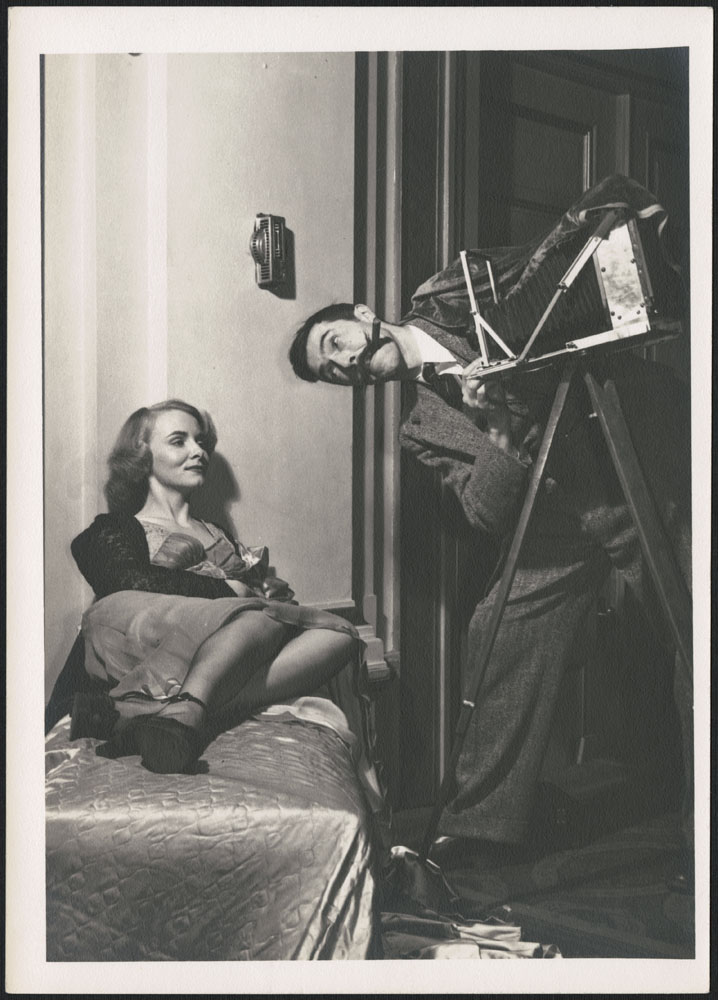
A black-and-white photograph of Brodie Macpherson pretending to photograph a reclined Miss 1948, Lialla Raymes.

Brodie Macpherson and Miss 1948, Lialla Raymes, during a skit portraying the changing trends in photography to mark the 60th Anniversary of the Toronto Camera Club. (e011310464)

Everett Roseborough, a fellow TCC member, writes the following characterization of Macpherson, which echoes throughout the correspondence and articles in the Brodie Macpherson fonds (R791).

“Opinionated [and found] seated in the back row at photographic society meetings, stroking his moustache, he could be counted on to object to something. Following a concerted groan by those present, frequently he would be proven correct.” (Photographic Historical Society of Canada, 1994)

Ever the son of a university professor and librarian

Undeniably clever, Macpherson would readily share information and freely offer his opinion and advice. He was an invaluable resource, as photographers active during this era considered Macpherson to be the best colour photographer / printer in the city.

Over the years, as colour-photography technology continued to improve in speed and accuracy, Macpherson’s skills in this area and his knowledge of colour-print specifications continued to be recognized. He regularly shared his research findings and encouraged discussion through various photography publications, private letters, photography clubs, public lectures, and evenings in his studio accompanied by records and top-shelf scotch.

A print of a cut round cake on a black plate, situated atop a box bearing the printing matrix and creator number C363.

An early colour photograph by Brodie Macpherson demonstrating the layering of yellow, magenta, and cyan to achieve a full-colour print. (e011312589)

Retirement

Already spending most of the winter months in Barbados, Macpherson semi-retired from the printing business in 1964, at the age of 55. While he was no longer accepting any new business, during his time in Toronto, he would still fill orders of reprints from existing negatives for previous clients.

A promotional photograph displaying eight different Purity biscuit and cookie products in clear bags against a white background.

A series of promotional prints commissioned by Purity Factories Ltd., Saint John’s, Newfoundland and Labrador. The company placed several orders with Macpherson, and continued to request reprints until 1970. (e011312592)

By the late 1960s, the photographic processes used by Macpherson had largely been replaced by Kodak’s new—and simpler—Ektacolor material. As a result, it became increasingly difficult to obtain the necessary supplies in Canada, and the reprinting stopped altogether.

A black-and-white photograph of Brodie Macpherson using his Devin-style one-shot camera.

Portrait of Brodie Macpherson at work. (e011310471)

A recluse by nature, Macpherson quietly closed up his home and studio sometime in the 1970s, reportedly moving to Florida without a trace (Roseborough, 1994). Subsequent efforts to locate Macpherson in Toronto, Florida, and Bermuda post-1970 were unsuccessful.

Macpherson’s successful career in colour photography, particularly during a period of rapid technological development, is a true testament to his entrepreneurial spirit, his dedication, and his mastery of the craft.


Samantha Shields is a Photo Archivist in the Social Life and Culture Division at Library and Archives Canada.

Madge Macbeth: Writer of everything and anything

By Vasanthi Pendakur

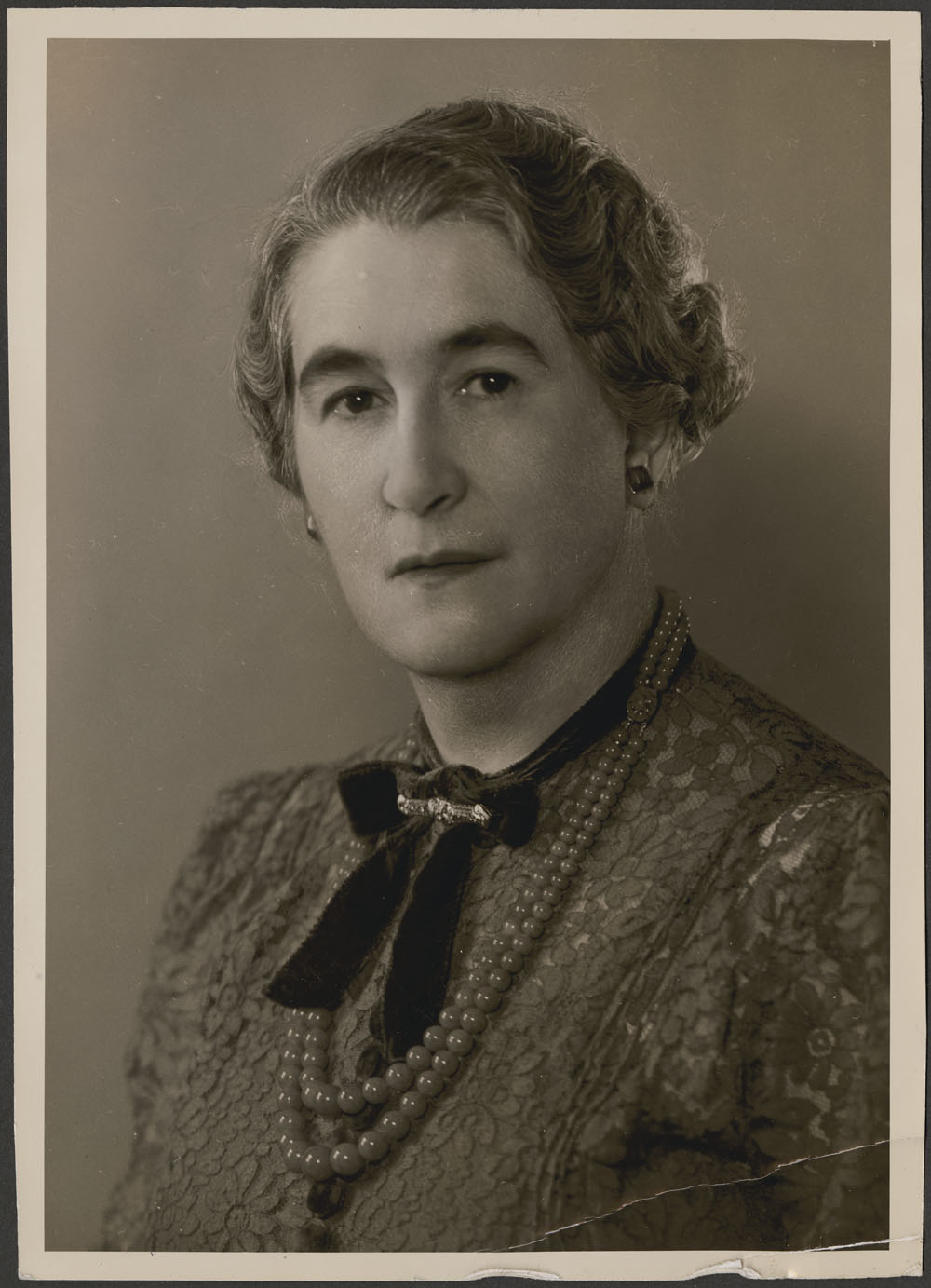
Portrait-style photograph of a woman wearing a lace blouse, jade beads and a diamond pin facing the camera.

Portrait of Madge Macbeth (e010935318)

Madge Macbeth was a prolific American-Canadian writer of short stories, novels, plays, travel books, newspaper articles, and interviews throughout the first half of the 20th century. She was deeply involved with authors’ associations and in theatre, being a founding member of the Ottawa Little Theatre and the first female president of the Canadian Authors Association, a position she held for three terms.

Macbeth was born Madge Hamilton Lyons in Philadelphia, to Bessie Maffitt and Hymen Hart Lyons, on November 6, 1878. As a child, she produced plays and edited her own newspapers. She may have been influenced by her grandmother, Louisa Hart Maffitt, who was one of the first professional American press women and a suffragist.

After the family settled in Baltimore, Madge Lyons was sent to Hellmuth College in London, Ontario, for her education. In her memoir Boulevard Career, she recalled that Hellmuth in the 1890s did not teach Canadian literature and that its curriculum centred on the classics. After completing her schooling, she performed as a mandolinist and vaudeville actress for a few years before marrying Charles Macbeth in 1901.

The couple first moved to Detroit, and then settled in Ottawa. Macbeth instantly loved Ottawa. In her writings, she stated that Ottawa provided a means of satisfying my in-born and unquenchable love of people.” This is certainly true. She became friends with many of the leading lights of Ottawa, including the photographer Yousuf Karsh and Mayor Charlotte Whitton.

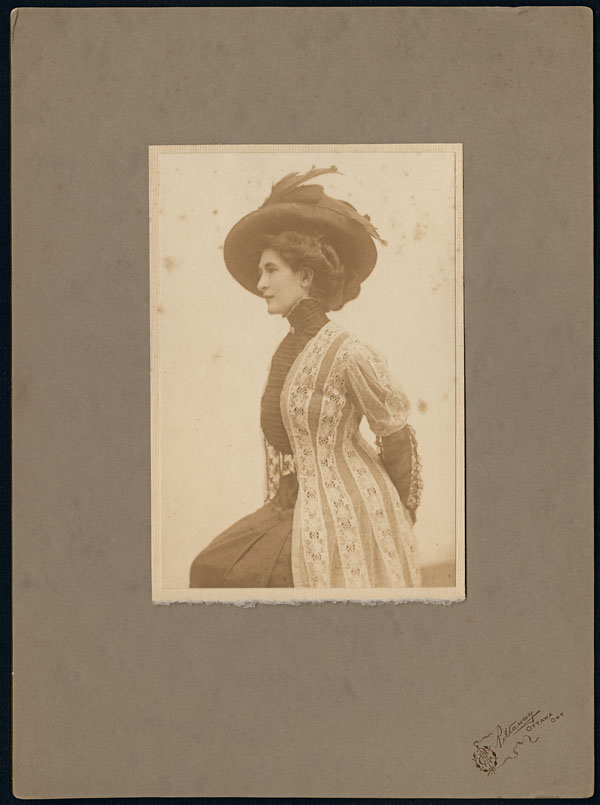
Side profile of Madge Macbeth in a black dress and white lace jacket wearing a feathered hat.

Portrait of Madge Macbeth as a young woman in Ottawa (e008406101)

Disaster struck around 1908. Macbeth’s husband caught tuberculosis and later died, her young son became ill, and her mother lost all her money. Writing was one of the few professional careers open to women at the time. As she recounted in an interview with Maclean’s: I began to write…with the deluded idea that it was something I could do at home. Long since I have learned that it is just the place where one can’t write in peace.” At the time, the Canadian market for writing was small. Editors were looking for American or British writers, and in many instances Canadians were confined to advertisements or second runs.

Macbeth began with short pieces in magazines, and had a few early successes with her novels The Changeling (1909), and The Winning Game (1910). This was followed by a dry spell. A helpful mentor at this time was Marjorie MacMurchy, one of the earliest press women in Canada. MacMurchy suggested Macbeth try getting interviews with members of Parliament, because magazines were more interested in public officials than in fiction.

Her luck returned. A Canadian editor accepted a piece she had written, and soon other work followed. Macbeth wrote anything she could get her hands on: advertisements, brochures for the Canadian Pacific Railway, serials, novels, travel books, plays, radio dramas, propaganda (during World War II), newspaper articles, and columns. She wrote under her own name and various pseudonyms, both male and female. Her writing style and subject matter changed from book to book, but most of her pieces were suffused with a strain of humour or satire, and her main characters were usually women. She wrote about marriage, sex, travel, adventure, religion, and political intrigue. Later in her career, she travelled extensively, usually alone, for lecture series or for material to turn into more books.

Madge Macbeth holding a document and looking off to the side.

Madge Macbeth holding a document (e010935329)

Many of her novels focussed on the middle and upper classes. In fact, popular political satire novels, like The Kinder Bees (1935) and The Land of Afternoon (1924), were based on her knowledge of upper-class society in Ottawa. Both were written under the closely guarded pseudonym of “Gilbert Knox.” One of her most popular novels was Shackles (1926), which highlighted first-wave feminist thinking of the time. The novel is the story of Naomi Lennox, a middle-class woman fighting for respect as a writer and for freedom within her church and marriage. The book was highly praised by some and condemned by others for its portrayal of sex in marriage.

Macbeth’s articles discussed similar themes as well as showcased women in the arts, business, education, and suffrage. One article entitled “How much sex should be put into novels?” was published in 1947. In it, Macbeth argued that authors were reporters describing the world around them. She was critical of authors using too much sex in their books, but argued that ignoring it completely was also a disservice to reality and literature. One exchange with a reformer went like this: Why don’t you authors write about nice things?” He complained. … “Do you enjoy uplift books?” I shot at him, “Or do you want them published for the other fellow?

Throughout her career, Macbeth was deeply involved with authors’ associations and in theatre. Not only was she the first female president of the Canadian Authors Association, but she held the position for three terms, a record at the time. She used the position to promote Canadian literature and continually supported younger writers. As well, her interest in theatre led to the founding of the Ottawa Drama League, later the Ottawa Little Theatre. Her stated goal with this project was to wean children from cheap movies, to give them a knowledge and love of good dramatic literature.” Macbeth pestered MPs for support until the project came to fruition. It is now one of the oldest theatre companies in Canada.

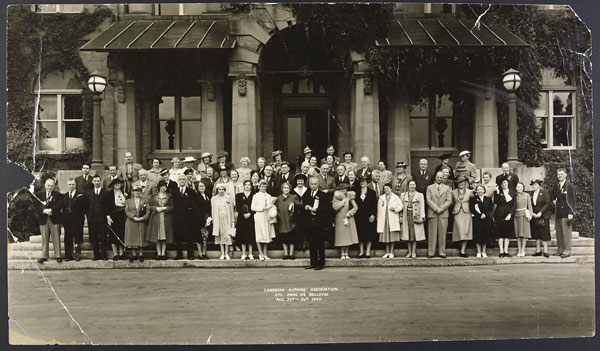
Large group of men and women standing in front of the entrance to a building.

Group portrait of the Canadian Authors Association (e008406116)

Macbeth’s work was very progressive, but elements of her writing show her Victorian upbringing. While her subject matter was enlightened, her books tended to fit into the conventions of the time. She supported fledging writers and was proud of supporting herself and creating space for other women to do the same. At the same time, she wrote articles arguing that women had forgotten their domestic responsibilities, and called spinsterhooda half baked life. She wrote as a member of her class, and some of her language would not be used today. These contradictions are symbolic of her long career and the changes that took place in society from her Victorian upbringing to her death in the 1960s.  Boulevard Career ends with a discussion of how much society, and Ottawa in particular, had changed over her career, especially for women. Her writing and her life were part of this change, half in the future and half in the past.

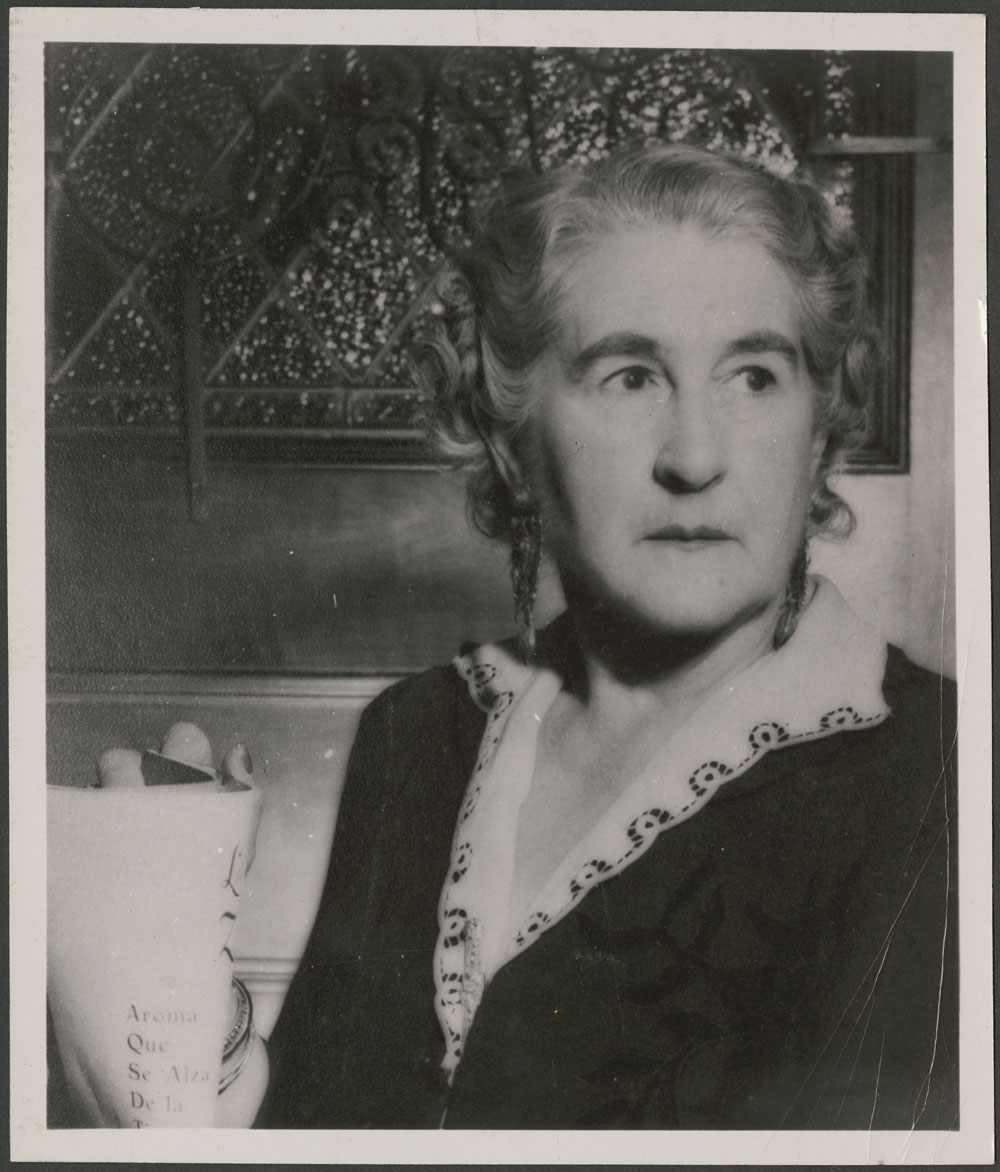
Macbeth donated her papers to the National Archives in 1958. The fonds includes manuscripts of many of her novels, copyright information, and correspondence on a number of topics, including Macbeth’s lecture series, her involvement with the Ottawa Drama League, and her work with the Canadian Authors Association. The fonds also comprises diaries, scrapbooks, and a large collection of photos of Macbeth over her life. These photos show her dramatic side and her love of the theatre. The fonds gives us insight into her long career and ensures that her work will be remembered.

Side portrait of Madge Macbeth wearing a pale patterned cape.

Portrait of Madge Macbeth wearing a cape (e010935313)

Additional resources


Vasanthi Pendakur is a project manager in the Online Content team at Library and Archives Canada.
George Mully: moments in Indigenous communities

Version française

On the left of the graphic, Tatânga Mânî [Chief Walking Buffalo] [George McLean] in traditional regalia on horse. In the middle, Iggi and girl engaging in a “kunik”, a traditional greeting in Inuit culture. On the right, Maxime Marion, a Métis guide stands holding a rifle. In the background, there is a map of Upper and Lower Canada, and text from the Red River Settlement collection.

By Annabelle Schattmann

This article contains historical language and content that may be considered offensive, such as language used to refer to racial, ethnic and cultural groups. Please see our historical language advisory for more information.

George Mully (1926–1999) was an American playwright and documentary film director. He began as a playwright, working on off-Broadway shows, travelling productions, and operas in the United States and Europe. Mully had various roles, including stagehand, stage manager, lighting designer, and director; he even worked as a puppeteer. After marrying and settling down in England with his wife Ann, Mully pivoted his career from the stage to audiovisual production. He started his own educational production studio, writing, directing, and producing stories on subjects and issues he was passionate about. By 1979, the family had immigrated to Canada and settled in Ottawa.

The George Mully collection, held at Library and Archives Canada, consists of personal and professional documentary photographs taken in the later part of Mully’s career. The images demonstrate his varied interests, including international development, the environment, history and socio-cultural topics, music, and art. In Canada, Mully worked closely with the National Film Board and museums in the capital region, directing many documentary films. Acid from Heaven (1981), a documentary film about acid rain, is a notable work included in his collection.

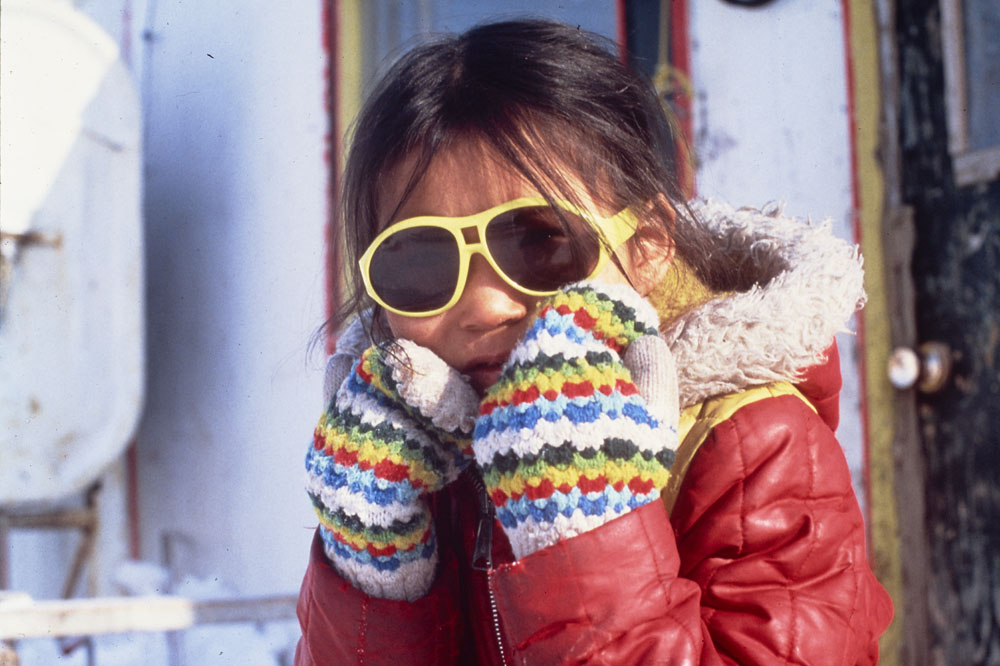
Colour photograph of a young girl staring into the camera.

An Inuk girl with yellow sunglasses, a red jacket, and multicolour mittens. Photo Credit: George Mully. (e011218259)

Of particular interest to the We Are Here: Sharing Stories initiative is a series of 363 photographs taken between 1978 and 1988. They depict First Nations people and Inuit from across Canada, as well as Diné (Navajo) and Inde (Apache) from the United States. Mully’s images document how Indigenous people lived and worked in the late 1970s and 1980s. Most of the photographs show people going about their daily lives, often while performing an activity. Sometimes it is a traditional activity, such as hunting, gathering, creating art, and making crafts, or a contemporary activity such as working in a modern industry. Occasionally, Mully captures crossover between traditional and contemporary life.

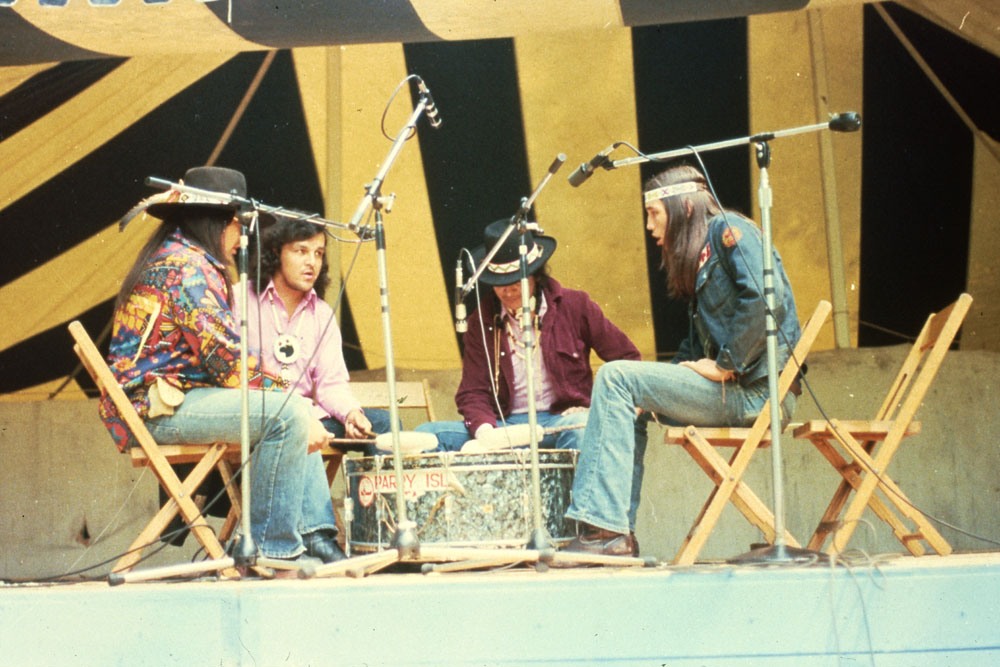
Colour photograph of four men sitting on wooden chairs surrounded by microphones and facing each other, singing and drumming.

Four unidentified First Nations drummers performing under a tent. Photo Credit: George Mully. (e011218157)

Mully’s interest in human rights is evident in a series of photographs taken in July 1979, when the Indian women’s rights march arrived in Ottawa. The march, led by Maliseet women Sandra Lovelace and Caroline Ennis, protested inequality and discrimination faced by First Nations women who lost their Indian status upon marrying non-status men. Bill C-31 amended the Indian Act in June 1985 by removing the relevant provisions and reinstating status for those affected, among other changes. The revisions to the Act have been critiqued for not adequately addressing the issue.

Colour photograph of a person sitting on green grass behind a sign that reads “Save our sisters.”

Unknown individual sitting on the lawn of Parliament Hill in Ottawa with a protest sign. Photo Credit: George Mully. (e011218140)

It is not initially clear why Mully captured particular images or what purpose they might have served. Some photographs might have been taken in preparation for a possible documentary or as part of research on a future project. The names of the people depicted, the locations, and the dates of the photographs are unknown; none of the images has a detailed caption, and few textual records accompany the collection. As such, a selection of over 300 photographs will be part of an upcoming Co-Lab challenge and Flickr album. If you recognize someone or a location, or know when an event took place, please go to the George Mully Co-Lab challenge and tag the photographs! Tagging the images with names, locations, and dates will allow others to find images of family members and their communities, and ensure that the people and places are remembered. Thank you for sharing your knowledge, and for your assistance in this endeavour.

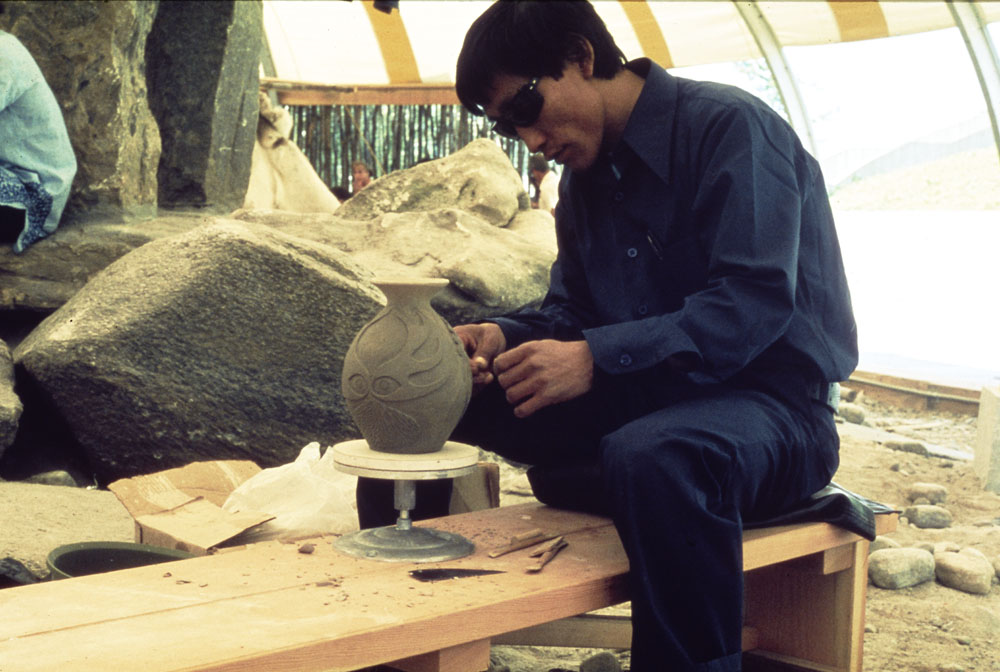
Colour photograph of a man in dark blue clothing wearing sunglasses and sitting on a wooden bench carving a vase.

Unidentified Inuk artist at an arts event, working on a ceramic vase with an abstract design. Photo Credit: George Mully. (e011218192)

This blog is part of a series related to the Indigenous Documentary Heritage Initiatives. Learn how Library and Archives Canada (LAC) increases access to First Nations, Inuit and Métis Nation collections and supports communities in the preservation of Indigenous language recordings.


Annabelle Schattmann is an archival assistant for We Are Here: Sharing Stories, an initiative to digitize Indigenous content at Library and Archives Canada.
 

Images of Icebergs now on Flickr 

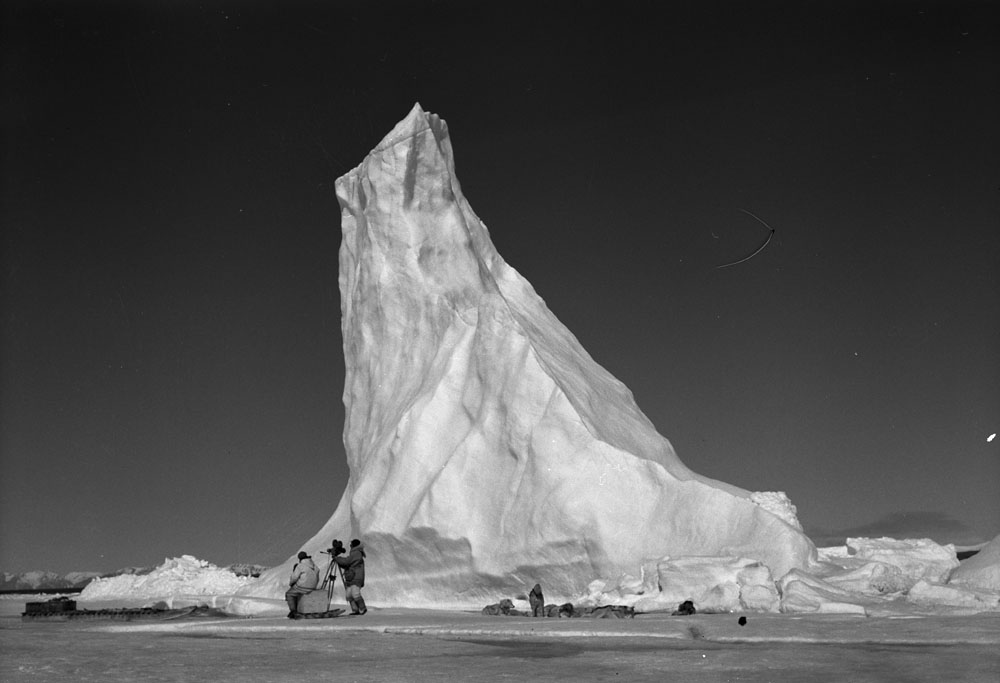
National Film Board photographers setting up by an iceberg (e011175885)

Icebergs are large pieces of ice that break off glaciers and float into the surrounding ocean. They can be pure white or streaked with blue and brown. Blue streaks come from melt water freezing in the cracks of the original glaciers. Brown streaks come from dust landing on the ice or erosion from the original glacier scraping the ground.

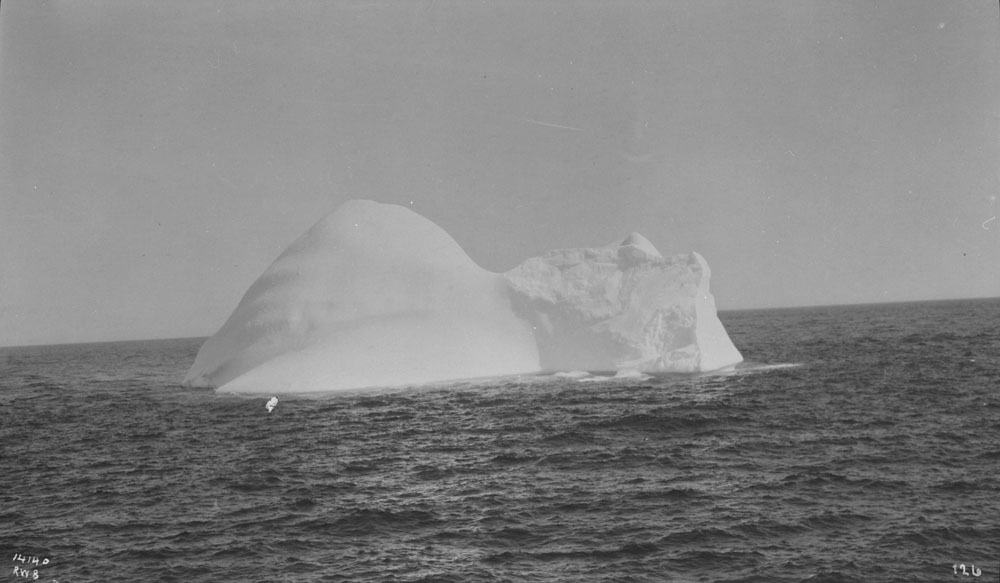
Iceberg in Hudson Strait (a045191)

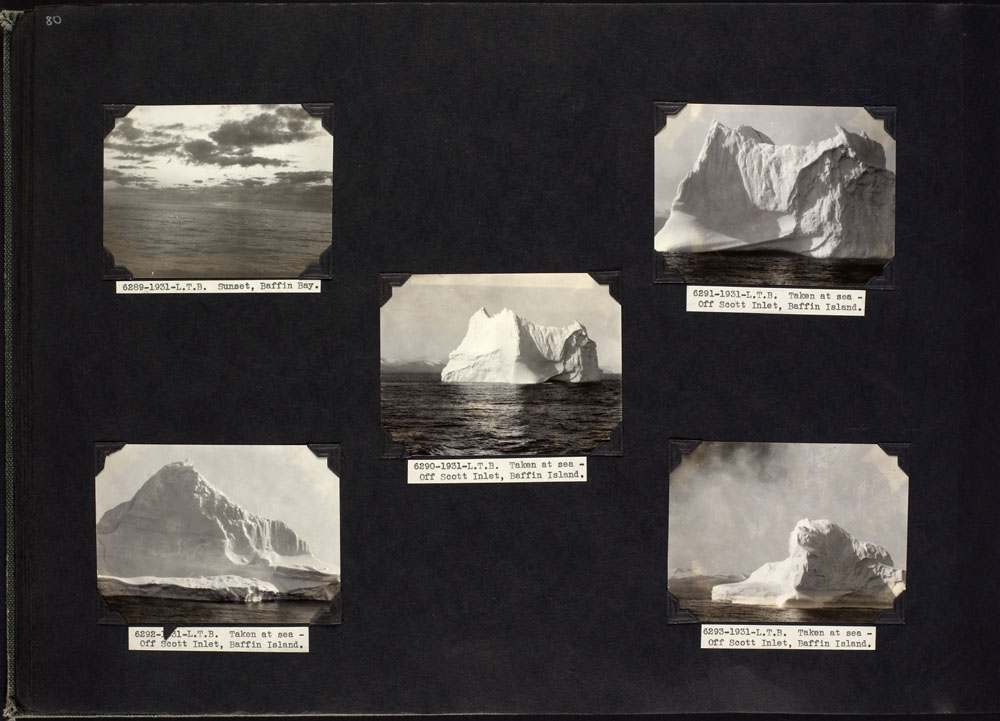
The shape and size of icebergs depends on their breakage and melt patterns, as well as waves, temperature, and the ice pack around them. Common shapes include tabular, blocky, wedge, pinnacle, domed, and drydock.

An album page with five black-and-white close up shots of different types of icebergs and a shot of the ocean at sunset. The captions read, left to right, “Sunset, Baffin Bay” and “Taken at sea – Off Scott Inlet, Baffin Island.”

Views of icebergs taken at sea, off Scott Inlet, Baffin Island (e010863534)

Tabular, or flat pieces of shelf ice that break off to form ice islands, are stable enough to use as mobile research platforms, while the more irregular shapes can break apart without warning. According to the Iceberg Finder, the largest iceberg ever recorded in the Arctic was recorded in 1882 near Baffin Island

Six small sketches of different types of icebergs in pale colours with the caption: “Vanille, fraise, framboise – boum, servez froid!” [Vanilla, strawberry, raspberry—boom, serve cold!]

Vanille, fraise, framboise – boum, servez froid! [Vanilla, strawberry, raspberry—boom, serve cold!] (e008444012)

Visit the Flickr album now!


Images of Indigenous Pipes now on Flickr

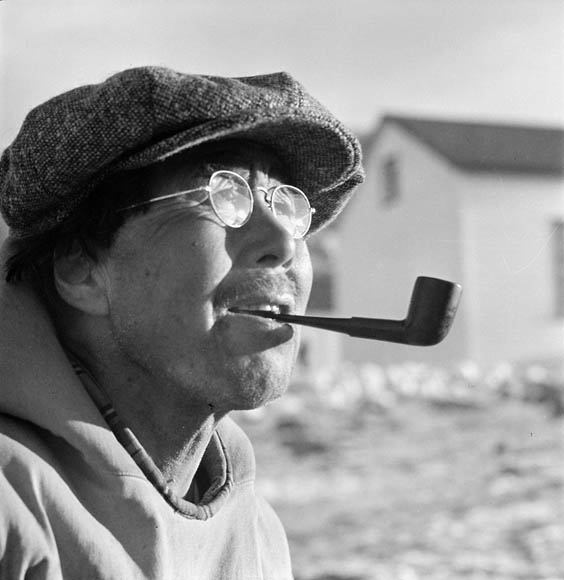
Close up portrait of a man smoking a pipe, and wearing a flat cap and round glasses.

Portrait of an Inuit man, Angmarlik, a respected leader at Qikiqtat (Kekerten) (PA-166470)

Pipe smoking was practiced by both Indigenous men and women.

Woman smoking a pipe and wearing a dress, shawl, and headwrap. She is holding the reins of a horse pulling a Red River cart.

Camp scene of a Red River cart and an Indigenous woman (e011156555)

Pipe bowls were made from ceramics or carved from hard materials such as pipestone, soapstone, wood, or corncobs. The stem was usually made of a hollowed out tube of wood. Pipes were used recreationally to smoke tobacco, or blends of aromatic plants or barks. Pipes were also used on political and ceremonial occasions. Unique metal-forged axe pipes were gifted to Indigenous chiefs and leaders.

A birch bark basket embroidered in the centre with a First Nations figure smoking a pipe, and white, red, and blue flowers on each side.

Birch bark basket with embroidered First Nations figure and pipe (e010948522)

Pipe smoking has dwindled, but the practice and symbolism still carries on as some of these pictures show.

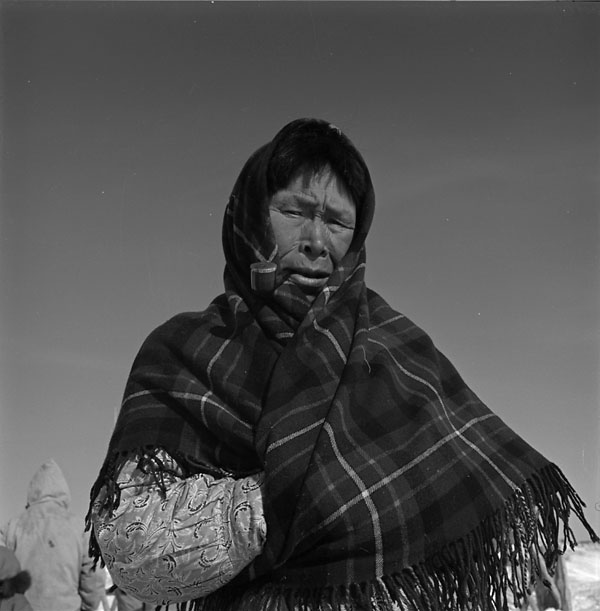
Portrait of a woman wearing a plaid shawl and smoking a pipe.

Inuit woman wearing plaid shawl and smoking a pipe (e010692540)

Visit the Flickr album now!


Judith-Pauline White, Nunatsiavut photographer

On the left of the graphic, Tatânga Mânî [Chief Walking Buffalo] [George McLean] in traditional regalia on horse. In the middle, Iggi and girl engaging in a “kunik”, a traditional greeting in Inuit culture. On the right, Maxime Marion, a Métis guide stands holding a rifle. In the background, there is a map of Upper and Lower Canada, and text from the Red River Settlement collection.By Heather Campbell

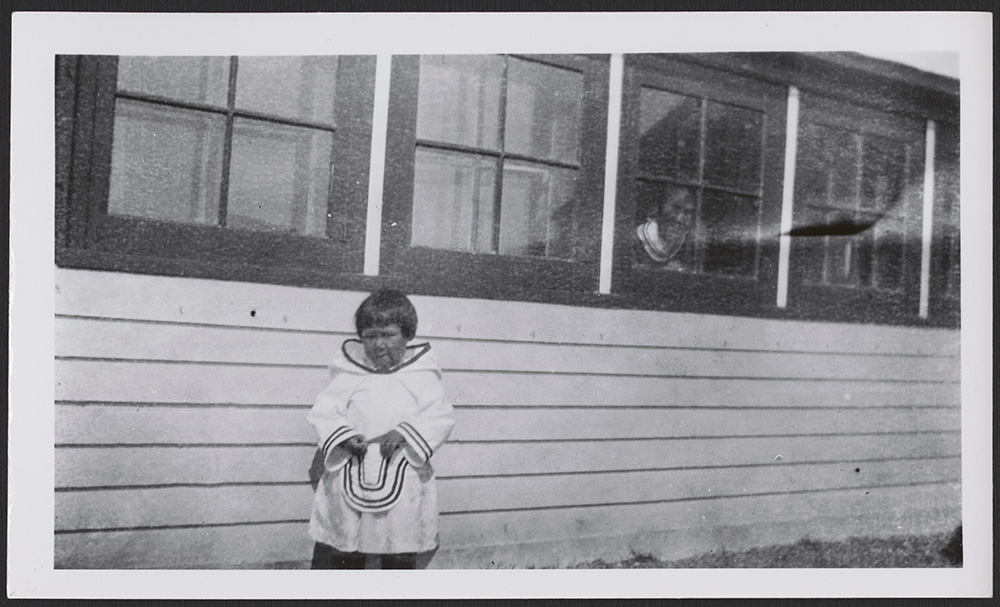
A black-and-white photograph of an Inuk girl facing the camera. The young girl is wearing a white amauti (a girl’s or woman’s coat with a large hood) and stands in front of a building as a woman peeks out from a window behind her.

An Inuk girl stands as a woman peeks out from a building behind her, circa 1900–1950 (e011307844)

Judith-Pauline White (née Hunter) was an Inuk woman born in 1905 in Hebron, Newfoundland (now Newfoundland and Labrador), about 200 kilometres north of Nain in Labrador. She married a well-known trading post owner, Richard White, in 1922 and became stepmother to his daughter; the couple would have five children together. The Richard (Dick) White Trading Post (now a heritage building) is located in Kauk, approximately 4 kilometres south of Nain and 34 kilometres north of Voisey’s Bay. Ms. White, an amateur photographer, took photos in the area starting in the 1920s. In the 1950s, she met anthropologist Alika Podolinsky Webber, who travelled to Labrador to conduct research for her thesis about the art of the Mushuau Innu (of the Innu Nation). Podolinsky Webber went to Kauk because she was aware that the trading post was a hub for Innu and Inuit along the north coast of Labrador. Ms. White sent a shipment of material to Podolinsky Webber after Mr. White died in 1960. The material included photographs and negatives for over 200 images of daily life in and around the trading post. White’s photographs (see lower levels) feature both Innu and Inuit, and are a visual documentary of life in Labrador from the 1920s to the 1950s. This wealth of knowledge, which was tucked away for decades before being donated to Library and Archives Canada in 2007, is now accessible to everyone.

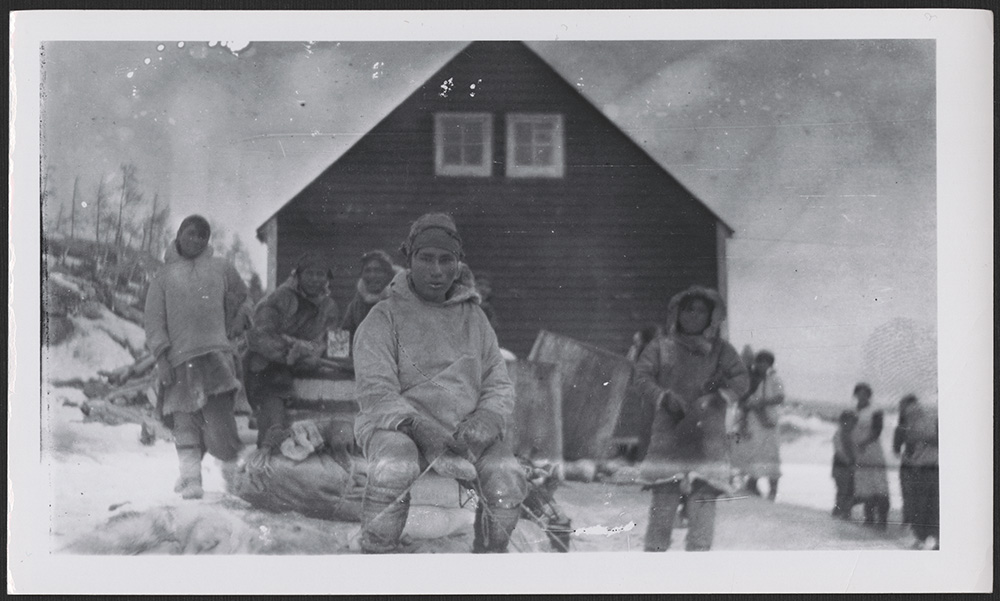
A black-and-white photograph of an Innu man staring at the camera, wearing traditional clothing and sitting on a pile of supplies. In the background, many other people are standing in front of a dark-coloured house with two small windows.

Innu on the move, circa 1925–1940 (e011305800)

As an Inuk woman from Nunatsiavut, an artist and a former curator, I am interested in the life and work of this early photographer. I cannot help but think of the well-known Inuk photographer Peter Pitseolak from Cape Dorset. His snapshots of Inuit life in the 1940s and 1950s are some of the earliest examples of Inuit individuals turning the camera on their own communities, rather than being the topic of ethnographic study by others. Unbeknownst to Pitseolak and those who followed his work, an Inuk woman in Nunatsiavut was also taking photos of everyday life. Why have we not heard of her? As Inuk scholar Dr. Heather Igloliorte writes in the Fall/Winter 2015 issue of the Inuit Art Quarterly, the Indian Act excluded Inuit in Nunatsiavut when Newfoundland joined Confederation in 1949:

Labrador Inuit artists were unfortunately omitted from virtually all of the developments that emerged from the concerted efforts of [James Houston (who “discovered” modern Inuit art)], the government, the Canadian Guild of Crafts, the Hudson’s Bay Company, and others, because the federal government did not officially recognize that there were Inuit in Labrador until decades later. We did not establish studios, form co-operatives, build relationships with the southern Canadian art world, and develop national or international markets for our work. We were not even permitted to use the ubiquitous “Igloo Tag” for authentification until 1991.

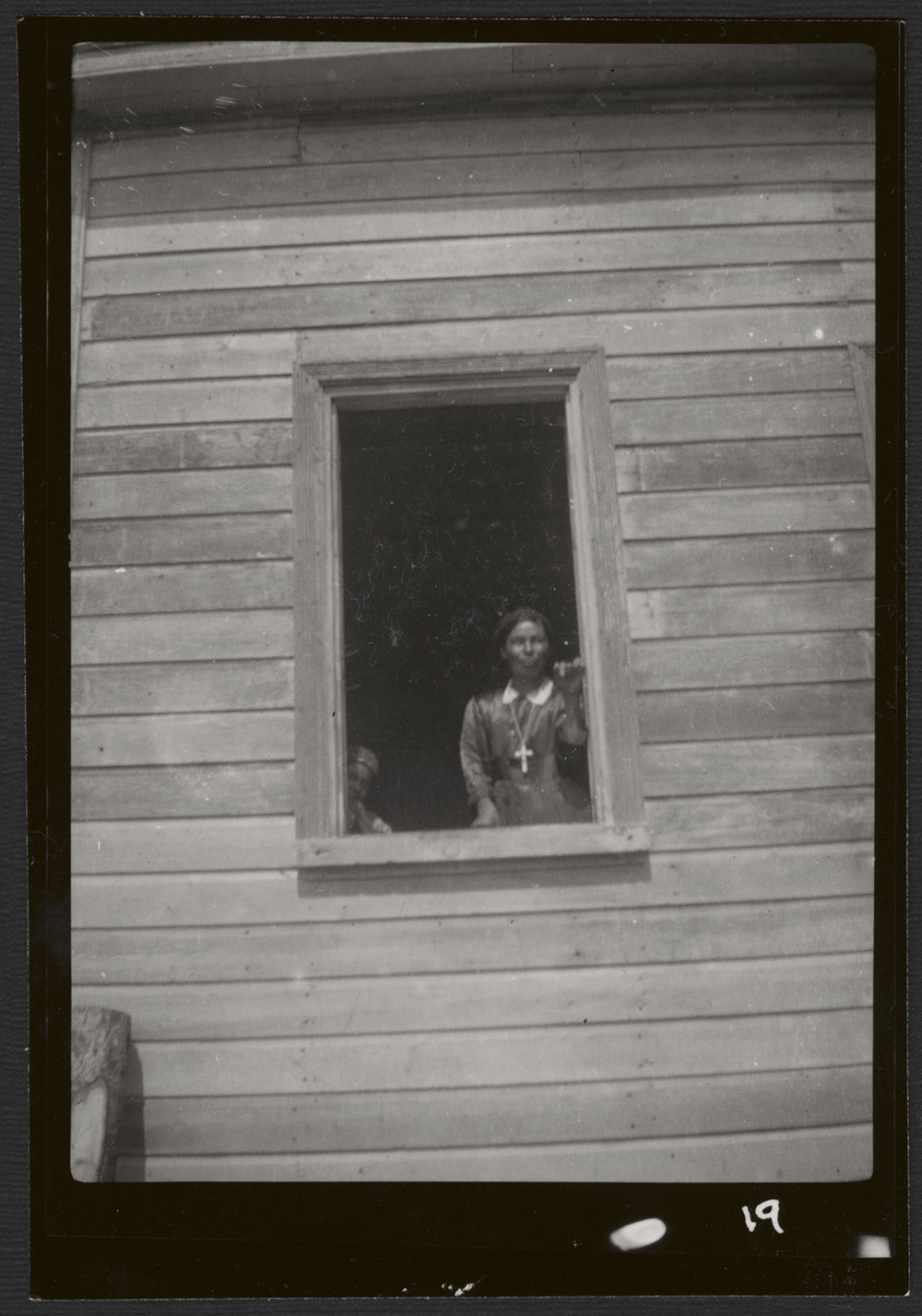
A black-and-white photograph of a woman standing in a window of a wooden building, wearing a dress with a white collar and a necklace with a large cross. In the left-hand corner of the window frame, a child is peeking out, looking toward the camera.

Woman standing in a window, circa 1900–1950 (e011307849)

When Newfoundland joined Confederation, White was still taking photographs, but galleries and exhibitions at the time did not feature Nunatsiavut Inuit artists. Instead, these artists sold their works door to door, at local craft shops or to the occasional visitor. We can only imagine how the Inuit art world would have reacted to White’s work had the contemporary provincial or federal governments given support and recognition to Nunatsiavut Inuit artists. We are thankful to the Alika Podolinsky Webber estate for its valuable gift. It is a visual reminder of Judith-Pauline White’s passion for photography and her recording of Labrador Innu and Inuit culture, which is now available online for all to enjoy.

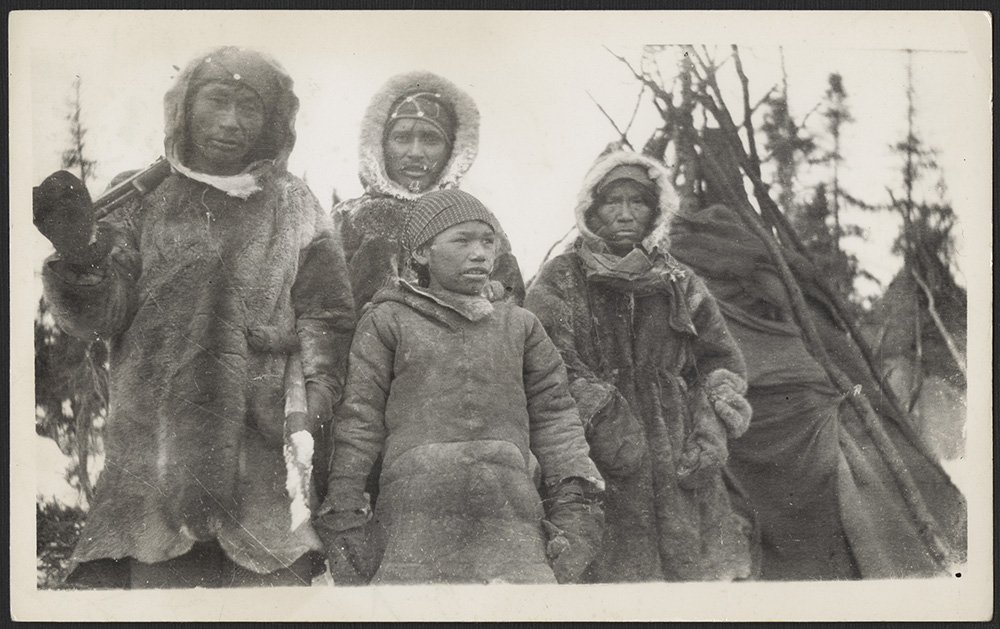
A black-and-white photograph of an Innu man and three members of his family. The men and young boy are dressed in fur jackets and mittens. A tent and trees are in the background.

Innu man Pasna and his family, circa 1920–1940 (e008299593)

Visit Flickr to see more of Judith-Pauline White’s photographs.

This blog is part of a series related to the Indigenous Documentary Heritage Initiatives. Learn how Library and Archives Canada (LAC) increases access to First Nations, Inuit and Métis Nation collections and supports communities in the preservation of Indigenous language recordings.


Heather Campbell is an archivist in the Public Services Branch at Library and Archives Canada.