Women in the War: The Women’s Royal Canadian Naval Service (WRCNS)

We often receive reference requests for photographs of loved ones serving with the Canadian Forces. Library and Archives Canada (LAC) holds a vast photographic collection, over 30 million images, a substantial portion of which is found within the Department of National Defence fonds (RG24/R112). A project to survey accession 1967-052 “Canada. Dept. of National Defence collection” 1939–1953 and to index all photographs of servicewomen began in April 2018 and is well under way. I hope to see the work completed for all three arms of the service, Navy, Army and Air Force, by 2022. Representing all three branches of the armed forces and comprising over 500,000 photographs, this collection is one of my favourites and at the top of my list for review when a researcher requests photographs from the Second World War or the Korean War. It includes photographs from the home front and theatre of war, making it a rich, well-described collection.

My colleague’s post “75th Anniversary of the Women’s Royal Canadian Naval Service ” published in 2017 serves as a perfect complement to this work and features many photographs, both colour and black and white, of servicewomen at work and play. To quote from the post, I want to highlight here that: “Those serving with the WRCNS were commonly called ‘Wrens,’ the nickname used by their British counterparts, who were members of the Women’s Royal Naval Service (WRNS).” Throughout the captions, I found both terms “Wren” and “WRCNS” used to identify servicewomen.
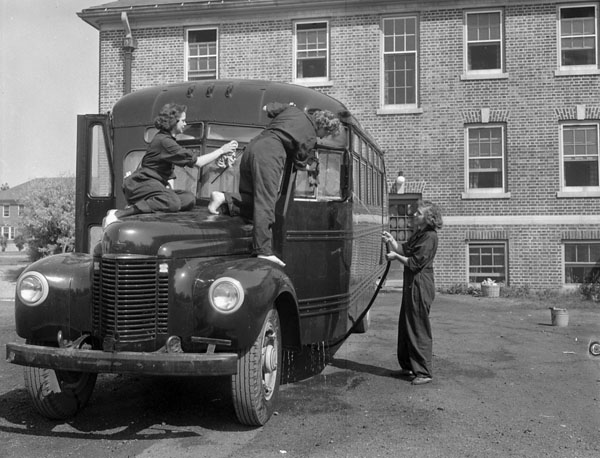
A black-and-white photograph of two members of the Women’s Royal Canadian Naval Service washing the front of a bus while their colleague sprays the side of the bus with a hose.

Personnel of the Women’s Royal Canadian Naval Service (WRCNS) washing a bus at H.M.C.S. CONESTOGA, Galt, Ontario, Canada, July 1943. (a108171)

The accession is broken down into prefixes, most often by location (such as base or city) or by ship. For example, the MAG prefix is comprised of photographs documenting “the HMCS Magnificent between 1948 and 1957.”

The finding aids for each prefix, also referred to as caption lists, are available for consultation in the second-floor reference room at 395 Wellington Street in Ottawa. They are also part of LAC’s initiative to digitize the majority of existing finding aids, ongoing until 2024.

A survey of the caption lists for each of the prefixes specific to naval photographs has been completed, and all those captions that mention servicewomen have been noted. The result is 2,652 photographs, or 1.3 percent.

A black-and-white photograph of a woman in a military uniform leaning across a counter to interview three women beside a sign that reads “Canadian Wives’ Bureau.”

Leading Wren Evelyn Kerr (right) of the Women’s Royal Canadian Naval Service (WRCNS) interviewing British wives of Canadian sailors, Canadian Wives’ Bureau, London, England, 30 November 1944. (a128179)

One of the pleasures of the project has been the exposure to the various trades and functions that the Wrens performed. From photographers and dieticians, to motor transport drivers and librarians, the servicewomen performed all sorts of valuable work at home and abroad to support the war effort. I also came across and included numerous images of Nursing Sisters.
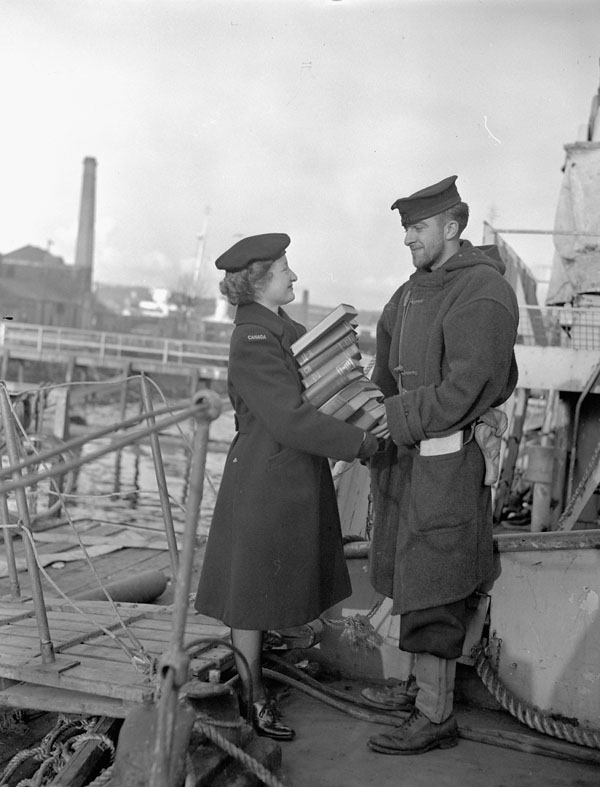
A black-and-white photograph of a member of the Women’s Royal Canadian Naval Service handing a man a tall stack of books beside a ship.

Leading Wren Ruth Church, Women’s Royal Canadian Naval Service (WRCNS), delivering a supply of library books to Able Seaman Bill Swetman of the HMCS Petrolia, Londonderry, Northern Ireland, November 1944. (a189717)

How to Search for “Your” Servicewoman

You can write to us with information about “your” Wren or Nursing Sister to see if there are any indexed photographs that identify her by name. It would be helpful to know her maiden name, where and when she served, as this will help us narrow the search. Similarly, once you identify relevant records within a series, a review of those photographs by yourself or a freelance researcher may reveal additional photographs that did not identify her by name OR that did not indicate that any servicewomen were in the image. For example, many captions simply describe the photograph as “Christmas Dance” or “Holiday Party” and were not included.

To know more about “your” servicewoman’s time with the Canadian Forces, request a copy of her Military Service file.
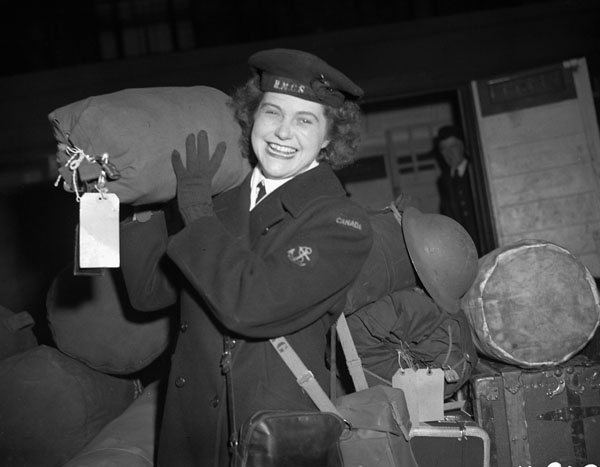
A black-and-white photograph of a smiling member of the Women’s Royal Canadian Naval Service carrying a large bag on her shoulder.

Leading Wren June Whiting of the Women’s Royal Canadian Naval Service (WRCNS) disembarking at Liverpool, England, April 1945 (a142415)

Please feel free to visit us at one of our public service points in Ottawa, Halifax, Winnipeg or Vancouver or write to us with questions about LAC’s holdings, both archival and published.


Rebecca Murray is an Archivist in the Reference Services Division.

Enfranchisement of First Nations peoples

Version française

On the left of the graphic, Tatânga Mânî [Chief Walking Buffalo] [George McLean] in traditional regalia on horse. In the middle, Iggi and girl engaging in a “kunik”, a traditional greeting in Inuit culture. On the right, Maxime Marion, a Métis guide stands holding a rifle. In the background, there is a map of Upper and Lower Canada, and text from the Red River Settlement collection.

This article contains historical language and content that some may consider offensive, such as language used to refer to racial, ethnic and cultural groups. Please see our historical language advisory for more information.

By Jasmine Charette

I have always been interested in the concept of identity in the Canadian context. I enjoy learning about how people tie themselves to identities to connect with their community, or sever those same ties for the benefit of being seen another way. However, this was not always done in fairness or voluntarily. A striking example of this is the enfranchisement of First Nations peoples.

What is enfranchisement?

Enfranchisement meant losing legal identity as an “Indian” in the eyes of the government to become a full Canadian citizen, with all the rights and privileges attached. This process was enshrined in the Indian Act of 1876, which consolidated several pieces of colonial legislation in force at the time.

A black-and-white typed page of a legal statute.

A page from the Indian Act as published in the Statutes of Canada, 1876 (Canadian Research Knowledge Network, Acts of Parliament)

Enfranchisement could be sought by a First Nations person, as long as certain requirements were met, including age, gender and competency in either English or French. Someone outside the band, such as a priest or Indian agent, needed to determine the person’s fitness for becoming enfranchised. Some records show individuals, in their own words or the correspondence of an Indian agent, wanting to enfranchise for the benefits of land titles and band monies. The loss of legal status meant they were no longer subject to the Indian Act.

Many people were enfranchised against their will, some because of employment as lawyers, doctors or clergy. Others were enfranchised because of serving in the First or Second World War, attending university, or simply because an Indian agent thought they were “civilized” enough. Eventually, compulsory enfranchisement expanded to include any First Nations woman who married a non-Status individual (see below for 1985 changes to the Indian Act).

What does this mean for First Nations peoples?

The Indian Act was and is still seen in many ways as restrictive for First Nations individuals. The loss of identity brought repercussions such as becoming ineligible for social services, the loss of hunting and land rights, and for many, becoming both physically and intangibly distant from their homes and cultures. There are examples in the record of Councils of Chiefs refusing the Enfranchisement of individuals because they do not believe the Franchise Act applies to them, noting a fear that lands may be sold off and the community would be lost.

For some, enfranchisement was a direct trespass on previous agreements. A petition from the Mohawk members of the Five Confederated Nations (now Six Nations of the Grand River) notes that a treaty with the British stated the British would never try to make those Indigenous persons British subjects. Enfranchisement involved breaking that promise.

A black-and-white reproduction of a handwritten petition addressed to His Excellency the Governor General of the Dominion of Canada, the Right Honourable Lord Stanley.

Six Nations agency—correspondence regarding a petition from the Six Nations Indians to be exempted from the provisions of the Franchise Act of 1885. (e006183352)

Was it only individuals?

One case exists of an entire band being enfranchised: Michel Band in northern Alberta. An Order-in-Council enfranchised all eligible members of the Michel Band as of March 31, 1958.

A black-and-white typewritten text outlining the disposal of the funds of the Michel Band and the lands of the Michel Indian Reserve No. 132.

Schedule B, “Plan for the disposal of the funds of the Michel Band and of the lands of the Michel Indian Reserve No. 132,” dated March 31, 1958. RG2-A-1-a, Volume 2215, PC 1958-375 (Canadian Research Knowledge Foundation, Orders-in-Council)

This enfranchisement order split the reserve lands among enfranchised individuals, dissolving the band entirely. Only three years later, compulsory enfranchisement was repealed, and some members of the historic Michel Band are still seeking to regain band status today.

Why is this relevant today?

When the Indian Act’s enfranchisement sections were repealed in 1985, they were replaced with what we now know as Indian Status. It became impossible to give up one’s Status, and many who were enfranchised regained Status through various provisions of the 1985 repeal, and subsequent amendments to the Indian Act. The gender-based discrimination in the Act was changed, and Status was returned to people who lost it by marrying a non-Status individual or because of the “double mother” rule of 1951 (Status was lost at age 21 if both the paternal grandmother and the mother had acquired Status through marriage).

Do you have a question about enfranchisement?

Reference Services is available to answer your queries and to help you navigate archival and published materials, including records on enfranchisement. Ask Us a Question; we are always glad to help!

Sources

This blog is part of a series related to the Indigenous Documentary Heritage Initiatives. Learn how Library and Archives Canada (LAC) increases access to First Nations, Inuit and Métis Nation collections and supports communities in the preservation of Indigenous language recordings.


Jasmine Charette is a reference archivist in the Reference Services Division of the Public Services Branch at Library and Archives Canada.

Plaisance: A French fishing colony in Newfoundland

By Valerie Casbourn

Library and Archives Canada (LAC) holds records related to the French colonial period in early Canada, and some of these records are available online. Included are records about the French cod fishery in the Atlantic region and the French colony of Plaisance in Newfoundland (1662–1713).

During the 17th century, the cod fishery in Newfoundland became increasingly important to the European fishing industry. France was one of several European countries competing for a share of this fishery, and in 1662, the French established a garrison town at Plaisance, on the western side of Newfoundland’s Avalon Peninsula. The French wanted to secure their merchant fishing fleet’s access to the fishery and their share of the European market for cod.

The site of Plaisance was chosen for its proximity to rich fishing grounds, its sheltered and relatively ice-free harbour, and its strategic location. Eventually, the colony of Plaisance grew to have a small permanent population, with military fortifications, and served as a base for the French Atlantic cod fishery.

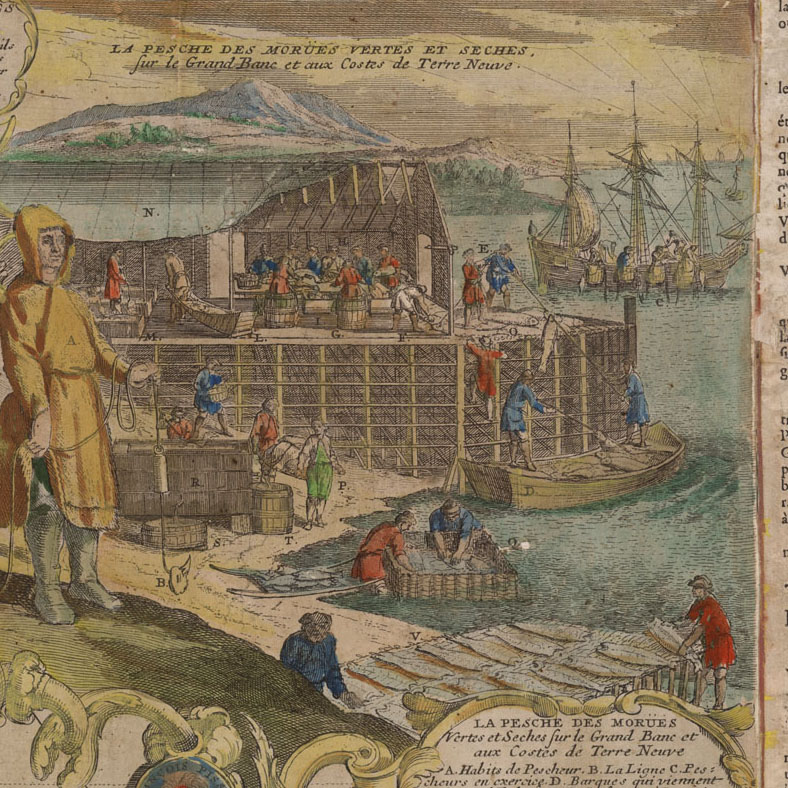
A hand-drawn and coloured illustration that shows the shore with people on a wooden stage working on curing and drying cod in Newfoundland.

A view of a stage and also of the manner of fishing for, curing and drying cod at New Found Land […] (c003686) A digitized copy of the map L’Amerique, divisee selon l’etendue de ses Principales Parties, et dont les Points Principaux sont placez sur les Observations de Messieurs de L’Academie Royale des Sciences. Dressee Par N. de Fer, Geographe de Monseigneur le Dauphin can be seen at the Osher Map Library website.

The French and English established colonies along the southeastern coast of Newfoundland, which encroached on the Indigenous territory of the Beothuk and the Mi’kmaq. The French had little recorded interaction with the Beothuk, who withdrew from the coast and its resources to avoid contact with the European fishermen and colonists. Before the arrival of the colonies the Mi’kmaq navigated the waters between Cape Breton and Newfoundland by canoe. They established friendly relations with the French, becoming important trading partners and military allies.

The colony of Plaisance encountered many difficulties, particularly during its first few decades. Its population was small and poorly supplied, and its early governors were ineffective. However, in the 1690s, the colony became stronger, and the French administration highly valued the Atlantic fishery.

The economy of Plaisance was largely based on the cod fishery. The colony’s small permanent population with its “habitants-pêcheurs” was bolstered each year with the arrival of a large seasonal workforce on the merchant fleet from French ports. All worked intensely to catch and preserve cod during the summer months. The residents of Plaisance relied on the merchant fleet to bring extra labourers, food and manufactured goods, and to ship their dried catch back to Europe to be sold.

During this period, there was ongoing conflict between the French and the English, as well as between the Mi’kmaq and the English. In the 1690s and early 1700s, both the French and the Mi’kmaq conducted raids, sometimes jointly, on English settlements on the Avalon Peninsula. The War of the Spanish Succession culminated in the Treaty of Utrecht, signed in 1713, in which France ceded its claim to Newfoundland to England. The English took over the settlement of Plaisance, changing its name to Placentia. Most of the French colonists moved south to the colony of Ile Royale (now Cape Breton). There they established themselves in the new French settlement of Louisbourg and continued their work in the French cod fishery. The French also retained the right to fish off the coasts of Newfoundland and to process their catch along stretches of the shoreline, known as the French Shore.

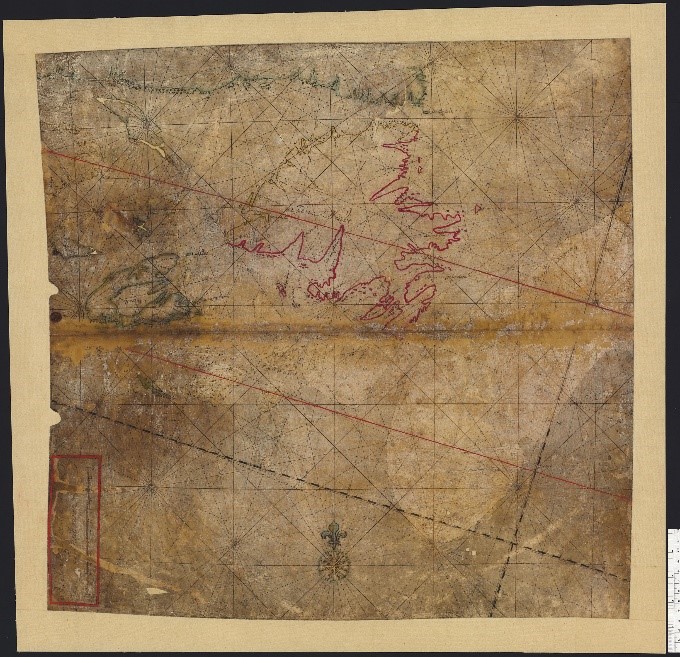
Nautical chart, on vellum in coloured ink, of the coastline of Newfoundland, Acadia and the Gulf of St. Lawrence.

Nautical chart of the coastline of Newfoundland, Acadia and the Gulf of St. Lawrence. Produced after 1713, the chart shows both Plaisance and Louisbourg (e011182107)

Records at Library and Archives Canada

LAC holds records related to the colony of Plaisance, among other topics, in the Fonds des Colonies (MG1). This fonds includes copies and transcriptions of selected records related to the French colonial period in early Canada. The records are in French, and the original documents are held at the Archives nationales d’outre-mer in Aix-en-Provence, France. The Fonds des Colonies consists of records including correspondence, reports, journals, instructions, records of fortifications and commerce, civil registers, and notary documents.

Many records in the Fonds des Colonies have been digitized and are available directly on the LAC website. Use LAC’s Collection Search to search for records about the colony of Plaisance. Try keyword searches, such as “MG1 Plaisance” or “MG1 pêche” (without quotation marks), and use the drop-down menu to search “Archives.” Including “MG1” will limit your search results to records in the Fonds des Colonies; you can search more broadly by not including it. Because the original records are in French, try using French keywords such as “pêche” (fishing), “Terre-Neuve” (Newfoundland), or “morue” (cod).

Related resources


Valerie Casbourn is an archivist based in Halifax with Regional Services at Library and Archives Canada.

The gloves come off!

By Alison Harding-Hlady

We are often asked why our book conservators and librarians don’t wear gloves when handling rare or fragile books. This question is understandable given the iconic imagery in film and television of rare book curators wearing gleaming white gloves to hand over priceless artifacts. But the answer is very simple: it is better for the books!

It’s true that protective gloves are needed to handle some archival material, such as art or photographs. When it comes to rare books, however, the industry standard has always been to use clean, dry, bare hands. Guides published by the British Library and Library of Congress don’t just recommend using bare hands to handle collection material—they actually warn against using gloves. Wearing gloves while handling books can do more harm than good!

Have you ever tried to read a book or do anything requiring fine motor control while wearing a pair of gloves? It’s impossible! Gloves reduce the control necessary to manipulate a book or turn pages and make an accidental drop, page rip, or other damage much more likely. When a conservator performs a detailed and exacting repair, it is essential that they can feel the paper and work with as much dexterity as possible.

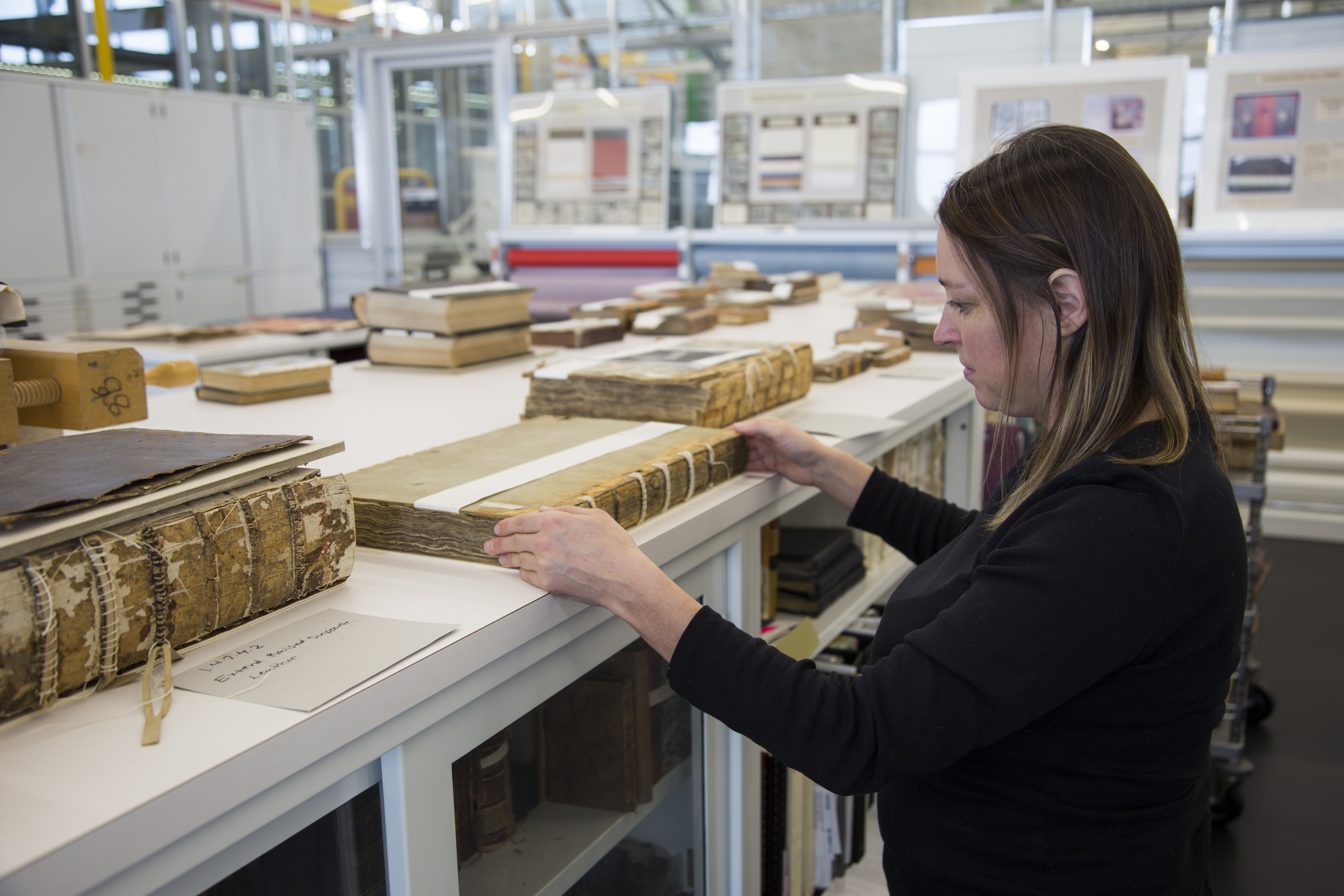
: A colour photo of a person standing at a table in the book conservation lab, repairing the spine of a book.

Manise Marston, Head Book Conservator, works in the book lab at LAC

Gloves aren’t always clean and they can transfer lint or dirt to a book. They can also make your hands hot and the thin cotton gloves normally used are no barrier against sweat. Book bindings and pages are sturdy and meant to be handled. And rare books have been handled by many people in the centuries before becoming part of the library collection. With care and caution, rare books can be handled by many more people for centuries to come!

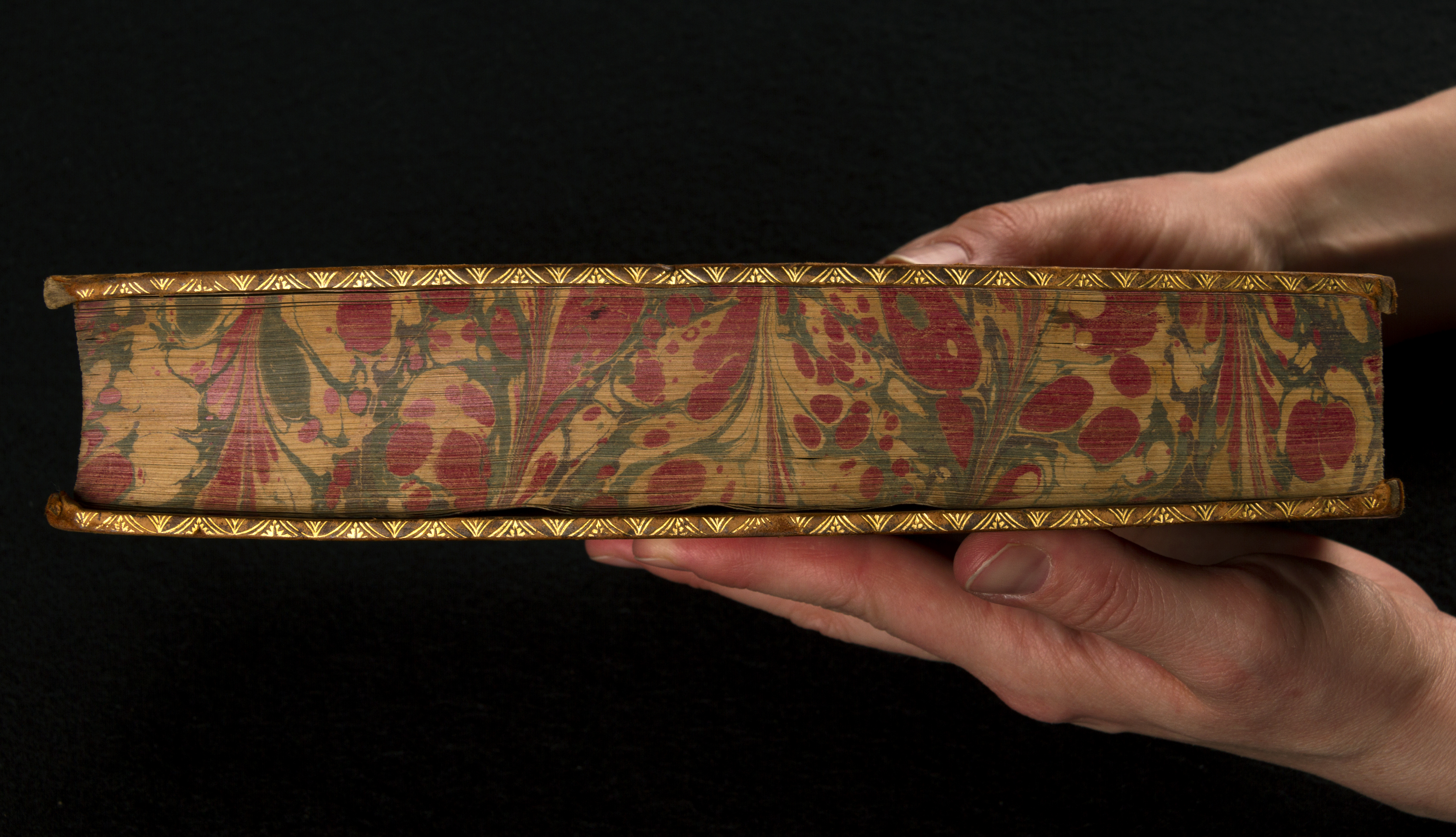
A close-up colour photo of hands holding an elaborately decorated book.

Details on a 1758 edition of Paradise Lost (OCLC 228137), held in LAC’s Rare Book Collection

This is not to say, of course, that precautions should not be taken when handling rare books. Hands should be clean, dry, and free of lotion or other products. Proper bookstands or supports should always be used and the books should be handled as little as possible and always with great care. Pages should be turned slowly and the book should never be forced open past where the spine or binding comfortably opens. Should gloves ever be worn? Occasionally. If there is original artwork or photographs, if the binding has elements of metal or another unusual material, or if there is evidence of a contaminant like mould, then a pair of gloves might make sense. However, in general it is standard practice at LAC and in similar institutions around the world to not wear gloves when working with this precious, beautiful and fascinating part of our collection.

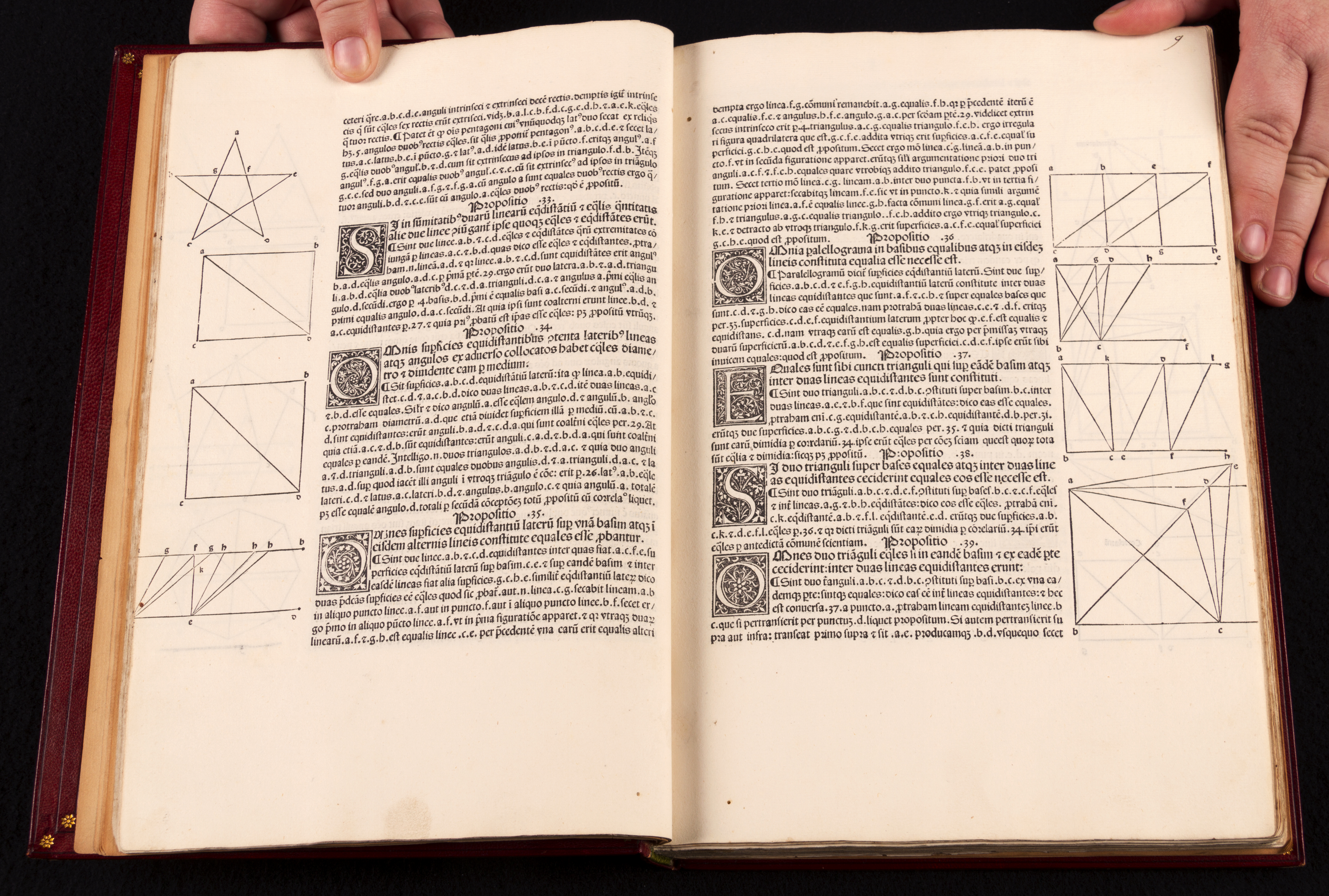
A colour photograph of two pages of illustrated text from an early printed book.

A 1482 copy of Euclid’s Elementa (OCLC 1007591701), held in LAC’s Rare Book Collection


Alison Harding-Hlady is the senior cataloguing librarian responsible for rare books and special collections in the Published Heritage branch at Library and Archives Canada.


It’s All in Your Perspective

By Kristen Ann Coulas

To quote Aminata Diallo from Lawrence Hill’s award-winning novel, The Book of Negroes: “When it comes to understanding others, we rarely tax our imaginations.” I’m sure most of us would agree this is a fair point. Even when we try to imagine the perspectives of others, it can be difficult to wrap our heads around concepts we haven’t experienced or don’t understand. That is why it’s so valuable to have literature from a rich and diverse variety of people.

Through the magic of immersing ourselves in the worlds created by authors, we gain the ability to see our own world through different lenses. Suddenly, our views gain new depth and nuances. By expanding our views of the world, we enrich ourselves and become better friends and neighbours.

Here are a few recent works from authors who have added their perspectives to Canada’s National Collection.

Non-Fiction

I’ve Been Meaning to Tell You: A Letter to My Daughter by David John Chariandy

ISBN: 978-0-771018-07-7

The son of black and South Asian migrants from Trinidad, David Chariandy takes a break from his award-winning fiction to draw upon his personal and ancestral past. In this touching non-fiction work dedicated to his daughter, Chariandy talks about navigating and cultivating a sense of identity in Canada.

A Mind Spread Out on the Ground by Alicia Elliott

ISBN: 978-0-385692-38-0

Tuscarora writer Alicia Elliott is a bold and visceral author. Drawing on intimate details from her own life and her experience with intergenerational trauma, Elliot’s A Mind Spread Out on the Ground offers unique insight. In this book, Elliot examines every aspect of life, asks tough questions and touches on topics like the ongoing legacy of colonialism.

Forgiveness by Mark Sakamoto

ISBN: 978-1-443417-97-6

Mark Sakamoto’s memoir details his journey to forgiving his mother, who suffered from alcoholism. By inviting readers into his family’s past, starting with his grandfather’s experience as a Canadian POW held by the Japanese army and his grandmother’s experience as an internee – born in Canada of Japanese ancestry – held by the Government of Canada during during the Second World War. Sakamoto discovers a common thread of forgiveness and traces how it led to his very existence. A winner of Canada Reads 2018, Forgiveness is a family’s history understood.

Étienne Boulay, le parcours d’un battant by Marc-André Chabot

ISBN: 978-2-764812-82-2

Marc-André Chabot’s recent work describes his long-time friend Étienne Boulay’s tortuous journey as he battled addiction. However, this is far from a book on addiction. It’s an honest look at how Boulay’s life shaped the man he is today and shows the importance of having a strong team around you.

Poetry

heft by Doyali Islam

ISBN: 978-0-771005-59-6

Prizewinning poet Doyali Islam’s second book, heft, is lyrical and innovative and includes works done in her original “parallel poem” style. This compilation includes works published by the Kenyon Review Online and The Fiddlehead, as well as poems that won national contests and prizes.

This Wound is a World by Billy-Ray Belcourt

ISBN: 978-1-927823-64-4

Billy-Ray Belcourt is an award-winning poet and CBC Books named him as one of six Indigenous writers to watch in 2016. In this stunning compilation, Belcourt brilliantly navigates themes of queerness, desire and survival. This Wound is a World won the 2018 Griffin Award for Excellence in Poetry as well as the 2018 Robert Kroetsch City of Edmonton Book Prize.

Fiction

Things Are Good Now by Djamila Ibrahim

ISBN: 978-1-487001-88-9

Things are Good Now is the debut collection of short stories by Djamila Ibrahim, an Ethiopian-born writer who moved to Canada in 1990. Ibrahim examines themes like remorse, race, hope, friendship, human relationships and the power of memory through the lens of the immigrant experience. Engaging and poignant, each story has an authenticity that belies its fictional status.

Saints and Misfits by S.K. Ali

ISBN: 978-1-481499-24-8

Saints and Misfits is an empowering coming-of-age story told through the lens of a teenage Muslim girl. This young adult novel tackles real and difficult issues like sexual assault and abuse of power while also exploring teenage anxiety and identity. S.K. Ali’s debut novel is full of faith and devotion and worthy of its position on the longlist for Canada Reads 2018.

Thelma, Louise et moi by Martine Delvaux

ISBN: 978-2-924666-55-5

In this striking French language portrait of feminism, Martine Delvaux examines the influence of the film Thelma and Louise. Through film anecdotes and personal reflections, Delvaux contemplates how her view of the film changes. This work reminds us of how important it can be to reclaim ourselves when facing a society ready to make us self-doubt.

Children’s Books

Takannaaluk by Herve Paniaq and illustrated by Germaine Arnaktauyok

ISBN: 978-1-772271-81-2

This gorgeous picture book tells the origin story of Takannaaluk, the mother of sea mammals and the most important being in Inuit mythology. Respected elder Herve Paniaq’s vivid storytelling comes to life through the work of acclaimed Inuit artist Germaine Arnaktauyok.

To borrow these books, visit your local library or search Library and Archives Canada’s new catalogue Aurora.


Kristen Ann Coulas is an acquisitions librarian at Library and Archives Canada

First Nations’ blanket traditions through time

Version française

On the left of the graphic, Tatânga Mânî [Chief Walking Buffalo] [George McLean] in traditional regalia on horse. In the middle, Iggi and girl engaging in a “kunik”, a traditional greeting in Inuit culture. On the right, Maxime Marion, a Métis guide stands holding a rifle. In the background, there is a map of Upper and Lower Canada, and text from the Red River Settlement collection.

By Elizabeth Kawenaa Montour

For First Nations people, a blanket holds deep meaning and traditions linked to culture, birth, life and death. It can represent survival and beliefs that transcend time and place. Blankets also have a dark history as they were sometimes used to decimate First Nations populations. In 1763, for example, Sir Jeffrey Amherst, leader of the British army, suggested introducing smallpox by giving infected blankets to the First Nations people they were fighting.

Before the arrival of woven and industrial materials, First Nations made blankets with what nature supplied. Animal skins were used as blankets, especially those from larger animals like deer, elk, bear, caribou, seal, moose and buffalo. It took several days and hard work to hunt, prepare and tan a pelt. The animal’s fur or hair may be removed depending on how its skin was to be used. The tanned skin might also be decorated if materials were available.

A watercolour over pencil of two First Nations men in regalia standing in front of landed canoe and river.

Two [Anishinaabek (Odawa)] Chiefs Who with Others Lately Came Down from Michillimackinac Lake Huron to Have a Talk with Their Great Father The King or His Representative, ca. 1813–1820 (c114384k)

Pine pitch or spruce gum was sometimes applied to the outer layer of the skin to make it more waterproof. This made it ideal to cover dwellings such as a lean-to or tepee.

Watercolor grey wash over pencil of First Nations man sitting on log by a tepee with blanket near top opening, fire pit with kettle, and canoe landed on shore by river.

Sugar Island, North of Georgian Bay. Date unknown. (e000996344)

First Nations had their own weaving techniques, using tree bark or parts of fibrous plants, such as cattails. The Northwest Coast Chilkat, an important ceremonial and dance blanket of goat hair mixed with cedar bark, would have taken a year or longer to make.

Black-and-white photograph of a woman’s face draped by a bark blanket.

Nuu-chah-nult (Nootka) woman wearing cedar-bark blanket, 1916 (a039478)

When European settlers arrived, First Nations peoples were quick to adapt new trade goods to their lives. Artists who travelled on western and northern expeditions recorded the many ways blankets were used in their drawings. Some First Nations people used blankets as a coat or shawl. Hooded capote coats were made from trade blankets by joining block-shaped pieces with sinew.

Black-and-white photograph of man in Hudson Bay coat.

Cree Chief Pi-a-pot, ca. 1884. (c003863)

The most recognized trade blankets were the Hudson Bay Company blankets. These were first supplied and traded in 1779. Early photographs of First Nations gatherings on the Northwest Coast show trade blankets piled high to symbolize prosperity.

A coloured lithograph of First Nations man in capote/blanket coat, three women and a dog in winter scene.

First Nations man, women and baby in Lower Canada, 1848. (c041043k)

Button blankets were made of high-quality woollen trade blankets from British mills. These blankets were usually dark and were decorated with red crests that had symbolic meaning. Lines of mother-of-pearl or abalone shell buttons would frame the designs. Families and communities would use button blankets in both ceremony and dance.

A black-and-white photograph of First Nations man wrapped in button blanket and headpiece.

Haida button blanket worn by Tom Price, ca. 1910 (a060009)

Black-and-white photograph of First Nations woman on horse in front of tepee.

First Nations Plains woman on horseback, ca. 1920–1930 (a041367)

First Nations peoples still use blankets to practice their traditions and hold the blankets in high regard. Star quilts are designed by the Dakota/Lakota/Nakota peoples. It is believed that when you are wrapped in a star quilt, your ancestors are amongst you and with you. Blankets are given at weddings and upon the birth of a child. They are also given to recognize elders and those involved in a worthy endeavour.

Some blankets used at pow-wows are changed into shawls by adding satin appliqués and ribbons. First Nations peoples’ use of blankets is multidimensional, shaped by their experiences, and can be passed to future generations.

Explore more images of blankets by searching Library and Archives Canada’s photograph and art collection.

This blog is part of a series related to the Indigenous Documentary Heritage Initiatives. Learn how Library and Archives Canada (LAC) increases access to First Nations, Inuit and Métis Nation collections and supports communities in the preservation of Indigenous language recordings.


Elizabeth Kawenaa Montour is a project archivist in the Exhibitions and Online Content Division at Library and Archives Canada.

A.P. Low and the Many Words of Love in Inuit Culture

On the left of the graphic, Tatânga Mânî [Chief Walking Buffalo] [George McLean] in traditional regalia on horse. In the middle, Iggi and girl engaging in a “kunik”, a traditional greeting in Inuit culture. On the right, Maxime Marion, a Métis guide stands holding a rifle. In the background, there is a map of Upper and Lower Canada, and text from the Red River Settlement collection.By Heather Campbell

Albert Peter Low was a geologist and explorer, whose expeditions to Quebec and Labrador from 1893 to 1895 assisted in the creation of their borders. Low mapped the interior of Labrador and discovered large iron deposits, which later lead to the development of the iron mine at what is now Labrador City. His mapping of Labrador influenced expeditions after him including that of Mina Hubbard in 1905.

Black-and-white portrait of a man standing in a photo studio.

Portrait of Albert Peter Low by William Topley, 1897. (a214276)

In 1903 and 1904, Low commanded two expeditions on the steamer Neptune up the west coast of Hudson Bay where he formally claimed possession of Southampton, Ellesmere, and adjacent islands for Canada. Low detailed his travels in Cruise of the Neptune (Report on the Dominion Government Expedition to Hudson Bay and the Arctic Islands on Board the D.G.S. Neptune 1903-1904). Much of his research was invaluable in the recording of Inuit culture in Quebec, Nunavut, and Newfoundland and Labrador.

The Albert Peter Low fonds includes photographs, proclamations, and journals, two from a prospecting trip along the east coast of Hudson Bay, now known as the Inuit region of Nunavik, Quebec and one notebook written between 1901 and 1907. The notebook records 40 pages of the many tenses and corresponding suffixes of the verb “to love” in Inuktitut. In the photo below, we see a notebook page starting with the basic form “him, her or it loves.” He moves on to record, in lesser detail, the variations of the verb “to teach.” At the end he lists other transitive verbs, passive verbs, and adverbs, many related to Christianity.

A handwritten page of a notebook, recording Inuktitut vocabulary for the word “love.”

A page from the notebook kept by Low during his expeditions along the coast of Hudson Bay. (e011304604)

In 1886, Low married Isabella Cunningham and they had three children. Sadly, their first son died as an infant in 1898, and their second son died at age 19 during the Spanish Flu epidemic. Only their daughter Estelle, born in 1901, survived to adulthood and looked after her ailing father until his death in 1942. In 1943, she donated his collection to the Public Archives of Canada, which included Inuit art, mainly hunting scenes rendered in ivory. The collection was transferred to the Museum of Man (Canadian Museum of History) in 1962. Most of the works are miniature ivories created by Harry Teseuke, leader of the Aivilingmiut and Captain Comer’s mate. Comer’s ship, Era, wintered in Fullerton Harbour (near Chesterfield Inlet, Nunavut) in 1903–1904. Low likely consulted with Teseuke who may have enlisted others to assist with Low’s research.

Although this journal is an extensive study of the sentence structure and grammar of Inuktitut, it also sheds light on Inuit culture. You’ll notice that verbs have no masculine or feminine forms or gender pronouns. This relates to the practice of naming children, as traditional Inuit names are unisex. And this is tied to the somewhat intricate practice of creating sauniq (namesake) relationships. For example, if a boy was named after a deceased woman with children, those children would address the boy as “my mother” or “my little mother” to acknowledge that special relationship. Bonds are often formed between people who are not related. It’s a lovely way of creating a strong sense of belonging and strengthening interconnectedness within a community. Inuit believe some of the unique characteristics of someone who has passed can live on in their namesake. Of course, love is the tie that binds these concepts.

Black-and-white photo of a ship surrounded by snow and ice, with people next to it building a snow shelter.

The expedition ship Neptune in its winter quarters at Cape Fullerton, Hudson Bay, Northwest Territories. (a053569)

I can’t help but wonder what Low’s fascination was with this particular word. With varied interests including geology, botany, photography, and hockey, he leaves the impression of an educated man with a curious mind. Was it curiosity alone that fed his hunger to know the nature of Inuit love? Despite the study of Inuktitut words related to Christianity, he was familiar with the Inuit traditional practice of polygamy. In Cruise of the Neptune, Low defends the custom, calling it a mistake for missionaries to attempt to abolish the practice. All of this paints a picture of a liberal-minded man and an early ally of Inuit. No personal writing or correspondence by Low has survived. Therefore, we will never truly know what inspired his fascination with Inuit culture and its many expressions of love.

Black-and-white photo of a woman sewing skin boots, while a child plays with her braids.

Rosie Iggi, also called Niakrok (left), and Kablu (right). Kablu is sewing kamiks (boots), and Niakrok is playing with Kablu’s braids. Photograph by Richard Harrington, 1950. (a147246)

This blog is part of a series related to the Indigenous Documentary Heritage Initiatives. Learn how Library and Archives Canada (LAC) increases access to First Nations, Inuit and Métis Nation content and supports communities in the preservation of Indigenous language recordings.


Heather Campbell is a researcher for the We Are Here: Sharing Stories project at Library and Archives Canada.

Qimmiit (sled dogs)

On the left of the graphic, Tatânga Mânî [Chief Walking Buffalo] [George McLean] in traditional regalia on horse. In the middle, Iggi and girl engaging in a “kunik”, a traditional greeting in Inuit culture. On the right, Maxime Marion, a Métis guide stands holding a rifle. In the background, there is a map of Upper and Lower Canada, and text from the Red River Settlement collection.By Laura Johnston

Traditionally, qimmiit (sled dogs) were an important part of Inuit culture. They represented a way of life and a connection to the land. Qimmiit were especially useful in transportation, safety and hunting. Today, however, the relationship between Inuit and qimmiit has changed, in part because of permanent settlement and a massive decline in the qimmiit population. Qimmiit have become more of a symbol or a connection to the cultural past.

Black-and-white photo of a team of sled dogs pulling a sled across an expanse of snow.

Qimuksiqtut (dog team with more than one person), Kugluktuk, Nunavut (formerly Coppermine, Northwest Territories), 1949 (a129937)

A black-and-white photo of a sled dog jumping across an opening of water, while a man holds its reins.

Phillip Napacherkadiak and his Qimuksiqtuq (dog team with one driver), Taloyoak, Nunavut (formerly Spence Bay, Northwest Territories), 1949–1950 (a129590)

Before the snowmobile was introduced to the North in the 1960s, going by qimuksiqtuq (dog team) was the primary means of transportation to travel across the frozen land and sea. Even after the introduction of the snowmobile, some preferred qimmiit as a way to travel. In contrast to the noise of snowmobiles, travelling by qimuksiqtuq was more pleasant and peaceful.

A black-and-white photo of a sled dog resting on the snow.

Qimmiq (sled dog) resting during a trip from Moose Factory Island, Ontario, to Kuujjuarapik, (formerly Great Whale), Quebec, 1946 (e010692583)

Travelling by qimuksiqtuq offered other benefits, including safety and protection. On account of their acute senses, qimmiit were useful for their ability to find their way home, or even a temporary camp, if a traveller were caught in a blizzard or a whiteout. Qimmiit were also useful to Inuit for travelling safely over ice. They were better able to sense whether the ice was too thin, and were usually able to avoid such areas. Qimmiit could also spread out and disperse their weight when travelling over thinner ice, making it less likely for a sled to fall through. However, even if a qimmiq (a single dog) fell through the ice, not every dog—or the traveler—would necessarily be endangered.

A black-and-white photo of a man holding a sled dog. The sled dog is wearing booties.

Possibly Ulaajuk and his qimmiq, Taloyoak, Nunavut (formerly Spence Bay, Northwest Territories) (a114721)

Qimmiit offered safety to Inuit in another way: from the threat of polar bears. Polar bears can be aggressive toward humans; they can pose a real danger to Inuit communities, especially travellers. Qimmiit were ideal protection, as they could warn people about bears entering a camp. Even without training, qimmiit would instinctively fight off polar bears. Consequently, Inuit travellers were able to sleep in peace and without fear when out on the land.

A black-and-white photo of some people pulling a seal, which they have just hunted, out of a hole in the ice. A sled dog team is in the background.

From left to right, Aqaatsiaq, Ipeelie Inuksuk, Felix Alaralak and Uqaliq, and their qimuksiqtut (dog team), Iglulik, Nunavut (formerly Igloolik, Northwest Territories) (a146059)

In additional to protection and safety, qimmiit played an important role in assisting Inuit in seal hunting. Hunting has traditionally been a defining element of Inuit life and culture. While the dogs were not necessarily trained to hunt, Inuit relied on the keen sense of smell of qimmiit to sniff out the locations of breathing holes and seals.

A black-and-white photo of a man with a dog.

Unidentified Inuk with his qimmiq, Kugluktuk, Nunavut (formerly Coppermine, Northwest Territories) (a146586)

Transportation, safety and assistance in hunting were all ways that qimmiit traditionally aided life in the Arctic. However, the enforced settlement of Inuit into permanent communities, and the dog slaughter during the 1950s and 1960s, resulted in a massive decline in the dog population. For more information on the slaughter, visit the Qikiqtani Truth Commission. In August 2011, the Quebec government offered an official apology for the negative effects on Inuit society of the mass slaughter of sled dogs in Nunavik (northern Quebec). This decline across the North created a profound shift in the relationship of Inuit with qimmiit. Today, qimmiit are mainly used for racing, which is a demanding and challenging sport. Dog racing has since become a celebrated new tradition in many Inuit communities.

A colour photo of two men with a team of sled dogs pulling a sled up a hill.

Qimuksiqtut at “Innukshuk” historical site, located either on the Foxe Peninsula, Baffin Island or Inukshuk Point (also spelled Enukso Point), Nunavut, 1958–1966. Photo by Charles Gimpel (e011211980)

This blog is part of a series related to the Indigenous Documentary Heritage Initiatives. Learn how Library and Archives Canada (LAC) increases access to First Nations, Inuit and Métis Nation content and supports communities in the preservation of Indigenous language recordings.


Laura Johnston, from the School of Art and Culture at Carleton University, is an undergraduate practicum student in the Public Services Branch at Library and Archives Canada.

The Story of the Canadian National Land Settlement Association: A Co-lab challenge

By Andrew Elliott

More than a century ago, on June 6, 1919, the Canadian National Railway Company (CN) was born. Its incorporation consolidated private and public railway systems into one public organization. The intention was for the new rail company to provide stable rail service to all parts of Canada. There are many aspects to the history of CN and the vast and rich archival collection—nearly 16,000 containers of archival material—in the Canadian National Railways fonds at Library and Archives Canada reflects this sprawl. The fonds, like the company itself, resembles a many-headed hydra. The myriad company functions reflected the perceived need for the company to be all things to all people.

To this archivist, two very interesting sub-sections of CN were the Colonization and Agriculture Department and the Canadian National Land Settlement Association (CNLSA). The Colonization and Agriculture Department existed from 1919 to 1963 and was run by T.P. Devlin for most of this time. In 1925, the federal government’s Department of Immigration and Colonization enacted regulations that remained in effect until 1951. These regulations stated that, where possible, immigrant land settlers from continental Europe should deposit money in trust with a government-approved land settlement agency.

Thus a land settlement division, called the CNLSA, was established within CN’s Colonization and Agriculture Department on March 9, 1925, as part of their program to promote immigration and land settlement in Canada, which had significant negative impacts on First Nations, Inuit and the Métis Nation. This both increased rail traffic and assisted the railway in disposing of some of its land grants. Over 27,000 immigrants were assisted by the CNLSA. Land was located and money released to immigrants to purchase land, equipment and livestock. This continued until 1963. As both the Colonization and Agriculture Department and the CNLSA were closely associated in this work, the CNLSA being virtually part of the Department, the records are often intermingled. It is also worth noting that the CNLSA competed with the Canadian Pacific Railway’s own association, the Canadian Colonization Association, which operated from 1923 onwards. Further information about that organization can be found at the Glenbow Archives in Calgary, Alberta.

Much of the administrative and operational records created by the Office of the Director of Colonization and Agriculture (and the CNLSA) help document CN’s efforts to obtain settlers, and the latter’s placement on the land and progress. These records include reports, policy and correspondence files, files concerning individuals and organizations (usually identified by ethnic origins), community progress reports, settlement proposals, shipping files, relations with various governments, and copies of annual reports and other publications. Of particular interest are the specific immigrant files, which include an application questionnaire indicating nationality, language, religion, age and family members; identification cards; record of service, including name of the shipping line and ship used for passage to Canada; receipts; documentation on location of settlement in Canada; and various correspondence. In the 1920s and 1930s, many immigrants brought over to Canada were from Ukraine and other Eastern European countries.

The series is split into the following sub-sections:

Since these records first arrived at LAC back in the 1960s, the way to search the collection has been through a number of finding aids, including a 194-page paper finding aid (FA 30–39).These finding aids are now searchable online.

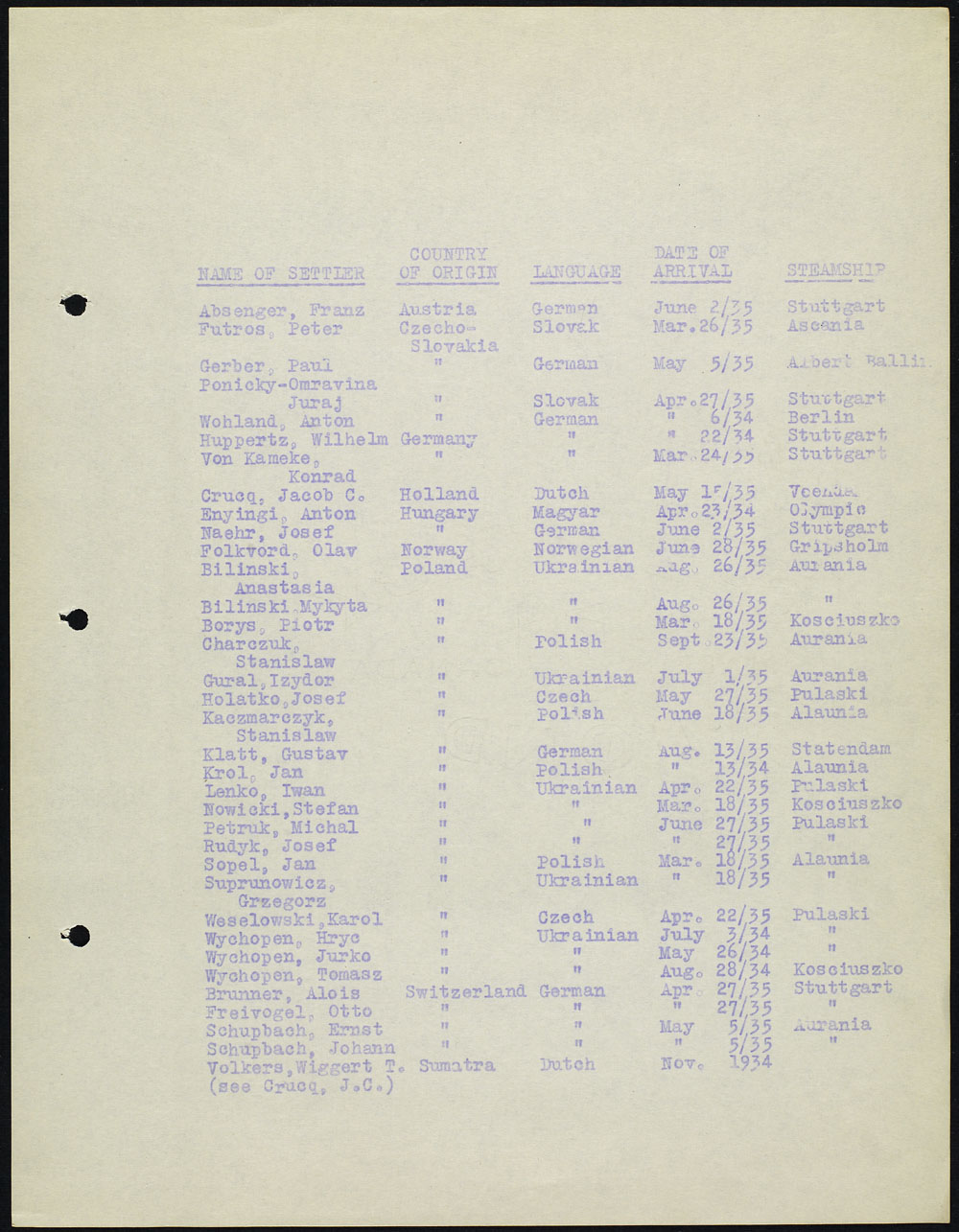
There are numerous CNLSA photographic reports, found in a sub-series attached to the main CN photograph collection. Additional records can be found in the Canadian National Land Settlement Association reports and photographs sub-series, which document the settlement of immigrant families, particularly in Western Canada in the 1920s and 1930s. Many reports provide lists with interesting information, such as the following list of immigrants settled in Western Canada in 1934–35.

Typed list indicating the names, origins and location of settlement for some families directed by the Western offices.

List from report entitled Brief notes on the settlement of some of the families directed by the Western offices during the years 1934 and 1935, (e011000601)

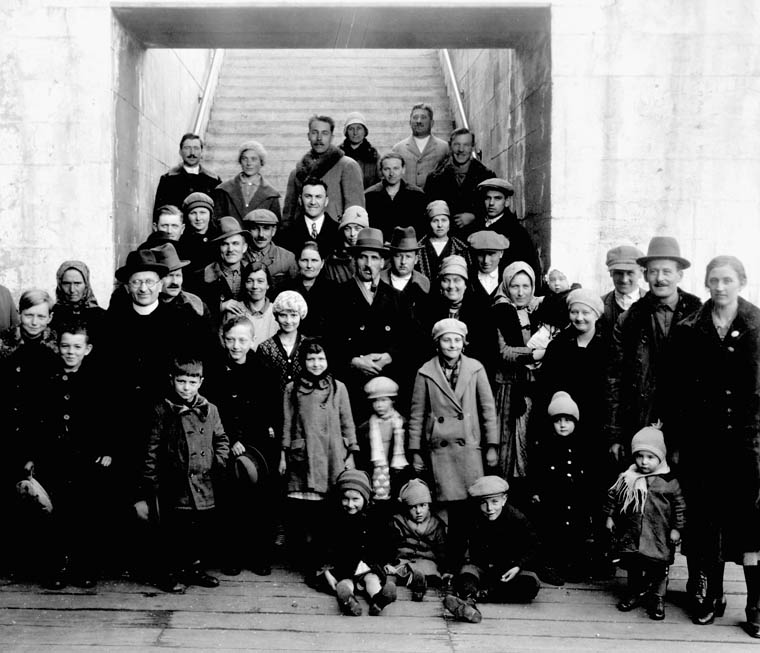
Many European immigrants heading for farms in Western Canada stopped at the Winnipeg immigration sheds attached to the CN railway station, as seen in this photograph.

Black and white photograph of a group of immigrants who had arrived at Winnipeg, Manitoba.

Immigrants from Central Europe arriving in Winnipeg, Manitoba. 1920s (c036148)

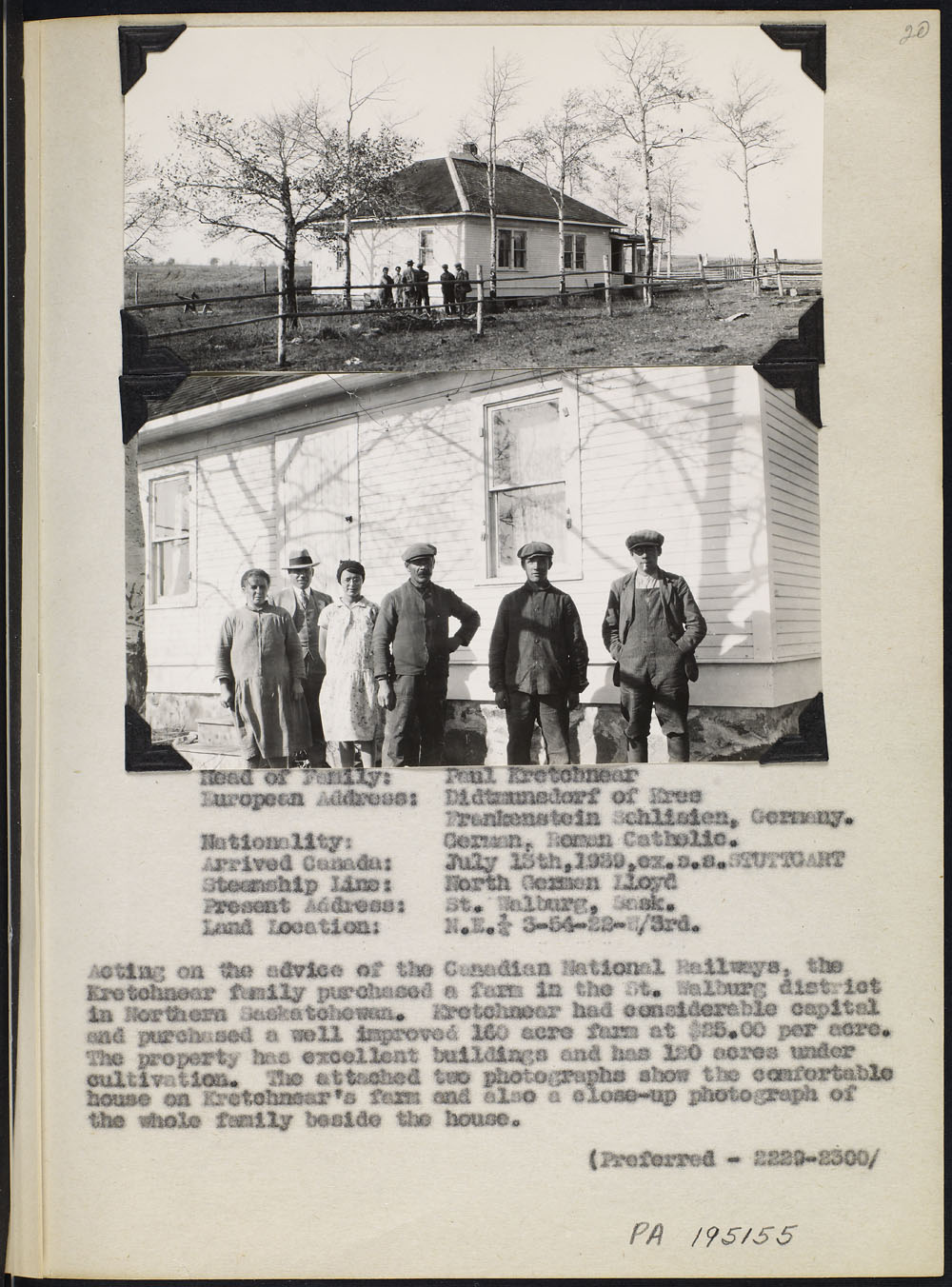
The CNLSA reports are invaluable resources for researchers who would wish to find out more about their ancestors and about farm settlement patterns. Since the censuses for the 1930s have not yet been released, the information provided in the CNSLA reports will be, for some years to come, the only information available as to where the immigrants came from and where they settled. Here are a few examples:

Page from an album with two black and white photographs; one of a family standing in front of a house surrounded by farmland, and the other a close-up of the same scene. Page also includes typed information about the family’s identity and their immigration details.

The Kretchnear family and farm. A German settlement. (e011000044)

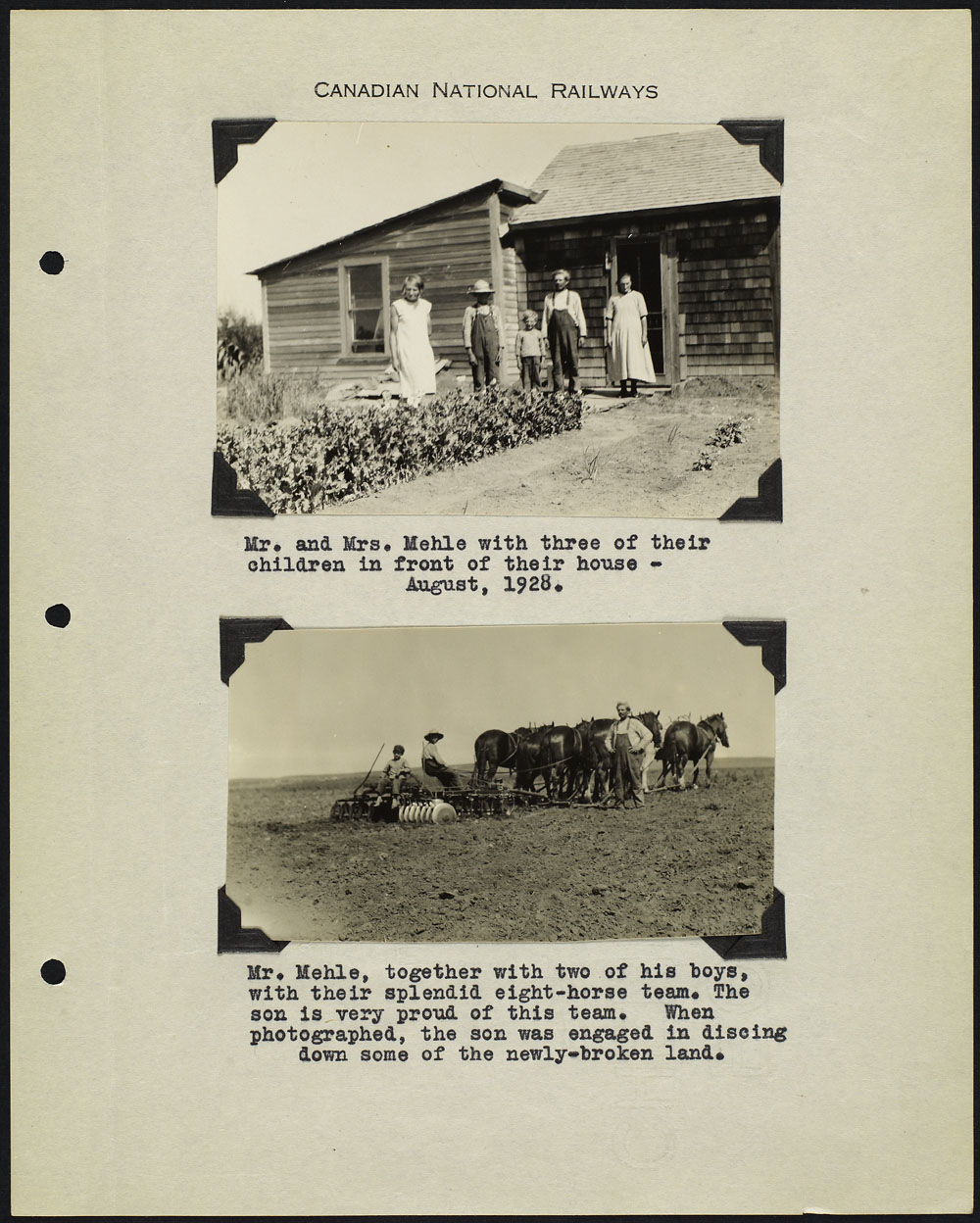
Page from an album with two black and white photographs; one showing a family standing in front of a house and the other showing a team of horses pulling a plough. Photos are captioned with typed text.

German Romanian Settlement, the Mehle Family, 1928. (e011000523)

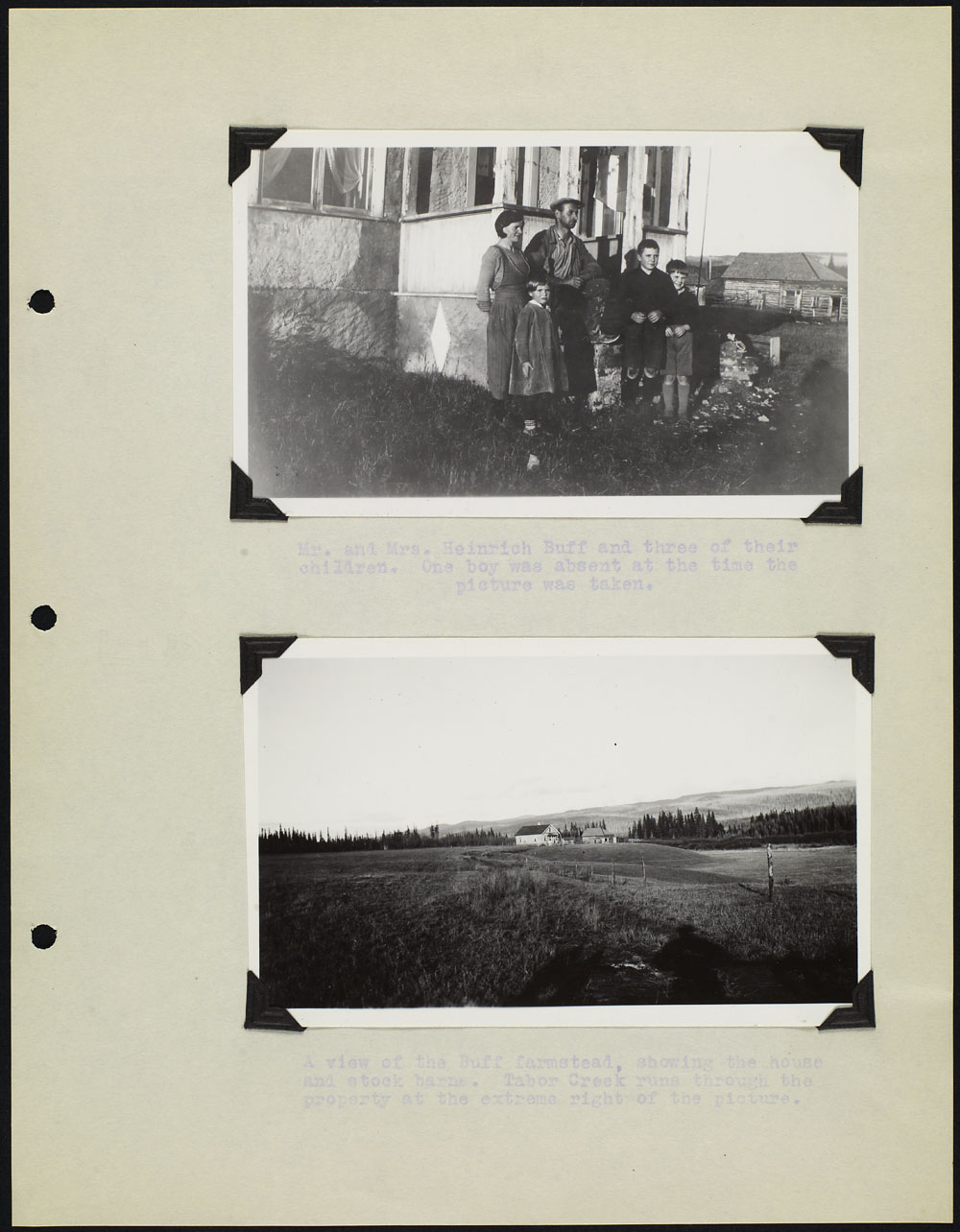
Page from an album with two black and white photographs; one showing a family standing in front of a house and the other showing a view of farmland. The photos are captioned with typed text.

Swiss Settlement, The Buff family in British Columbia, 1937 (e011000585)

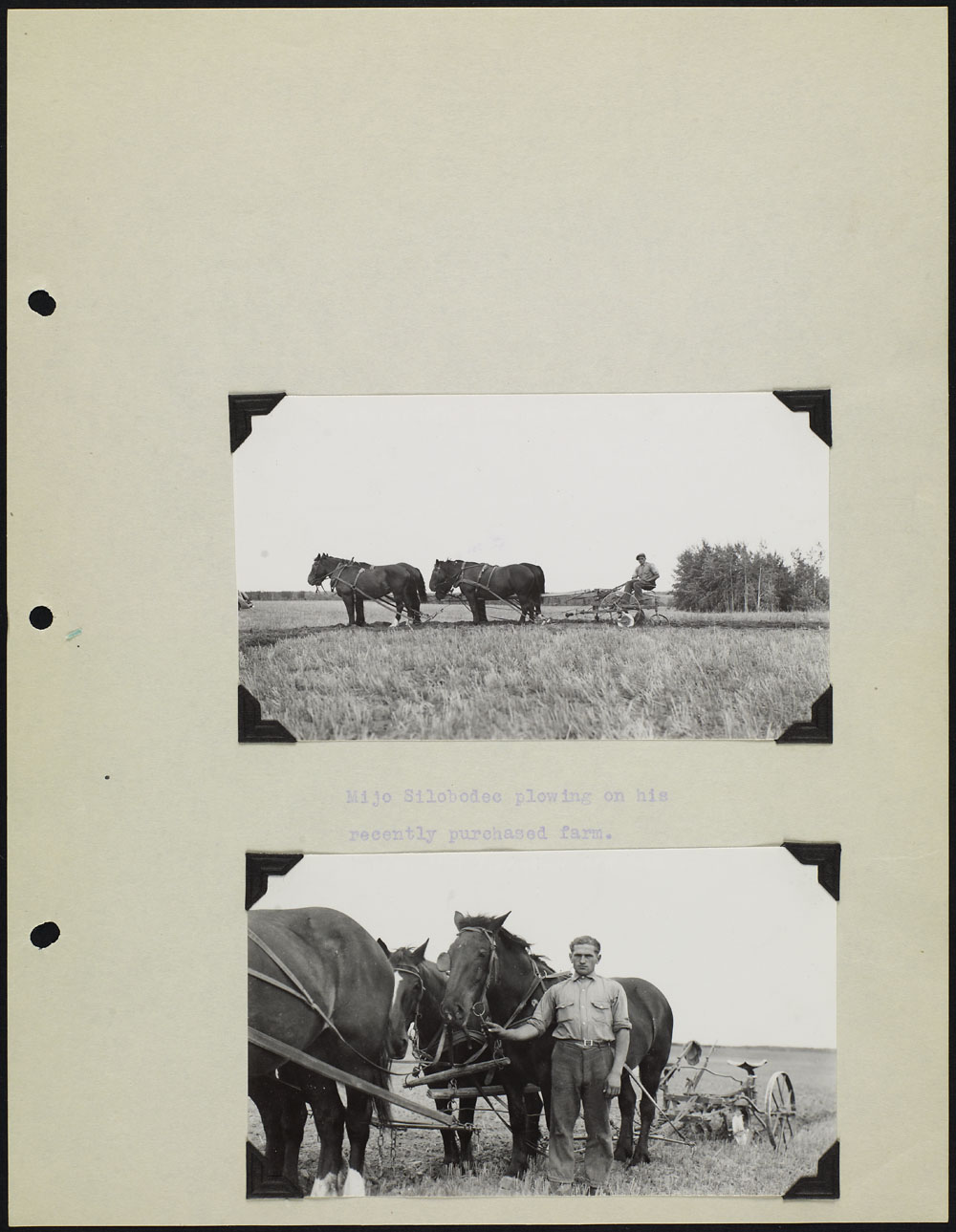
Page from an album with two black and white photographs. One showing a team of horses pulling a plough, and the other shows a man standing with his team of horses. The photos are captioned with typed text.

Yugosalvian Setttlement, The Silobodec family in Saskatchewan, 1937 (e011000581)

Many of these photographic reports were recently digitized. You can help tag and transcribe these reports using LAC’s Co-Lab tool. Maybe you will see where your ancestors came from, or maybe you will spot the first farm they purchased! These CNLSA archival records are a treasure trove of information, particularly for Western Canadian farm settlement, and we hope this will excite new and long-term genealogists alike.


Andrew Elliott is an archivist with the Archives Branch at Library and Archives Canada.

Department of Indian Affairs and Northern Development records: Estate files

On the left of the graphic, Tatânga Mânî [Chief Walking Buffalo] [George McLean] in traditional regalia on horse. In the middle, Iggi and girl engaging in a “kunik”, a traditional greeting in Inuit culture. On the right, Maxime Marion, a Métis guide stands holding a rifle. In the background, there is a map of Upper and Lower Canada, and text from the Red River Settlement collection.

This article contains historical language and content that some may consider offensive, such as language used to refer to racial, ethnic and cultural groups. Please see our historical language advisory for more information.

By Rebecca Murray

When researching First Nations genealogy, estate files can be a valuable source of information. Estate files are held at Library and Archives Canada (LAC) in the Department of Indian Affairs and Northern Development (DIAND) fonds, known as RG10.

What are estate files?

The Department, now known as Crown-Indigenous Relations and Northern Affairs Canada and Indigenous Services Canada, continues to administer “the estates of deceased Indians” as per the Indian Act. The contents of estate files vary. These forms record vital information on the deceased, summaries of land and personal assets, summaries of debts, and vital information on heirs and next of kin.

The types of information found in these files can be very useful when conducting genealogical research. Before you begin researching, record the information you already have in a pedigree or family chart, both of which are available on our website. You can use any information you find in the estate files to fill in the blanks.

How do I identify estate files held at LAC?

The file title by the name of the deceased individual identifies estate titles held at LAC. Below are a few examples of complete references to estate files in our holdings:

RG10, 1996-97/816, box 91, file “Estate of Clifford Leonard – Kamloops,” 1928–1948.

RG10, volume 11266, file 37-2-8, “ESTATE NELSON, JOB,” 1928–1929.

2017-00390-5, box 4, file 411/37-2-179-48, part 1, “Estates – P. Meneweking – Spanish River,” 1946–1967.

These examples show the different title formats used by estate files. Researchers can search by family name, with or without the given name (first name). Sometimes the band name is included.

The department formerly known as DIAND has used various file classification systems throughout its history. The following file numbers indicate that a file is classified as an estate file:

Modified Duplex Numeric System (1950s–1980s): 37-2
Thousand Series: 16000
Block Numeric System: E5090

Aside from file classifications, this type of research is one of the few cases where searching by the name of an individual is the best method for identifying a relevant file.

It is best to begin your search in our archival database, Collection Search. If you are unable to identify a file for an individual described in our database, do not worry. Many files are not described at the file level in our database.

To identify these files, try another search with keywords “estate” AND the name of the band or agency of the deceased individual. For example, Estate Sudbury.  A long list of results can be filtered first by the Archives tab (top menu) and then . A long list of results can be filtered by hierarchical level on the left-hand side of the page; in this case, choose Accession.

One of the results, 2017-00390-5 “Estate Files of the Sudbury District Office,” 1900–1983, is an example of a set of 18 boxes of records comprised almost exclusively of estate files, with no descriptions at the file level. In these instances, check the Finding Aid section for information on how to access a file list. In this case, the finding aid (or file list) is not linked to the description, but it can be consulted in person at 395 Wellington Street in Ottawa, or you can write to us and ask that we check it for a specific name. Doing this extra step beyond the keyword search for the deceased individual’s name, and including your work in your written request, can help Reference Services staff triage and treat your request more efficiently.

How do I access estate files held at LAC?

You will find that access is restricted to most estate files held at LAC for privacy reasons. Please make an access request online. Some early files are open. Of those, some are available on digitized microfilm, for example: RG10, volume 2918, file 186,900, “CARADOC AGENCY – ESTATE OF THE LATE DOLLY NICHOLAS OF THE ONEIDA BAND,” 1897–1898.

If an open file is not available online, please request the original for Retrievals and Consultation.

A white page with black handwritten text.

The first of two pages of a letter from RG10, volume 2918, file 186,900 (e007575915)

A second white page with black handwritten text.

The second of two pages of a letter from RG10, volume 2918, file 186,900 (e007575916)

This information should help you to identify and access estate files held at LAC. To ask a question about estate files or on any other topic, please write to us!

This blog is part of a series related to the Indigenous Documentary Heritage Initiatives. Learn how Library and Archives Canada (LAC) increases access to First Nations, Inuit and Métis Nation collections and supports communities in the preservation of Indigenous language recordings.

________________________________________________

Rebecca Murray is an archivist in the Reference Services Division at Library and Archives Canada.